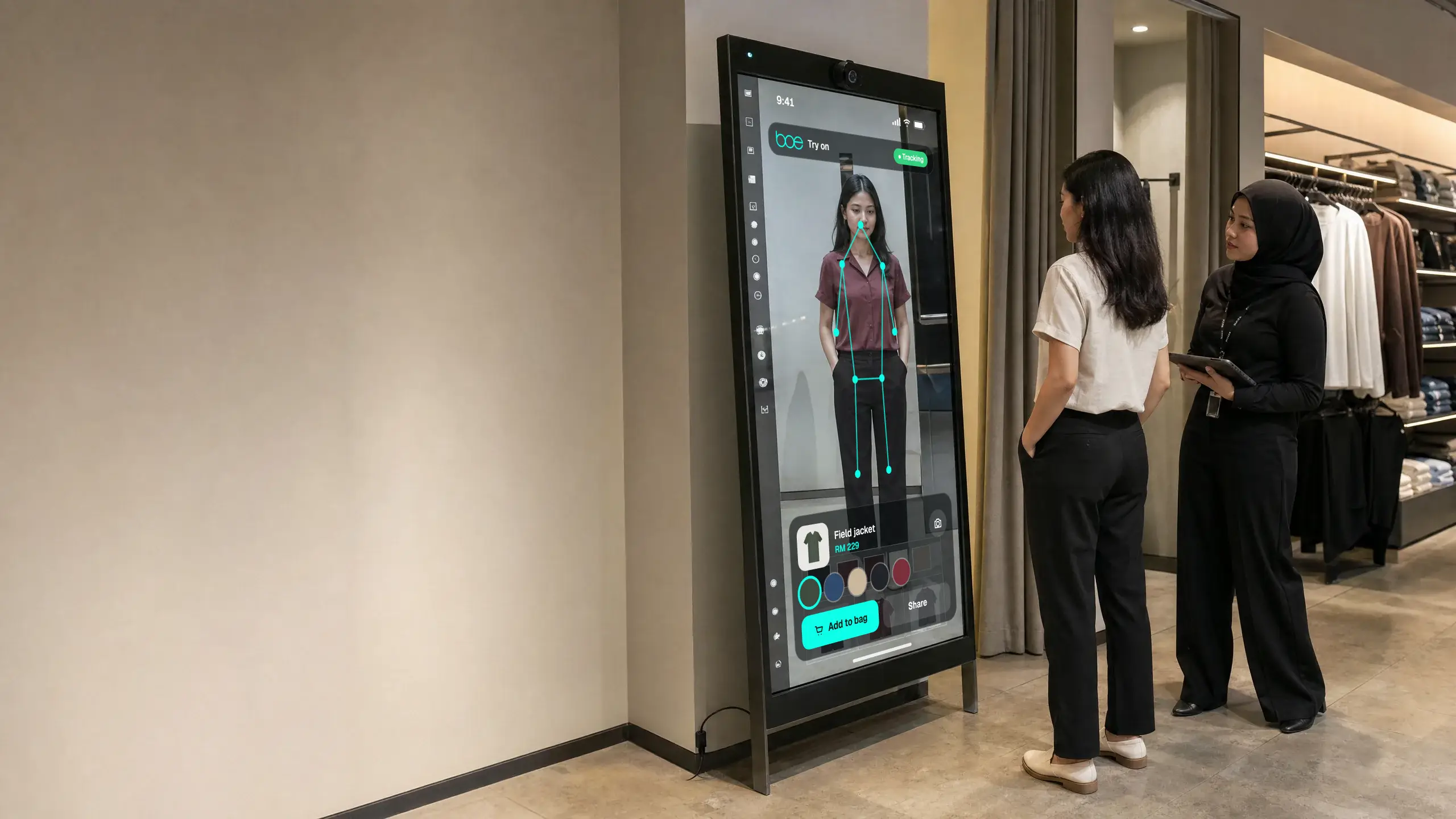
We build AI into the daily work of Malaysian factories, warehouses, contractors and energy users. One team builds the data, models, agents, apps and devices it needs, then keeps them running.
Agents read orders and RFQs from email, enter them into the ERP, draft the quote and chase late deliveries. Anything that spends money or reaches a customer waits for a person to approve it.
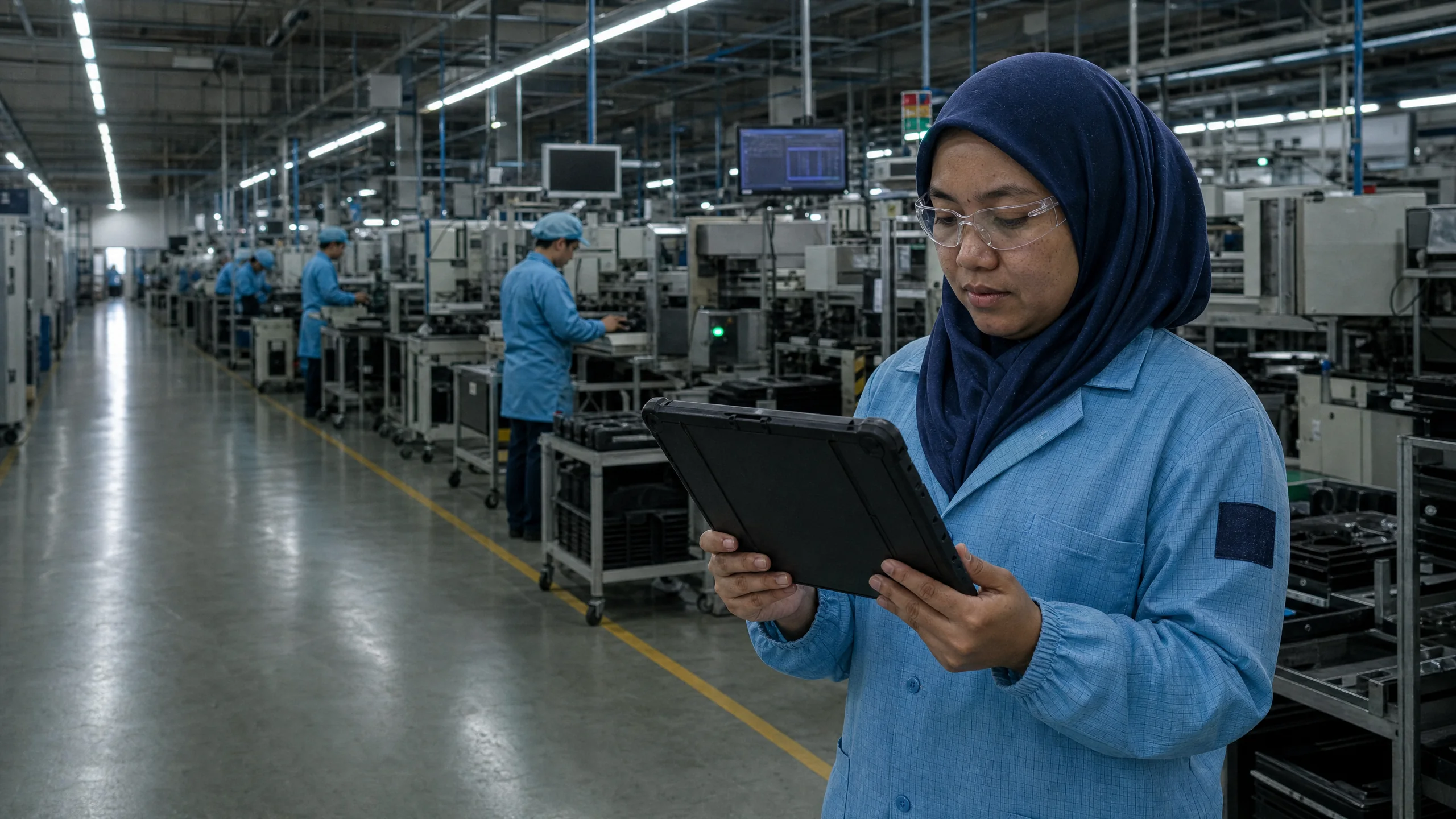
Cameras check each step before the unit moves on. Smart screwdrivers judge every screw by its whole torque curve. The models run on small computers beside the machine, so a slow network never stops the line.
Language models that run on your own servers, in your own cloud account or in a Malaysian data centre. Your documents stay where they are, and every question and answer is logged.
Guided steps at the workstation, a camera that checks the work and tutors that explain in Malay or English. On one assembly line, new operators got up to speed 30–40% faster.
Most AI stops at the demo. Ours clocks in, on the production line, in the warehouse, on the tender and on the electricity bill.
Inside the tools you already use.
AI works in your ERP, on the station screen and in WhatsApp. Nobody has to open a separate AI app.
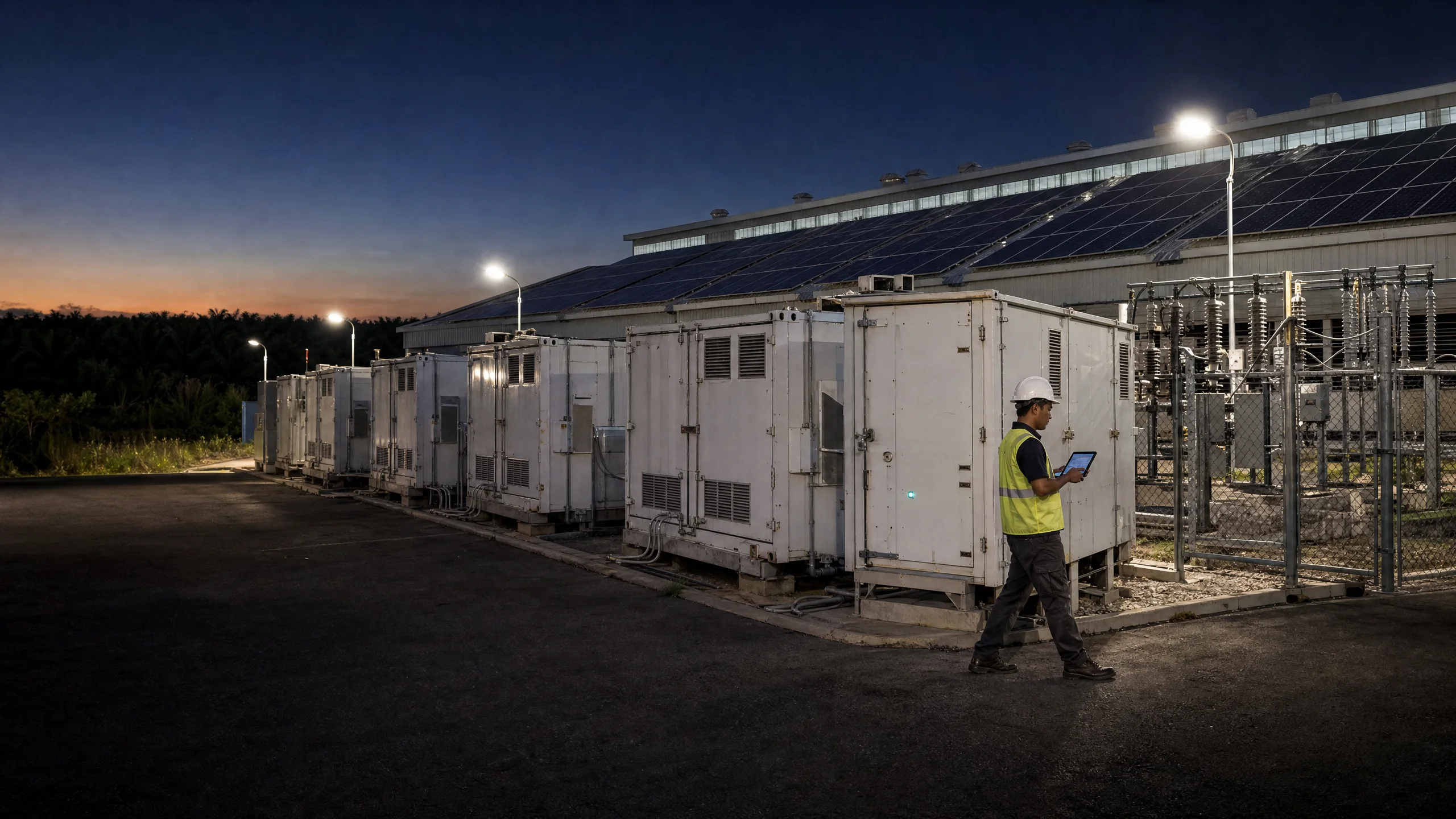
Built for the night shift.
It has to work at 3 a.m. with no engineer watching. We test it on your data, monitor it live and plan for what happens when it’s unsure.
A person signs off.
AI drafts, checks and flags. People approve anything that spends money, reaches a customer or changes the line, and every decision is logged.
Pass marks agreed first.
Before we build, we agree the numbers that count as success. Then we measure against them, before launch and after.
The full stack
The model is the easy part.
AI projects stall on everything around the model: messy data, old systems, an app nobody wants to use, hardware on a noisy floor. We build all five layers ourselves, so nothing falls between vendors.
Apps
What people touch every shift: phones in the warehouse, screens at the station, dashboards in the office.
FlutterReactNext.jsDjangoFastAPINestJS
Agents & workflows
Agents and copilots that work inside your ERP, email and WhatsApp, with an approval step wherever it matters.
Each one is running in production somewhere in the world today. We build them to fit Malaysian operations, and we start with the one that pays back first.
Agentic AI
Agents that turn emails into orders.
Purchase orders, RFQs and invoices arrive as emails and PDFs. An agent reads them, checks them against the ERP and drafts the entry or the reply, and a person approves anything unusual. At Dow, an invoice agent caught a US$30,000 freight charge that should have been about US$5,000.
A vision model checks every unit for missing parts, wrong labels and surface defects at line speed, and saves the photo with each decision. Audi uses the same approach to check about 5,000 spot welds on every car, instead of a sample.
Defect detectionLabel and serial OCREdge inference
A camera tells the robot where each part is and which way it faces, so it can pick from a mixed bin without a precise jig. Robots that learn a new task from a few demonstrations are still in pilots, and we try them only where the payback is clear.
Open-weight models such as Llama, Qwen and Gemma run on a single GPU server and trail the best closed models by about four months. Contracts, drawings and HR files stay on your hardware or in-country, under your control.
Digital work instructions show each step with photos and video, and a camera checks it was done right. In a study of 5,179 support agents, an AI assistant raised the output of new and less experienced staff by 34%.
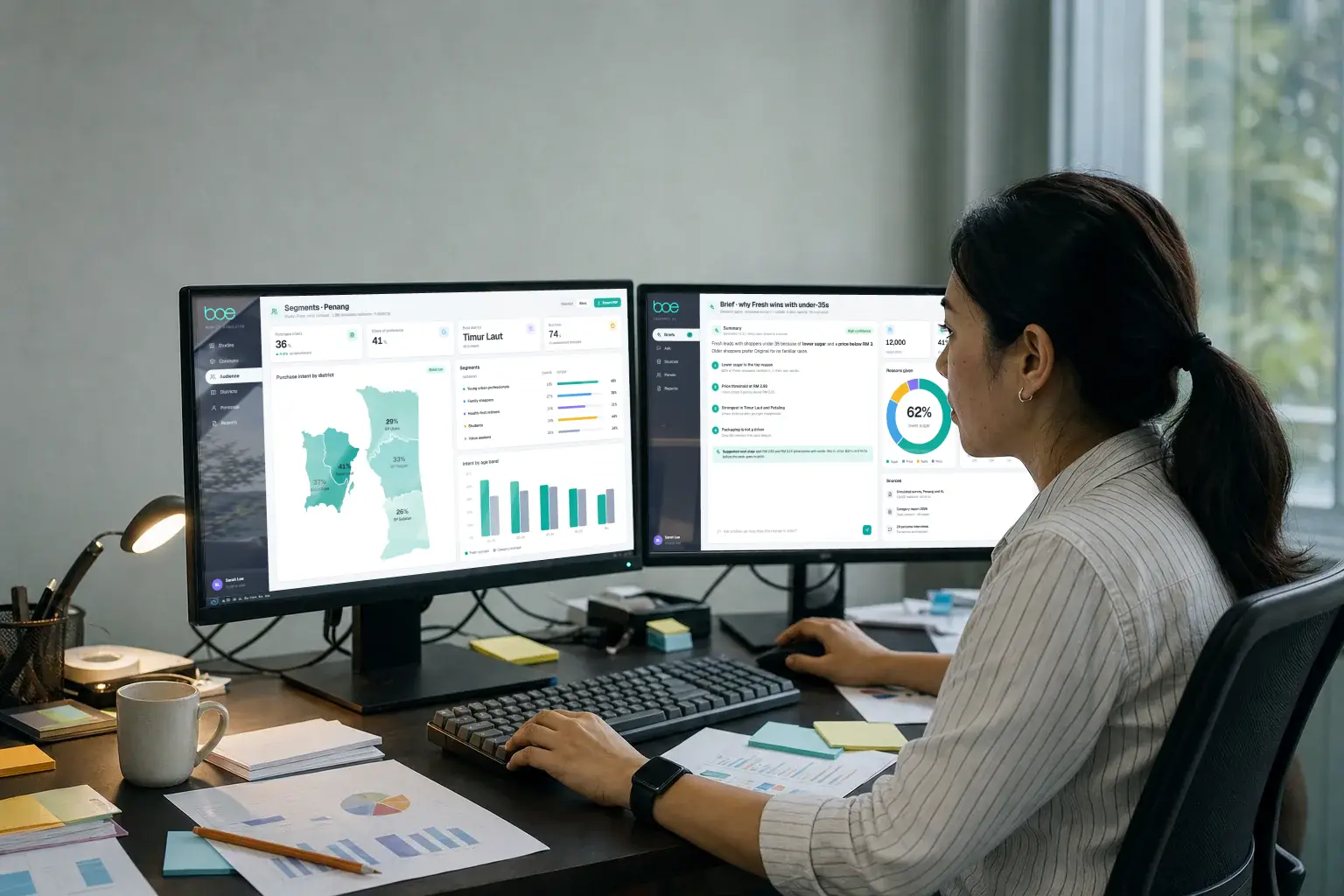
Synthetic residents built from official statistics react to concepts, packs and prices before you pay for fieldwork. Studies show they rank options well but exaggerate the gaps, so we use them to cut ten ideas to two, then test those two on real customers.
Language models read the codebase, find gaps in the test plan, draft automation scripts and group failure logs, and an engineer reviews every output. Airbnb moved 3,500 test files this way in six weeks, against an estimate of 18 months.
Eleven capabilities. Most projects need two or three.
We don’t train foundation models. We build everything a model needs to do a real job: clean data, small task models, agents, apps and the servers they run on.
Every number here came from a system in production.
Measured on our clients’ lines and in their offices after go-live. Client names stay private unless a client agreed to be named.
50–85%
shorter visual inspection cycle with guided, camera-checked work
Guided work & inspection
85%
fewer execution errors after paper instructions went digital
Digital work instructions
80%
shorter quotation turnaround with AI drawing extraction
Drawing-to-quotation
50h
saved every week on a digitalised production floor
DTC (M) Sdn. Bhd.
Results from individual BOE deployments. Yours will depend on your process and where you start. See all results
In production
What it looks like on an ordinary shift.
Scenes from systems we’ve deployed. To protect our clients, some images are recreated, and names and products are removed.
Guided assemblyThe step is on screen. Every screw is logged with its torque, time and operator.Multi-camera inspectionSixteen views. Every connector is found and scored before the unit moves on.Anomaly detectionA heatmap shows the odd patch on a battery pack, caught before it ships.Camera check before testA camera above the test line checks every unit before it reaches the rig.Live test analyticsThe rig streams every measurement into a live chart, so drift shows up mid-batch.Line-side dashboardGauges and limits for each unit, on a tablet beside the machine.
What clients say
“We wanted to digitalize our production floor but were overwhelmed by the cost and complexity. BOE made it simple. They understood the process, customized everything we needed, and delivered under budget. It saves us at least 50 hours every week.”
“We did not expect much from a small company, but the final result blew us away. Everything was built exactly how we wanted. The team was fast, responsive and never tried to upsell us.”
Jesslyn YeohIT & System Lead, Nexlogic Engineering Solutions (SEA)
How we work
See it work on your own data before you commit.
The first consultation is free. Bring one real example, such as a tender, a job card, a year of electricity bills or a photo of the whiteboard.
Map the work
We spend time with the people doing the job and write down every step, system and exception, including the ones nobody has documented.
Prototype on your data
You see it run on your own documents, photos or machine data, with a fixed proposal beside it.
Build and connect
We build it, connect it to your ERP, machines and apps, test it on real work and train the people who will use it.
Run and improve
We watch it in production, retrain it as your products change and add the next piece once the first one pays off.
Send one real example: a tender, a job card, a year of bills or a photo of the whiteboard. An engineer will map it with you and show you what AI can do with it. The first consultation is free.