
Energy
Nine raids later, the bitcoin mine was running
Malaysia’s deputy prime minister told Parliament that power theft for bitcoin mining cost TNB RM5.14 billion between 2020 and 2025, across 14,489 premises that produced 77 investigation papers. At TNB’s business tariffs, legally bought power leaves miners little or no margin. In the US, miners with legal grid connections now lease them to AI firms, in deals such as TeraWulf’s US$19 billion lease with Anthropic.
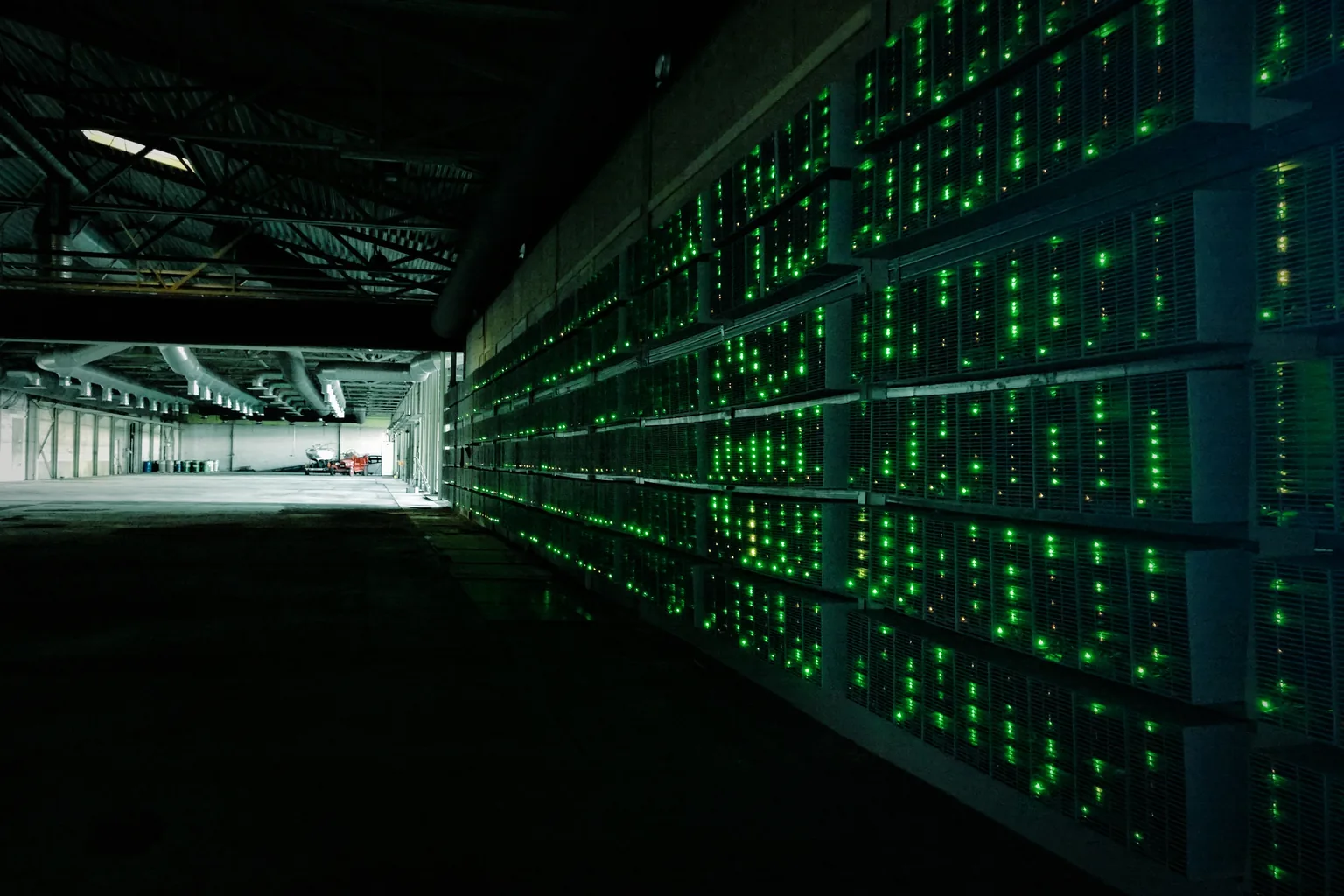
On 17 July 2025 officers from the Energy Commission (Suruhanjaya Tenaga, ST), Tenaga Nasional Berhad (TNB) and the police raided seven premises around Alor Setar, Kedah. With them was Akmal Nasrullah Mohd Nasir, the deputy minister for energy transition and water transformation. One address was familiar. “The second premises has been raided nine times by the Energy Commission and TNB. The last time was last May, and today it is operating again,” he told Berita Harian (our translation).1
Inside were machines mining bitcoin on stolen electricity. Another site sat above a building with a clinic and shops on the ground floor. A short circuit or fire there would be very dangerous to the public, Akmal warned.1 He blamed the price. A bitcoin was then worth about RM500,000, which he said encouraged illegal miners. The activity had dipped in 2022 and 2023, he said, then surged again in 2024.2 He put the country’s losses since 2018 at RM4.8 billion.1
That one raid holds the whole problem: raids that do not stick, miners who restart, neighbours at risk and a coin price that makes theft worth the trouble. This article follows the money in two directions. One leads into rented houses and shop lots in Kedah, Pahang and Sarawak. The other leads to campuses in Texas and Kentucky, where former bitcoin miners now rent their grid connections to AI companies. The machines differ, but the commodity is the same: electricity. The wider data-centre boom is covered in our articles on data-centre power pledges, the race to power AI and the grid. Household tariffs are in our electricity bill guide.
The short version
- Ministers told Parliament that power theft for bitcoin mining cost TNB RM4.57 billion between 2020 and August 2025, then RM5.14 billion for 2020 to 2025. Police had put losses from all electricity theft at about RM441 million for 2020 to October 2024. We found no explanation for the gap.
- TNB found 14,489 premises between 2020 and 2025, which produced 77 investigation papers. Since 2022 the authorities have seized 75,578 machines in 3,049 raids. In the one concluded case we found, the fine was RM80,000 against a loss of RM1.33 million.
- At end-October 2026 prices, an older machine of about 32 J/TH broke even at about 17.7 sen per kWh, by our conversion. TNB’s business tariffs work out at about 42.2 to 50.68 sen before surcharges. Legally bought power leaves little or no margin.
- In the US, miners are becoming AI landlords. TeraWulf says its 20-year lease with Anthropic could bring in about US$19 billion. Listed miners have more than 4 GW of AI capacity contracted, but only about 550 MW was billing in mid-2026, CoinShares says.
- In Malaysia the pivot is under way at a listed company: Bitdeer has secured 86.8 MW of AI data-centre capacity on one Johor campus. Illegal miners in rented houses own none of what AI tenants pay for: no grid connection, land or permits.
How a mining machine earns
Bitcoin has no central bank to keep its ledger. Instead, computers around the world compete to add the next block of transactions, and the network aims for one block about every ten minutes.3 The machines are called miners, or rigs. Each is a box of chips built for one calculation, repeated trillions of times a second. The winner of each round collects newly created coins plus the fees attached to the transactions.
The new coins are called the block subsidy, and they shrink on a schedule. The subsidy halves every 210,000 blocks, about every four years: 50 bitcoin in 2009, 6.25 from May 2020 and 3.125 from April 2024.4 The supply is expected to run out around 2140, and more than 19.8 million coins had been mined by the end of 2024.4 Fees do not fill the gap. In October 2026 they were 0.57% of block rewards, the sixteenth month in a row below 1%.3 By our arithmetic, the next halving falls around 2028 and cuts the subsidy to 1.5625 bitcoin.
Two numbers decide whether a machine pays. Hashprice is what the network pays, in US dollars, for one petahash per second of computing for one day. Efficiency, in joules per terahash (J/TH), is the electricity a machine burns for each unit of work; lower is better. Together they give what each kilowatt-hour (kWh) earns. Electricity is more than 80% of miners’ cash costs, a Cambridge survey of 49 mining firms found, and they report a median price of US$45 per megawatt-hour (MWh).4
The machines age quickly. Cambridge projected that 11.1% of the network’s computing power would be retired by the end of 2024 as newer, more efficient models arrived.4 It put bitcoin mining’s electricity use at about 138 TWh a year, roughly 0.54% of the world’s consumption.4 Miners know where their risks lie. In the same survey, 57% had at least high concern about long-term rises in power prices, and 47% about unfavourable government action.4 Bloomberg notes that bitcoin mining uses more electricity than South Africa or Thailand.5
2026, a hard year to mine
This year the economics turned against miners. Bitcoin peaked at US$124,485 on 6 October 2025, about RM509,000 at Bank Negara’s middle rate today.67 It closed June 2026 at US$59,005, a fall of about 53% by our arithmetic.8 Hashprice set records on the way down. Its monthly average hit a record low of US$31.27 in March and then US$30.37 in June, with a daily low of US$27.74 on 6 June.89 At a network-average power cost of about US$46 per MWh, Luxor estimated, machines of 25–38 J/TH, the least efficient group it tracks, fell back below break-even in June.8
Miners switched off. Difficulty is the network’s automatic setting for how hard a block is to find, and it falls when machines leave. On 14 June it fell 10.09%.8 By late July it was down year on year for only the second time in bitcoin’s history. The first was in 2021, “when China banned mining and roughly half the network went dark overnight”, Luxor wrote. This time it found no single cause; among several, it named this one: “The AI/HPC buildout is pulling capital, power, and operators away from bitcoin mining.”10
April, May, July and August are left out because we did not open those reports. June’s average was a record low; the daily low was US$27.74 on 6 June. October closed at US$32.98.
Source: Luxor Hashrate Index, monthly lookbacks (10 April, 10 July, 9 October and 5 November 2026).
Show the numbers
| Month | US$ per PH/s per day |
|---|---|
| Feb 2026 | 32.31 |
| Mar 2026 | 31.27 |
| Jun 2026 | 30.37 |
| Sep 2026 | 39.33 |
| Oct 2026 | 37.97 |
CoinShares, a digital-asset manager, estimates that listed miners’ weighted average cash cost of producing one bitcoin was about US$75,500 in the second quarter of 2026, about RM309,000.11 Power bills varied widely. Its figures put IREN’s electricity cost at US$25,942 per coin, the lowest among listed miners, and MARA’s at US$48,681.11 Prices then recovered in part. Hashprice averaged US$39.33 in September and US$37.97 in October, but it closed October at US$32.98 after bitcoin fell 8% in the month.36
Why legal power rarely pays here
Electricity is the miner’s main bill, so the price of a kWh decides everything. Luxor’s model put the break-even power price at the end of October 2026 at US$0.0432 per kWh for a machine of about 32 J/TH. A machine of about 49 J/TH needed US$0.0278 or less.3 Converted at RM4.089, that is about 17.7 sen and 11.4 sen per kWh, by our arithmetic.
Mining is legal in Malaysia “as long as operators obtain power properly and pay taxes”, Bloomberg reports.5 A legal operator would be a business customer, not a household. Since July 2025 TNB’s non-domestic low-voltage general tariff has replaced the old tariffs B, D and F. It charges 27.03 sen per kWh for energy, 8.83 sen for capacity and 14.82 sen for the network.1213 That totals 50.68 sen, plus RM20 a month, before the monthly fuel adjustment, 8% service tax and a 1.6% renewable-energy levy.12
A larger site would connect at medium voltage. There TNB charges 29.83 sen per kWh, plus RM89.27 a month for each kilowatt of peak demand and a RM200 monthly charge.12 Spread over a load that runs every hour of a 30-day month, that is about 42.2 sen per kWh, by our arithmetic. Against the 17.7 sen break-even, the medium-voltage rate is about 2.4 times as high and the low-voltage rate about 2.9 times.
Newer machines earn more per kWh. Luxor’s October averages, converted by us, show about 54 sen per kWh for the newest class (under 14 J/TH), 39 sen at 14–19 J/TH and 29 sen at 19–25 J/TH.3 Only the newest class beat TNB’s medium-voltage rate, by about 12 sen on October’s average. At the month’s closing hashprice it earned about 47 sen, by our arithmetic. That thin margin still had to pay the fuel adjustment, taxes, cooling, rent and the machine.
So at Malaysian tariffs, legally bought power leaves little or no margin, and older machines lose money on every unit. Theft removes the largest cost. The rivals abroad pay far less. CoinShares says Cipher’s Odessa site has a fixed contract near 2.8 US cents per kWh, about 11.4 sen. Bitdeer’s average power cost was US$44 per MWh, about 18 sen, it says.11 Luxor puts the average industrial mining power cost at US$48 per MWh, about 19.6 sen.3
The deputy minister draws the same conclusion from a different angle. “Even if you run it properly, the challenge is that the market itself is very volatile,” Akmal told Bloomberg.5
I don’t see any well-run mining that can be considered as successful legally.
Five official totals, one unexplained gap
The official numbers have grown over time, but they rest on different bases. In early 2022 the then energy and natural resources minister, Takiyuddin Hassan, put the cost at RM2.3 billion and rising.14 In July 2025 Akmal gave RM4.8 billion since 2018.1 In November 2025 a written parliamentary reply put TNB’s losses at RM4.57 billion between 2020 and August 2025, from 13,827 premises.1516 That is about US$1.12 billion, by our arithmetic.
On 27 November Deputy Prime Minister Fadillah Yusof gave the Dewan Rakyat a larger figure. “From 2020 until 2025, TNB uncovered 14,489 premises in this activity, opening 77 investigation papers. The total losses borne by TNB amounted to RM5.14bil,” he said.17 In May 2026 Deputy Minister Abdul Rahman Mohamad estimated the loss at more than RM700 million a year.1819 RM5.14 billion over six years averages about RM857 million a year, by our arithmetic. Neither estimate came with a method.
The police count is far smaller. In October 2024 the Bukit Aman CID director, Comm Datuk Seri Mohd Shuhaily Mohd Zain, gave TNB’s losses from all electricity theft year by year. They came to about RM441 million between 2020 and October 2024, and he said most theft cases were due to illegal bitcoin mining.20 The ministry’s RM4.57 billion, covering about ten more months and mining alone, is roughly ten times larger. No source we found explains the gap or publishes either method.
| Stated | By | Period | Loss |
|---|---|---|---|
| Early 2022 | Then minister Takiyuddin Hassan | Not stated | RM2.3bn |
| 24 Oct 2024 | Bukit Aman CID, all electricity theft | 2020 to Oct 2024 | ~RM441m |
| 17 Jul 2025 | Deputy Minister Akmal Nasrullah | Since 2018 | RM4.8bn |
| Nov 2025 | Ministry, written reply | 2020 to Aug 2025 | RM4.57bn |
| 27 Nov 2025 | Deputy Prime Minister Fadillah Yusof | 2020 to 2025 | RM5.14bn |
| 5 May 2026 | Deputy Minister Abdul Rahman Mohamad | Per year, estimate | Over RM700m |
Source: Free Malaysia Today (Bloomberg); The Star; Berita Harian; Malay Mail; Malay Mail (Bernama).11415171820
All electricity theft, which the CID director said was mostly due to illegal bitcoin mining. The 2024 figure is for the year to 24 October, when it was given. The total is about RM441 million. The ministry’s RM4.57 billion for 2020 to August 2025 counts mining alone; neither side has explained the gap.
Source: The Star (25 October 2024), quoting the Bukit Aman CID director.
Show the numbers
| Year | RM million |
|---|---|
| 2020 | 5.9 |
| 2021 | 140.4 |
| 2022 | 124.9 |
| 2023 | 67.1 |
| 2024 to Oct | 103 |
The losses saw a significant drop last year compared with the previous year. We will examine whether bitcoin market prices have influenced this or if our ongoing efforts against illegal bitcoin mining are having an effect.
Where the thefts are
The count of cases keeps climbing. Akmal said 2,399 cases were recorded in 2023 and 2024, and about 1,800 in the first half of 2025 alone.1 By early October 2025 the authorities had logged some 3,000 power-theft cases tied to mining, and Bloomberg described the activity as accelerating.5 In Melaka, TNB lost RM29.63 million in 2025, against RM10.46 million in 2024, and cases rose to 85 from 30.21 By February 2026 TNB had acted against 17,489 premises nationwide, 4,283 of them in Perak, the state with the second-highest count in the Peninsula. Manjung district alone accounted for RM53.4 million over 1,742 premises, and Perak Tengah for RM26.2 million over 857. “Most cases in the two areas are repeat cases,” said state executive councillor Mohammad Nizar Jamaluddin (our translation).22
Who pays for it
The cost does not stay with TNB. At a Kota Bharu sentencing in January 2026, the Energy Commission’s prosecutor said such losses count as “system loss”, which raises tariffs for all consumers (our translation).23 A Sinar Harian analysis in May 2026 made the same point: in the long run the burden can reach consumers through tariff adjustments or higher maintenance costs.24 No official figure says how much of today’s tariff reflects theft. Neighbours also carry the physical risk, as the next section shows.
Inside a stolen-power mine
The Kuantan raid of 5 May 2026 shows the usual set-up. Around 10am, TNB and ST staff with Abdul Rahman cut the supply to two rented houses in Taman Seri Mahkota and Kampung Batu 11 suspected of illegal mining. One house had 18 machines running, with losses estimated at about RM21,000 a month. The other had 10, at RM13,703 a month. Together that came to RM34,000 a month, or RM208,000 over six months, he said. “Most premises inspected were found using unsafe wiring, with a risk of explosion and fire,” he said (our translation).19
The methods are simple. Fadillah listed meter tampering, unauthorised use and illegal connections.17 In Melaka, inspectors found cables in an empty house in Taman Tambak Paya Harmoni hidden under curtain fabric; the theft disrupted supply to three neighbours. An earlier raid that January, on two shop units, found losses of RM1.6 million.21 Bloomberg describes miners who “hop from empty storefronts to deserted houses”, fit heat shields and guard doors with CCTV and broken glass. Some play recorded nature sounds to mask the roar of the machinery, and neighbours report strange bird noises.5 The main challenge is that the activity is flexible and moves easily, especially through rented premises, a Sinar Harian analysis noted (our translation).24
Some accounts are opened in someone else’s name. Fadillah said 85 cases involved genuine victims whose identity was misused; they are not prosecuted or billed unless proven responsible.17 The risk to neighbours is physical. In August 2022 Sarawak Energy described a shop lot on the Kuching-Serian road that caught fire when heat from mining machines ignited egg cartons and gypsum boards. Thirty machines were found charred.25 In Miri in 2023, 74 servers at two premises overloaded the lines and caused repeated outages in two residential areas.26 Akmal told Bloomberg that the miners’ mobility points to syndicates. We found no court finding of an organised network.5
How the hunters find them
Much detection now starts with data. By the end of 2025 TNB had installed 5.56 million smart meters in Peninsular Malaysia, and it has piloted distribution transformer meters at substations. Together they detected 5,133 theft cases worth RM41 million in 2021 to 2025, Fadillah told Parliament in February 2026.1727 A transformer meter measures what flows into a cluster of homes and shops. When the meters downstream record far less, the difference points to theft. TNB also tracks spikes in demand and checks meters for tampering.17 The 14,489 premises were raided and inspected in 91 operations, Kosmo reported.28
Then come the field checks. Drones and handheld thermal devices look for excess heat in suspect premises.27 Police carry handheld sensors “that sniff out irregular power use”.5 TNB keeps an internal database of the owners and tenants of suspect premises.29 To stop accounts being opened in other people’s names, it now verifies fingerprints and MyKad identity cards on biometric devices.28 In October 2024 it gave the police six four-wheel drives for raids.20
The raids are joint operations. Alongside TNB, ST and the police, they have involved the National Anti-Financial Crime Centre, the communications regulator MCMC, CyberSecurity Malaysia, the Inland Revenue Board, local councils and the anti-corruption commission.29 Since 2022 the authorities have seized 75,578 mining machines in 3,049 raids and arrested 629 people, the deputy home minister told Parliament.30 That is about 25 machines a raid, by our arithmetic.
- 1TNBMeter data flags a gapSmart meters and substation transformer meters detected 5,133 theft cases worth RM41 million in 2021–2025.
- 2TNB, policeField checkDrones and thermal devices look for excess heat; neighbours report noise.
- 3ST, TNB, police, other agenciesJoint raidSupply is cut and machines seized: 75,578 machines in 3,049 raids since 2022.
- 4ST, policeApprovalInvestigation paperOpened under Section 37(3) of the Electricity Supply Act 1990: 77 papers for 14,489 premises found in 2020–2025.
- 5Sessions CourtApprovalCourtFines of RM1,000 to RM1 million and up to five years in jail. In the one concluded case we found, RM80,000 for a RM1.33 million loss.
The counts come from different statements and periods, so they show scale, not a single cohort. No conviction totals have been published.
Source: Kosmo (25 February 2026); The Vibes (8 July 2026); The Star (28 November 2025); Malay Mail (19 November 2025); Berita Harian (6 January 2026).
Show the numbers
| Step | Who | What | Detail |
|---|---|---|---|
| 1 | TNB | Meter data flags a gap | Smart meters and substation transformer meters detected 5,133 theft cases worth RM41 million in 2021–2025. |
| 2 | TNB, police | Field check | Drones and thermal devices look for excess heat; neighbours report noise. |
| 3 | ST, TNB, police, other agencies | Joint raid | Supply is cut and machines seized: 75,578 machines in 3,049 raids since 2022. |
| 4 | ST, police | Investigation paper (approval) | Opened under Section 37(3) of the Electricity Supply Act 1990: 77 papers for 14,489 premises found in 2020–2025. |
| 5 | Sessions Court | Court (approval) | Fines of RM1,000 to RM1 million and up to five years in jail. In the one concluded case we found, RM80,000 for a RM1.33 million loss. |
An old law and a new committee
Malaysia has no law written for bitcoin mining. Theft is prosecuted under Section 37(3) of the Electricity Supply Act 1990 (Act 447), Parliament heard in November 2025.15 Bank Negara says bitcoin is not legal tender in Malaysia and that it does not regulate bitcoin operations.15 Sarawak has its own Electricity Ordinance, whose Section 33(5) allows fines up to RM200,000, up to five years in jail, or both.31
| Offender | Fine | Jail |
|---|---|---|
| Domestic, first offence (Peninsula) | RM1,000 to RM50,000 | Up to 1 year, or both |
| Domestic, second and later offences | RM5,000 to RM100,000 | Up to 3 years, or both |
| Non-domestic, first offence (Peninsula) | RM20,000 to RM1 million | Up to 5 years, or both |
| Any offender, Sarawak | Up to RM200,000 | Up to 5 years, or both |
Source: Malay Mail; Sinar Harian; Sarawak Energy.151931
Sentences in practice are hard to find. On 5 January 2026 the Kota Bharu Sessions Court fined a trader RM80,000 after he pleaded guilty to an illegal connection near Kampung Lundang on 15 October 2025. TNB’s loss in the case was RM1.33 million, so the fine was about 6% of it, by our arithmetic.23 The Energy Commission’s legal director, Khairul Nizam Mohd Kamal, prosecuted. He described the case as a planned crime whose impact falls on everyone, not one individual (our translation).23
On 19 November 2025, winding up the Budget 2026 debate, Akmal announced a special committee. It brings together the finance, digital, housing and home ministries, Bank Negara, the Inland Revenue Board, police, MCMC, CyberSecurity Malaysia, local authorities and TNB. It will examine possible improvements to Section 37(3), and its recommendations go to Cabinet.16 At its first meeting on 25 November, members “debated whether to recommend banning Bitcoin mining outright”, Bloomberg reported.5 In July 2026 the deputy home minister said amending the Act was a matter for the energy ministry.30 We found no published recommendations by 17 November 2026.
A ban has a mixed record. China’s 2021 ban took roughly half the network offline overnight, Luxor recalls, but the miners did not vanish.10 Some moved to Southeast Asia. Bityou’s owner chose Sarawak after he was forced to shut a 10,000-rig, 20 MW operation in China, and Indonesia’s share of mining “markedly rose” in 2022, Bloomberg reported.14 In Malaysia a ban would also hit sites such as Bityou’s, whose owner says it operates legally. The thieves already break the law.
Others want a legal channel. The consumer federation FOMCA urged action against landlords, facilitators and financiers, harsher penalties, and special tariffs and licences for registered mining businesses.32 Abroad, the menu is wider.
| Product | Mining-specific law | Registry or licence | Penalty for theft or illegal mining | Ban or crackdown | Verdict |
|---|---|---|---|---|---|
| Peninsular MalaysiaAct 447, Section 37(3) | No | No | Yesup to RM1m or 5 years | Yesraids; ban debated | ✕Losses keep rising |
| SarawakElectricity Ordinance, s.33(5) | Nono stated policy | No | Yesup to RM200,000 or 5 years | Yesraids; 2021 steamroller | ? |
| KuwaitCrackdown from April 2025 | No | Unknown | Unknown | Yeshomes raided in Al-Wafrah | ✓Load fell 55%, ministry says |
| RussiaBill passed first reading, May 2026 | Partlybill pending | Yesregistration required | Partlyup to 5 years if passed | Unknown | ?Law not yet passed |
Our reading of the sources. “Unknown” means we found no evidence either way. Kuwait’s 55% drop is the electricity ministry’s own figure for one district.
Source: Malay Mail (19 November 2025); The Star (Bloomberg, 4 December 2025); Sarawak Energy (22 January 2025); Borneo Post (13 November 2024); The Star (Reuters, 1 May 2025); Meduza (27 May 2026).
Show the numbers
| Product | Mining-specific law | Registry or licence | Penalty for theft or illegal mining | Ban or crackdown | Verdict |
|---|---|---|---|---|---|
| Peninsular Malaysia | No | No | Yes (up to RM1m or 5 years) | Yes (raids; ban debated) | Losses keep rising |
| Sarawak | No (no stated policy) | No | Yes (up to RM200,000 or 5 years) | Yes (raids; 2021 steamroller) | |
| Kuwait | No | Unknown | Unknown | Yes (homes raided in Al-Wafrah) | Load fell 55%, ministry says |
| Russia | Partly (bill pending) | Yes (registration required) | Partly (up to 5 years if passed) | Unknown | Law not yet passed |
Russia’s State Duma passed a bill at first reading on 27 May 2026 that would add Article 171.6 to the Criminal Code. Unregistered mining with significant income or harm would carry fines up to 1.5 million roubles; organised or large-scale cases up to 2.5 million roubles or five years in prison.33 Kuwait, which has no mining law either, raided homes in Al-Wafrah in April 2025. Electricity use in the district fell 55% afterwards, the electricity ministry said.34
Sarawak, the steamroller and the malls
Malaysia’s most famous image of the fight comes from Miri. In July 2021 police and Sarawak Energy laid out 1,069 seized rigs worth RM5.3 million in the police headquarters car park and flattened them with a steamroller. The rigs came from raids between February and April, and the miners allegedly took RM8.4 million of electricity.35 “The crypto-miners stole electricity,” Hakemal Hawari, a senior Miri police official, told AFP. AFP reported that eight people were arrested and six were convicted, jailed for six months and fined; FMT, citing Bernama, said six were charged.3536
The thefts went on. In 2024 Miri recorded 48 crypto-linked theft cases, out of 56 across Sarawak, with losses above RM20 million, Sarawak Energy said. In a case it announced in January 2025, staff found direct-tapping cables hidden in the ceiling of a Desa Senadin shophouse’s five-foot way, feeding 25 servers.31 In February 2026 four Miri homes were found drawing about RM22,200 of power a month through illegal connections, one after a public tip-off and two through routine meter inspections.37 A state assemblywoman cited a report that the utility loses RM4 million a month; that is her claim, not a Sarawak Energy figure.38
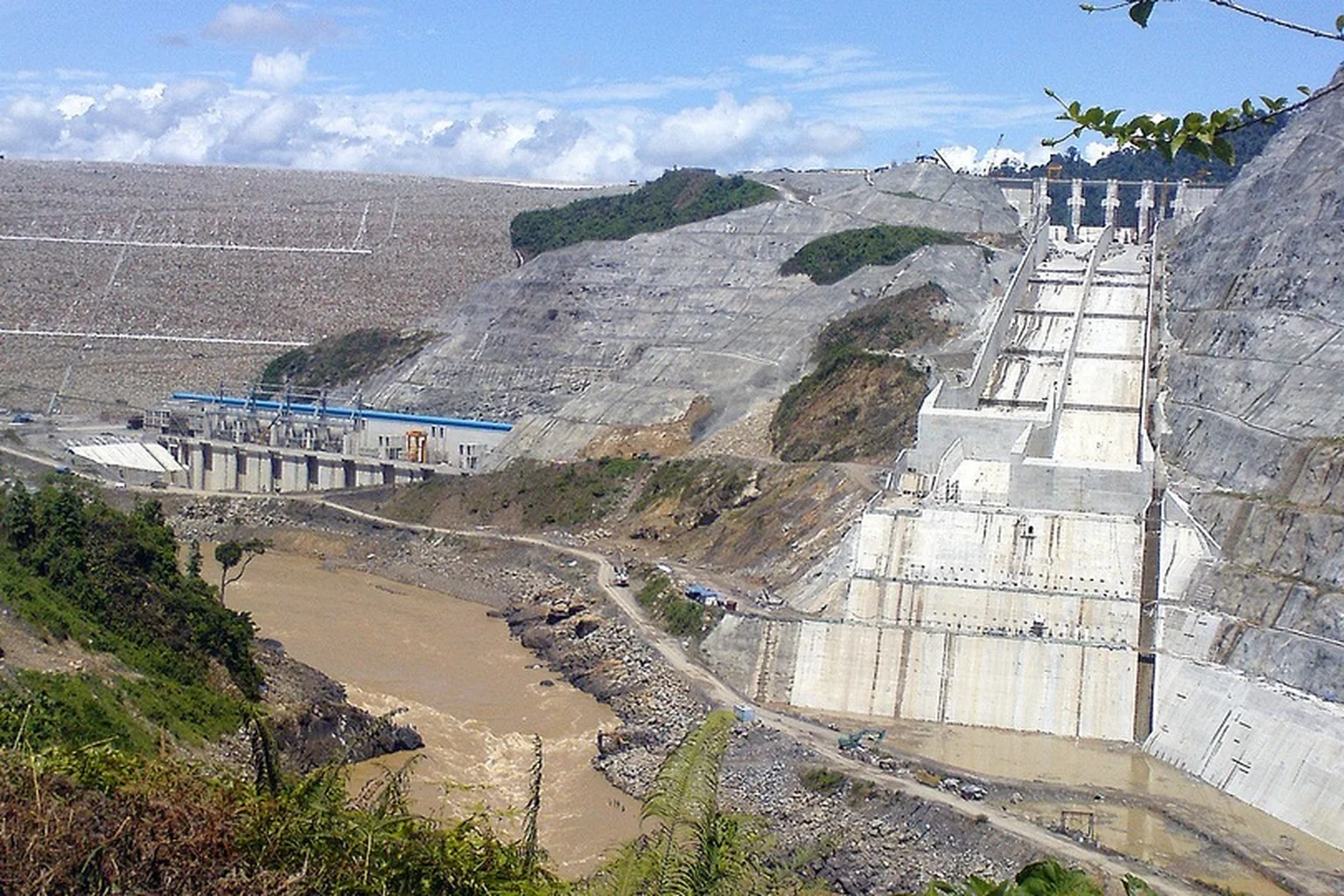
Sarawak also hosts mining that its operators say is legal. Bloomberg reported on Bityou’s site at Tanjung Manis, a 17-acre slab that once belonged to a logging company and the largest of its four operations in the area. Its owner says the operations are above board.14 In 2024 a state assemblywoman told the assembly there had been no official statement or policy governing such activities.38 Sarawak has large hydro dams.39 Even so, Southeast Asia lacks the “gluts of power” that US miners exploit, the head of Marathon Digital told Bloomberg.14
Malaysia’s place in world mining is uncertain. It had 2.5% of global hashrate in January 2022, and Cambridge has published no newer country figure.5 Cambridge’s 2025 survey warns that it may overstate US activity and under-represent parts of Asia-Pacific, so Malaysia’s current share is unknown.4 The industry’s hardware has local roots too. “The vast majority of miners now are produced in Malaysia,” Ben Gagnon, chief mining officer of Bitfarms, told Bloomberg in 2024.14 Even shopping malls were tried. In September 2021 a subsidiary of Hatten Land, a Melaka-based developer that runs six malls in the state, signed a deal for at least 1,000 mining machines at its Melaka sites.40 Bloomberg reports that ElementX Mall, overlooking the Strait of Malacca, took miners as tenants from early 2022. The rigs were gone by early 2025, after a TikTok video went viral.5
Why AI pays more for a miner’s grid link
While Malaysia chased stolen power, US miners found that their legal power was worth more to someone else. Their sites and contracts “can often be adapted for AI workloads far faster than building new facilities”, Cambridge noted.4 Using end-2024 hashprice, it set the revenue of each use side by side. Renting out AI computing earns US$1,600 to US$4,000 per MWh. Colocation, hosting other firms’ servers, earns US$120 to US$400. Bitcoin mining earns US$80 to US$151.4
The catch is capital. J.P. Morgan estimates, cited by Cambridge, put the capital cost of AI hosting and AI computing at US$9 million to US$40 million per MW, against about US$1.2 million for mining.4 CoinShares estimates conversion at US$8 million to US$15 million per MW.11 Even so, it reckons AI earns annual profits of about US$1.5 million per MW against US$0.5 million for mining.11 Grid access is the scarce part. Citing Lawrence Berkeley National Laboratory, CoinShares puts the US queue for grid connections at roughly 2,600 GW, with a median wait of more than five years.11
Mining revenue uses the hashprice of 31 December 2024. Capital costs run the other way: US$9 million to US$40 million per MW for AI hosting and computing, about US$1.2 million for mining. “Ten times” compares AI’s low estimate with mining’s high one, our arithmetic.
Source: Cambridge Centre for Alternative Finance, Cambridge Digital Mining Industry Report (April 2025), citing J.P. Morgan Research.
Show the numbers
| Item | Low estimate | High estimate |
|---|---|---|
| AI compute as a service | US$1,600 | US$4,000 |
| Colocation (hosting servers) | US$120 | US$400 |
| Bitcoin mining | US$80 | US$151 |
Grids lose something when miners convert. A mine can switch off when power is scarce, and miners in Cambridge’s survey reported curtailing 888 GWh of load in 2023.4 In Texas this summer, one of Luxor’s energy clients switched off at all four of the grid operator’s summer peak intervals, spending 120 hours offline.6 A stolen-power mine in a rented house offers none of this. It draws load the grid did not plan for, and pays nothing.
The miners that became landlords
Core Scientific shows the full arc. In early 2023 it was in Chapter 11 bankruptcy protection, while still mining 1,527 bitcoin in January.41 By February 2025 its contracts with CoreWeave, an AI cloud company, totalled about US$10.2 billion of projected revenue over 12-year terms, for about 590 MW across six sites.42 In July 2025 CoreWeave agreed to buy the company for about US$9 billion in stock.43
Shareholders said no on 30 October 2025. The offer, 0.1235 CoreWeave shares per Core Scientific share, “lacked a downside collar”. Investors including Two Seas Capital and Gullane Capital opposed it, as did the proxy advisers ISS and Glass Lewis.44 In July 2026 it signed AMD: 15-year leases for 529 MW that could bring more than US$14 billion of base revenue, about RM57.2 billion.45 By the third quarter, colocation was US$215.4 million of its US$232.9 million revenue, with 485 MW billing.46 It is converting its remaining mining sites.46
Shares are our arithmetic from the company’s revenue table. Q3 2025 does not sum to exactly 100 because of rounding.
Source: Core Scientific, third-quarter 2026 results (5 November 2026).
Show the numbers
| Item | Colocation (AI hosting) | Self-mining | Hosted mining |
|---|---|---|---|
| Q3 2025 (US$81.1m) | 18.4% | 70.8% | 10.7% |
| Q2 2026 (US$164.2m) | 83.2% | 13.1% | 3.7% |
| Q3 2026 (US$232.9m) | 92.5% | 5.3% | 2.2% |
Others followed. On 3 November 2025 IREN signed a five-year GPU cloud contract with Microsoft worth about US$9.7 billion, about RM39.7 billion, with a 20% prepayment. It covers 200 MW of IT load on a 750 MW campus at Childress, Texas, and IREN agreed to buy about US$5.8 billion of GPUs from Dell.47 Cipher Mining announced a 15-year, US$5.5 billion lease with Amazon Web Services for 300 MW, TheEnergyMag reported on 3 November.48 In December Hut 8 signed a 15-year, 245 MW lease at its River Bend campus worth US$7.0 billion, with Google providing a financial backstop.49 By July 2026 its contracts totalled 949 MW and US$26.6 billion of base-term value. “100% of Hut 8’s contracted AI data center capacity is leased to or backstopped by investment-grade counterparties,” it said.50
The largest single lease we found came on 6 July 2026. TeraWulf signed a 20-year lease with Anthropic for a campus of about 401 MW in Hawesville, Kentucky, which it says could bring in roughly US$19 billion, about RM77.7 billion. The first phase is due in the second half of 2027.51 Miner shares jumped that day: TeraWulf nearly 14%, IREN more than 13%, Hut 8 12%.51 Riot Platforms has a 191 MW, 20-year AI lease worth about US$9.1 billion, CoinShares reports.11
Headline values are not yet cash. More than 4 GW of IT capacity is contracted across the companies CoinShares covers, “but only around 550MW is billing”. More than US$100 billion of disclosed backlog supports about US$1.1 billion of annual AI revenue, it says.11 Keel Infrastructure, formerly Bitfarms, stopped mining on 29 June 2026 and had no signed tenant, CoinShares noted.11
Our arithmetic from CoinShares’ figures. The same report elsewhere puts annualised colocation revenue at less than US$800 million.
Source: CoinShares, Bitcoin mining report Q2 2026 (15 September 2026).
Show the numbers
| Share | What |
|---|---|
| Under 14% | of more than 4 GW of contracted IT capacity was billing (about 550 MW) |
| About 1% | the share of a disclosed backlog of over US$100 billion that one year’s AI revenue, about US$1.1 billion, represents |
Could Malaysia’s miners pivot to AI
Malaysia has the demand. TNB has signed electricity supply agreements for 59 data-centre projects with a combined 8.3 GW, RHB Research reported in July 2026. Of those, 36 were complete, with a maximum capacity of 4.5 GW, and 68% of the secured capacity is in Johor. TNB’s management maintains a target of adding 1 GW of data-centre capacity a year, RHB said.52 Those loads draw on the same grid the thieves tap.
The one miner pivot we found here is by a listed company. Bitdeer, a bitcoin miner, signed a five-year deal in August 2026 covering about half of A102, a 9.5 MW site in Malaysia.5354 It expects about US$400 million in revenue, about RM1.64 billion, from the first quarter of 2027.53 A102 then sold out before it was energised, and its offtake contracts total over US$800 million.54 W.Media reported in September that Bitdeer had signed a 10-year data-centre services agreement for A202, a 65.1 MW Johor Bahru facility due for energisation in the third quarter of 2027. With A201 next door, the campus will have 86.8 MW.54 “That is how we added 65.1 MW without originating a new site,” said Retainna Lin, Bitdeer’s vice-president for AI cloud.54 It still expects to sign customers for A202 before energisation, and to fund its GPUs mainly from their prepayments.54
The illegal miners are in a different position, in our assessment. They work from rented houses and shop lots on low-voltage connections, sometimes in borrowed names. They hold no grid connection, land or permits of their own, which is what AI tenants pay for. Their machines do one calculation and cannot run AI models. Sarawak’s openly run sites are the only plausible local candidates, and none had announced an AI plan in the sources we found.
Things you probably didn’t know
- A miner earned more by switching off. In August 2023 Riot received US$31.7 million in power and demand-response credits, worth about 1,136 bitcoin. It mined 333.55
- Some miners fake birdsong. Residents have reported strange bird noises that turned out to be recordings masking the machines.5
- Your name can be used. In 85 cases, people’s identities were misused to open electricity accounts for mining, Fadillah told Parliament.17
- Russia’s registry is nearly empty. The authors of its mining bill estimate that about 50,000 people and firms may mine, but only 1,489 are registered.33
- Some Kuwaiti homes used up to 20 times normal power. About 100 homes in Al-Wafrah were used for mining, the electricity ministry had said.34
- A contract clause sank a mining venture. Tether read its Uruguayan power contract as a minimum, a former contractor told Reuters; the state utility UTE saw a maximum. One person estimated the project cost about US$120 million.56
- A miner that quit mining led the rally. Keel’s shares rose 194.4% in the quarter it shut down its mining, the best of 12 listed miners CoinShares covers.11
What worked and what didn’t
The cases that worked share one feature: a legal, large power connection, or a crackdown narrow enough to measure.
Worked
IREN and Microsoft
IREN had a 750 MW campus in Texas and says it holds 3 GW of secured power. In November 2025 it signed a five-year, US$9.7 billion contract with Microsoft for 200 MW, with 20% paid up front.47 In mid-2026 its AI cloud revenue overtook mining revenue for the first time, CoinShares says.11
Why it worked: land, a grid connection and a prepayment were in place before the GPUs arrived.
Worked
Core Scientific’s second life
The company was in Chapter 11 in early 2023.41 It turned its power into 12-year CoreWeave contracts, its shareholders rejected a takeover, and it then signed AMD for over US$14 billion.4245 Colocation made up 92% of its third-quarter 2026 revenue, by our arithmetic.46
Why it worked: shareholders judged the contracted power worth more than the bid.
Worked
Hut 8’s backed leases
Hut 8 has 949 MW of AI capacity contracted, with US$26.6 billion of base-term value. All of it is leased to or backstopped by investment-grade parties, including a Google backstop at River Bend.4950 It raised US$7.5 billion of project debt in the second quarter of 2026, before revenue from the leases had begun, CoinShares notes.11
Why it worked: lenders and tenants pay for credit quality, and Hut 8 secured it first.
Worked
Riot is paid to stop
During a Texas heat wave in August 2023, Riot cut its power use by more than 95% at peak demand. Its credits of US$31.7 million exceeded all of 2022’s.55 “August was a landmark month for Riot in showcasing the benefits of our unique power strategy,” said chief executive Jason Les.55
Why it worked: long-term power contracts and a grid that pays flexible loads. Stolen-power mines offer the grid nothing of the kind.
Worked
Kuwait’s targeted sweep
In April 2025 Kuwait raided homes used for mining in Al-Wafrah. Its interior ministry called mining “an unlawful exploitation of electrical power”. Consumption in the district fell 55% afterwards, the electricity ministry said.34
Why it worked: mining was concentrated in one area with an obvious load signature. The figure is the ministry’s own.
Didn’t work
Raids on their own
Malaysia crushed rigs in 2021 and has raided thousands of premises since, yet Melaka’s losses nearly tripled in 2025.21 An Alor Setar site raided nine times was running again.1 Most cases in Perak’s two worst districts are repeats.22 TNB’s 14,489 premises led to 77 investigation papers.17
Lesson: machines are portable and premises rented, so seizures alone do not stop the business.
Didn’t work
CoreWeave’s bid for Core Scientific
The all-stock offer had no downside collar, so its value moved with CoreWeave’s shares. Major holders and both big proxy advisers opposed it, and it failed the vote on 30 October 2025.44
Lesson: owners of scarce power will not sell it for volatile paper.
Didn’t work
Tether in Uruguay
Tether announced two mining sites in 2023. A dispute over whether its contracted power was a floor or a ceiling grew after a new government took office. Its local unit stopped paying bills, and UTE cut the power on 25 July 2025. On 25 November 2025 Tether told labour authorities it would cease operations, a local newspaper reported.56
Lesson: a miner tied to one state utility’s contract has no fallback.
Didn’t work
Malls as mines
Hatten Land planned at least 1,000 rigs in its Melaka properties in 2021.40 At ElementX Mall, miners arrived in early 2022 and were gone by early 2025, after a viral TikTok video, Bloomberg reports.5
Lesson: empty floor space is not a business case. Why the rigs left is not documented.
What to do about it
None of this is legal or investment advice.
For landlords
- Put the account in the tenant’s nameThe deputy minister advises owners to transfer TNB accounts to tenants, because the owner can be pursued if the tenant cannot be found.1819 “Make sure tenants apply for electricity supply. Don’t let your name be used so you don’t become a victim of irresponsible electricity use,” Fadillah said.17
- Check your tenantThe deputy minister has asked owners to look into who rents their homes. Sarawak Energy warns that owners may also be held accountable.1931
- Know your rights as a victimPeople whose identity was misused are not prosecuted or billed unless they are proven responsible.17
For neighbours
Warning signs include a constant hum or recorded bird sounds, heat, heavy security on an empty house or shop, and flickering or lost supply.52126 In the Peninsula, report suspected theft through TNB’s official channels.29 In Sarawak, Sarawak Energy’s Customer Care Centre takes reports on 1300-88-3111.31
For anyone tempted to mine
At October’s prices, legally bought power loses money on all but the newest machines, as the chart above shows. Stolen power risks fines up to RM50,000 for a household and RM1 million for a business, plus jail, and the wiring can start a fire.1519
For investors
Questions to ask an AI pivot
- How many megawatts are billing, against how many are contracted?
- Who is the tenant, and is there an investment-grade backstop?
- What will conversion cost per MW, and who pays for the GPUs?
- Is the deal a lease, or a cloud contract in which the miner owns the chips?
For policymakers
Four options appear in our sources. The committee has debated an outright ban, and FOMCA has proposed licences and special tariffs.532 Russia’s bill pairs a registry with criminal penalties, and TNB has begun tighter identity checks.2833 Local councils also hold powers over premises, licensing and building safety, and can help close or seize premises, Perak’s executive councillor said.22 Publishing a single loss series with its method would let the public judge which policy works.
What to watch to 2030
- The committee reports to Cabinet. No date has been set. Watch for a ban, licences or changes to Section 37(3).16
- December 2026: IREN leaves mining. Its transition to AI is due to be substantially complete by 31 December; Cipher is likely to have exited by the end of 2027, CoinShares says.11
- Early 2027: Bitdeer’s first Malaysian AI revenue. A102 revenue is due from the first quarter, and A202 is due to be energised in the third quarter.5354
- Hashprice through April 2027. Luxor’s forward market prices an average of US$32.86 per PH/s per day for November 2026 to April 2027.3
- Late 2027 to early 2028: TeraWulf’s Kentucky campus. The first phase is due in the second half of 2027 and full capacity by early 2028.51
- 2028: the next halving. By our arithmetic the subsidy falls to 1.5625 bitcoin around 2028. Cipher’s 1 GW Colchis site in West Texas is also targeted for energisation in 2028.48
- 28 December 2028: AMD’s option ends. Under certain conditions, AMD may reserve another 1,925 MW at Core Scientific until then.45
- Russia’s mining bill. It still needs further readings to become law.33
Loss figures come from different agencies and periods, and none has published its method. Company figures are the companies’ own claims, and our calculations are labelled. Tariff comparisons exclude surcharges and taxes. Nothing here is legal or investment advice. Conversions use Bank Negara Malaysia’s middle rate of 17 November 2026: RM4.089 per US dollar.
Sources
- Berita Harian, “Sindiket bitcoin curi elektrik punca negara rugi RM4.8b” (TNB press clipping), 18 July 2025: tnb.com.my
- Harian Metro, “Pelombong bitcoin haram makin rancak” (TNB press clipping), 18 July 2025: tnb.com.my
- Luxor Hashrate Index, Hashrate Lookback, October 2026, 5 November 2026: hashrateindex.com
- Cambridge Centre for Alternative Finance, Cambridge Digital Mining Industry Report, April 2025: jbs.cam.ac.uk
- The Star (Bloomberg), bitcoin miners hunted after stealing US$1bil of electricity, 4 December 2025: thestar.com.my
- Luxor Hashrate Index, Hashrate Lookback, September 2026, 9 October 2026: hashrateindex.com
- Bank Negara Malaysia, exchange rates, 17 November 2026: bnm.gov.my
- Luxor Hashrate Index, Hashrate Lookback, June 2026, 10 July 2026: hashrateindex.com
- Luxor Hashrate Index, Hashrate Lookback, March 2026, 10 April 2026: hashrateindex.com
- Luxor Hashrate Index, bitcoin difficulty down year over year for the second time, 28 July 2026: hashrateindex.com
- CoinShares, Bitcoin mining report Q2 2026, 15 September 2026: coinshares.com
- Tenaga Nasional Berhad, myTNB tariff page and bill calculator rates, accessed 17 November 2026: mytnb.com.my
- Avera Energy, TNB commercial tariff explained, 30 July 2026: averaenergy.com.my
- Free Malaysia Today (Bloomberg), bitcoin miners pivot to Southeast Asia, 14 June 2024: freemalaysiatoday.com
- Malay Mail, bitcoin policy review or potential ban, 19 November 2025: malaymail.com
- The Edge CEO Morning Brief, PETRA committee on electricity fraud (TNB press clipping), 20 November 2025: tnb.com.my
- The Star, “RM5bil lost to power theft” (TNB press clipping), 28 November 2025: tnb.com.my
- Malay Mail (Bernama), bitcoin power theft costs RM700m a year, 5 May 2026: malaymail.com
- Sinar Harian, Kuantan raid on bitcoin mining houses (TNB press clipping), 6 May 2026: tnb.com.my
- The Star, “Shocking losses to electricity theft, bitcoin mining blamed”, 25 October 2024: thestar.com.my
- The Star (Bernama), TNB loses nearly RM30mil in Melaka, 5 February 2026: thestar.com.my
- Kosmo, Perak state assembly on bitcoin power theft (TNB press clipping), 22 April 2026: tnb.com.my
- Berita Harian, “Didenda RM80,000 curi elektrik untuk lombong bitcoin” (TNB press clipping), 6 January 2026: tnb.com.my
- Sinar Harian, analysis on illegal bitcoin mining (TNB press clipping), 13 May 2026: tnb.com.my
- Borneo Post, Kuching mining den catches fire, 18 August 2022: theborneopost.com
- Malay Mail (Borneo Post), mining source of outages in Desa Bahagia Senadin, 27 September 2023: malaymail.com
- Kosmo, smart meters detect 5,133 theft cases (TNB press clipping), 25 February 2026: tnb.com.my
- Kosmo, 14,489 premises and biometric checks (TNB press clipping), 28 November 2025: tnb.com.my
- The Star, “Billions lost to Bitcoin farms” (TNB press clipping), 20 November 2025: tnb.com.my
- The Vibes, 75,578 illegal mining machines seized, 8 July 2026: thevibes.com
- Sarawak Energy, electricity theft linked to crypto mining in Miri, 22 January 2025: sarawakenergy.com
- Berita Harian, FOMCA on bitcoin power theft (TNB press clipping), 19 July 2025: tnb.com.my
- Meduza, State Duma passes bill on illegal mining at first reading, 27 May 2026: meduza.io
- The Star (Reuters), Kuwait cracks down on crypto mining, 1 May 2025: thestar.com.my
- Free Malaysia Today, RM5.3mil of mining rigs steamrolled, 19 July 2021: freemalaysiatoday.com
- Malay Mail (AFP), Miri police steamroll bitcoin machines, 23 July 2021: malaymail.com
- Borneo Post, illegal mining at four Miri homes, 12 February 2026: theborneopost.com
- Borneo Post, call for regulation of Sarawak’s crypto mining, 13 November 2024: theborneopost.com
- Sarawak Energy, homepage, accessed 17 November 2026: sarawakenergy.com
- New Straits Times, Hatten Land turns to crypto mining in Melaka, 29 September 2021: nst.com.my
- Core Scientific, January 2023 production and operational update, 6 February 2023: investors.corescientific.com
- Core Scientific, new 70 MW CoreWeave contract, 26 February 2025: investors.corescientific.com
- Decrypt, Core Scientific shareholders reject CoreWeave merger, 30 October 2025: decrypt.co
- The Block, Core Scientific vote sinks US$9 billion CoreWeave deal, 30 October 2025: theblock.co
- CoinDesk, Core Scientific lands AMD AI deal, 28 July 2026: coindesk.com
- Core Scientific, third-quarter 2026 results, 5 November 2026: investors.corescientific.com
- IREN, US$9.7 billion agreement with Microsoft, 3 November 2025: iren.com
- TheEnergyMag, Cipher signs US$5.5 billion AWS lease, 3 November 2025: theenergymag.com
- Hut 8, 245 MW lease at River Bend, 17 December 2025: hut8.com
- Hut 8, second 352 MW lease at Beacon Point, 20 July 2026: hut8.com
- Decrypt, TeraWulf signs US$19 billion lease with Anthropic, 6 July 2026: decrypt.co
- The Star, data-centre demand to energise TNB growth, 13 July 2026: thestar.com.my
- Cointelegraph, Bitdeer signs US$400 million AI deal for Malaysia facility, 20 August 2026: cointelegraph.com
- W.Media, Bitdeer AI signs 10-year agreement for 65.1 MW in Malaysia, 16 September 2026: w.media
- Riot Platforms, August 2023 production and operations update, 6 September 2023: riotplatforms.com
- The Star (Reuters), how Tether’s bitcoin mining plans in Uruguay unravelled, 21 August 2026: thestar.com.my
Related research
 Paper megawatts: Malaysia has promised data centres 8.3 GW. They draw about one.TNB has signed supply agreements for 8.3 GW of data centres.
 The grid ran out before the money didOn 14 July 2026 America’s largest grid bought all the standby power it could at its price cap and still fell 6,831 MW short.
 In October, the 801st unit costs RM51The July 2025 tariff sets the efficiency rebate by total use and applies it to every unit.
