
Medicine
Her implant decoded “I have a lot to say”
In June 2026 a woman with motor neuron disease received Paradromics’ implant, and her first freely chosen decoded sentence was “Okay, I have a lot to say.” Published speech implants went from 15.2 words a minute in 2021 to 78 in 2023, and China approved the first BCI for use outside trials on 13 March 2026. Malaysia has 123 registered neurologists, no implant trial we could find and no law that names neural data.
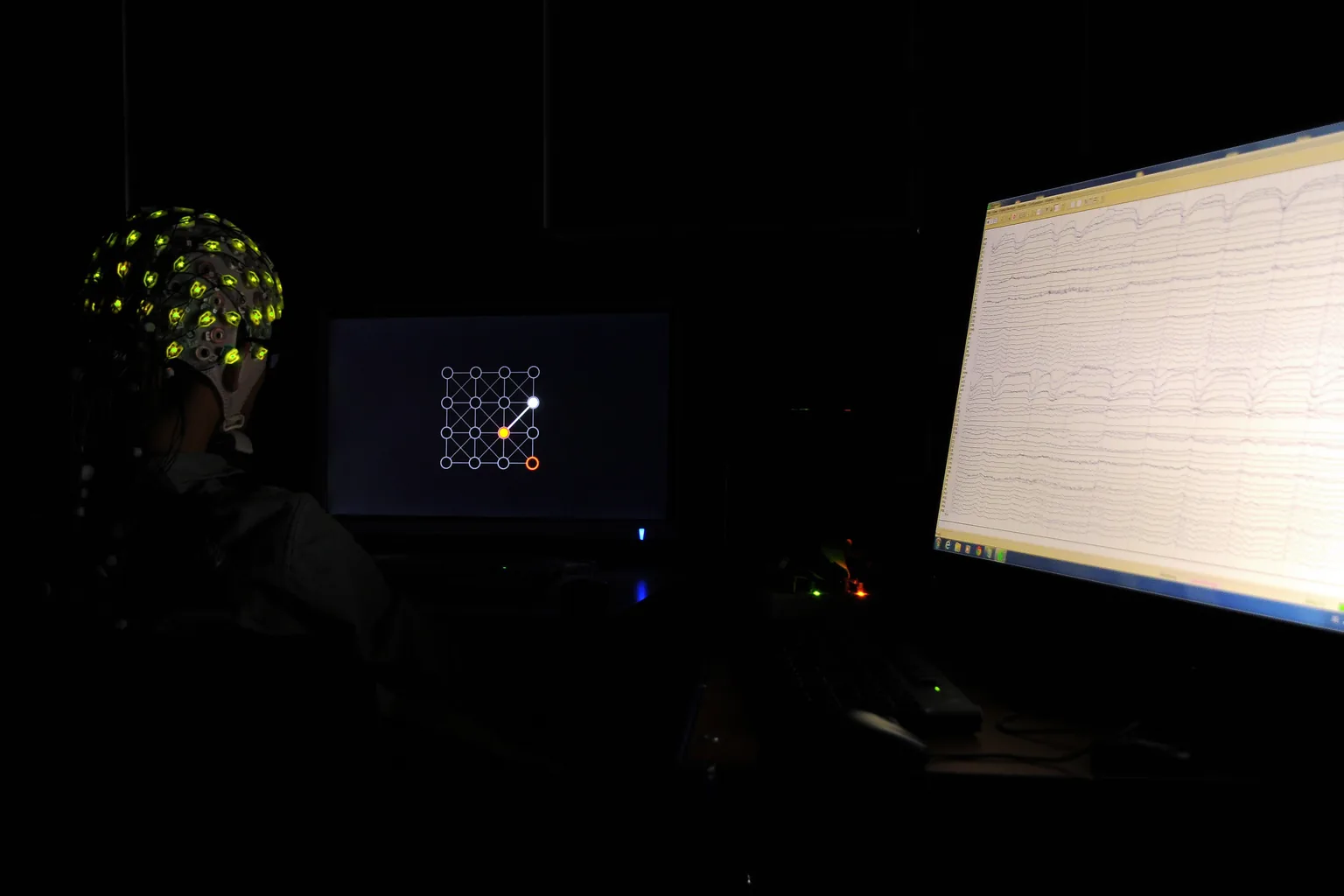
In June 2026 the neurosurgeon Matthew Willsey and his team at the University of Michigan cut a small window in a woman’s skull. Through it they placed a disc about the size of a dime on her brain. The device, Paradromics’ Connexus, carries 421 platinum-iridium micro-wires that record single nerve cells in the part of the motor cortex that controls the muscles of speech. She has a progressive motor neuron disease that has severely limited her speech. Weeks later, testing moved to her home. Her first freely chosen sentence, decoded into text and synthetic speech, was “Okay, I have a lot to say.”1
Paradromics says the system decoded that sentence word for word with no errors, and that she has since used it in a live phone call with her grandchildren. Those are company accounts of one participant in an early study, and the company will follow her for six years.1 On 26 October Paradromics said the US Food and Drug Administration (FDA) had let the study recruit nationwide. It dropped a rule that participants live within a four-hour drive of a site.2
A brain-computer interface (BCI) captures brain signals linked to an intended movement and turns them into commands.3 In 2026 China approved the first one for use outside trials, Neuralink counted 21 participants, and Synchron paused a trial. This article explains how BCIs work, what AI adds, who pays and who owns the data, then turns to Malaysia. Voice banking and everyday assistive technology are covered in our article on AI for disabled Malaysians, and hospital AI in medical AI in Malaysia.
The short version
- Published speech implants decoded attempted speech at 15.2 words a minute in 2021 and 78 in 2023. Natural conversation runs at about 160. One UC Davis user kept 97.5% accuracy over 8.4 months.
- Neuralink says 21 people were in its trials by January 2026 and reports a cursor record of 11.32 bits per second. Most of its figures are not peer-reviewed.
- China approved Neuracle’s NEO on 13 March 2026, the first BCI available outside trials, Nature says. The first implant billed under China’s price list cost 6,552 yuan, about RM4,020.
- Neuralink, Synchron and Merge Labs have raised about US$1.9 billion, by our arithmetic. That exceeds the US$1.5 billion of BCI revenue Morgan Stanley forecast through 2035.
- In Malaysia we found no implant BCI trial. There are 123 registered neurologists, 31 in Health Ministry hospitals, and the PDPA has no term for neural data.
How a brain-computer interface works
The motor cortex, a strip of brain across the top of the head, controls voluntary movement. A person who is paralysed may be unable to make a fist, but the neurons there “still fire in a unique pattern” when they try, WIRED explains.4 A BCI records that pattern and turns it into a click, a cursor movement or a word.
Speech devices follow the same logic. They “do not read a person’s inner thoughts”, WIRED notes. They decode signals from the motor cortex “that are generated when a person tries to move their muscles to speak”.3 The user has to attempt the words.
Where the electrodes sit
Designs differ in how close they get to nerve cells. Closer means a cleaner signal and a bigger operation. Devices that stay further away accept “a lower signal quality and data transfer rate”, WIRED notes. “Individual neurons are the information carriers in the brain. So the more individual neurons you can record from, the more data you have,” says Matt Angle, Paradromics’ chief executive.3
Neuralink’s chip sits in the skull, with more than 1,000 electrodes on 64 threads that a robot inserts into the brain. Paradromics’ 421 micro-wires rest in brain tissue.3 Precision Neuroscience lays 1,024 electrodes in a film “thinner than a human hair” on the brain’s surface.5 Synchron goes through a blood vessel: a mesh tube enters the jugular vein in the neck and is guided up to sit over the motor cortex.6 China’s approved NEO rests just eight electrodes over the brain, above its tough outer membrane.78 Caps with scalp electrodes record EEG (electroencephalography) without any surgery, at lower resolution.
What the AI does
The software that turns spikes into intent is called a decoder, a machine-learning model. Neuralink writes that “Decoders are unique to each user, and all users have to perform calibration prior to using the device.” Brain signals also drift. “Neural data is highly nonstationary, and even the best decoders degrade over time,” the company says, and its users spend an average of 55 minutes a week recalibrating.9
Newer decoders borrow from chatbots. Neuralink says its participants have streamed more than 50,000 hours of unlabelled brain data, and it now pretrains models on that data. Its design treats spikes “like tokens”, the units a language model reads.9 Synchron is working with Nvidia on “foundation models for the brain”.10
- 1UserThe user tries to speakThe muscles may barely move, but the speech area of the motor cortex still fires.
- 2ImplantElectrodes recordHundreds of electrodes in or on the cortex pick up the firing of nerve cells.
- 3AI decoderA decoder guessesA model trained for this one person turns the activity into speech sounds and words, from a vocabulary of up to 125,000 words. One 2025 system worked in 80-millisecond steps.
- 4Screen or speakerText and voice come outWords appear on screen or play in a synthetic voice, which can be built from recordings made before the illness.
- 5User and teamApprovalThe user checks and recalibratesSignals drift, so decoders are retrained. Neuralink’s cursor users spend 55 minutes a week on calibration.
Speech decoders read attempted movements of the speech muscles, not private thoughts.
Source: WIRED (20 November 2025); Nature (23 August 2023); Nature Neuroscience (31 March 2025); NEJM (August 2024); Neuralink (1 October 2026).
Show the numbers
| Step | Who | What | Detail |
|---|---|---|---|
| 1 | User | The user tries to speak | The muscles may barely move, but the speech area of the motor cortex still fires. |
| 2 | Implant | Electrodes record | Hundreds of electrodes in or on the cortex pick up the firing of nerve cells. |
| 3 | AI decoder | A decoder guesses | A model trained for this one person turns the activity into speech sounds and words, from a vocabulary of up to 125,000 words. One 2025 system worked in 80-millisecond steps. |
| 4 | Screen or speaker | Text and voice come out | Words appear on screen or play in a synthetic voice, which can be built from recordings made before the illness. |
| 5 | User and team | The user checks and recalibrates (approval) | Signals drift, so decoders are retrained. Neuralink’s cursor users spend 55 minutes a week on calibration. |
Cursors first, then speech
Academic teams did the groundwork. In 2006 the first BrainGate participant, three years after a spinal cord injury, moved a cursor with a 96-electrode array, opened simulated e-mail and operated a television.11 In 2012 two people with tetraplegia reached and grasped with a robot arm, and one drank coffee from a bottle.12 In 2021 a Stanford participant imagined writing letters by hand and typed 90 characters a minute at 94.1% raw accuracy. Smartphone users of the same age average 115.13 In 2023 a Lausanne team linked brain and spinal cord with a “digital bridge” that let a man with chronic tetraplegia stand and walk. He later walked with crutches even when it was switched off.14
Speech came next. In July 2021 a UCSF team decoded sentences at a median 15.2 words a minute from a 50-word vocabulary, with a quarter of words wrong.15 On 23 August 2023 Nature published two leaps. A Stanford team reached 62 words a minute and was first to decode from a 125,000-word vocabulary, with a 23.8% word error rate.16 UCSF reached 78 words a minute, with a synthetic voice and a talking avatar, for a participant with severe limb and vocal paralysis.17 Natural conversation runs at about 160.16
Accuracy then caught up. At UC Davis in 2024, a 45-year-old man with ALS reached 99.6% accuracy on 50 words on his first day of use. On the second, he reached 90.2% on 125,000 words. Over 8.4 months it held 97.5%, and he talked at about 32 words a minute for more than 248 hours.18 His story is told in our disability article. In 2025 a UCSF and Berkeley team streamed speech in the participant’s pre-injury voice in 80-millisecond steps. A UC Davis participant could change his intonation and “sing short melodies”.1920
Private thoughts stay mostly private
Inner speech is harder. In August 2025 a Stanford-led team showed that imagined sentences also appear in the motor cortex. It decoded them from a large vocabulary with word error rates of 26% to 54%. But “it was not possible to accurately decode complete, intelligible sentences during free-form thinking.”21 Brain scanners can do more, in a lab. A 2025 study turned fMRI scans into sentences describing what a person had seen or recalled.22 A 2023 fMRI decoder found that “subject cooperation is required both to train and to apply the decoder.”23
Neuralink grows fast, mostly in its own words
Neuralink, Elon Musk’s company, had raised US$1.3 billion by January 2026.10 The FDA rejected its first application for human trials in 2022, Fox News reported, and trials began in 2024 after it addressed safety concerns.24 The company says its first participant, Noland Arbaugh, set a then-record of 4.6 bits per second (BPS) in his first session and later reached 8.0. In one week he used the device for 69 hours.25
BPS scores cursor control by combining speed and accuracy. Neuralink calls it “the closest thing we have to an objective metric for decoder quality”.9 Able-bodied people using a mouse average about 8 to 10, it says.26 On 1 October 2026 the company said its pretrained decoders lifted six participants to personal records, and one to 11.32 BPS, “a new BCI record”.9
The first implant showed the risks. “In the weeks following the surgery, a number of threads retracted from the brain,” the company wrote, cutting the working electrodes and his BPS. Changes to the recording software restored control.25 Neuralink says it has since seen higher signal quality in 18 of the next 20 participants, and keeps a record of “zero serious device-related adverse events”.26 Both are company statements, not peer-reviewed results.
Growth has been quick. Neuralink’s own timeline shows three surgeries in 2024, four in the first half of 2025 and 13 in the second half. By 28 January 2026 it counted 21 participants.26 Neuralink says Arbaugh has gone back to college to study neuroscience. It says Sebastian, a 23-year-old medical student with a spinal cord injury, uses his implant “for up to 17 hours a day”.26
Company figures from Neuralink’s own timeline. It counted 21 participants enrolled by 28 January 2026.
Source: Neuralink, “Two Years of Telepathy” (28 January 2026).
Show the numbers
| Half-year | Surgeries |
|---|---|
| H1 2024 | 1 |
| H2 2024 | 2 |
| H1 2025 | 4 |
| H2 2025 | 13 |
Claims keep climbing. Neuralink says typing by imagining ten-finger movements has reached up to 40 words a minute, and its VOICE speech trial aims for 140.26 On 28 October 2026 it posted on X: “One participant achieved 75 WPM at 5.8% WER on a 125k-word vocabulary in their first week.”27 WER is the word error rate. The claim has not been peer-reviewed.
The next day it described a 72-hour “hackathon” at the home of a VOICE participant. Engineers fed his decoded speech straight into iPhone calls. “Our participant and his wife started their relationship over phone calls,” the team wrote.28
Promises run ahead of evidence. On 31 December 2025 Elon Musk posted that Neuralink would “start high-volume production” and move to “a streamlined, almost entirely automated surgical procedure in 2026”. Threads would pass through the dura, the brain’s tough outer membrane.24 By 17 November 2026 the only public sign we found was a 30 June post, “Our First Transdural Procedure”. In it the company says it inserted threads “straight through the dura and into the cortex”.29 WIRED reports secondary-market trades valuing Neuralink at up to US$42 billion, about RM172 billion.6
Synchron, Paradromics and Precision
Through a vein
Synchron avoids opening the skull. In its first safety study, in Melbourne, four patients completed 12 months “with no serious adverse events and no vessel occlusion or device migration”.30 Ten volunteers in the US and Australia received the first-generation Stentrode.6
Rodney Gorham, a 65-year-old former IBM software salesman with ALS, has had his since December 2020, longer than any other Synchron user. At home in Melbourne he uses it to play music, switch on a fan, adjust the lights, run a pet feeder and drive a robot vacuum.4 A Synchron engineer says he helped develop Apple’s Switch Control for BCIs, announced in May 2025, which lets users run iPhones and iPads without moving.431
Home use taught hard lessons. “If you have a wearable component where there’s a delicate communication layer, we learned that that’s a problem,” said Tom Oxley, Synchron’s founding chief executive.4 Gorham tires easily now, and some participants have died as their ALS progressed. WIRED asked whether insurers will cover “an expensive device that requires surgery and has a potentially limited lifespan”.4
From my point of view, I think the companies have to take into consideration the human component more, because every human is different.
Then came a setback. On 12 November 2026 WIRED reported that Synchron had paused trials of its second-generation device, which has fewer electrodes and is fully wireless. Synchron blamed “a performance issue involving the lead, the cable that carries signals from the Stentrode to the implanted electronics”. It said no device safety issue had been found and that “The pause was a company decision, not an FDA-directed action.”6 It is cutting jobs in New York and hiring in San Diego. “We still have strong confidence that it has the potential to be a first-line therapy,” Oxley said.6
Speech first, in the cortex
Paradromics won FDA approval for an early feasibility study in November 2025.2 Its first participant is the woman in our opening. Angle told WIRED it was “reasonable to think that someone will be communicating at 60 words per minute”.3
On the surface
Precision Neuroscience went another way. In April 2025 the FDA gave 510(k) clearance to its Layer 7 Cortical Interface for implantation of up to 30 days. The array had already been placed temporarily in 37 people.5
| Product | Where electrodes sit | Peer-reviewed human results | Regulatory status | Decodes speech | Verdict |
|---|---|---|---|---|---|
| Academic speech teamsStanford, UCSF, UC Davis | In or on the cortex | YesNature, NEJM | Partlyresearch trials | Yesup to 78 wpm | ✓Best evidence |
| Neuracle NEOChina, 8 electrodes | Above the brain’s membrane | No2024 preprint only | YesNMPA, March 2026 | Nohand grip | !Approved, thin data |
| SynchronStentrode | In a vein | Yessafety study, 2023 | Partly2nd-gen trial paused | No | !Paused |
| NeuralinkN1, 1,000+ electrodes | In the cortex | Nocompany posts | PartlyFDA trials | Partly75 wpm claim | ?Company data |
| ParadromicsConnexus, 421 wires | In the cortex | Nofirst implant June 2026 | PartlyFDA feasibility study | Yescompany account | ?One user |
| PrecisionLayer 7 | On the brain surface | Unknown | Yes510(k), 30 days | Unknown | ?Temporary use |
Our reading of the sources listed. “No” and “unknown” mean we found no public evidence, not that none exists.
Source: Nature; NEJM; JAMA Neurology; WIRED (2025–26); Neuralink (2026); Paradromics (26 October 2026); Practical Neurology (21 April 2025); medRxiv (6 September 2024).
Show the numbers
| Product | Where electrodes sit | Peer-reviewed human results | Regulatory status | Decodes speech | Verdict |
|---|---|---|---|---|---|
| Academic speech teams | In or on the cortex | Yes (Nature, NEJM) | Partly (research trials) | Yes (up to 78 wpm) | Best evidence |
| Neuracle NEO | Above the brain’s membrane | No (2024 preprint only) | Yes (NMPA, March 2026) | No (hand grip) | Approved, thin data |
| Synchron | In a vein | Yes (safety study, 2023) | Partly (2nd-gen trial paused) | No | Paused |
| Neuralink | In the cortex | No (company posts) | Partly (FDA trials) | Partly (75 wpm claim) | Company data |
| Paradromics | In the cortex | No (first implant June 2026) | Partly (FDA feasibility study) | Yes (company account) | One user |
| Precision | On the brain surface | Unknown | Yes (510(k), 30 days) | Unknown | Temporary use |
China moves first to market
China has a plan. In July 2025 seven government departments issued a road map aiming for breakthroughs by 2027 and an internationally competitive BCI industry by 2030, WIRED reported. Its 17 steps cover chips, decoding software, standards and manufacturing. It also proposes piloting BCIs for safety in mining, nuclear energy and electricity.32
Pricing came early. In March 2025 the National Healthcare Security Administration added invasive and non-invasive BCI procedures to the national medical price catalogue, capping their cost. In the last week of November 2025, a man paralysed for three years by a spinal cord injury had a BCI implanted at Tongji Hospital in Wuhan. He was the first in China billed under the scheme. The surgery cost 6,552 yuan, about RM4,020, and research funding paid.33
On 13 March 2026 the National Medical Products Administration approved Neuracle’s NEO, Paradromics reports.8 Nature calls it “the first in the world to be available for use outside clinical trials”.34 The coin-sized implant sits in the skull, with eight electrodes on the brain’s movement area. When the user imagines moving a hand, a mechanical glove picks up objects or utensils.7 WIRED reports approval for people aged 19 to 60 with paralysis from neck injuries, after 18 months of testing. Citing Nature, it says 32 people tested it without adverse side effects.7 Paradromics, a competitor, gives the age range as 18 to 60 and counts 36 implant procedures: four feasibility cases and 32 in the confirmatory trial.8
The evidence is thin but real. A 2024 preprint, which has not been peer-reviewed, describes two users at home for 24 and 12 months, with 98% success in an object-transfer test. Both regained some grip without the device.35 Paradromics estimates the full procedure at ¥300,000 to ¥500,000, about RM184,000 to RM307,000, and says it is not yet reimbursed.8 Rivals are close behind. NeuCyber had implanted its Beinao-1 chip in five people by August 2025, and NeuroXess said it had decoded Chinese speech in three of six patients.32
Some Chinese scientists call the goals modest. “It is basically an engineering project, with not so ambitious goals. Already, there are so many people working on it,” said Minmin Luo, director of the Chinese Institute for Brain Research. Luo, also NeuCyber’s chief scientist, estimates that at least 1 to 2 million patients in China could benefit.32 Paradromics notes that “the U.S. has one approved BCI product”, while China has an industrial strategy and reimbursement taking shape.8
Reading the brain without surgery
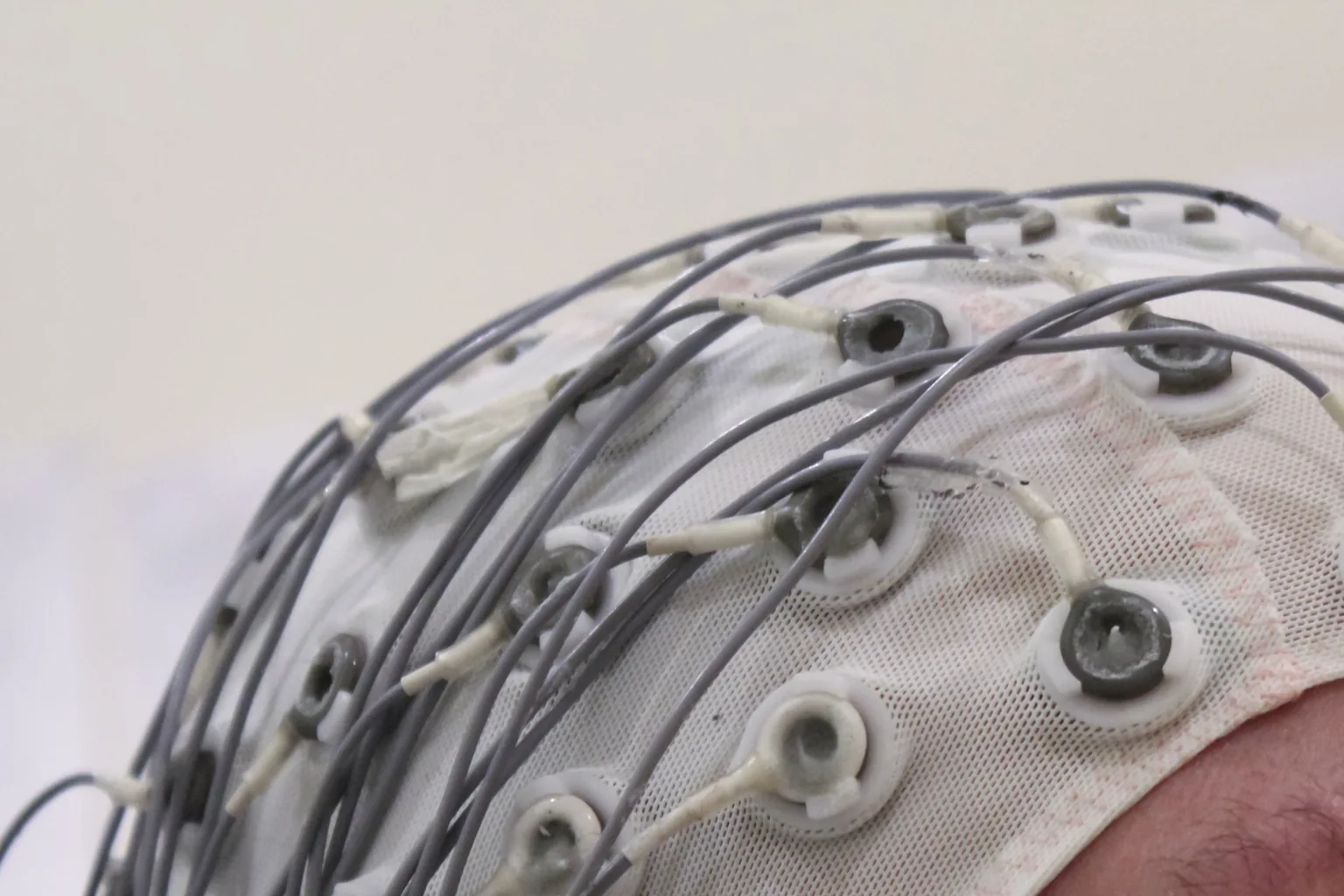
UNESCO says many consumers already use neurotechnology “without knowing it”, in headbands or headphones that use neural data to monitor heart rate, stress or sleep.36
Meta has tested the limits. In February 2025 its researchers said an AI model decoded “up to 80% of the characters typed” by volunteers recorded with magnetoencephalography (MEG), at least twice what EEG allowed. But MEG, the company noted, “requires subjects to be in a magnetically shielded room and remain still”.37 In 2021 Facebook said it was “no longer pursuing a research path to develop a silent, non-invasive speech interface”. It turned to wrist devices with “a nearer-term path to market”.38
The wrist worked. In July 2025 Meta’s researchers published a wristband that reads muscle signals by electromyography (EMG). It decodes handwriting at 20.9 words a minute without training for each user.39 It went on sale with Meta Ray-Ban Display glasses from US$799, about RM3,267. Meta says the band is “the product of years of surface electromyography (EMG) research with nearly 200,000 research participants.”40 It reads nerve signals at the muscle, not the brain.
Others want to go deeper without surgery. Merge Labs, co-founded by OpenAI’s Sam Altman, raised US$252 million, about RM1.03 billion, in January 2026. It plans to read and modulate the brain with ultrasound, which detects changes in blood flow rather than electrical spikes.10 Consumer EEG is already cheap. A 2024 review by the Neurorights Foundation, an advocacy group, listed the MindWave Mobile 2 at US$129.99, Singapore’s SenzeBand 2 at US$429 and the Neurosity Crown at US$1,199.41
The money and the forecasts
Capital has poured in. Besides Neuralink’s US$1.3 billion, about RM5.3 billion, Synchron had raised US$345 million by January 2026, about RM1.4 billion.10 Synchron was valued at nearly US$1 billion after a US$200 million round in autumn 2025. Its backers include Khosla Ventures and the venture firms of Bill Gates and Jeff Bezos.6 UNESCO reports a 700% rise in investment in neurotechnology companies between 2014 and 2021.36
Revenue is another matter. In October 2024 Morgan Stanley put the US “total addressable market” for BCIs at US$400 billion, about RM1.64 trillion, NeuroTech Reports said. That splits into US$80 billion for people with critical impairments and US$320 billion for later adopters. The same report forecast only US$1.5 billion of BCI revenue through 2035, and US$500 million a year in 2036.42 By our arithmetic, the revenue forecast to 2035 is 0.375% of the headline market.
An addressable market counts everyone who might one day buy; it is not a sales forecast. Precision’s chief executive, Michael Mager, argued the early market is larger: “a $2.5 to 3 billion per year opportunity in the first stage”.42
When the company walks away
BrainGate has published the most detailed safety record we found. Between 2004 and 2021, 14 people carried its devices for 12,203 implant-days, about 33 years combined by our arithmetic. There were 68 device-related adverse events, six of them serious; the most common was skin irritation around the connector on the head. There were no brain infections, no device-related deaths and no safety events that required removing a device.43
Most trial participants keep their implants. In a 2024 survey, 64% of 66 investigators said all their participants stayed implanted after the trial, and 33% said most did. They named limited funding and scarce expertise as the main barriers to continued care. And 95% agreed there is an ethical duty to provide post-trial access to people who benefit.44
When the money runs out, patients pay. Second Sight discontinued its Argus retinal implant in 2019 and nearly went out of business in 2020, IEEE Spectrum reported. For more than 350 blind users, a technology that changed their lives became “just another obsolete gadget”.45
It is fantastic technology and a lousy company.
Rita Leggett, an Australian, received a seizure-warning implant from NeuroVista in a trial in 2010. In 2013 the company “essentially ran out of money”, and participants were advised to have their implants removed. Her family offered to buy hers. “They were asking to remortgage their house,” the ethicist Frederic Gilbert told MIT Technology Review. It was removed “very much against her will”. “I would have done anything to keep it,” she told him.46
Who owns brain data
Brain data can reveal health, and perhaps more later. Cathy Kipp, a Colorado state senator, sponsored its 2024 neural data bill. “If you collect the data today, what can you read from it five years from now because the technology is advancing so quickly?” she asked.47
Consumer firms hold it loosely. The Neurorights Foundation reviewed the policies of 30 consumer neurotechnology companies in 2024. It found that 29 appear to have access to users’ neural data with “no meaningful limitations”, and 29 can pass data to third parties. Only 22 had a privacy policy covering their products, and four said they do not sell data.41
A review of published policies and correspondence by an advocacy group, not an audit of actual data flows. 29, 29, 22 and 4 of 30 companies.
Source: Neurorights Foundation (Perseus Strategies), “Safeguarding Brain Data” (April 2024).
Show the numbers
| Item | Yes | No or unclear |
|---|---|---|
| Can access neural data without meaningful limits | 96.7 | 3.3 |
| Can pass data to third parties | 96.7 | 3.3 |
| Has a privacy policy covering the product | 73.3 | 26.7 |
| States it does not sell data | 13.3 | 86.7 |
Laws are arriving piecemeal. Chile amended its constitution in 2021 to protect brain data. In 2023 its Supreme Court ordered EMOTIV, a headset maker, to delete the brain data it held on a citizen.41 Colorado’s law took effect on 7 August 2024, California’s on 1 January 2025 and Montana’s on 1 October 2025. Most of Connecticut’s took effect on 1 July 2026, and each state defines neural data differently.48 In March 2026 Morrison Foerster listed bills pending in seven states.49
UNESCO adopted the first global standard in November 2025. Its Recommendation on the Ethics of Neurotechnology draws on more than 8,000 contributions. It warns against workplace monitoring of productivity, advises against non-therapeutic use on children, and insists on explicit consent.36 “Neurotechnology has the potential to define the next frontier of human progress, but it is not without risks,” said Audrey Azoulay, UNESCO’s Director-General.36
| Jurisdiction | Rule | In force | What it does |
|---|---|---|---|
| Chile | Constitutional amendment | 2021 | Protects brain data; the Supreme Court ordered a deletion in 2023 |
| Colorado | HB 24-1058 | 7 August 2024 | Neural data as sensitive “biological data” when used to identify someone |
| California | SB 1223 | 1 January 2025 | Neural data as sensitive personal information |
| Montana | SB 163 | 1 October 2025 | “Neurotechnology data” under its genetic privacy law |
| Connecticut | SB 1295 | Mostly 1 July 2026 | Neural data as sensitive data |
| UNESCO | Ethics Recommendation | 12 November 2025 | Non-binding global standard; UNESCO will help members apply it |
| Malaysia | PDPA, amended 2024 | Biometric data from 1 April 2025 | Health and biometric data are sensitive; no neural data term |
Source: Neurorights Foundation; Future of Privacy Forum; UNESCO; Act A1727 and P.U. (B) 522.3641485051
Malaysia: who could benefit
Stroke survivors are the group most studied for BCI rehabilitation, and Malaysia has many. Stroke is the third leading cause of death, the Galen Centre for Health and Social Policy says. There are about 52,000 cases a year, and management costs exceed RM213 million a year. Only 21% of patients reach hospital within three hours of symptoms, and 55% of survivors depend partly or fully on carers. Most exhaust insurance for rehabilitation within two months, “missing the critical 6–12 month recovery window”.52
Specialists are scarce. Malaysia has 123 registered neurologists, about one per 323,000 people, and only 31 work in Ministry of Health (MOH) hospitals, a quarter by our arithmetic.52 MOH hospitals have fewer than five stroke units. Clot-busting drugs reach under 3% of patients, and mechanical thrombectomy, which pulls the clot out, under 0.7%. Vietnam had 81 stroke units by 2021.53 About one patient in five dies within a year, and only about a third live independently again, said Dr Law Wan Chung of Sarawak General Hospital.53
Malaysia is lagging behind all metrics, especially thrombectomy access and rehab integration.
Spinal cord injury is barely counted. The only detailed local profile we found covers 292 patients admitted to Hospital Kuala Lumpur’s rehabilitation department between 2006 and 2009. Of them, 77% were men, road crashes caused 66% of traumatic injuries, and 37% became tetraplegic, paralysed in all four limbs. Nearly half, 46%, earned less than US$180 a month.54 In China, NEO is approved for people paralysed by neck injuries.7 We found no national count of spinal cord injury, or of people living with ALS or motor neuron disease.
Different measures from different years. The neurologist share is our arithmetic (31 of 123).
Source: Galen Centre (14 May 2026); Movement Disorders abstract (2023); Spine (March 2013).
Show the numbers
| Share | What |
|---|---|
| 21% | of stroke patients reach hospital within three hours of symptoms |
| 25% | of Malaysia’s 123 registered neurologists work in MOH hospitals (31) |
| 11.1% | of Universiti Malaya’s deep brain stimulation patients were government-funded |
| 37% | of 292 spinal cord injury patients at Hospital Kuala Lumpur, 2006–2009, became tetraplegic |
The neural implants Malaysia already uses
Malaysia is not starting from zero. Universiti Malaya has performed deep brain stimulation (DBS), in which implanted electrodes stimulate deep brain areas, mainly for Parkinson’s disease, since 2004. A 2023 conference abstract counted 161 patients and about 19 new surgeries a year in 2017–2022. Only 17 patients, 11.1%, were government-funded; the rest paid themselves or used private insurance. The authors flag “inequity of access to device-aided therapy”.55 Seven patients had infections and three had skin erosion that led to hardware removal.55
Cochlear implants, which stimulate the hearing nerve, are another neural interface the state already funds. The Health Ministry spent nearly RM21 million on 272 of them in 2019–2023, about RM77,000 each by our arithmetic.56 Others rely on appeals. In March 2026 a Sarawak deputy minister said each cochlear operation for two Miri children would cost RM125,000.57 Malaysia also makes hardware. Cochlear Ltd calls Kuala Lumpur the third-largest site in its network, after an expansion of more than RM30 million.58
The closest thing to a BCI in daily clinical use here is a robot suit. Cyberdyne’s HAL detects “a very faint signal that reflects the wearer’s intention to move” on the skin and moves the limb to match.59 It reads nerve signals, not the brain directly. PERKESO, the social security organisation, opened what it calls Southeast Asia’s first neuro-robotic and cybernics clinic in Melaka in November 2018. By January 2024 its Melaka centre had treated 15,214 people since opening in October 2014, and PERKESO says two in three recover.60 An unbylined promotional feature on PERKESO’s centres in The Star says HAL has treated more than 2,200 patients since 2018, nearly 60% with functional recovery.61 Its Ipoh centre runs more than 60 HAL units, which Cyberdyne calls the world’s largest number at one facility.62
Research is small
Malaysian BCI work goes back at least to 2004, when a Multimedia University researcher in Melaka co-published an EEG interface driven by mental tasks.63 In 2023 researchers from Universiti Kebangsaan Malaysia (UKM) and Universiti Putra Malaysia co-authored a stroke rehabilitation study. It classified imagined movements from the EEG of eight people with about 74% accuracy.64 In 2019, 84 teams from 16 universities flew drones with brain or eye signals in a university student contest.65
Evidence for non-invasive BCI in stroke rehabilitation is modest. A 2026 network meta-analysis with UKM co-authors pooled 49 trials and 2,209 patients. It found that some combinations of BCI with brain stimulation or robots “might improve upper-limb function”.66 Another 2026 meta-analysis of 11 trials found BCI-controlled hand robots beat robots alone on overall arm scores, but not on finer hand function.67
By our count, Europe PMC lists 15 papers with a Malaysian affiliation and “brain-computer interface” or “brain-machine interface” in the title, against 76 for Singapore.68 We found no Malaysian clinical trial of an implanted BCI, and no work on decoding Malay speech. Translation alone may not carry tools across. In a Malaysian study of 21 people with ALS, patients “mostly could not grasp the intended meaning” of some quality-of-life questions, even in Malay.69
Our query of the Europe PMC index on 17 November 2026; 4,188 papers matched worldwide. Affiliation fields are incomplete, so treat counts as indicative. A fifth is our arithmetic (15 of 76).
Source: Europe PMC REST API, our query (17 November 2026).
Show the numbers
| Country | Papers |
|---|---|
| China | 768 |
| Korea | 163 |
| Japan | 115 |
| Singapore | 76 |
| India | 63 |
| Malaysia | 15 |
| Thailand | 10 |
| Indonesia | 1 |
The rules that would apply here
A brain implant would face Malaysia’s strictest device class. Under Medical Device Authority (MDA) guidance, devices in direct contact with the central nervous system, including “CNS electrodes”, are Class D, the highest risk. So are active implantable devices such as pacemakers. Standalone decoding software “is classified in its own right”, and diagnostic devices that capture physiological signals are Class B.70 Clinical studies are notified through MDA’s MeDC@St system, with a plan following the ISO 14155 standard.71 Our medical AI article covers MDA’s approach to AI software.
Brain data would fall under the Personal Data Protection Act 2010 (PDPA). It treats data on “the physical or mental health or condition” of a person as sensitive, which needs explicit consent.72 The 2024 amendment added biometric data, from “technical processing relating to the physical, physiological or behavioural characteristics of a person”, from 1 April 2025.5051 It raised the maximum penalty for breaching the data protection principles to RM1 million, three years in jail or both, from RM300,000 or two years. Data controllers must also appoint data protection officers.50
Gaps remain. The PDPA has no term for neural data, and whether signals from a consumer headband count as health or biometric data has not been tested. The Act applies to commercial transactions and “shall not apply to the Federal Government and State Governments”.72 Whether that leaves brain data held by public hospitals outside it is a question for lawyers.
Things you probably didn’t know
- One user, 9,000 hours. Neuralink says its first participant alone has recorded more than 9,000 hours of brain data, or “22.4 billion spikes”.9
- Inner speech can have a password. Stanford’s inner-speech decoder stayed locked until the user imagined the word “chittychittybangbang”, detected correctly 98.75% of the time.21
- Pink Floyd from the brain. Researchers rebuilt “Another Brick in the Wall” from the brain signals of 29 epilepsy patients who had electrodes implanted.47
- The record is over 10 years. Nathan Copeland has lived with four Blackrock Neurotech arrays in his brain for more than a decade.4
- An implant in Abu Dhabi. Neuralink’s trial sites include Cleveland Clinic Abu Dhabi and Toronto Western Hospital.73
- Thinking “Hey Neuralink”. Neuralink says its engineers prototyped a way to start a Grok AI agent by thinking “Hey Neuralink” followed by a task.28
What worked and what didn’t
The devices that lasted had a clear medical use, a team that kept supporting the user, and someone willing to pay.
Worked
Two decades of published safety
BrainGate’s 14 participants carried implants for 12,203 days between 2004 and 2021. The team reported 68 device-related adverse events, six of them serious, in a journal. There were no brain infections, no device-related deaths and no safety-related removals.43
Why it worked: published safety data gave later trials a known baseline of risk.
Worked
Speech that held for months
A UC Davis participant with ALS kept 97.5% accuracy over 8.4 months and used his implant for more than 248 hours of conversation.18
Why it worked: 256 electrodes in the speech motor cortex, with a decoder trained on the user’s own attempts.
Worked
A bridge that helped even when off
In Lausanne, a man with chronic tetraplegia stood and walked in community settings with a brain-spine interface. After rehabilitation with it, he could walk with crutches even when it was switched off.14
Why it worked: the device decoded intent and then stimulated the spinal cord, so the user’s own legs did the work.
Worked
Five years at home through a vein
Rodney Gorham has used his Stentrode since December 2020 to run lights, music and a robot vacuum, with an engineer visiting twice a week. A Synchron engineer says he helped shape Apple’s BCI control, announced in May 2025.431
Why it worked: no open-brain surgery, and simple switch control that plugs into existing accessibility software.
Worked
Meta moved to the wrist
Meta dropped head-worn speech decoding in 2021.38 Its EMG wristband decodes handwriting at 20.9 words a minute with no per-user training, and it ships with glasses from US$799.3940
Why it worked: Meta chose a signal it could decode across people out of the box, and trained on data from nearly 200,000 participants.
Worked
Malaysia pays for proven neural devices
The Health Ministry funded 272 cochlear implants in 2019–2023 for nearly RM21 million.56 PERKESO uses HAL suits that read movement intent from the skin, and a promotional feature reports nearly 60% functional recovery among more than 2,200 patients.61
Why it worked: a clear medical use, an established care pathway and an institutional payer.
Didn’t work
A bionic eye abandoned
Second Sight discontinued its Argus retinal implant in 2019 and nearly went out of business in 2020. More than 350 blind people were left with unsupported implants.45
Lesson: nobody was obliged to keep supporting implanted hardware once the business changed.
Didn’t work
An implant removed against her will
NeuroVista ran out of money in 2013, and trial participants were advised to have their implants removed. Rita Leggett’s family offered to remortgage their house to keep hers.46
Lesson: post-trial access needs funding written in before the first surgery.
Didn’t work
Infection ended a hand implant
Ian Burkhart knew his implant would come out at the end of the trial. An infection led to its removal in 2021, while his team also struggled for funding.46
Lesson: “These companies need to have the responsibility of supporting these devices in one way or another,” Burkhart says.46
Setback
A new cable, a paused trial
Synchron paused trials of its wireless second-generation device over “a performance issue involving the lead”, and is restructuring. It says no device safety issue was found.6
Lesson: one new component can stop a programme that worked for years.
Too early
China’s first approval
NEO was approved on 13 March 2026 for paralysis from neck injuries.734 The published evidence we found is a 2024 preprint on two home users, and the full procedure is not yet reimbursed, a competitor says.835
Lesson: approval and a price list are a start; independent long-term data will decide the case.
What to do now
None of this is medical or legal advice. Check a specific case with a doctor or a lawyer.
For patients and families
- Ask what happens after the trialWho maintains the device if the company fails, and who pays for repairs or removal? Second Sight and NeuroVista users found out too late.4546
- Check eligibility firstThe implant trials we found run in the US, Canada, the UK, Australia, the UAE and China. Paradromics now recruits across the continental US.26293273
- Start with proven careFor stroke, today’s gains come from fast treatment and long rehabilitation. Only 21% of patients reach hospital within three hours, and most insurance for rehabilitation runs out before the 6–12 month recovery window ends.52
For anyone buying a brain headband
- Assume the company can see and share your data, as 29 of 30 reviewed firms could.41
- Under the PDPA, health and biometric data need your explicit consent. Ask the seller to delete your data when you stop.5072
For hospitals, universities and medtech firms
Before a BCI study in Malaysia
- Classify early: an implant is Class D, and standalone decoding software may be a device in its own right.70
- Notify the study through MeDC@St with an ISO 14155 plan.71
- Get explicit consent for brain data, name a data protection officer, and note penalties of up to RM1 million.50
- Write post-trial access and removal into the protocol, as 95% of surveyed investigators say is an ethical duty.44
For policymakers
- Count the need. There is no national figure for spinal cord injury or ALS, and the best local profile dates from 2006–2009.54
- Fund stroke units and rehabilitation first. Neurologists are calling for a national stroke policy.53
- Decide whether neural data is health or biometric data under the PDPA, before consumer devices settle the question.5072
What to watch to 2030
- Synchron’s restart. Medium confidence that enrolment resumes by 2027. The company will restart once its hardware upgrades are complete, and gave no date.6
- Peer review for Neuralink’s speech claims, 2027. Medium confidence. Its 75-words-a-minute claim and its goal of 140 rest on company posts.2627
- China’s 2027 milestones and 2030 industry goal. High confidence of more approvals. In 2025 NeuroXess’s chief executive thought at least one approval by 2027 realistic; NEO came in March 2026.3234
- Commercial launch with reimbursement in the US, about 2029. Low to medium confidence. Morgan Stanley expected it within five years of October 2024.42
- Paradromics’ six-year follow-up, to about 2032. High confidence it runs if she stays in the study. It is a long test of durability.1
- More US states pass neural data laws, 2026–27. High confidence, with bills proposed in at least five states that have no such law yet.49
- National laws follow UNESCO. Medium confidence for some countries, low for Malaysia by 2030. UNESCO says it will help member states review their policies; it already helps more than 80 countries put its 2021 AI ethics principles into law.36
- A national stroke policy. Low to medium confidence. Neurologists asked for one in November 2025.53
Company figures, including Neuralink’s, Paradromics’ and Synchron’s statements on performance and safety, are their own and mostly not peer-reviewed. Calculations marked as ours are illustrative, and the Europe PMC counts are indicative. This is general information, not medical, legal or investment advice. Conversions use Bank Negara Malaysia’s middle rate of 17 November 2026: RM4.089 per US dollar and RM0.6135 per yuan.
Sources
- CBS Austin, Paradromics participant communicates in real time, 14 September 2026: cbsaustin.com
- Paradromics, FDA approves nationwide Connect-One recruitment, 26 October 2026: paradromics.com
- WIRED, Paradromics gets FDA approval to trial its implant, 20 November 2025: wired.com
- WIRED, five years with a Synchron implant, 4 March 2026: wired.com
- Practical Neurology, FDA clears Precision’s cortical interface, 21 April 2025: practicalneurology.com
- WIRED, Synchron pauses trials of its brain implant, 12 November 2026: wired.com
- WIRED, China approves the first brain chips for sale, 20 March 2026: wired.com
- Paradromics, China’s recent BCI developments, 30 April 2026: paradromics.com
- Neuralink, “Pretraining on 50,000 Hours of Unlabeled Brain Data”, 1 October 2026: neuralink.com
- WIRED, OpenAI invests in Merge Labs, 15 January 2026: wired.com
- Hochberg et al., first BrainGate participant, Nature, July 2006: doi.org
- Hochberg et al., reach and grasp with a robotic arm, Nature, 16 May 2012: doi.org
- Willett et al., handwriting brain-to-text, Nature, 12 May 2021: doi.org
- Lorach et al., brain-spine interface for walking, Nature, 24 May 2023: doi.org
- Moses et al., speech neuroprosthesis, New England Journal of Medicine, July 2021: doi.org
- Willett et al., high-performance speech neuroprosthesis, Nature, 23 August 2023: doi.org
- Metzger et al., speech decoding and avatar control, Nature, 23 August 2023: doi.org
- Card et al., speech neuroprosthesis in ALS, New England Journal of Medicine, August 2024: doi.org
- Littlejohn et al., streaming brain-to-voice synthesis, Nature Neuroscience, 31 March 2025: doi.org
- Wairagkar et al., instantaneous voice-synthesis neuroprosthesis, Nature, 12 June 2025: doi.org
- Kunz et al., inner speech in motor cortex, Cell, 14 August 2025: doi.org
- Horikawa, mind captioning from fMRI, Science Advances, 5 November 2025: doi.org
- Tang et al., language decoding from fMRI, Nature Neuroscience, May 2023: doi.org
- Fox News, Musk’s plan to mass-produce brain implants, 5 January 2026: foxnews.com
- Neuralink, PRIME study progress update, 8 May 2024: neuralink.com
- Neuralink, “Two Years of Telepathy”, 28 January 2026: neuralink.com
- TeslaNorth, Neuralink’s speech claim on X (post embedded), 28 October 2026: teslanorth.com
- Neuralink, 72-hour engineering sprint, 29 October 2026: neuralink.com
- Neuralink, updates archive, accessed 17 November 2026: neuralink.com
- Mitchell et al., first-in-human Stentrode study, JAMA Neurology, March 2023: doi.org
- Apple Newsroom, new accessibility features, 13 May 2025: apple.com
- WIRED, China is getting serious about brain-computer interfaces, 28 August 2025: wired.com
- Sixth Tone, first brain implant under state pricing, 1 December 2025: sixthtone.com
- Nature, China approves brain implant for use outside trials, 16 March 2026: nature.com
- Liu et al., home use of an epidural BCI (preprint), medRxiv, 6 September 2024: doi.org
- UNESCO, first global standard on the ethics of neurotechnology, 5 November 2025: unesco.org
- Meta AI, brain decoding of typed sentences, 7 February 2025: ai.meta.com
- Facebook Reality Labs, BCI milestone and change of direction, 14 July 2021: tech.facebook.com
- CTRL-labs at Reality Labs, a generic neuromotor interface, Nature, 23 July 2025: doi.org
- Meta Newsroom, Meta Ray-Ban Display and Neural Band, 17 September 2025: about.fb.com
- Neurorights Foundation (Perseus Strategies), “Safeguarding Brain Data”, April 2024: perseus-strategies.com
- NeuroTech Reports, publisher’s letter on Morgan Stanley’s BCI report, October 2024: neurotechreports.com
- Rubin et al., BrainGate interim safety profile, Neurology, 13 January 2023: doi.org
- Higgins et al., post-trial access to neural implants, BMJ Surgery, Interventions & Health Technologies, 17 April 2024: doi.org
- IEEE Spectrum, “Their bionic eyes are now obsolete and unsupported”, 15 February 2022: spectrum.ieee.org
- MIT Technology Review, a brain implant removed against her will, 25 May 2023: technologyreview.com
- KFF Health News via KUNC, states pass brain data privacy laws, 26 July 2025: kunc.org
- Future of Privacy Forum, defining neural data in US state laws, 12 August 2025: fpf.org
- Morrison Foerster, emerging trends in neural data legislation, 17 March 2026: mofo.com
- Personal Data Protection (Amendment) Act 2024 (Act A1727), 2024: pdp.gov.my
- P.U. (B) 522, commencement of PDPA amendments, 19 December 2024: pdp.gov.my
- Galen Centre for Health and Social Policy, stroke in Malaysia microsite, 14 May 2026: galencentre.org
- CodeBlue, neurologists call for a national stroke policy, 25 November 2025: codeblue.galencentre.org
- Ibrahim et al., spinal cord injury in Hospital Kuala Lumpur, Spine, March 2013: doi.org
- Dy Closas et al., deep brain stimulation in Malaysia, Movement Disorders abstract, 2023: mdsabstracts.org
- Free Malaysia Today, RM21 million spent on cochlear implants, 18 May 2024: freemalaysiatoday.com
- Borneo Post, cochlear implant surgeries for two Miri children, 24 March 2026: theborneopost.com
- MIDA, Cochlear expands its Kuala Lumpur facility, 26 October 2022: mida.gov.my
- Cyberdyne, About HAL, accessed 17 November 2026: cyberdyne.jp
- PERKESO, media release on the Tun Abdul Razak rehabilitation centre (in Malay), 15 January 2024: perkeso.gov.my
- The Star, “A decade of hope and transformation” (unbylined StarPicks feature on PERKESO), 18 January 2025: thestar.com.my
- Cyberdyne, Japan’s health minister visits PERKESO’s Ipoh centre, 15 September 2026: cyberdyne.jp
- Huan and Palaniappan, EEG brain-computer interface design, Journal of Neural Engineering, 31 August 2004: doi.org
- Al-Qazzaz et al., EEG complexity for BCI stroke rehabilitation, Sensors, 11 April 2023: doi.org
- Buletin Mutiara, student brain-computer interface contest, 9 October 2019: buletinmutiara.com
- Zhu et al., BCI with neuromodulation for stroke, BMC Neurology, 3 September 2026: doi.org
- Hu et al., BCI-controlled hand robot training, Brain Sciences, 22 May 2026: doi.org
- Europe PMC, title and affiliation search (our query), 17 November 2026: ebi.ac.uk
- Sabirin et al., ALS quality-of-life measure in Malaysia, Neurodegenerative Disease Management, 11 September 2025: doi.org
- Medical Device Authority, MDA/GD/0009 rules of classification, 1 April 2022: portal.mda.gov.my
- Medical Device Authority, clinical research study notification, accessed 17 November 2026: portal.mda.gov.my
- Personal Data Protection Act 2010 (Act 709), reprint: pdp.gov.my
- Neuralink, Series E funding, 2 June 2025: neuralink.com
Related research
 Google’s phone reads sign language, but not Malaysia’sGoogle’s newest phone turns American Sign Language into English text.
 The AI went looking for cancer and found TBAbout 3,000 people had AI-read chest X-rays at klinik kesihatan by November 2025, and the scans found more tuberculosis than lung cancer.
 The care robot that works is a mattress. In Japan, 63% of nursing homes use one.In a survey of Japanese nursing homes, 63% used bed and room sensors by 2022, and homes with care robots kept more staff and used fewer restraints.
