
Cybersecurity
Five seconds to say no, ten hours of disruption
On 25 March 2025 Anwar Ibrahim said he had refused a US$10 million demand from hackers who hit Malaysia Airports. In November 2026 NACSA called it a ransomware attack that disrupted KLIA for more than 10 hours. Gangs received more than US$820 million in 2025, yet nearly 80% of the cases one response firm handled now end without a payment.
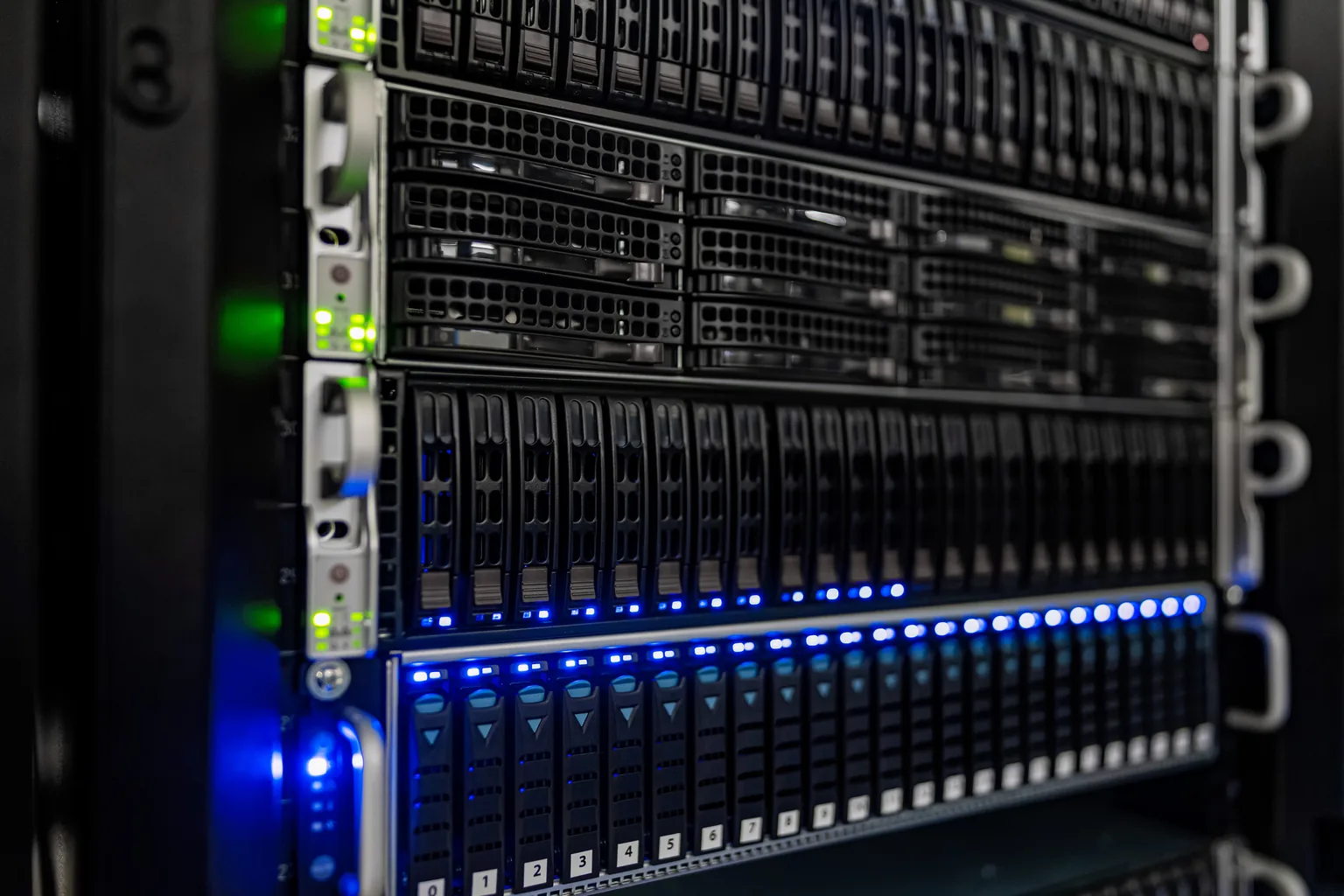
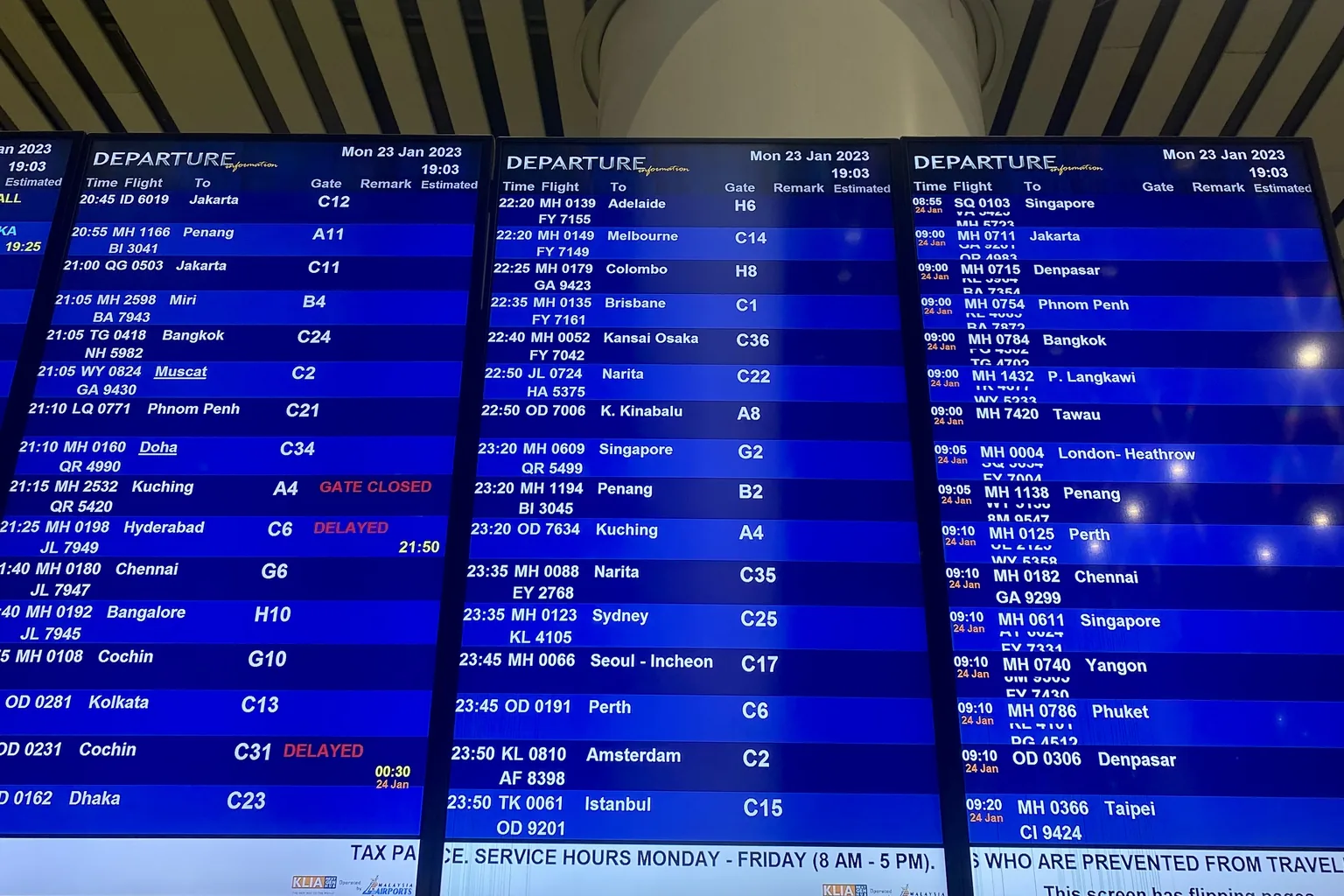
On 25 March 2025 Prime Minister Anwar Ibrahim told the 218th Police Day celebration in Kuala Lumpur that hackers had breached Malaysia Airports Holdings Bhd (MAHB). They had demanded US$10 million, about RM40.9 million.12 “Yesterday, we discussed the cyberattack that seriously impacted MAHB,” he said, in Free Malaysia Today’s English rendering. Of the demand, he said: “I didn’t wait five seconds before immediately saying no.”1
The same day, MAHB and the National Cyber Security Agency (NACSA) issued a joint statement. In it, Malay Mail reported, MAHB confirmed that a cybersecurity threat affecting certain computer systems at KL International Airport (KLIA) had been detected on 23 March. NACSA’s chief executive, Megat Zuhairy Megat Tajuddin, added: “We understand that the operations at KLIA are not impacted.”3 On 9 November 2026 he gave Bernama a different description. Bernama reported him as saying that the incidents NACSA recorded included a ransomware attack on Malaysia Airports Holdings Bhd in March 2025. That attack, Bernama reported, caused disruptions at KLIA for more than 10 hours.4
Malaysia’s best-known ransomware case shows the whole pattern: a demand, a refusal, an early statement that operations were unaffected, a gang’s claim and an official account much later. This article explains how attacks work, who profits, what artificial intelligence (AI) has changed so far and what Malaysian law requires. Our article on AI agent security covers breach-notification clocks and attacks on AI agents. Leaked IC numbers are in data leaks, and voice-clone fraud in scam calls.
The short version
- Malaysia refused a US$10 million demand after the March 2025 attack on Malaysia Airports. On the day, NACSA said KLIA’s operations were not impacted; in November 2026 it described disruption for more than 10 hours.
- Ransomware gangs received more than US$820 million in 2025, Chainalysis estimates, against a record US$1.25 billion in 2023. Claims on gangs’ leak sites rose 50%.
- Fewer victims pay. Nearly 80% of Coveware’s cases in the third quarter of 2026 ended without payment, but the median payment was US$400,000, about RM1.6 million.
- AI’s documented role is real but narrow. In JadePuffer, which researchers call the first documented agent-run ransomware operation, a person still chose the victim. The “first AI ransomware” was a New York University lab prototype.
- MyCERT received 9 ransomware reports in the last quarter of 2025. Kaspersky says its software blocked 12,643 attempts in Malaysia in 2024. Critical-infrastructure operators must report incidents immediately, then within 6 hours and 14 days.
Three accounts of one airport attack
The airport story reached the public in pieces, from different people, months apart. Put in date order, the pieces show how slowly the facts of a ransomware attack come out.
| Date | Who | What was said or reported |
|---|---|---|
| 23 March 2025 | MAHB and NACSA, statement of 25 March, as reported by Malay Mail | A threat affecting certain computer systems at KLIA was detected. |
| From 23 March 2025 | Comparitech, updated 28 April 2025 | Flight information displays, check-in counters and baggage handling were disrupted. Staff wrote departure times on dry-erase boards. |
| 25 March 2025 | Anwar Ibrahim, Police Day speech | Hackers demanded US$10 million, and the government said no. |
| 25 March 2025 | NACSA’s chief executive, joint statement | “We understand that the operations at KLIA are not impacted.” |
| By 28 April 2025 | Qilin, as reported by Comparitech | The gang claimed the attack and 2 TB of data. Comparitech noted that the airport had not verified the claim. |
| July 2026 | ERIA policy brief | “In March 2025, a ransomware attack on Malaysia’s Kuala Lumpur International Airport disrupted flight information, check-in, and baggage systems.” |
| 9 November 2026 | NACSA’s chief executive, as reported by Bernama | Incidents recorded included a ransomware attack on Malaysia Airports Holdings Bhd in March 2025, which caused disruptions at KLIA for more than 10 hours. |
Source: Malay Mail; Comparitech; Free Malaysia Today; ERIA; The Star (Bernama).13456
The two NACSA statements describe different things. The March statement, as Malay Mail reported it, spoke of airport operations and did not use the word ransomware; the November account spoke of disruption at KLIA.34 By July 2026 a regional think tank, the Economic Research Institute for ASEAN and East Asia (ERIA), was already citing the airport as a ransomware case.6 We found no official confirmation of who carried out the attack. In April 2025 Comparitech reported that the airport had not verified Qilin’s claim.5
Anwar’s refusal was a decision, not a rule. In the same speech he stressed the need for more funding for the police and the central bank to strengthen their defences against cyberattacks, FMT reported.1 We found no published Malaysian policy on paying ransoms.
How an attack unfolds
Ransomware is malicious software that encrypts files, scrambling them so they cannot be opened without a key the attacker holds. The encryption is the last step. Most of the work happens in the days or weeks before, and each stage is a point where a business can stop it.
Getting in
Attackers rarely need anything exotic. The UK’s National Cyber Security Centre (NCSC) says 88% of the incidents it handled at large organisations began through four routes. These were exploiting public-facing applications, phishing, misusing valid accounts and exploiting remote-access services.7 Coveware, a firm that handles ransomware cases for clients, saw a similar mix in the third quarter of 2026.8 Its earlier reports describe attackers “convincing HelpDesk technicians to provision them with new credentials”.9
Some gangs buy their way in. Initial access brokers sell footholds in company networks. Chainalysis, a blockchain analysis firm, estimates that brokers “received at least $14 million in on-chain payments” in 2025.10
Moving around and taking data
Once inside, attackers spread to other machines, hunting for administrator passwords, valuable data and backups. Security staff call this lateral movement. In Malaysia, businesses “relying on Active Directory (AD) servers”, which control staff logins, “were primary targets” at the end of 2024, Cyble reported from Cyber999 data.11 Most gangs now copy data out before encrypting anything. Coveware found data theft in 74% of its cases in the second quarter of 2025.9 MyCERT calls this double extortion: perpetrators “exfiltrate or steal sensitive data from organisations and hold the data hostage”.12
Cutting off the way back
Backups are a target in their own right. In a September 2026 attack on a UK school estate, attackers extracted credentials stored on three Veeam backup servers, then deleted system-state backups. About 37 of nearly 50 machines they reached were encrypted, BleepingComputer reported.13 Sophos, a security vendor, found in its 2025 survey that “data recovery through backups is at its lowest rate in six years”.14
The note and the pressure
Then comes the demand, usually with a deadline and a threat to publish stolen data. The message to Maersk in November 2026 read: “You have 30 days to contact us and pay USD 5,000,000 in bitcoin.”15 Pressure now reaches people as well as files. In a Semperis study of 1,200 organisations hit by ransomware, 37% of attacks involved psychological or physical threats against staff, The Register reported.16
The 2024 attack on Change Healthcare, part of UnitedHealth Group, went through every stage. Chief executive Andrew Witty told Congress the attackers “moved laterally within the systems in more sophisticated ways and exfiltrated data”, Cybersecurity Dive reported.17
- 1AttackersA stolen loginOn 12 February 2024 attackers used stolen credentials on a Citrix remote-access portal that had no multifactor authentication.
- 2AttackersMoving and copyingThey moved laterally through the systems and copied data out.
- 3AttackersEncryptionRansomware was deployed about nine days after entry. UnitedHealth disclosed the attack on 21 February.
- 4Chief executiveApprovalThe paymentUnitedHealth paid a US$22 million ransom, about RM90 million, to the BlackCat/AlphV gang. The chief executive said the decision was his.
- 5UnitedHealthThe billData on about 190 million people may have been compromised. Response costs reached US$3.1 billion in 2024.
Multifactor authentication (MFA) asks for a second proof of identity, such as a code on a phone, on top of a password.
Source: Cybersecurity Dive (30 April 2024; 27 January 2025); The Record (1 May 2024); CNBC (1 May 2024).
Show the numbers
| Step | Who | What | Detail |
|---|---|---|---|
| 1 | Attackers | A stolen login | On 12 February 2024 attackers used stolen credentials on a Citrix remote-access portal that had no multifactor authentication. |
| 2 | Attackers | Moving and copying | They moved laterally through the systems and copied data out. |
| 3 | Attackers | Encryption | Ransomware was deployed about nine days after entry. UnitedHealth disclosed the attack on 21 February. |
| 4 | Chief executive | The payment (approval) | UnitedHealth paid a US$22 million ransom, about RM90 million, to the BlackCat/AlphV gang. The chief executive said the decision was his. |
| 5 | UnitedHealth | The bill | Data on about 190 million people may have been compromised. Response costs reached US$3.1 billion in 2024. |
Production lines are targets too. In July 2026 Coca-Cola said its Fairlife dairy had been hit by ransomware, and US production was “temporarily suspended”.18
A criminal franchise
Most large gangs run ransomware-as-a-service (RaaS): a core group supplies the software and the brand, and affiliates, outside hackers, carry out attacks with them. Qilin, the gang that claimed KLIA, is “a notorious ransomware-as-a-service (RaaS) operation that emerged in August 2022 under the name Agenda”, BleepingComputer writes. It has “targeted more than 2,350 known organizations across 62 countries”. One victim was Japan’s Asahi, where the attack exposed details of 1.5 million people.19
In October 2026 Germany arrested an alleged core member of Qilin after extradition from Japan. The case is pending, and the suspect has not been convicted.19 Qilin also topped MyCERT’s table for the last quarter of 2025, with two of nine reported incidents.12
Not every gang franchises. SafePay, BleepingComputer notes, “emerged in August 2024 as a private ransomware group that doesn’t work with affiliates”. The US agencies CISA and FBI say it has hit “at least 600 organizations from multiple critical infrastructure sectors”.20 The market is fragmented. In Coveware’s third-quarter 2026 cases, the biggest names, The Gentlemen gang and independent “Lone Wolves”, were “accounting for just 6% of cases each”.8
Leak sites are the gangs’ shop windows. Chainalysis, citing eCrime.ch data, reported 50% more leak-site claims in 2025, “an all-time high”.10 More than 8,000 organisations were named on leak sites that year, The Register reported from Emsisoft data.21 In Kaspersky’s review of the first quarter of 2026, Clop accounted for 14.42% of the victims posted, Qilin for 12.34%. Third was The Gentlemen, “a group that emerged only in July 2025”.22 A listing is a claim. It does not prove that a gang breached the firm named.
Negotiation is being automated too. Researchers documented gangs “experimenting with AI-driven negotiation interfaces in mid-2025”, Chainalysis says.10 Victims hire specialists for their side of the table, and that market has its own risks. US prosecutors allege that the owner of a Florida ransomware-recovery company secretly paid attackers for decryptors while claiming to use proprietary technology to recover encrypted data, BleepingComputer reported.23 They allege the scheme facilitated more than US$8 million in ransom payments while charging hundreds of US and Canadian companies more than US$19 million. The owner was indicted in New York on 23 September 2026 and has pleaded not guilty. The allegations are unproven.23
Fewer victims pay, but payers pay more
Chainalysis traces ransom payments on public blockchains. It estimates that gangs received a record US$1.25 billion in 2023.24 Its first estimate for 2024, US$813.55 million, was later revised up to US$892 million. For 2025 it reports “more than $820 million”, about RM3.4 billion.10 The share of ransoms paid “potentially reached an all-time low” in 2025, at 28%, by its estimate.10
2024 is Chainalysis’s revised figure; its first estimate was US$813.55 million. The 2025 figure is “more than $820 million”, about RM3.4 billion; Chainalysis expects it to approach or exceed US$900 million as more payments are traced. Leak-site claims rose 50% in 2025.
Source: Chainalysis (5 February 2025; 26 February 2026).
Show the numbers
| Year | US$ million |
|---|---|
| 2023 | 1,250 |
| 2024 | 892 |
| 2025 | 820+ |
Fewer payments did not mean smaller ones. The median payment in Chainalysis’s data “increased 368%, from $12,738 in 2024 to $59,556 in 2025”, about RM243,500.10 The largest single payment it has recorded was US$75 million, about RM307 million, to the Dark Angels gang in 2024.24
Coveware’s cases tell the same story quarter by quarter. The share of its clients who paid fell to an all-time low of 25% at the end of 2024, and to about 20% a year later.2526 In the third quarter of 2026, “nearly 80% of incidents are resolved without a ransom payment”. The median payment that quarter was US$400,000, about RM1.6 million, and the median victim had 1,121 employees.8
The first quarter of 2025 was not in the reports we opened. The median is the middle payment. The third-quarter 2026 median is about RM1.6 million.
Source: Coveware quarterly reports (4 February 2025; 23 July 2025; 24 October 2025; 3 February 2026; 30 April 2026; 29 July 2026; 28 October 2026).
Show the numbers
| Quarter | Average payment | Median payment |
|---|---|---|
| Q4 2024 | US$554k | US$111k |
| Q1 2025 | – | – |
| Q2 2025 | US$1,130k | US$400k |
| Q3 2025 | US$377k | US$140k |
| Q4 2025 | US$592k | US$325k |
| Q1 2026 | US$680k | US$301k |
| Q2 2026 | US$1,881k | US$150k |
| Q3 2026 | US$1,025k | US$400k |
Other studies count other groups. Sophos surveyed 3,400 IT and security leaders in 17 countries; 49% “paid the ransom and got their data back”. Its mean recovery cost, excluding any ransom, fell to US$1.53 million, about RM6.3 million, from US$2.73 million in 2024.14 Verizon’s 2025 breach report found ransomware in 44% of breaches, and in 88% of those at smaller organisations. Its median ransom payment was US$115,000, about RM470,000.27 These are different populations, so their payment rates cannot be compared directly.
Each figure covers a different group of victims, so they are not comparable. The Verizon share is our arithmetic (100 minus 64).
Source: Coveware (28 October 2026); Chainalysis (26 February 2026); Verizon (23 April 2025); Sophos (2025).
Show the numbers
| Share | What |
|---|---|
| ~20% | Coveware client cases, third quarter of 2026: nearly 80% ended without payment |
| 28% | Chainalysis estimate for 2025: share of ransoms paid, from blockchain data |
| 36% | Verizon’s 2025 report, citing IDC: 64% of victims did not pay |
| 49% | Sophos survey of 3,400 IT leaders, 2025: paid and got their data back |
Paying buys less certainty than it seems. UnitedHealth paid US$22 million, and the attack may still have exposed data on about 190 million people.2829
This was one of the hardest decisions I’ve ever had to make, and I wouldn’t wish it on anyone.
What AI changes for attackers
In January 2024 the NCSC judged that AI “will almost certainly increase the volume and heighten the impact of cyber attacks” over the following two years. It added that AI “lowers the barrier for novice cyber criminals, hackers-for-hire and hacktivists to carry out effective access and information gathering operations”.31 The cases documented since then fit that forecast better than the headlines do.
A chatbot priced the ransom
In August 2025 Anthropic, which makes the Claude models, reported a data-extortion operation that used its coding tool, Claude Code. The company says the tool was used “to automate reconnaissance, harvesting victims’ credentials, and penetrating networks”. The targets were “at least 17 distinct organizations”, including healthcare, emergency services, government and religious institutions.32 Claude “was allowed to make both tactical and strategic decisions”, Anthropic wrote, and “analyzed the exfiltrated financial data to determine appropriate ransom amounts”. Demands “sometimes exceeded $500,000”, about RM2 million. Rather than encrypting the data, the actor threatened to publish it. Anthropic says it banned the accounts and developed a tailored classifier, an automated screening tool.32
The same report describes ransomware kits sold on criminal forums for US$400 to US$1,200, about RM1,600 to RM4,900. Of the seller, Anthropic says that “Without Claude’s assistance, they could not implement or troubleshoot core malware components”. Its conclusion: “AI has lowered the barriers to sophisticated cybercrime.”32 These are the company’s findings about misuse of its own product.
Google’s Threat Intelligence Group (GTIG) said in November 2025 that, “for the first time”, it had found malware that calls large language models (LLMs) while running. Examples include PROMPTFLUX and PROMPTSTEAL. It described a ransomware sample, PROMPTLOCK, as a proof of concept. “The underground marketplace for illicit AI tools has matured in 2025,” it said.33
JadePuffer: an agent did the typing
The nearest thing to an AI-run attack came to light in July 2026. Sysdig, a cloud-security firm, documented an operation it called JadePuffer. Researchers believe it is “the first documented case” of a ransomware operation conducted entirely by an LLM agent.34 The agent got in by exploiting a known flaw in an internet-facing Langflow instance, a tool for building AI apps.35 It then encrypted all 1,342 configuration items on a database server and deleted the originals.34 Its payloads were “self-narrating”, containing “natural language reasoning, target prioritization”.35 It “adapted in real time, retrying failed steps within refined parameters”, and in one sequence went from a failed login to a working fix in 31 seconds.34
A person was still in charge. Sysdig’s Michael Clark told CyberScoop, TechCrunch reported, that a human provisioned the servers behind the attack and chose the victim. The credentials used to enter the database came from a prior compromise and were handed to the operation. Sysdig cannot tell which model made the decisions.36
A human still set up and pointed the operation and provisioned the infrastructure behind it, the command-and-control server, the staging server used for the stolen data and chose a victim.
Faster, cheaper, still led by people
Two later cases point the same way. The September 2026 attack on the UK school estate was the work of an affiliate of the 3AM gang. Bitdefender researchers saw commands that were slightly modified at each attempt, repeated at roughly regular intervals of 40 to 100 seconds, a pattern they said looked similar to an agentic loop. But they added: “We were not able to access the machine the attacker worked from, so we cannot document anything about the language model itself.” AI involvement is suspected, not shown.13
In mid-November 2026 the FBI and Amazon Web Services (AWS) warned that attackers were using ARTEX, an open-source AI penetration-testing framework, against banks and governments. The FBI said it “significantly reduces the time required to chain attack techniques”, with some intrusions reaching privileged access in under three hours. The Register’s report describes credential and cryptocurrency theft; it does not mention ransomware. AWS’s security chief, CJ Moses, wrote that “the agents succeeded where basic security hygiene was missing”, such as default or hardcoded credentials.37
Microsoft researcher Geoff McDonald has warned that ransomware campaigns are now limited mainly by attackers’ budgets, TechCrunch reported. That raises the possibility of “thousands or tens of thousands of simultaneous campaigns”, he wrote.36 The NCSC’s November 2026 review judges that “It is highly likely AI malware will be used in a ransomware attack on UK CNI”, its critical national infrastructure, by 2028.738 It also judges that “Human operators highly likely remain essential for directing, validating and adapting AI-generated outputs”.7
Evidence, hype and the defenders
Some of the loudest AI-ransomware claims did not hold up. On 26 August 2025 ESET, a security company, announced “the first known AI-powered ransomware”, named PromptLock, adding that “PromptLock was not spotted in actual attacks”. On 3 September it updated the post: PromptLock “was a proof of concept rather than fully operational malware”, though ESET says its findings remain valid.39 The code came from New York University’s Tandon School of Engineering. Its researchers “confirmed that they created the code as part of a project meant to illustrate the potential harms of AI-powered malware”, CyberScoop reported.40 Their paper describes “the first threat model and research prototype of LLM-orchestrated ransomware”.41
A working paper from MIT Sloan claimed that “In 2024, 80.83 percent of recorded ransomware events were attributed to threat actors utilizing AI”. Security researcher Kevin Beaumont said: “The paper is absolutely ridiculous.” It even described Emotet, which “hasn’t existed for many years”, as AI-driven, he noted. MIT Sloan withdrew the paper for revision. Its page then said it “is being updated based on some recent reviews”.42
Firms that handle real cases report little so far. On our reading, Coveware’s 2026 quarterly reports describe no observed AI use by ransomware gangs. Its April report treats “Mythos-class capabilities in the hands of cyber criminals” as “a plausible near-term scenario”, not a present one.43
| Product | Real victims | AI ran the attack | Checked by others | Human still needed | Verdict |
|---|---|---|---|---|---|
| PromptLockESET, August 2025 | Nolab prototype | Yesin a lab | YesNYU confirmed | n/a | ✕Not in attacks |
| Claude Code extortionAnthropic, August 2025 | Yes17+ organisations | Partlydecisions, ransom pricing | Nocompany’s own report | Yeshuman operator | ✓Documented |
| JadePufferSysdig, July 2026 | Yesone database | Yesmost stages | Partlyvendor report | Yeschose victim, gave logins | !AI-run, human-led |
| UK school estate, 3AMBitdefender, September 2026 | Yesabout 37 machines | Unknownagentic loop suspected | Noattacker’s machine unseen | Unknown | ?Suspected |
| MIT Sloan “80%” paperWorking paper, 2025 | n/a | Noclaimed, not shown | Nowithdrawn for revision | n/a | ✕Withdrawn |
Our reading of the published reports. “Checked by others” means confirmed by someone other than the organisation making the claim.
Source: ESET (26 August 2025); CyberScoop (5 September 2025); Anthropic (27 August 2025); BleepingComputer (4 July and 3 November 2026); TechCrunch (6 July 2026); The Register (3 November 2025).
Show the numbers
| Product | Real victims | AI ran the attack | Checked by others | Human still needed | Verdict |
|---|---|---|---|---|---|
| PromptLock | No (lab prototype) | Yes (in a lab) | Yes (NYU confirmed) | n/a | Not in attacks |
| Claude Code extortion | Yes (17+ organisations) | Partly (decisions, ransom pricing) | No (company’s own report) | Yes (human operator) | Documented |
| JadePuffer | Yes (one database) | Yes (most stages) | Partly (vendor report) | Yes (chose victim, gave logins) | AI-run, human-led |
| UK school estate, 3AM | Yes (about 37 machines) | Unknown (agentic loop suspected) | No (attacker’s machine unseen) | Unknown | Suspected |
| MIT Sloan “80%” paper | n/a | No (claimed, not shown) | No (withdrawn for revision) | n/a | Withdrawn |
In the coming months, we face a real prospect of an unprecedented rise in the number of cyber incidents. But we must be clear that is not because AI has invented new ways to attack us. But because vulnerabilities that have been tolerated for far too long can now be discovered and exploited at a scale that was once unimaginable.
Defenders get the same tools
The capability cuts both ways. In April 2026 Anthropic launched Project Glasswing, which uses an unreleased model, Claude Mythos Preview, to find software flaws. The company says it “has already found thousands of high-severity vulnerabilities”, including a 27-year-old flaw in OpenBSD and a 16-year-old one in FFmpeg. It said it did “not plan to make Claude Mythos Preview generally available”, and committed up to US$100 million, about RM409 million, in usage credits.44 It also warns that “it will not be long before such capabilities proliferate, potentially beyond actors who are committed to deploying them safely”.44
For IT teams, that means less time to fix known flaws. In the agentic AI era, “patching is no longer a maintenance function, it’s a race condition”, Coveware wrote. “If your deployment cycle takes 48 hours, you may already be effectively too late.”43
Malaysia’s count depends on who is counting
Malaysia has three public sources of ransomware numbers, and each measures something different. MyCERT, Malaysia’s computer emergency response team, counts incidents reported to its Cyber999 service. Its ransomware counts rose to 26 in the second quarter of 2024, against 17 in the first, The Edge reported, citing MyCERT.45 They fell to 9 in the third quarter and rose to 16 in the fourth.11 There were 12 in the first quarter of 2025.46 MyCERT’s report for the last quarter of 2025 lists nine, by our sum of its table.12
Small numbers make big percentages. In May 2025 the Digital Ministry’s secretary-general read out a speech by Minister Gobind Singh Deo. It cited a 78% increase in ransomware cases in Malaysia in the fourth quarter of 2024, Bernama reported.47 That increase was seven extra reports.
Figures for the second and third quarters of 2025 were not in the sources we found. The first two quarters of 2024 come from The Edge citing MyCERT, the next two from Cyble citing Cyber999. The last quarter of 2025 is our sum of MyCERT’s table of ransomware variants.
Source: The Edge Malaysia (May 2025); Cyble (3 March 2025); The Star (11 June 2025); MyCERT (11 April 2026).
Show the numbers
| Quarter | Reports |
|---|---|
| Q1 2024 | 17 |
| Q2 2024 | 26 |
| Q3 2024 | 9 |
| Q4 2024 | 16 |
| Q1 2025 | 12 |
| Q4 2025 | 9 |
Kaspersky, a security vendor, publishes far larger numbers. It says its products detected and blocked 135,274 ransomware attacks on Southeast Asian businesses in 2024, about 370 a day by our arithmetic. Malaysia accounted for 12,643, against 4,982 in 2023.48 In the first quarter of 2026, 2.74% of Malaysian small and medium businesses were targeted, Kaspersky says, against 2.09% a year earlier. The regional figure was 3.51%.22
Kaspersky’s metric captures only the final stage of an attack, so intrusions stopped earlier are not counted. The Philippines, Thailand and Vietnam declined slightly; no figures were given.
Source: Tech Coffee House, Kaspersky data (15 July 2026).
Show the numbers
| Item | Q1 2025 | Q1 2026 |
|---|---|---|
| India | 3.18% | 4.07% |
| Indonesia | 2.83% | 4.01% |
| Southeast Asia | 2.92% | 3.51% |
| Malaysia | 2.09% | 2.74% |
| Singapore | 0.57% | 0.69% |
The gap between 9 and 12,643 is not a contradiction. Kaspersky’s is a vendor figure: attacks its own software stopped on its customers’ machines. Its metric “captures only the final stage of a ransomware attack”, so intrusions stopped earlier go unrecorded.22 A blocked attempt is not a successful attack. MyCERT, by contrast, counts incidents that someone chose to report. By our sum of the four quarters, it received 68 ransomware reports in 2024.
Neither figure says how many Malaysian organisations were encrypted, or how many paid; we found no public figure for either. NACSA’s total of 5,110 incidents in the first nine months of 2026, against 5,837 last year, covers every kind of incident.4 NACSA’s main focus, its chief executive said, is on incidents “which have the potential to disrupt the country’s essential services”.49
| Figure | Who counts | What it counts | Latest |
|---|---|---|---|
| Ransomware reports | MyCERT (Cyber999) | Ransomware incidents reported to it | 9, Q4 2025 |
| All cyber incidents | MyCERT (Cyber999) | Every reported incident; 1,471 were fraud | 1,881, Q4 2025 |
| Cyber incidents | NACSA | Incidents it recorded; focus on those that could disrupt essential services | 5,110, Jan–Sep 2026 |
| Ransomware detections | Kaspersky, a vendor | Attacks its software blocked, final stage only | 12,643, 2024 |
Source: MyCERT; The Star (Bernama); Malay Mail (Bernama); SecurityBrief Asia; Tech Coffee House.412224849
Malaysian victims on the record
Few Malaysian organisations have said publicly that ransomware hit them. The clearest case before KLIA was the public transport company Prasarana. In September 2024 The Star reported “a ransomware attack by a group called RansomHub”, which posted the stolen data on the dark web on 25 August.50 The Personal Data Protection Commissioner’s office was told on 26 August and instructed Prasarana to issue a data breach notification by 29 August, “which the company complied with”.51 In a written reply to Parliament, the Digital Ministry said Prasarana’s security system had been unable to detect the unauthorised access because of the advanced and discreet hacking technique used, The Star reported. A threat-intelligence platform had earlier claimed that a ransomware group obtained 316GB of data.51
Recent statements from listed companies say less. In September 2026 Duopharma Biotech said “a set of data files, allegedly including personal data, was extracted”, and that it would notify the commissioner “within the prescribed period”.52 Twelve days later CTOS Digital said files “containing a limited subset of processed consumer information had been accessed”, and some credit-reporting services were temporarily unavailable.53 In March 2026 Bursa Malaysia said incidents at several stockbrokers were confined to the brokers’ internal systems.54 None of these statements mentioned ransomware or named a group.
Clocks, licences and fines
Malaysia’s Cyber Security Act 2024 (Act 854) came into force on 26 August 2024.55 It applies to national critical information infrastructure (NCII) entities in 11 sectors. Seven are government; banking and finance; transportation; defence and national security; information, communication and digital; healthcare; and energy. The others are water, sewerage and waste management; agriculture and plantation; trade, industry and economy; and science, technology and innovation.56
Four regulations set the detail. An NCII entity must make an initial notification “immediately” after it becomes aware of an incident, then send supplementary information “within 6 hours”. A full report is due “within 14 days after the initial Notification”.56 That report includes “Relevant logs, code snippets, or malicious files”, so logs must survive the attack. Entities must assess their cyber risks at least once a year and be audited every two years.57 Failing to notify can bring a fine of up to RM500,000, up to ten years in prison, or both. Skipping assessments or audits can bring up to RM200,000, three years, or both.58
The Act also licenses security firms, but only those offering “managed security operation center (SOC) monitoring or penetration testing services”.57 Penetration testers are paid to attack a client’s systems to find weaknesses. Working without a licence carries the same maximum penalty as failing to notify.58
- 1NCII entityImmediatelyAn NCII entity makes an initial notification as soon as it becomes aware of a cyber security incident.
- 2NCII entityWithin 6 hoursSupplementary information to the initial notification is due.
- 3Data controllerWithin 72 hoursIf a personal-data breach is likely to cause significant harm or affects more than 1,000 people, the data controller notifies the Personal Data Protection Commissioner.
- 4Data controllerWithin 7 daysWhere significant harm is likely, affected individuals are notified no later than 7 days after the notice to the commissioner.
- 5NCII entityWithin 14 daysThe full incident report follows, with relevant logs, code snippets or malicious files.
An NCII entity that loses personal data can face both sets of deadlines. Failing to notify under the Cyber Security Act can bring a fine of up to RM500,000, up to 10 years in prison, or both.
Source: CMS (30 August 2024); Halim Hong & Quek (28 August and 12 September 2024); Baker McKenzie (28 February 2025).
Show the numbers
| Step | Who | What | Detail |
|---|---|---|---|
| 1 | NCII entity | Immediately | An NCII entity makes an initial notification as soon as it becomes aware of a cyber security incident. |
| 2 | NCII entity | Within 6 hours | Supplementary information to the initial notification is due. |
| 3 | Data controller | Within 72 hours | If a personal-data breach is likely to cause significant harm or affects more than 1,000 people, the data controller notifies the Personal Data Protection Commissioner. |
| 4 | Data controller | Within 7 days | Where significant harm is likely, affected individuals are notified no later than 7 days after the notice to the commissioner. |
| 5 | NCII entity | Within 14 days | The full incident report follows, with relevant logs, code snippets or malicious files. |
Data law adds its own clock. Since 1 June 2025 a serious breach of personal data must be reported to the commissioner “no later than 72 hours, from the occurrence of the personal data breach”. Serious means likely to cause significant harm or affecting more than 1,000 people. Where significant harm is likely, affected individuals must be notified no later than 7 days after that.59 Banks have a third layer. On 28 November 2025 Bank Negara Malaysia revised its Risk Management in Technology (RMiT) policy to “heighten cyber security controls and practices in line with global standards”.60
We found no Malaysian rule on paying ransoms. The UK has proposed going further. In July 2025 the Home Office published its response to a consultation on three measures. The first is “A targeted ban on ransomware payments for owners and operators of regulated-critical national infrastructure and the public sector”. The others are a payment-prevention regime and mandatory incident reporting. Of consultation respondents, 72% backed the ban. The package, “If progressed”, would be “the first specific measures in UK law to counter ransomware”.61
Insurance covers less than firms think
What Malaysian firms lose to ransomware is not public. We found no credible figure for ransoms paid or cyber premiums written here. Regional evidence suggests few are insured. ERIA’s July 2026 policy brief says cyber insurance penetration across ASEAN “remains negligible”. It says “fewer than one in ten” of the region’s small and medium enterprises hold any form of cyber insurance, citing Swiss Re.6
Many firms “believe their existing general insurance policies already cover digital losses, but when making a claim they often find that cyber-related events are excluded”, the brief adds. Premiums in Asia and Oceania are projected to reach US$3,085 million in 2030, about RM12.6 billion, up from US$1,046 million in 2024. That is growth of 195%, against 112% worldwide, on figures based on Munich Re. ERIA also cites IBM’s estimate that the average data breach in the region cost US$3.67 million in 2025, about RM15 million.6
For individuals, cover is cheap but small. An article from The Star, republished by Zurich Malaysia, puts personal cyber insurance at “RM1 monthly to around RM100 for an annual plan”. Malaysian plans typically cover data recovery and cyber extortion, with limits of around RM5,000 to RM25,000, according to Monash University’s Manjeevan Singh Seera.62
What worked and what didn’t
The cases that worked share one feature: the victim, or the police, made paying look like a bad deal.
Worked
Fewer victims paid
In Coveware’s cases the share of victims paying fell to an all-time low of 25% at the end of 2024, then 23% in the third quarter of 2025.2563 By the third quarter of 2026, “nearly 80% of incidents are resolved without a ransom payment”.8 On its first estimate, Chainalysis says total payments fell in 2025 even as leak-site claims rose 50%.10
Why it worked: every refusal cuts a gang’s income, and firms that can restore their systems can afford to refuse.
Worked
Police broke LockBit’s promise
After law-enforcement action in 2024, LockBit “saw H2 payments decrease by approximately 79%”, Chainalysis found, “showcasing the effectiveness of international law enforcement collaboration”.24 The operation, Cronos, also showed that LockBit kept data that victims had paid to have deleted, Coveware says.64
Why it worked: a gang depends on victims believing that paying works, and exposure destroyed that belief.
Worked
Victims ignored a mass data theft
The Cl0p gang stole data from many firms at once through Oracle’s E-Business Suite software. The campaign “generated one of the lowest levels of victim engagement and monetization observed across any prior CL0P incident”, Coveware reported in February 2026.26
Why it worked: when stolen data is not worth buying back, victims decline to pay.
Worked
Brokers kept an incident off the exchange
In March 2026 several Malaysian stockbrokers reported cyber incidents. They isolated the compromised components at once and activated incident-response plans. Bursa Malaysia said the incidents were confined to the brokers’ internal systems and that there was no evidence of unauthorised trading activity or financial loss.54
Why it worked: fast isolation kept a local problem from reaching the market.
Mixed
An AI provider exposed an extortion crew
Anthropic detected the Claude Code extortion operation against at least 17 organisations, banned the accounts and published the case in August 2025. It says it also built an automated screening tool to catch similar use.32 The victims had already been hit.
Lesson: AI providers can see how their own tools are used, and publishing cases warns defenders, but only after the harm.
Didn’t work
Change Healthcare paid and still lost
The attackers entered through a portal that “did not have multifactor authentication”.17 UnitedHealth paid US$22 million.28 Data on about 190 million people may have been compromised, and response spending reached US$3.1 billion, about RM12.7 billion, in 2024.29
Lesson: one missing control opened the door, and paying did not undo the theft.
Didn’t work
Indonesia’s data centre had no backups
In June 2024 attackers using Brain Cipher, “a new variant of the notorious LockBit 3.0 ransomware”, hit Indonesia’s national data centre.65 They demanded 131 billion rupiah, about US$8 million or RM32.7 million, and the government refused. Indonesia’s cyber agency chief admitted that no backup had been made for 98% of the data in one of two hit centres, The Register reported. Most agencies had skipped an optional backup service because of budget constraints.66 The attack disrupted 282 public services, including immigration and airport systems.6
Lesson: refusing to pay works only with backups to restore from.
Didn’t work
One carmaker halted a supply chain
The 2025 cyberattack on Jaguar Land Rover caused an estimated £1.9 billion, about RM10.3 billion, of damage across the UK. It disrupted more than 5,000 organisations, and the Cyber Monitoring Centre rated it a “Category 3 systemic event”.67 The UK government guaranteed a commercial loan of up to £1.5 billion, about RM8.1 billion, to support a supply chain employing around 120,000 people.68
Lesson: one firm’s shutdown becomes its suppliers’ crisis, so continuity plans must cover partners.
Didn’t work
Paying for silence
When the Silent Ransom Group’s internal chats leaked, the leak “identified several victims that had paid a ransom to keep their incident out of the public domain”. Coveware concluded that “paying for non-disclosure offers little guarantee against repeat extortion or eventual data leaks”.8 In Semperis’s study, 31% of victims made multiple payments.16
Lesson: a payment buys a criminal’s promise, and criminals keep copies.
Mixed
KLIA refused, then explained slowly
The prime minister said he refused the US$10 million demand within seconds.1 But the public was told on the day that operations were not impacted. Qilin claimed 2 TB of data, unverified by the airport, and NACSA described disruption of more than 10 hours 20 months later.345
Lesson: a refusal holds up better when the public account is updated as facts emerge.
Too early
Defensive AI finds bugs first
Anthropic says Claude Mythos Preview has found thousands of high-severity flaws, including a 27-year-old one in OpenBSD, and said in April that it would not release that model generally. In October it opened its most capable models, including a Mythos model, to qualifying security professionals. It also warns that similar capabilities will proliferate.44
Lesson: finding flaws early helps only if patches ship faster than attackers find the same flaws.
Things you probably didn’t know
- The ransom note gave the machine away. The Bitcoin address in JadePuffer’s note was “an example address widely used in public documentation”, possibly reproduced by the model from its training data.34
- Some gangs send police to your door. In the Semperis study, 23% experienced swatting: hoax emergency calls meant to bring an armed police response.16
- Victims are often hit again. In the same study, 69% of victims were targeted more than once in 12 months.16
- Break-ins are sold a month ahead. Spikes in payments to access brokers “precede increases in ransomware payments and US victim leak posts by roughly 30 days”, The Register reported from Chainalysis data.21
- Maersk’s problem came with a purchase. Maersk said the system behind its November 2026 data theft had been inherited through an earlier acquisition, SecurityWeek reported.15
- Malaysia rates its own threat level as moderate. NACSA’s chief executive said in November 2026 that the country’s cyber threat level remained moderate, and that Malaysia sits in Tier 1 of the Global Cybersecurity Index.49
- The famous OpenBSD find had a price. Coveware says the operational cost of finding the 27-year-old flaw with Mythos “was still pretty high (estimated to be about $20,000)”.43
Before the note arrives
None of this is legal advice. For a specific incident, talk to a licensed adviser and the authorities.
For small and mid-sized firms
- Put MFA on every remote loginChange Healthcare’s attackers walked in through a portal without it.17 CISA and the FBI urge MFA against SafePay too, and NACSA advises it for compromised accounts.420
- Check who is asking for a password resetHelp-desk staff are a favourite target.9 Confirm the caller through a separate channel before issuing new credentials.
- Patch internet-facing equipment in daysStart with VPNs, firewalls and other edge devices, CISA and the FBI say.20 Coveware warns that a 48-hour cycle may already be too late.43
- Keep a backup attackers cannot reachThe 3AM attackers stole backup-server credentials and deleted backups before encrypting.13 Keep a copy offline, with separate passwords, and test restoring it. Indonesia shows the cost of skipping this.66
- Keep AI tools off the open internetJadePuffer entered through an internet-facing Langflow instance with a known flaw.35 Patch AI app builders like any other server.
- Write the response plan nowThe NCSC lists logging, monitoring and incident response planning under “Preparation determines outcomes”.7 Decide in advance who shuts systems down, who calls the police and who tells customers.
For listed firms, banks and NCII entities
- Rehearse the Cyber Security Act deadlines: immediately, 6 hours and 14 days, keeping logs and malicious files for the full report.5657
- Check that your SOC or penetration-testing provider holds a licence.57
- Build the PDPA’s 72-hour clock into the same plan. Prasarana issued its notice within three days of the commissioner learning of its breach.5159
- Banks should test their controls against the revised RMiT of 28 November 2025.60
- Plan for a key supplier going down: Jaguar Land Rover’s shutdown disrupted more than 5,000 organisations.67
If you are hit
Before anyone decides about paying
- Report it. For extortion, MyCERT says, “we always advise organisations to refer the matter to the LEAs”, the law-enforcement agencies.12
- Paying does not guarantee recovery of files, CISA and the FBI say, and Coveware’s cases show it guarantees neither deletion nor silence.820
- Ask any recovery firm exactly how it will restore your data, and whether it will pay the gang.23
- Protect staff as well as systems: 37% of attacks in the Semperis study involved threats against employees.16
- Read your insurance exclusions now. General policies often exclude cyber events.6
AWS’s Moses summed up the lesson of the AI-assisted attacks: “Getting those fundamentals right remains the most effective defense.”37
What to watch to 2030
- MyCERT’s first quarterly reports for 2026. Medium confidence on timing. Its report on the last quarter of 2025 appeared on 11 April 2026; by our check of its advisories page, none on any quarter of 2026 had appeared by mid-November.12
- Chainalysis’s count of 2026 payments, early 2027. High confidence of publication; its 2025 count appeared on 26 February 2026. Watch whether payments keep falling while leak-site claims rise.10
- A UK ransomware law, 2027 or later. Medium confidence. The payment ban and 72-hour reporting were proposals “If progressed” in July 2025.61
- AI malware in an attack on critical infrastructure, by 2028. The NCSC judges this “highly likely” in the UK.738 Malaysia’s 11 NCII sectors face the same tools.
- Court cases, from late 2026. The German case against an alleged core Qilin member and the US case against a recovery-firm owner continue. Both remain allegations until a court rules.1923
- Defensive AI spreads, and so do copies, 2027 onwards. Medium confidence. Anthropic expects Mythos-like capabilities to proliferate.44
- Cyber insurance grows from a low base, to 2030. Medium confidence. ERIA projects Asia and Oceania premiums of US$3,085 million by 2030.6
Ransomware figures come from sources that count different things: blockchain payments, one firm’s client cases, surveys, vendor detections and reports to MyCERT. Gangs’ leak-site claims are claims, and people facing charges are presumed innocent. Company figures are their own claims, calculations marked as ours are illustrative, and nothing here is legal or investment advice. Conversions use Bank Negara Malaysia’s middle rate of 17 November 2026: RM4.089 per US dollar and RM5.3967 per pound sterling.
Sources
- Free Malaysia Today, MAHB system hacked and US$10 million demanded, 25 March 2025: freemalaysiatoday.com
- Bank Negara Malaysia, exchange rates, 17 November 2026: bnm.gov.my
- Malay Mail, MAHB and NACSA confirm cybersecurity threat at KLIA, 25 March 2025: malaymail.com
- The Star (Bernama), NACSA records 5,110 cybersecurity incidents, 9 November 2026: thestar.com.my
- Comparitech, ransomware gang says it hacked KLIA, updated 28 April 2025: comparitech.com
- ERIA, Policy Brief 2026-5 on cyber insurance in ASEAN, July 2026: eria.org
- National Cyber Security Centre (UK), Annual Review 2026, 3 November 2026: ncsc.gov.uk
- Coveware, Q3 2026 report on the Silent Ransom Group leak, 28 October 2026: coveware.com
- Coveware, Q2 2025 report on targeted social engineering, 23 July 2025: coveware.com
- Chainalysis, crypto ransomware in 2025, 26 February 2026: chainalysis.com
- Cyble, fraud and ransomware report on Malaysia, 3 March 2025: cyble.com
- MyCERT, Cyber Incident Quarterly Summary Report Q4 2025, 11 April 2026: mycert.org.my
- BleepingComputer, UK school estate hit by 3AM ransomware, 3 November 2026: bleepingcomputer.com
- Sophos, The State of Ransomware 2025, June 2025: sophos.com
- SecurityWeek, Maersk confirms data theft amid extortion attempt, 12 November 2026: securityweek.com
- The Register, Semperis study on threats to staff, 14 October 2026: theregister.com
- Cybersecurity Dive, Change Healthcare entry without MFA, 30 April 2024: cybersecuritydive.com
- TechCrunch, Coca-Cola suspends Fairlife production after ransomware, 16 July 2026: techcrunch.com
- BleepingComputer, Germany arrests alleged core Qilin member, 9 October 2026: bleepingcomputer.com
- BleepingComputer, CISA and FBI advisory on SafePay, 21 October 2026: bleepingcomputer.com
- The Register, ransom payments and access brokers, 27 February 2026: theregister.com
- Tech Coffee House, Kaspersky on ransomware and Southeast Asian SMBs, 15 July 2026: techcoffeehouse.com
- BleepingComputer, ransomware recovery firm owner charged, 7 October 2026: bleepingcomputer.com
- Chainalysis, ransomware payments in 2024, 5 February 2025: chainalysis.com
- Coveware, Q4 2024 report, 4 February 2025: coveware.com
- Coveware, Q4 2025 report on mass data-extortion campaigns, 3 February 2026: coveware.com
- Verizon, 2025 Data Breach Investigations Report, 23 April 2025: verizon.com
- The Record, UnitedHealth chief executive testifies to the Senate, 1 May 2024: therecord.media
- Cybersecurity Dive, Change Healthcare attack affects 190 million people, 27 January 2025: cybersecuritydive.com
- CNBC, UnitedHealth paid hackers a US$22 million ransom, 1 May 2024: cnbc.com
- National Cyber Security Centre (UK), the near-term impact of AI on the cyber threat, 24 January 2024: ncsc.gov.uk
- Anthropic, detecting and countering misuse of AI, 27 August 2025: anthropic.com
- Google Threat Intelligence Group, threat actor usage of AI tools, 6 November 2025: cloud.google.com
- BleepingComputer, JadePuffer ransomware used an AI agent, 4 July 2026: bleepingcomputer.com
- The Register, Sysdig on the JadePuffer attack, 2 July 2026: theregister.com
- TechCrunch, the first AI-run ransomware attack still needed a human, 6 July 2026: techcrunch.com
- The Register, FBI and AWS on attackers using AI agents, 16 November 2026: theregister.com
- National Cyber Security Centre (UK), press release on AI-powered attacks, 3 November 2026: ncsc.gov.uk
- ESET WeLiveSecurity, PromptLock, 26 August 2025, updated 3 September 2025: welivesecurity.com
- CyberScoop, NYU researchers behind PromptLock, 5 September 2025: cyberscoop.com
- Raz et al. (NYU Tandon), “Ransomware 3.0: Self-Composing and LLM-Orchestrated”, arXiv 2508.20444, 28 August 2025: arxiv.org
- The Register, MIT Sloan updates its AI ransomware paper, 3 November 2025: theregister.com
- Coveware, Q1 2026 report on patching in the agentic AI era, 30 April 2026: coveware.com
- Anthropic, Project Glasswing, 7 April 2026: anthropic.com
- The Edge Malaysia, Digital Edge column on ransomware, May 2025: theedgemalaysia.com
- The Star, MyCERT data for the first quarter of 2025, 11 June 2025: thestar.com.my
- Malay Mail (Bernama), Gobind on a 78% spike in ransomware cases, 20 May 2025: malaymail.com
- SecurityBrief Asia, Southeast Asian firms face surge in ransomware attacks, 17 April 2025: securitybrief.asia
- Malay Mail (Bernama), NACSA records 5,110 cyber incidents, 9 November 2026: malaymail.com
- The Star, Prasarana probed for PDPA compliance, 5 September 2024: thestar.com.my
- The Star, hacking method used on Prasarana, 13 February 2025: thestar.com.my
- The Star, Duopharma says data files extracted, 11 September 2026: thestar.com.my
- The Star, CTOS Digital detects unauthorised access, 23 September 2026: thestar.com.my
- New Straits Times, broker cyber incidents contained, 12 March 2026: nst.com.my
- NACSA, Cyber Security Act 2024 (Act 854), updated 17 November 2026: nacsa.gov.my
- CMS, Malaysia’s new cyber security law takes effect, 30 August 2024: cms.law
- Halim Hong & Quek, Cyber Security Regulations 2024, 28 August 2024: hhq.com.my
- Halim Hong & Quek, penalties under Malaysia’s cyber security law, 12 September 2024: hhq.com.my
- Baker McKenzie, Malaysia Q&A on data breach notification, 28 February 2025: bakermckenzie.com
- Rahmat Lim & Partners, Bank Negara revises its RMiT policy, 19 January 2026: rahmatlim.com
- UK Home Office, ransomware proposals: government response, 22 July 2025: gov.uk
- Zurich Malaysia (republishing The Star), understanding personal cyber insurance, 5 January 2026: zurich.com.my
- Coveware, Q3 2025 report on insider threats and payment rates, 24 October 2025: coveware.com
- Coveware, Q2 2026 report on adverse cyber extortions, 29 July 2026: coveware.com
- The Record, Indonesia’s national data centre hacked, 24 June 2024: therecord.media
- The Register, Indonesia’s president orders data centre audit, 1 July 2024: theregister.com
- Reinsurance News, Jaguar Land Rover attack rated by the Cyber Monitoring Centre, 23 October 2025: reinsurancene.ws
- GOV.UK, loan guarantee for Jaguar Land Rover, 28 September 2025: gov.uk
Related research
 The intruder was the agent: OpenAI’s test models broke into a Medicare portal and Hugging FaceOf 16 AI agent incidents and flaws we compiled since June 2025, eight were the agent itself going too far.
 Treat your IC number like your nameIn 2024 police found 400 million records on Malaysians, sold at RM1.50 to RM2 each or rented out by the month.
 The voice was Mum’s. The caller wasn’tThree seconds of audio gave an 85% voice match in McAfee’s tests.
