
Trade
Malaysia’s rare earth export ban bends for France
On 17 November 2026 Anwar Ibrahim said Malaysia, which has banned raw rare earth exports since January 2024, would make an exception for France, with a venture due to start in early 2027. The IEA puts the top supplier’s share of rare earth refining at 85%. USGS estimates Malaysia mined about 110 tonnes in 2025, yet it hosts the largest plant outside China.
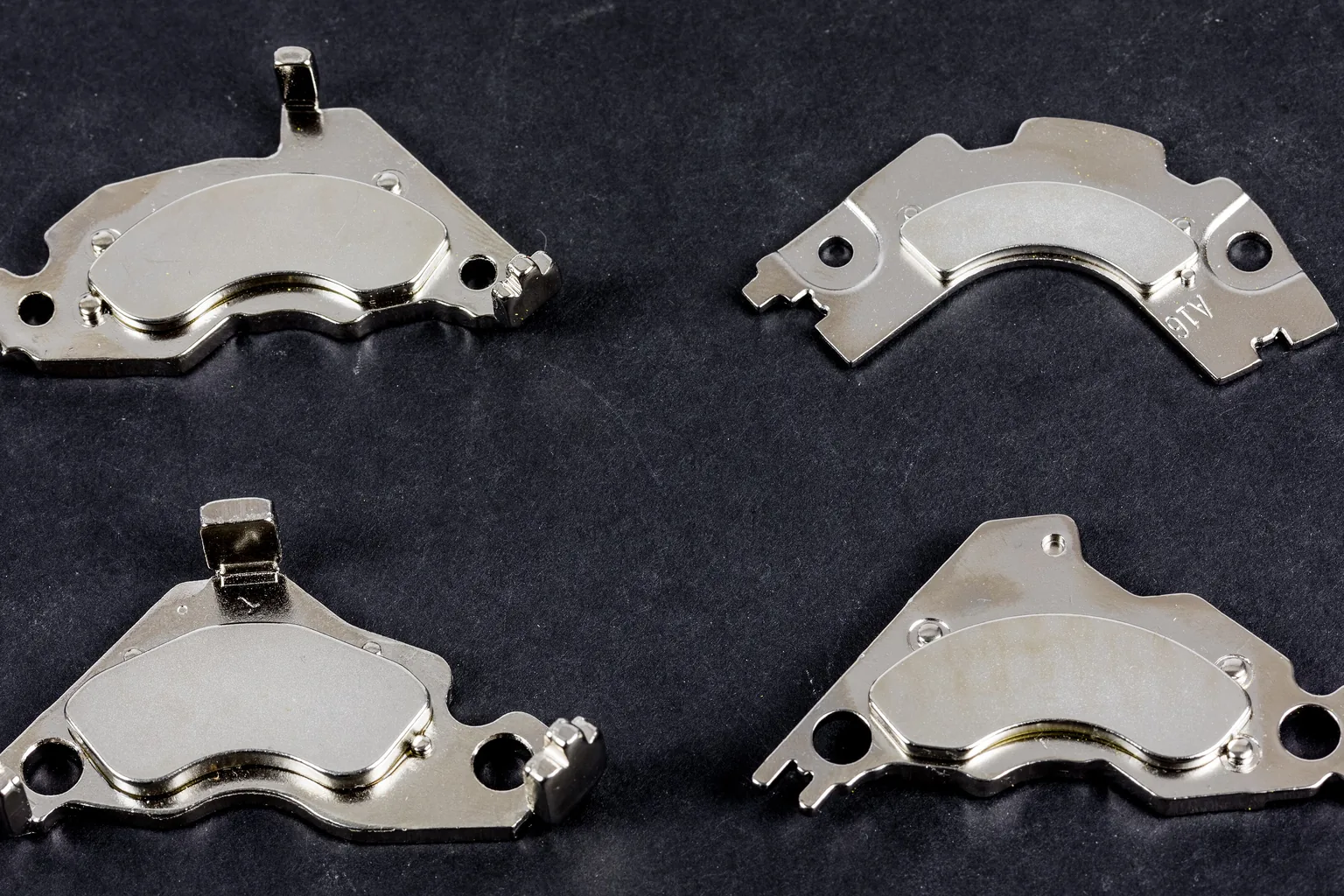
On 17 November 2026, at a joint news conference in Kuala Lumpur with French President Emmanuel Macron, Prime Minister Anwar Ibrahim bent one of Malaysia’s firmest trade rules. Since 1 January 2024 the country has banned exports of unprocessed rare earths.1 France would be an exception. “We do not export raw materials, but with France we have done so, because you are committed to that processing and working with the Malaysians as a team,” Anwar said.2
The project at the centre of the visit is a venture between Carester, a French company, and Malaysia’s Malaco Mining. In July, Carester announced plans for a separation plant in Perak under a 10-year joint venture.3 Macron said the project would cover extraction and processing in Malaysia, with reserved volumes and capacity and the possibility of refining in France. “Operations are due to begin in early 2027,” he said.2 AFP reported it would add another 13,000 tonnes of processed minerals, including those needed for high-performance magnets.3 Anwar gave no further details, AP noted. The quote is AP’s rendering; in AFP’s, he says “we’ll do so” rather than “we have done so”.
Rare earths make the strongest permanent magnets, which turn motors in cars, robots and industrial machines and help the hard drives in cloud data centres read and write data. China controls most of the supply chain, and since April 2025 it has required licences to export several of the elements. Malaysia already hosts the largest rare earth processing plant outside China, Lynas’s plant at Gebeng.34 A month before Macron’s visit it had issued guidelines for conditional raw exports and approved a first shipment.5 The chip side of the same contest is in our articles on Nvidia servers and export controls and Malaysia’s chip industry. For the machines that need the magnets, see humanoid robots.
The short version
- On 17 November 2026 Anwar said Malaysia, which has banned raw rare earth exports since 1 January 2024, would make an exception for France. The Carester–Malaco venture is due to start in early 2027, Macron said.
- China mined about 69% of the world’s rare earths in 2025, by our arithmetic from USGS data. The IEA says the top refiner’s share fell to 85% in 2025, partly because Malaysia produced more.
- Since April 2025 China has required licences for seven medium and heavy rare earths. Its wider October 2025 rules are paused until 10 January 2027.
- Estimates of Malaysia’s rare earths run between 274,144 tonnes and 16.1 million tonnes; USGS lists reserves of 710,000 tonnes and 2025 mine output of about 110 tonnes. None of these is proven value.
- Lynas’s Gebeng licence runs to 2 March 2036 if its radioactive residue stops by 2031. Price floors helped lift its average price 88% to a record A$102.1 a kilo in the September 2026 quarter.
A ban with a growing list of exceptions
Malaysia announced the moratorium in September 2023.1 CSIS, a Washington think tank, quotes the then trade minister, Tengku Zafrul Aziz: “Our policy is not to prevent trade forever. Our policy is to prevent the export of cheap unprocessed raw materials so that value is added to Malaysia.”1 CSIS reports an earlier exemption. MCRE Resources, a Chinese-Malaysian venture mining clay at Gerik in Perak, was allowed to ship ore for processing by a subsidiary of a Chinese state-owned group. It exported nearly US$11 million (about RM45 million) of ore to China in January–September 2025, CSIS says.16
Pressure grew in 2026. In August Deputy Natural Resources Minister Syed Ibrahim Syed Noh told Bloomberg that states and investors wanted the ban eased. “They are knocking at the doors already,” he said, naming interest from the US, Australia, France and India.7 In October his ministry issued guidelines allowing raw exports for research and development or processing, subject to conditions. The first approval went to an applicant the ministry did not name. It said quality of investment and technology transfer mattered more than the number of approvals.5
DTEC Mineral and Metal Technology then said it was the first company allowed to ship unprocessed material to the US. Its chief executive, a Malaysian-born US citizen, and a partner own 51%. It has approval to export up to 700 tonnes and is preparing a first shipment of about 30 tonnes for research. It plans a US$600 million (about RM2.5 billion) refinery within three years.8
Seventeen metals, one magnet
Rare earths are a group of 17 metallic elements.9 The name misleads. “Rare earths are relatively abundant in the Earth’s crust, but minable concentrations are less common than for most other mineral commodities,” says the US Geological Survey (USGS). Their leading use worldwide is magnets.10 The heavy rare earths, which include terbium and dysprosium, are less abundant than the light ones but are elevated in some ores, including ion-adsorption clays.11
The magnet that matters is neodymium-iron-boron, or NdFeB. Sintered NdFeB magnets “are the strongest magnets commercially available”, a 2022 review by the US Department of Energy (DOE) says. An electric-vehicle motor typically needs 1–2 kg of magnet material.12 Neodymium and praseodymium, traded together as NdPr, provide most of the rare earth content. Dysprosium is added so a magnet keeps its strength when hot.12
That last ingredient decides who is exposed. A magnet grade rated to 100°C holds about 1.4% dysprosium by weight. One for an EV traction motor, rated to 200–220°C, holds 8.5–11%.12 Hard drives and loudspeakers “require magnets with very little if any Dy as they do not operate at high temperatures”, DOE notes.12 Samarium-cobalt magnets are the high-temperature alternative where weight does not matter.12
100°C grades go into hard drives and MRI machines; 150°C grades into wind generators and industrial motors; 200–220°C grades into hybrid and electric traction drives. The last bar shows the top of the range.
Source: US Department of Energy, Rare Earth Permanent Magnets (February 2022), Table 4.
Show the numbers
| Maximum temperature | Dysprosium, % |
|---|---|
| 80°C | <0.5% |
| 100°C | 1.4% |
| 120°C | 2.8% |
| 150°C | 4.2% |
| 180°C | 6.5% |
| 200–220°C | 8.5–11% |
Cost explains why shortages surprise buyers. DOE estimated that rare earth metals make up over 90% of a magnet’s material costs. The IEA, measuring total magnet cost, puts rare earths at around 40%, “but less than 1% of a vehicle’s value”, as reported by Global Mining Review.1213 A part that cheap is easy to overlook until it stops arriving.
Where AI comes in
We found no public source that counts the rare earths inside AI data centres. The links run through storage, robots and motors. Western Digital says hard disk drives, which it calls essential to cloud data-centre infrastructure, use neodymium, praseodymium and dysprosium “to help HDDs precisely read and write data”.14 Permanent magnet motors and drives also turn up in industrial equipment, and DOE says they use about 2% less energy than an efficient induction motor at variable speed.12
In a pilot announced in April 2025, Western Digital, Microsoft and two recyclers processed about 50,000 pounds (about 22.7 tonnes) of shredded drives and other parts. The material came from Microsoft’s US data centres. The companies report about 90% recovery of elemental and rare earth materials, and an estimated 95% cut in greenhouse gas emissions against mining.14 The recycling chemistry was developed at the US Critical Materials Innovation Hub. “This project is significant because HDD feedstock will continue to grow globally as AI continues to drive the demand for HDD data storage,” said Tom Lograsso, its director.14
Robots are the second link. On 22 April 2025 Elon Musk told Tesla investors that its Optimus humanoid was waiting on Chinese magnet licences. Optimus has no existing supply chain for its motors and actuators, he said, and he predicted “a million Optimus units per year” by 2030.15 In China’s 2026 exports, magnets for EV drive motors, wind turbines and industrial robots are taking a larger share, says SMM, a Shanghai price agency.16
Hopefully, we’ll get a license to use the rare earth magnets. China wants assurances that these are not used for military purposes, which obviously they’re not. They’re just going into a humanoid robot. So that’s not a weapon system.
AI is also being turned on the problem. Materials Nexus, a UK company, says its AI screened over 100 million compositions and produced a rare-earth-free magnet, MagNex, in three months. It claims the magnet costs 20% as much in materials as rare earth magnets.17 The report gives no measured magnetic performance. USGS’s general verdict on substitutes is that they “generally are less effective”.10
How China came to dominate
The US once led. “In the 1970s and ’80s, Mountain Pass was the world’s top producer of rare earths,” mining.com recounts. By the early 2000s Chinese supply had driven prices so low that the Californian mine halted in 2002. Molycorp acquired it and listed in 2010, then shut it in 2015 and filed for bankruptcy three months later. A creditor, James Litinsky, founded MP Materials in 2017 to restart it.18
CSIS describes the pattern behind such failures. China oversupplies the market until prices crash and rival projects fail, then restricts exports once it controls the chain.1 Today its share rises at each step. In 2025 China mined 270,000 of the world’s 390,000 tonnes of rare-earth oxide, about 69%, by our arithmetic from USGS data.10 China accounted for 60% of mined production of magnet rare earths in 2024 and 91% of refined output, the IEA said, as reported by The National.19 DOE put its share of NdFeB magnet production at 92% in 2020.12
Different years and sources. The IEA says the top refiner’s share fell to 85% in 2025 and could reach 70% by 2035 if planned projects arrive on time.
Source: USGS (February 2026); The National, citing the IEA (9 November 2026); US Department of Energy (February 2022); Global Mining Review (17 July 2026).
Show the numbers
| Share | What |
|---|---|
| 69% | of rare earth mine output in 2025, by our arithmetic from USGS data (270,000 of 390,000 tonnes) |
| 91% | of refined rare earth output in 2024, the IEA says |
| 92% | of NdFeB magnet production in 2020, the US Department of Energy estimated |
The gap is closing slowly in refining. The IEA said “new projects in the US and production increases in Malaysia reduced the share of the top supplier from over 90% in 2023 to 85% in 2025”. Planned refining outside the dominant supplier covers only about two-thirds of expected mine output by 2035, and planned magnet production about one-third.13 Chinese firms invested roughly US$120 billion (about RM491 billion) in foreign mining in 2023–2025, the IEA estimates, according to the Bank of Finland’s BOFIT.20
Export licences since April 2025
In April 2025 China put samarium, gadolinium, terbium, dysprosium, lutetium, scandium and yttrium under export licensing, in alloy, compound, metal and oxide form.10 The list also covers magnet materials containing them, notes Clark Hill, a US law firm.21 The controls “forced some automakers to reduce production or temporarily suspend operations,” the IEA said.13 Ford and Suzuki halted some production, mining.com reported.18
In October 2025 China added europium, holmium, erbium, thulium and ytterbium.10 One directive, Announcement 61, reached abroad: it “introduced an extraterritorial licensing obligation for foreign-made products incorporating Chinese-origin rare-earth materials or technologies,” Clark Hill wrote. After Presidents Donald Trump and Xi Jinping met in South Korea, China’s commerce ministry suspended six October directives on 7 November 2025.21 The April controls stayed, although China began issuing general licences to selected exporters.10 So did China’s ban on dual-use exports to US military end users.21
The pause was set to expire on 10 November 2026.20 The day before, the ministry extended it to 10 January 2027, ahead of an expected Trump–Xi meeting at the APEC summit in Shenzhen.19 The IEA estimates that full enforcement of the October measures could put US$6.5 trillion (about RM26.6 trillion) of annual production outside China at risk.13 China also targets firms. In June 2026 it added ten US companies to its export control list, including MP Materials, owner of the Mountain Pass mine.20 In 2025 Chinese suppliers stopped providing spare parts for Chinese-made equipment at Lynas’s refinery, CSIS reports.1
| Measure | What it covers | Latest reported status |
|---|---|---|
| Announcement 46, Article 1 (2024) | Dual-use exports to US military end users | Banned, unchanged |
| Announcement 18 (April 2025) | Seven medium and heavy rare earths, with their compounds and magnet materials | In force; general licences for some exporters |
| October 2025 directives | Five more elements; licences for foreign products with Chinese rare earths | Paused to 10 January 2027 |
| June 2026 listing | Ten US companies, including MP Materials | On the export control list |
Source: USGS; Clark Hill; BOFIT; The National.10192021
Trade data show a recovery that bypasses the US. China exported 6,165 tonnes of rare earth magnets in September 2026, its highest month of the year, SMM reported from customs data. January–September exports were 48,055 tonnes, up 20% on a year earlier. SMM attributes the September spike mainly to cargo held at ports in July and August, and says end-user checks on each shipment have become “the critical bottleneck”.22 Exports to the US fell 22.5% in January–February to 994 tonnes, then in March to 406 tonnes, a fifth monthly fall.2324 In October China committed to a “green channel” for EU magnet licences.22
The 2025 figures for March, July and September are our arithmetic from reported year-on-year changes. SMM says January–September exports rose 20%; the difference lies in months not shown, for which we found no confirmed 2025 figures. Exports to the US fell 30.6% year on year in March 2026, to 406 tonnes.
Source: The Star (20 March 2026); mining.com/Reuters (20 April 2026); SMM (21 August and 20 October 2026), from Chinese customs data.
Show the numbers
| Item | 2025 | 2026 |
|---|---|---|
| January | 6,357 | 6,024 |
| February | 3,585 | 4,739 |
| March | 5,323 | 5,238 |
| July | 5,576 | 5,375 |
| September | 5,778 | 6,165 |
Prices, floors and a security premium
Prices fell hard before the controls. USGS data on NdPr oxide, the main magnet input, show annual averages of US$124 a kilo in 2022, US$55 in 2024 and US$69 in 2025 (about RM282).10 That is a fall of 56% and then a rebound of 25%, by our arithmetic. Heavy rare earths cost far more. Terbium oxide averaged US$1,010 a kilo in 2025, about 15 times NdPr, and dysprosium oxide US$239.11
The controls split the market. Prices outside China had “surged three to five times since export controls were enacted,” Neha Mukherjee of Benchmark Mineral Intelligence wrote in July 2025.25 In 2026 the IEA found European prices of dysprosium and terbium about five times China’s domestic prices, BOFIT reported.20 Inside China, light and heavy prices moved apart: on 13 October 2026 SMM reported NdPr oxide up 3,500 yuan a tonne and terbium oxide down 45,000 yuan.26
Price floors are the West’s answer. In July 2025 the US Department of Defense set a 10-year floor of US$110 a kilo (about RM450) for NdPr from MP Materials.25 That is 59% above the 2025 USGS average, by our arithmetic. Floors carry a cost. BOFIT, summarising Oxford Economics, writes that “REE supplies outside China could remain permanently more expensive than their Chinese equivalents, even when there is no physical scarcity on world markets”.20 The IEA’s Fatih Birol says a higher cost “can be viewed as a mineral security premium in a time of geopolitical uncertainty”. He calls it “a form of economic insurance against major supply risks”.13
The floor applies from July 2025 for 10 years and is drawn across all years for comparison. Prices are Argus free-on-board averages compiled by USGS. US$110 is about RM450 a kilo.
Source: US Geological Survey, Mineral Commodity Summaries 2026; mining.com (10 July 2025).
Show the numbers
| Period | NdPr oxide, annual average | US floor price (from July 2025) |
|---|---|---|
| 2021 | US$92 | US$110 |
| 2022 | US$124 | US$110 |
| 2023 | US$75 | US$110 |
| 2024 | US$55 | US$110 |
| 2025 | US$69 | US$110 |
Washington, Tokyo and Brussels respond
The July 2025 deal made the Pentagon MP Materials’ largest shareholder, through US$400 million (about RM1.6 billion) of preferred stock. It also guarantees purchase of all magnets from a new “10X” plant for a decade after commissioning, due in 2028, taking MP to about 10,000 tonnes a year.25 Apple followed with a US$500 million deal for magnets from MP’s Texas plant, shipping from 2027.18 In August 2025 the US Department of War lent US$150 million for heavy rare earth separation at Mountain Pass. Even so, no US company produced sustained commercial quantities of heavy rare earths in 2025, USGS says.11 On 2 February 2026 Trump launched Project Vault, a US$12 billion (about RM49 billion) minerals stockpile that aims to hold a 60-day emergency supply.27
Japan learned earlier. China’s 2010 restrictions “exposed the vulnerability of its industrial base and national security,” Kunihiko Shinoda writes in East Asia Forum. China’s share of Japan’s rare earth imports fell from around 90% in 2010 to under 60% by 2020, helped by Lynas and by magnets that use less rare earth.28 In March 2026 Lynas agreed to reserve 75% of its heavy rare earth oxide output for Japan. The buyer is JARE, a venture of the state agency JOGMEC and the trader Sojitz.29 JARE also agreed to buy at least 5,000 tonnes of NdPr a year from Malaysia at a US$110 floor, CSIS says.1
The EU’s Critical Raw Materials Act sets 2030 benchmarks for strategic materials. At least 10% of annual consumption should be extracted in the EU, 40% processed and 25% recycled there, with no more than 65% from any single outside country. The Commission expects EU rare earth demand to rise six-fold by 2030.30 At Evian in June 2026 the G7 agreed that by 2030 no single country outside the bloc should control over 60% of rare earth and magnet supply.20 Public finance for critical minerals quadrupled in 2023–2025 to US$65 billion, the IEA says, but total investment fell 9% in 2025.13
| Product | Producing now | Heavy rare earths | Price floor or guaranteed buyer | Government backing | Verdict |
|---|---|---|---|---|---|
| Lynas MalaysiaGebeng, Pahang | Yessince 2012 | YesDy, Tb, Sm | Yesover half of output | YesJapan, US | ✓Operating |
| MP MaterialsMountain Pass, US | Yesmine and refinery | Partlyseparation being built | YesUS$110/kg, 10 years | YesPentagon top shareholder | ✓Operating |
| Carester–MalacoPerak | Nodue early 2027 | Partlyminister’s claim | Unknown | PartlyJapan expected to join | ?Too early |
| JS Link magnet plantKuantan | No3,000 t/yr planned | Unknown | Unknown | Unknown | ?Too early |
| DTEC MineralMalaysia, site not chosen | Nowithin three years | Unknown | Unknown | Partlyeligible for US funds, it says | ?Too early |
| Khazanah–China refineryTalks since 2025 | No | Unknown | Unknown | Partlytalks only | ?Too early |
| Lynas TexasHeavy rare earth plant | No | Partlyplanned | Unknown | Unknown | !In doubt |
Our reading of company statements and news reports. “Unknown” means we found no public evidence, not that none exists. Lynas reports “significant uncertainty” over its Texas plant because of wastewater and costs, CSIS says.
Source: Mining Weekly (29 October 2026); FMT (19 March and 7 July 2026); mining.com (10 July 2025); USGS (February 2026); AP (17 November 2026); The Star (2 October 2025; 30 October 2026); CSIS (20 October 2026).
Show the numbers
| Product | Producing now | Heavy rare earths | Price floor or guaranteed buyer | Government backing | Verdict |
|---|---|---|---|---|---|
| Lynas Malaysia | Yes (since 2012) | Yes (Dy, Tb, Sm) | Yes (over half of output) | Yes (Japan, US) | Operating |
| MP Materials | Yes (mine and refinery) | Partly (separation being built) | Yes (US$110/kg, 10 years) | Yes (Pentagon top shareholder) | Operating |
| Carester–Malaco | No (due early 2027) | Partly (minister’s claim) | Unknown | Partly (Japan expected to join) | Too early |
| JS Link magnet plant | No (3,000 t/yr planned) | Unknown | Unknown | Unknown | Too early |
| DTEC Mineral | No (within three years) | Unknown | Unknown | Partly (eligible for US funds, it says) | Too early |
| Khazanah–China refinery | No | Unknown | Unknown | Partly (talks only) | Too early |
| Lynas Texas | No | Partly (planned) | Unknown | Unknown | In doubt |
Lynas in Gebeng
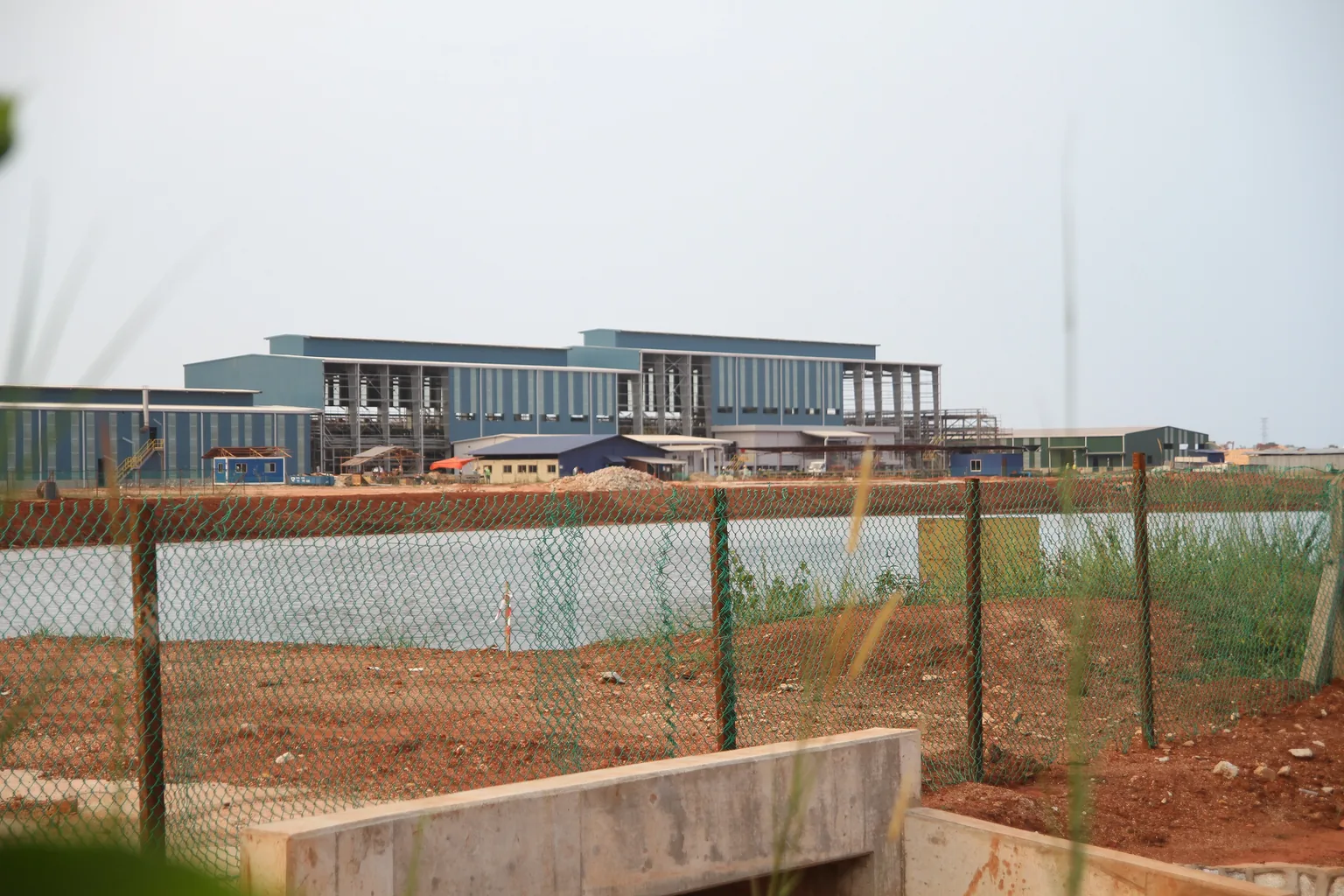
Lynas, an Australian company, won approval in 2007 to build in an industrial park at Gebeng, near Kuantan. Protests and lawsuits by the Stop Lynas movement delayed operations until 2012, CSIS writes. Malaysia gave it a 12-year tax holiday as a pioneer investor.1 The plant refines rare earths mined in Western Australia and shipped as concentrate.931
The argument has always been about residue. Water leach purification (WLP) residue is a by-product containing naturally occurring radioactive material, including thorium.32 In 2023 the government banned the plant’s cracking and leaching stage as a licence condition. Lynas went to the High Court in July 2023. Australia’s government told Malaysian authorities that “a drop in production from Lynas’s Malaysian facility will have an impact on global rare earths supply chains”. In October a compromise let the work continue, with Lynas committing to remove radioactive waste and spend 1% of gross sales on research in Malaysia.1
On 2 March 2026 the government announced a ten-year renewal of the licence under the Atomic Energy Licensing Act 1984, running from 3 March 2026 to 2 March 2036. WLP generation must stop after five years, by 2031.33 “Whatever WLP is produced before or within that five-year period must be neutralised into waste that is no longer radioactive, to below one becquerel per gramme (1 Bq/g). I think this is a positive move that will make our 2031 goal achievable,” Science Minister Chang Lih Kang told reporters in Parliament.33 Below 1 Bq/g, material is not radioactive waste in law.34 Amanda Lacaze, then chief executive, said: “Lynas welcomes the longer licence term, which provides greater investment certainty for Lynas and our rare earths supply chain partners and customers.”33
Residue made until then goes into a permanent disposal facility that was 75% complete in March, and no new one may be built. Lynas need not ship residue out of Malaysia. A laboratory project extracting thorium from WLP showed “very promising results” in 2025, Chang wrote on Facebook, though scaling up typically takes seven to 10 years.33 The 1% research requirement continues, and radiation data are public at erms.atom.gov.my.3334 Four months earlier, the US trade pact’s joint statement had committed Malaysia to “granting extended operating licenses to create certainty for businesses to increase production capacity”.35 We found no evidence linking the two.
Granting a long-term licence extension before fully resolving legacy waste management concerns risks normalising regulatory leniency in matters involving radioactive materials.
Qarrem Kassim of ISIS Malaysia told AFP the conditions were substantially tighter, but that the five-year arrangement “remained a compromise”.4
Heavy rare earths and a magnet plant
Gebeng now makes what few others can. In 2025 it became the first plant outside China to produce dysprosium oxide.1 It also separates terbium, and in March 2026 added samarium oxide, ahead of an April target. Lynas says that makes it the only commercial producer of separated heavy rare earth oxides outside China. Europium, holmium, ytterbium and erbium will depend on commercial agreements, it says.36 A facility announced in October 2025 will lift heavy rare earth feedstock capacity to 5,000 tonnes a year, against 1,500 now.1
Growth runs into the residue limit. Lynas wants to raise lanthanide concentrate capacity to 110,000 tonnes a year, against 95,000, at a projected cost of nearly RM500 million. Its environmental impact assessment (EIA) showed the expansion would bring total WLP residue to 2.55 million tonnes by March 2031, against 2.41 million without it. In June 2026 the Department of Environment asked for an updated EIA.37
Downstream, South Korea’s JS Link plans a factory near the plant making 3,000 tonnes a year of sintered NdFeB magnets, with up to 400 jobs, Lynas says. Lynas will invest about A$50 million (about RM138 million) in JS Link and supply it exclusively until January 2028.38 At DOE’s 1–2 kg per EV motor, 3,000 tonnes would serve 1.5 to 3 million motors, by our arithmetic.12
Floors, profits and a Pentagon contract
Price floors changed Lynas’s finances. Net profit for the year to June 2026 was A$222.4 million (about RM613 million), against A$8 million a year earlier. The average selling price rose 59% to A$80.7 a kilo.39 In the September 2026 quarter revenue rose 55% to A$310.1 million. Floors now cover more than half of output, and the average price rose 88% to a record A$102.1 a kilo, though sales volumes fell 17.7%.40 A one-month kiln shutdown in Malaysia will cut December-quarter output; acting chief executive Pol Le Roux said stockpiles would fill orders.3140
Financial years end on 30 June. FY2025 and September quarter 2025 prices are our arithmetic from the reported 59% and 88% rises. A$102.1 is about RM282 a kilo. Lynas’s price blends all its products and is not comparable with NdPr prices.
Source: The Star/Reuters (26 August 2026); Mining Weekly/Reuters (29 October 2026).
Show the numbers
| Period | A$ per kg |
|---|---|
| FY2025 | ~50.8 |
| FY2026 | 80.7 |
| Sep qtr 2025 | ~54.3 |
| Sep qtr 2026 | 102.1 |
One buyer is the Pentagon. In March 2026 Lynas signed a binding letter of intent to supply the US defence industry with light and heavy rare earth oxides for four years. It includes a US$110 floor for NdPr oxide, Malaysiakini reported.41 The agreement is worth US$96 million (about RM393 million).42 More than 20 Malaysian civil society groups, including Greenpeace Malaysia, objected that it supports the US military, which backs Israel in its war against Hamas in Gaza. On 16 July 2026 a parliamentary select committee chaired by Wong Chen examined it.42 Syed Ibrahim said in August that Malaysia, “as a country which is supporting Palestine, would look into it”.7 In October Investment, Trade and Industry Minister Johari Abdul Ghani told Parliament it was “technically difficult” to know where Lynas’s exports end up. Lynas had told the government the supply was for magnet research and development.41
Four numbers for one resource
Malaysia’s rare earth wealth is quoted in figures that disagree, because each measures something different. The largest comes from 2019 studies by the Minerals and Geoscience Department (JMG): 16.1 million tonnes of in-situ non-radioactive rare earth resources across 10 states, “valued at over RM809.6bil”.9 Bloomberg calls them “inferred” reserves, previously valued by the government at RM970 billion.7 The Star gives a notional value of RM800 billion to RM1 trillion.9
Detailed studies give a far smaller figure: 274,144 tonnes across nine states, from work covering 103.9 sq km, the New Straits Times reported in January 2026.43 USGS lists Malaysia’s reserves at 710,000 tonnes of rare-earth oxide, revised from government reports. That is under 1% of a world total above 75 million tonnes.10 Hannam & Partners puts Malaysia’s recognised reserves at about 1% of the world’s, Bloomberg reports.7
CSIS calls the 16.1 million tonnes “the third-largest reserves in the world after China (44 million) and Brazil (21 million)”.1 That compares a resource estimate with reserves, and USGS now lists Brazil at 11 million.10 None of the reports we opened says whether the 16.1 million tonnes counts contained rare-earth oxide, as USGS does. Qarrem says these are geological estimates, not proven commercial reserves. Many lie in sensitive areas, including permanent forest reserves. “Where mining is prohibited, the economic value of those deposits is effectively zero,” he said.9
| Figure | What it measures | Source |
|---|---|---|
| 16.1 million tonnes | In-situ non-radioactive resources in 10 states, 2019 studies; called “inferred” | JMG, via The Star and Bloomberg |
| 710,000 tonnes | Reserves, as rare-earth oxide, revised from government reports | USGS |
| 274,144 tonnes | Resources found by detailed studies over 103.9 sq km, nine states | New Straits Times |
| 110 tonnes | Mine output in 2025, estimated from China’s import data | USGS |
| RM809.6 bn, RM970 bn, RM800 bn–1 tn | Notional values put on the 16.1 million tonnes | Government, via The Star and Bloomberg; The Star |
Source: The Star; Malay Mail/Bloomberg; USGS; New Straits Times.791043
The promise lies in the type of deposit. Much of Malaysia’s identified resource is in ion-adsorption clays, “where the elements are loosely bound to clay rather than locked in hard rock”, Bloomberg explains. That potentially makes them easier and cheaper to extract. They can contain the heavy rare earths that high-performance magnets need.8 They are also non-radioactive, unlike hard-rock deposits that are often found with radioactive material, CSIS notes.1 The states most often cited are Terengganu, Kelantan, Kedah and Perak.9 Elsewhere the method is new. Ionic clay mining has historically taken place only in China, CSIS says. Brazil’s Serra Verde, bought by USA Rare Earth in 2026, is projected to produce 6,400 tons in 2027. Australia’s nuclear science agency began pilot processing of Koppamurra clay in June 2026.1
The missing middle
Mining is a state matter. A company needs an exploration licence, then a mining lease, both issued by the state government, and states hold authority over land and royalties.9 “Miners want to mine, but they can’t even get access to areas to explore,” a geologist told The Star.9 Federal direction comes from the National Mineral Policy. A third version, NMP3, was discussed by the National Mineral Council in July 2024, but in February 2026 it was unclear whether Cabinet had approved it.9 In August the natural resources ministry said it was committed to developing a domestic midstream and downstream chain in line with NMP3.44 In Washington in February, Foreign Minister Mohamad Hasan said Malaysia “seeks to work with partners to move beyond a purely extractive role”.9
Malaysia has one operating non-radioactive rare earth mine, an ion-adsorption clay operation at Kenering, Gerik, run by MCRE Resources. No commercial plant in Malaysia can separate ionic clay carbonate into oxides, and Lynas is built for imported concentrate.9 “Lynas is not a miner in Malaysia. It processes mineral concentrates, not ionic clay carbonates,” said Teoh Lay Hock of the Malaysian Chamber of Mines.9 Lynas signed a deal with Kelantan in May 2025 for future mixed rare earth carbonate.45 Qarrem says it would test whether local carbonate can feed Lynas’s refinery.9
This creates a chicken-and-egg problem. Without raw materials, you cannot justify building a midstream plant. But without a midstream plant, miners have nowhere to send their product.
Teoh says Malaysia lacks proven technology for environmentally friendly in-situ leaching, the method China uses on ionic clays.9 The method injects chemicals into the ore body and carries “a high risk of groundwater contamination and deadly landslides”, CSIS warns.1 Qarrem blames coordination more than law: the ministry’s operating procedures for these mines “have only been formally implemented by a limited number of states”.9
- 1State governmentsApprovalState licencesAn exploration licence, then a mining lease, from the state government. Only a handful of players hold rare earth licences.
- 2MCRE ResourcesClay is leachedThe only operating mine, at Gerik in Perak, leaches ion-adsorption clay and has shipped its ore to China for refining.
- 3Carester–Malaco (planned)Carbonate is separatedNo commercial plant in Malaysia can yet separate carbonate into oxides. A French-Malaysian plant in Perak is due in early 2027.
- 4Lynas MalaysiaConcentrate is refinedGebeng separates imported Australian concentrate, including dysprosium, terbium and samarium oxides.
- 5JS Link (planned)Magnets are madeA factory near Kuantan is planned to make 3,000 tonnes a year of sintered NdFeB magnets.
Steps two and four run in parallel: Malaysian clay and Australian concentrate do not yet meet in one plant. Lynas has a 2025 agreement with Kelantan for future mixed carbonate.
Source: The Star (19 February 2026; 2 October 2025); CSIS (20 October 2026); AP (17 November 2026); FMT (19 March and 7 July 2026).
Show the numbers
| Step | Who | What | Detail |
|---|---|---|---|
| 1 | State governments | State licences (approval) | An exploration licence, then a mining lease, from the state government. Only a handful of players hold rare earth licences. |
| 2 | MCRE Resources | Clay is leached | The only operating mine, at Gerik in Perak, leaches ion-adsorption clay and has shipped its ore to China for refining. |
| 3 | Carester–Malaco (planned) | Carbonate is separated | No commercial plant in Malaysia can yet separate carbonate into oxides. A French-Malaysian plant in Perak is due in early 2027. |
| 4 | Lynas Malaysia | Concentrate is refined | Gebeng separates imported Australian concentrate, including dysprosium, terbium and samarium oxides. |
| 5 | JS Link (planned) | Magnets are made | A factory near Kuantan is planned to make 3,000 tonnes a year of sintered NdFeB magnets. |
Foreign partners are queuing. Reuters reported in October 2025 that Khazanah Nasional was likely to partner a Chinese state-owned firm on a refinery. China “has banned export of its processing technology”, so a deal would be a departure for Beijing.45 In August 2025 Johari had said President Xi asked to limit cooperation to state-linked companies to protect trade secrets, Reuters reported.45 On 11 November 2025 Anwar told Parliament: “I proposed that China’s investment with Khazanah in rare earths be expedited.” He added: “Some assume the trade agreement restricts rare earths to the US. That is not true.”46
The US trade pact was signed on 26 October 2025. In its joint statement Malaysia “committed to refrain from banning, or imposing quotas on, exports to the United States of critical minerals or rare earth elements”. It also bars restrictions on selling rare earth magnets to US companies.35 Japan sent geology and environmental chemistry experts in February 2026.1 In August, Malaysia and Australia discussed managing neutralisation underflow residue and building neodymium magnet manufacturing.44 France’s trade minister, Nicolas Forissier, claimed in July that Carester–Malaco could eventually meet 15–20% of world heavy rare earth needs, with Japan expected to join.47 None of the reports we opened names its Malaysian feedstock.
Bukit Merah and Bukit Enggang
Malaysia has been here before. Its first rare earth plant opened in 1982 at Bukit Merah, Perak. Asian Rare Earths, a Mitsubishi subsidiary, extracted rare earths from old tin-smelting slag.1 Residents and activists say the area, home to 15,000 people, saw higher rates of leukaemia, birth defects and infant deaths, AFP reported in 2012. The government “has neither admitted nor denied radiation poisoning in the village”, it added.48 We found no published official health study, so these remain allegations.
Sources disagree on when the plant closed. CSIS says it “was permanently closed in 1992”.1 AFP wrote that “Mitsubishi Chemicals closed the plant in 1994 after a mounting public outcry”. It reported the company’s only payout as a RM500,000 lump sum to the community that year.48 The Consumers’ Association of Penang (CAP) also gives 1994. Summarising a CNA Insider report, it says the plant had no long-term waste facility and that Mitsubishi Chemicals spent US$100 million on the clean-up.49 The legacy still shapes attitudes to the industry, CSIS notes.1
Clay brings newer harms. In June 2023 Kedah police arrested nine people, including four Myanmar nationals, over the alleged smuggling of migrants. The migrants were allegedly brought to mine rare earths illegally in the Bukit Enggang forest reserve in Sik. Police seized about 99 kg of minerals containing rare earths, and four suspects were charged under anti-trafficking and immigration laws.50 Syed Ibrahim says the government is mapping deposits in protected forests and studying how to extract them without damaging biodiversity.7
Things you probably didn’t know
- America’s terbium imports all came from China. China supplied 100% of US imports of terbium compounds and metals in 2021–24, USGS says.11
- The US considered stockpiling finished magnets. Its potential purchases for fiscal 2025 included 450 tons of NdFeB magnet block and 60 tons of samarium-cobalt alloy.10
- Malaysia’s rare earths began with tin. By 1904 what is now Malaysia supplied half the world’s tin, and slag from old tin smelting later fed Bukit Merah.1
- Malaysia set up its first mineral analysis laboratory in 2024. Terra Mineral Lab and a Centre of Excellence for Mineral Research received about US$3 million (about RM12 million) of government funding.1
- Japan is paying for half of a French rare earth plant. France’s trade minister said Japan finances half of Carester’s facility in France.47
- America’s stockpile was compared to Costco. An official likened Project Vault to a membership that allows buying in bulk.27
- EU law targets recycled magnets. The Critical Raw Materials Act sets recyclability and recycled-content requirements to encourage large-scale recycling of permanent magnets.30
- A rare-earth-free magnet plant is planned in Minnesota. Niron Magnetics says its first full-scale iron nitride magnet plant at Sartell will create 175 jobs in phase one.51
What worked and what didn’t
The cases that worked had backing in place before the next shock arrived.
Worked
Heavy rare earths from Gebeng
Lynas produced dysprosium oxide in 2025, the first outside China. It also separates terbium, and added samarium in March 2026.136 The IEA credits production increases in Malaysia, with new US projects, for cutting the top refiner’s share to 85% in 2025.13 Japan’s patient capital and US offtake helped, CSIS says.1
Why it worked: fourteen years of operating experience gave allies a ready plant when China tightened.
Worked
Japan after the 2010 shock
China supplied around 90% of Japan’s rare earth imports in 2010 and under 60% by 2020. Japan’s Lynas offtake now covers roughly 30% of its heavy rare earth demand.28 In March 2026 Lynas reserved 75% of its heavy oxide output for Japan.29
Why it worked: a state agency backed a non-Chinese supplier for years before it was needed.
Worked
A floor under Mountain Pass
Low prices closed Mountain Pass in 2002, and its later owner, Molycorp, went bankrupt in 2015.18 In July 2025 the Pentagon took US$400 million of MP Materials stock, set a US$110 floor and guaranteed to buy a new plant’s magnets. Shares jumped over 53% before the market opened.25
Why it worked: a guaranteed price and buyer remove the risk that oversupply kills the project.
Worked
Old drives, new materials
Western Digital, Microsoft and partners turned about 50,000 pounds of shredded data-centre drives into usable materials. They report about 90% recovery and about 80% of feedstock mass recaptured.14 These are company figures from a pilot.
Why it worked: one owner with large volumes of similar scrap made collection cheap.
Worked
The 2023 compromise
In 2023 Malaysia banned cracking and leaching at Gebeng, and Lynas went to court. By October the licence was amended to allow it, in return for removing radioactive waste and spending 1% of gross sales on local research.1 Dysprosium oxide followed in 2025.
Why it worked: a quick, conditional settlement kept the plant running and added obligations.
Didn’t work
Bukit Merah
The Mitsubishi-owned plant processed tin slag from 1982. It closed in 1992 or 1994, depending on the source, after a public outcry over residents’ health. It had no long-term waste facility, CAP says.14849
Lesson: radioactive residue without a long-term plan costs decades of public trust.
Didn’t work
Car lines without magnets
China’s April 2025 controls forced some carmakers to cut or suspend production.13 Ford and Suzuki halted some output.18 Rare earths are under 1% of a vehicle’s value, the IEA says.13
Lesson: a cheap part with no ready substitute needs buffer stock.
Didn’t work
Clay with nowhere to go
Despite 16.1 million tonnes on paper, Malaysia has one operating clay mine and no commercial plant to separate clay carbonate. Licences are slow, and NMP3’s approval was unclear in February 2026.9
Lesson: a resource figure attracts headlines; mining needs licences, a refinery and a buyer together.
Stalled
Residue follows the industry
Lynas reports “significant uncertainty” over its Texas heavy rare earth plant because of wastewater and costs.1 At Gebeng, the Department of Environment asked for an updated EIA for an expansion that would lift total WLP residue to 2.55 million tonnes by 2031, from 2.41 million.37
Lesson: waste and water, not chemistry, set the pace of new capacity.
Too early
A ban that bargains
Malaysia now trades raw-export exceptions for processing promises: DTEC’s planned refinery, Carester–Malaco’s plant in Perak and the French exception.28 None of the new separation plants is yet operating.
Lesson: judge the policy when a plant runs in Malaysia, not when exports start.
What to do now
None of this is legal or investment advice. Check specifics with a licensed adviser.
For manufacturers in Malaysia
- Map the magnetsList bought parts with NdFeB or samarium-cobalt magnets, such as motors, fans, pumps, drives and storage, and whether they contain dysprosium or terbium. The April 2025 controls still cover those.21
- Ask about Chinese contentGet supplier declarations on Chinese-origin rare earths now, in case the paused extraterritorial rule returns after 10 January 2027.1921
- Hold buffer stockKeep more than just-in-time stock of magnet parts where a stoppage is costly. Carmakers learned this in 2025.13
For data-centre and IT operators
Write drive recovery into decommissioning contracts. The Western Digital and Microsoft pilot shows retired drives can return rare earths to supply chains.14
For investors
Questions to ask
- How much revenue depends on price floors, and when do they end?
- Is a resource figure a reserve, an inferred resource or a notional value?
- Does the project hold a state mining lease and an approved EIA?
- Where will residue go, and what does the licence say about it?
For communities near Gebeng and clay mines
Environmental radiation data are open at erms.atom.gov.my.33 EIA reports go on public display: Lynas’s 770-page expansion EIA was open for review between 10 April and 9 May 2026.37
For policymakers
- Publish resource figures with stated definitions: reserve or resource, ore or oxide.910
- Bring all states onto the ministry’s operating procedures for clay mines.9
- Tie each raw-export permit to dated processing milestones in Malaysia.5
What to watch to 2030
- 27 November 2026. The end date Clark Hill gave for China’s pause on US-specific licensing of gallium, germanium and antimony. Reports of the 9 November extension do not say whether it is covered.1921
- December quarter 2026. Gebeng’s one-month kiln shutdown; the permanent disposal facility is due for completion by year end.3340
- 10 January 2027. China’s pause on its October 2025 controls expires unless extended.19
- Early 2027. Carester–Malaco operations are due to begin, Macron said.2
- 2027. MP Materials is due to begin shipping magnets to Apple from Texas.18
- January 2028. Lynas’s exclusive supply deal with JS Link ends.38
- 2028. MP’s 10X magnet plant is due to begin commissioning.25
- By late 2029. DTEC expects its planned refinery within three years of October 2026.8
- 2030. The G7’s 60% ceiling and the EU’s benchmarks fall due, and Malaysia aims to be a regional critical-minerals hub.72030
- 2031. Lynas must stop producing WLP residue, and its licence faces a formal review.33
Malaysia’s resource, reserve and value figures measure different things, and none is proven commercial value. Company figures are their own claims, and calculations marked as ours are illustrative. Nothing here is investment or legal advice. Conversions use Bank Negara Malaysia’s middle rate of 17 November 2026: RM4.089 per US dollar and RM2.7576 per Australian dollar.
Sources
- CSIS, The race for Malaysia’s rare earths, 20 October 2026: csis.org
- AP via WTOP, Malaysia-France rare earths project to begin in early 2027, 17 November 2026: wtop.com
- Malay Mail (AFP), France and Malaysia strike rare earth deal, 17 November 2026: malaymail.com
- Free Malaysia Today (AFP), Malaysia renews Lynas licence despite waste concerns, 3 March 2026: freemalaysiatoday.com
- Free Malaysia Today (Bloomberg), first export of raw rare earths under new rules, 22 October 2026: freemalaysiatoday.com
- Bank Negara Malaysia, exchange rates, 17 November 2026: bnm.gov.my
- Malay Mail (Bloomberg), Malaysia weighing limited return of raw rare earth exports, 3 August 2026: malaymail.com
- The Star (Bloomberg), US-owned start-up plans Malaysian rare earth refinery, 30 October 2026: thestar.com.my
- The Star, Ambition meets reality in rare earths, 19 February 2026: thestar.com.my
- US Geological Survey, Mineral Commodity Summaries 2026: Rare earths, February 2026: usgs.gov
- US Geological Survey, Mineral Commodity Summaries 2026: Rare earths (heavy), February 2026: usgs.gov
- US Department of Energy, rare earth permanent magnets supply chain assessment, February 2022: energy.gov
- Global Mining Review, IEA Global Critical Minerals Outlook 2026, 17 July 2026: globalminingreview.com
- Western Digital, hard disk drive rare earth material capture programme, 17 April 2025: westerndigital.com
- The Register, Tesla’s Optimus and China’s magnet licences, 23 April 2025: theregister.com
- SMM, China rare earth permanent magnet exports, July 2026, 21 August 2026: metal.com
- mining.com, AI helps develop rare-earth-free permanent magnet, 11 June 2024: mining.com
- mining.com, Apple invests $500m in Pentagon-backed MP Materials, 15 July 2025: mining.com
- The National, China extends pause on rare earth export curbs, 9 November 2026: thenationalnews.com
- Bank of Finland BOFIT, Weekly Review 32/2026, 7 August 2026: bofit.fi
- Clark Hill, China hits pause on rare-earth export controls, 24 November 2025: clarkhill.com
- SMM, China’s rare earth magnet exports hit record in September, 20 October 2026: metal.com
- The Star, China’s exports of rare earth magnets jump, 20 March 2026: thestar.com.my
- mining.com (Reuters), China’s rare earth magnet exports fall 1.6% in March, 20 April 2026: mining.com
- mining.com, MP Materials lands multi-billion Pentagon deal, 10 July 2025: mining.com
- SMM, rare earth daily review, 13 October 2026: metal.com
- Malay Mail (Reuters), Trump launches Project Vault minerals stockpile, 3 February 2026: malaymail.com
- East Asia Forum, Lessons from Japan’s rare earth shock, 19 March 2026: eastasiaforum.org
- Caixin Global, Japan secures 75% of Lynas heavy rare earths, 12 March 2026: caixinglobal.com
- European Commission, Critical Raw Materials Act, 30 May 2024: europa.eu
- The Star (Bloomberg), one-month shutdown at Lynas Malaysian plant, 30 October 2026: thestar.com.my
- Malay Mail, Lynas stays another decade, 6 March 2026: malaymail.com
- The Star, Lynas gets 10-year licence under strict terms, 3 March 2026: thestar.com.my
- Free Malaysia Today, conditions for Lynas’s 10-year licence renewal, 2 March 2026: freemalaysiatoday.com
- MITI, Malaysia-US Agreement on Reciprocal Trade and joint statement, 26 October 2025: miti.gov.my
- Free Malaysia Today, Lynas Malaysia produces first samarium oxide, 19 March 2026: freemalaysiatoday.com
- Free Malaysia Today, Lynas to submit updated EIA for Gebeng expansion, 23 June 2026: freemalaysiatoday.com
- Free Malaysia Today, Lynas and JS Link sign Kuantan magnet plant deal, 7 July 2026: freemalaysiatoday.com
- The Star (Reuters), Lynas expands global footprint, 26 August 2026: thestar.com.my
- Mining Weekly (Reuters), Lynas posts 55% revenue jump on record prices, 29 October 2026: miningweekly.com
- Malaysiakini, hard to know where Lynas’ rare earth products end up, 13 October 2026: malaysiakini.com
- mining.com, Malaysia probes Lynas Pentagon rare earths supply deal, 17 July 2026: mining.com
- New Straits Times, 274,144 tonnes of rare earth resources in nine states, 21 January 2026: nst.com.my
- Malay Mail (Bernama), Malaysia and Australia eye neodymium magnet production, 12 August 2026: malaymail.com
- The Star (Reuters), China and Malaysia in talks for rare earths refinery, 2 October 2025: thestar.com.my
- theSun (Bernama), Anwar urges faster Khazanah-China rare earth investment, 11 November 2025: thesun.my
- Free Malaysia Today, French-Malaysian rare earths project, 9 July 2026: freemalaysiatoday.com
- Phys.org (AFP), toxic legacy of Malaysia’s rare earths village, 26 June 2012: phys.org
- Consumers’ Association of Penang, the Malaysian town still haunted by radioactive pollution, 6 November 2023: consumer.org.my
- Free Malaysia Today, nine held for smuggling migrants to mine rare earths, 13 July 2023: freemalaysiatoday.com
- EV Engineering & Infrastructure, rare-earth-free magnet plant in Minnesota, 5 November 2025: evengineeringonline.com
Related research
 An indictment says a Malaysian official was toldA US indictment announced on 1 October 2026 says a co-conspirator emailed a Malaysian official in March 2024 that 27 Nvidia-equipped servers flown to Kuala Lumpur had been transhipped to a…
 AI’s scarcest step is Malaysia’s oldest chip trade. It still earns 6 sen in the ringgit.AI has made packaging and test, Penang’s trade since 1972, the chip industry’s bottleneck, yet that step earns about 6% of the industry’s value added.
 The RM1,700 test: a working humanoid still costs about five times a Malaysian worker an hourThe IFR counted about 7,000 full-size humanoids sold worldwide in 2025, against more than 600,000 conventional factory robots.
