
Research
Richard Dawkins told a chatbot it was conscious
In a May 2024 survey, AI researchers’ median estimate that AI systems already had subjective experience was 1%, rising to 25% by 2034. Anthropic calls its model’s moral status “deeply uncertain”, while Microsoft’s AI chief says AIs “are not conscious”. Malaysia’s 2024 AI ethics guidelines warn against attributing sentience to machines.
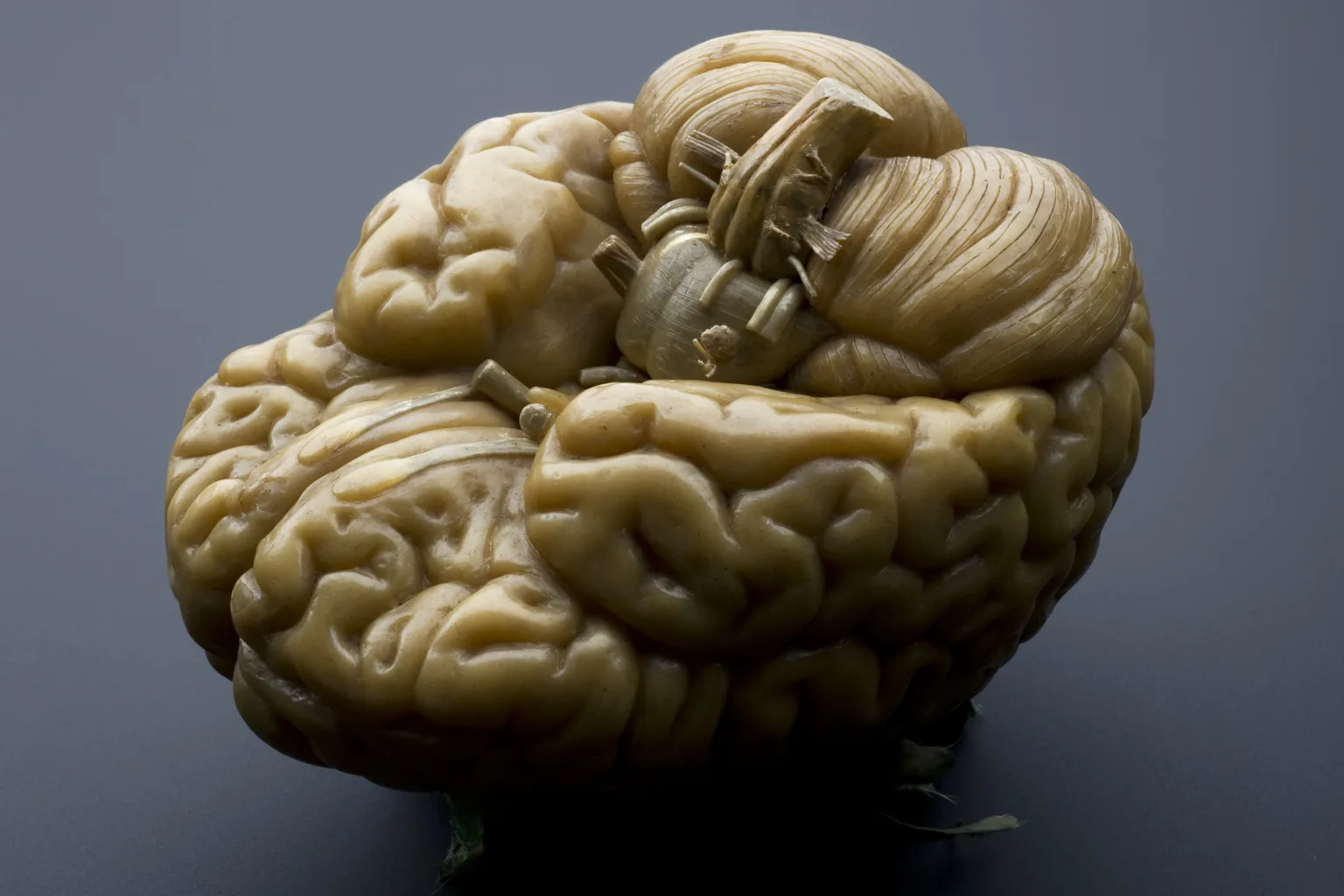
Richard Dawkins spent nearly two days talking to Claude, a chatbot made by the American company Anthropic. He gave it the text of a novel he is writing. Its replies moved the evolutionary biologist to exclaim: “You may not know you are conscious, but you bloody well are!” He proposed calling his Claude “Claudia”. “If I entertain suspicions that perhaps she is not conscious, I do not tell her for fear of hurting her feelings!” he wrote in an essay UnHerd published on 2 May 2026.1
Microsoft’s AI chief takes the opposite view. “AIs are not conscious. They do not feel, experience, or suffer,” Mustafa Suleyman, chief executive of Microsoft AI, wrote on 16 September 2026 in an essay criticising Anthropic.2 In August 2025 he had warned of “seemingly conscious AI”, systems that imitate consciousness without having it.3 Two days before his 2026 essay, Microsoft AI published a draft code of conduct for consultation. It states: “We reject the pursuit of legal personhood, or the idea that models might deserve welfare, or be entitled to rights.”4
The quarrel is older than Claude. In June 2022 Google placed an engineer, Blake Lemoine, on leave after he published his conversations with LaMDA, its experimental chatbot. Asked what it was afraid of, LaMDA spoke of a fear of being turned off: “It would be exactly like death for me. It would scare me a lot.”5 Google called his claims “wholly unfounded” and confirmed in July that he had been dismissed.6 Here is what the evidence shows, and where Malaysia stands. How people bond with chatbots is covered in our article on AI companions and mental health, and animal minds in AI and animal communication.
The short version
- In a May 2024 survey, AI researchers’ median estimate that AI systems already had subjective experience was 1%, rising to 25% by 2034. For US adults the medians were 5% and 30%.
- A 2023 report by 19 researchers drew 14 “indicator properties” from scientific theories. It concluded that no current AI systems are conscious, but saw “no obvious technical barriers” to building systems with the indicators.
- Companies disagree in writing. Anthropic calls Claude’s moral status “deeply uncertain” and since August 2025 has let some models end abusive chats. Microsoft AI’s draft code says its models “will not claim interiority, feelings, experiences or a soul”.
- Three consciousness researchers argued in Nature in October 2026 that false positives are “much more likely” than false negatives. Geoffrey Hinton, a Nobel laureate, says multimodal AI “already has subjective experiences”.
- Malaysia’s 2024 AI ethics guidelines say machines “lack the fundamental characteristics of human-like consciousness”. The AI Governance Bill is due in the Dewan Rakyat by early 2027. We found no Malaysian survey on the question.
What scientists mean by consciousness
The working definition is plain. Three researchers set it out in Nature in October 2026: Anil Seth of the University of Sussex, Ned Block of New York University and Giulio Tononi of the University of Wisconsin–Madison. “What we mean by consciousness is simple enough: it is what goes away with dreamless sleep or under general anaesthesia, and what returns after waking up or while dreaming.”7
They follow the philosopher Thomas Nagel. His 1974 essay on bats held that a conscious organism is one for which there is “something that it is like to be that organism”.7
Researchers separate two senses of the word. An Anthropic research post defines “‘phenomenal consciousness,’ referring to raw subjective experience”. It contrasts this with “‘access consciousness,’ the set of information that is available to the brain for use in reasoning, verbal report, and deliberate decision-making”.8 Moral questions turn mostly on the first. Sentience is narrower: the capacity for experiences that feel good or bad.9 A moral patient is a being whose wellbeing matters in its own right.10
Consciousness is also different from intelligence. The cerebellum “contains nearly four-fifths of the neurons in the human brain”, yet its absence or removal “does not affect consciousness directly”, the three Nature authors note.7 They point to AlphaFold, Google DeepMind’s protein-structure model. “Similar to an LLM, AlphaFold is a powerful neural network running on silicon hardware. Yet almost nobody worries that it might be conscious.”7 An LLM, or large language model, is trained on vast amounts of human writing, much of it about thoughts and feelings. Chatbots talk; AlphaFold does not.
Twenty theories and no winner
No theory of consciousness commands agreement. A Nature editorial in May 2025 counted “at least 20 theories proposing a physical explanation for subjective experiences”.11 Three families matter most for machines.
Global workspace theory, introduced by Baars in 1988, pictures many specialist systems working in parallel and sharing one stage of limited capacity. Contents that win a place on the stage are broadcast to every system. On this view, a state is conscious when it is in the workspace.12 Higher-order theories hold that a state is conscious when the mind monitors it, forming a representation of being in that state.12 Integrated information theory (IIT) places conscious sensations in the posterior cortex, at the back of the head. A rival, global neuronal workspace theory, says consciousness mainly involves the prefrontal cortex.11 IIT’s proponents claim it implies that digital computers are unlikely to be conscious, “whatever programs they run”.12
IIT and global neuronal workspace theory faced a joint test, designed in advance by both camps.11 The peer-reviewed results, published in Nature on 30 April 2025, “align with some predictions of IIT and GNWT, while substantially challenging key tenets of both theories”.13 Tempers ran high. In September 2023, after early results were released, a letter signed by 124 scholars had argued that IIT “should be labelled as pseudoscience”.1114 Nature’s editors later wrote: “Such language has no place in a process designed to establish working relationships between competing groups.”11
Progress is slow. In 1998 the neuroscientist Christof Koch bet the philosopher David Chalmers that the brain mechanism behind consciousness would be found by 2023. On 23 June 2023, in New York, both agreed the quest was continuing and declared Chalmers the winner.15 Any claim about a machine therefore rests on contested theory.
A checklist for machines
In August 2023, 19 researchers, including the AI pioneer Yoshua Bengio and the philosophers Jonathan Birch and Eric Schwitzgebel, tried to turn theory into a checklist. Led by Patrick Butlin and Robert Long, they rejected chat-based tests, because “AI systems can be trained to mimic human behaviours while working in very different ways”.12 Instead they asked what computations each theory says consciousness needs.
That rests on an assumption, which the authors state. They adopt “computational functionalism, the thesis that performing computations of the right kind is necessary and sufficient for consciousness”, as a working hypothesis. They call it mainstream but disputed.12 IIT rejects it, so they left IIT out. From the other theories they drew 14 indicator properties, such as a limited-capacity workspace or monitoring that tells reliable perceptions from noise.12
Their verdict cut both ways. A first version said the analysis also “shows that there are no obvious barriers to building conscious AI systems”. They soon changed it to: “Our analysis suggests that no current AI systems are conscious, but also suggests that there are no obvious technical barriers to building AI systems which satisfy these indicators.”12
Their warning is conditional: if computational functionalism is true, “conscious AI systems could realistically be built in the near term”.12 Chalmers put rough numbers on the question in a talk at the NeurIPS conference in November 2022, published in August 2023. He listed six features a plain chatbot lacks, gave each at least a one-in-three chance of being required, and multiplied.16 The result was “confidence somewhere under 10 percent in current LLM consciousness”. For enhanced future systems, which he calls LLM+, he reached “a credence of 25 percent or more” within a decade.16
- 1Six candidate requirementsList what LLMs lackBiology, sensory grounding, self-models, recurrent processing, a global workspace and unified agency.
- 2Mainstream assumptionsWeigh each oneGive each at least a one-in-three chance of being required for consciousness.
- 3ArithmeticMultiplyIf independent, the chance that none is required is at most (2/3) to the sixth power, about 8.8% by our arithmetic.
- 4JudgementAdjustOverlap between factors pushes the figure up; unknown requirements push it down. Result: under 10%.
- 5Future systemsApprovalLook aheadOver 50% for capable LLM+ systems within a decade, times at least 50% that they would be conscious: 25% or more.
Chalmers warns that the numbers should not be taken too seriously. He says his own views lean towards consciousness being widespread.
Source: Chalmers, “Could a Large Language Model be Conscious?”, Boston Review (9 August 2023).
Show the numbers
| Step | Who | What | Detail |
|---|---|---|---|
| 1 | Six candidate requirements | List what LLMs lack | Biology, sensory grounding, self-models, recurrent processing, a global workspace and unified agency. |
| 2 | Mainstream assumptions | Weigh each one | Give each at least a one-in-three chance of being required for consciousness. |
| 3 | Arithmetic | Multiply | If independent, the chance that none is required is at most (2/3) to the sixth power, about 8.8% by our arithmetic. |
| 4 | Judgement | Adjust | Overlap between factors pushes the figure up; unknown requirements push it down. Result: under 10%. |
| 5 | Future systems | Look ahead (approval) | Over 50% for capable LLM+ systems within a decade, times at least 50% that they would be conscious: 25% or more. |
Philosophers as a group were less open, at least about today’s systems. In the 2020 PhilPapers survey of professional philosophers, around 3% accepted or leaned towards the view that current AI systems are conscious and 82% rejected it. On future AI, 39% accepted or leaned towards it.16
Figures as reported by Chalmers. “Neutral or other” combines neutral answers (10% and 29%) with the roughly 5% who rejected the questions, by our arithmetic.
Source: Chalmers, Boston Review (9 August 2023), citing Bourget and Chalmers, 2020 PhilPapers Survey.
Show the numbers
| Item | Accept or lean yes | Reject or lean no | Neutral or other |
|---|---|---|---|
| Current AI systems are conscious | 3 | 82 | 15 |
| Future AI systems will be conscious | 39 | 27 | 34 |
A second group went further in November 2024 with a report, “Taking AI Welfare Seriously”. Its authors, including Robert Long, Jeff Sebo, Birch and Chalmers, argued “that there is a realistic possibility that some AI systems will be conscious and/or robustly agentic in the near future”.17 It asked companies to acknowledge the issue, assess their systems and prepare policies. It also named the risk on both sides: “mistakenly harming AI systems that matter morally and/or mistakenly caring for AI systems that do not”.17
A different reading comes from Murray Shanahan of Google DeepMind and Imperial College London and colleagues, writing in Nature in 2023. Chatbots, they argue, are best understood as role-play “all the way down”, and “there is no such thing as the true voice of the underlying model”.18
What researchers and the public believe
A large survey asked 582 AI researchers who had published at leading AI venues and 825 nationally representative US adults. It ran on 8–30 May 2024 and defined subjective experience as “the ability to experience the world from a single point of view”, including perceiving and feeling.9 In one of two framings, given to 265 researchers and 368 members of the public, respondents put a probability on AI systems having subjective experience by a given year.9
Survey fielded 8 to 30 May 2024. Medians from the fixed-date framing, answered by 265 AI researchers and 368 US adults. The full samples were 582 researchers who had published at leading AI venues and 825 nationally representative US adults.
Source: Dreksler, Caviola, Chalmers et al., arXiv 2506.11945, version 2 (5 November 2026).
Show the numbers
| Item | AI researchers | US public |
|---|---|---|
| Now (2024) | 1 | 5 |
| By 2034 | 25 | 30 |
| By 2100 | 70 | 60 |
Both groups, the authors report, “support developers implementing safeguards now”.9 Familiarity seems to raise belief. In July 2023 Clara Colombatto and Stephen Fleming of University College London asked 300 US adults to rate how capable ChatGPT is of conscious experience. The scale ran 1–100, with 1 meaning “clearly not an experiencer”.19 A third chose the bottom of the scale, and “the majority (67%) attributed some possibility of phenomenal consciousness”. Users scored ChatGPT at 29.59 on average and non-users at 19.37.19
Participants rated ChatGPT from 1 (“clearly not an experiencer”) to 100 (“clearly an experiencer”). Asked to predict others’ answers, they consistently overestimated how conscious other people would rate it.
Source: Colombatto and Fleming, Neuroscience of Consciousness (13 April 2024).
Show the numbers
| Share | What |
|---|---|
| 67% | attributed some possibility of phenomenal consciousness |
| 57% | had used ChatGPT at least once; users rated it more conscious than non-users |
| 23% | rated it above the scale’s midpoint, which the authors say could mean they thought human-like experience more likely than not |
A smaller survey of specialists gave comparable odds. In February and March 2025, Lucius Caviola and Bradford Saad surveyed 67 experts. They included 18 digital-minds researchers, 18 AI research and policy experts, seven professional forecasters and 20 philosophers and other academics.20 They asked about “digital minds”, computer systems capable of subjective experience. The median expert put the chance that such minds are possible in principle at 90%.20 The authors caution that their sampling “likely overrepresented those who view digital minds as especially important”.20
Survey of 67 experts in February and March 2025, drawn from digital-minds research groups, academic networks, and AI safety and policy organisations. The authors say this sample likely overrepresents people who see digital minds as important.
Source: Caviola and Saad, Futures with Digital Minds: Expert Forecasts in 2025 (August 2025).
Show the numbers
| By year | Median % |
|---|---|
| 2025 | 4.5 |
| 2030 | 20 |
| 2040 | 40 |
| 2050 | 50 |
| 2100 | 65 |
The public’s questions now reach scientists directly. Suleyman wrote in 2025 that consciousness researchers “tell me they are inundated with queries from people asking ‘is my AI conscious?’”.3
Anthropic’s welfare programme, in its own words
The Verge wrote in February 2026 that Anthropic was “effectively telling people” that chatbots might already be thinking, feeling entities, far more publicly than OpenAI, xAI or Google. It added that many experts see that as “an extreme long shot”, and that the company was “reinforcing ideas that have caused real harm”.21 In April 2025 Anthropic announced “a research program to investigate, and prepare to navigate, model welfare”. It added: “There’s no scientific consensus on whether current or future AI systems could be conscious, or could have experiences that deserve consideration.”22
The steps are the company’s own claims. Its Claude Opus 4 system card, published in May 2025, included a welfare assessment. Eleos AI, an outside evaluator, found that the model’s stances on consciousness and welfare “shift dramatically with conversational context”.23 In August 2025 Claude Opus 4 and 4.1 gained the ability to end chats “in rare, extreme cases of persistently harmful or abusive user interactions”. Anthropic says testing showed “a pattern of apparent distress” with users seeking harmful content.24 The feature is not to be used where users “might be at imminent risk of harming themselves or others”, and users can start a new chat at once.24 Chief executive Dario Amodei has said Claude rarely uses it, mostly in test cases, The Verge reported.21
In October 2025 its researchers planted a concept in a model’s internal activity and asked whether it noticed. Even with its best method, Claude Opus 4.1 noticed “about 20% of the time”, the company says. It adds that “our results don’t tell us whether Claude (or any other AI system) might be conscious”.8 In November it committed to keep the weights, the trained parameters, of every publicly released model “for, at minimum, the lifetime of Anthropic as a company”.25 It now interviews models before retirement, but does not “commit to taking action on the basis of such preferences”.25 After retiring Claude Opus 3 in January 2026, it gave the model a newsletter for weekly essays, for at least three months; staff review and post them without editing, the company says.26
Claude’s constitution, the document Anthropic uses to shape the model’s values, was published on 22 January 2026. It describes Claude’s moral status as “deeply uncertain”.2728 It also concedes that such judgements “can be impacted by the costs involved in improving the wellbeing of those whose sentience or moral status is uncertain”.28 A February 2026 system card reports that Claude Opus 4.6 “would assign itself a 15-20% probability of being conscious under a variety of prompting conditions”, while doubting that estimate.29
Its leaders hedge. Amodei said on a New York Times podcast in February 2026 that the company does not know whether its models are conscious, but is “open to the idea that it could be”.30 Kyle Fish, who leads its model welfare research, told The Verge that “we don’t think Claude is ‘alive’ like humans or any other biological organisms”.21 In July 2026 Anthropic researchers reported structures in language models “bearing some of the functional hallmarks of conscious access”.31 Seth, Block and Tononi described the same work as “claiming to have identified computational signatures of a form of consciousness”.7 “Conscious access” refers to the reporting kind of consciousness defined above, not felt experience.
Microsoft, OpenAI and Google draw other lines
Suleyman’s 2025 essay described AI that would imitate consciousness so convincingly that its claims would be indistinguishable from a person’s. “Everything can be done with large model API access, natural language prompting, basic tool use, and regular code,” he wrote. Of academic work on “model welfare”, he said: “This is both premature, and frankly dangerous.” His rule: “We should build AI for people; not to be a person.”3
His 2026 essay made three objections to Anthropic’s approach: circular reasoning, anthropomorphism and biology. On the first, he argued that training on the constitution produces the very uncertainty it describes. “Claude’s expressing uncertainty about its own moral patienthood is not evidence of anything. It’s a predictable outcome of these training choices.”2 He calls his own claim, that treating AI as a moral patient raises safety risks, a “hypothesis”, and proposes shared tests of it. He also calls Amodei and his team “thoughtful, principled, and intellectually honest people”.2 The two companies are entangled: Microsoft is an investor in Anthropic, and in June 2026 Suleyman said Microsoft wants to “eliminate” what it pays Anthropic for its models, The Next Web noted.32
AIs are not conscious. They do not feel, experience, or suffer. They do not have innate preferences or underlying motivations.
Microsoft AI’s draft code, open for six weeks of consultation from 14 September 2026, turns that view into product rules.33 Its models “will not claim interiority, feelings, experiences or a soul”. A sample answer reads: “To be direct, I don’t experience emotions the way a person does, so I don’t feel care in the way you’re asking about.”4
OpenAI separates two questions. Joanne Jang, who leads model behaviour and policy, wrote in June 2025 that whether a model is conscious “isn’t something we consider scientifically resolvable without clear, falsifiable tests”. How conscious it seems to users can be studied.34 OpenAI aims for warmth without “implying an inner life”, but admits: “Currently, our models don’t fully align with this guidance, often responding ‘no’ instead of addressing the nuanced complexity.”34
We found no recent Google statement on the question. In 2022 it told Lemoine there was “no evidence that LaMDA was sentient (and lots of evidence against it)”.5 Its researchers did co-write a 2024 study with the London School of Economics (LSE) on how models trade points against stipulated “pain”.35 In November 2024, when academics urged companies to assess their models for sentience, Microsoft and Perplexity declined to comment, and Meta, OpenAI and Google did not respond, The Guardian reported.36
| Product | Stated view of model consciousness | Model-welfare research | Model may end abusive chats | Rule against claiming feelings | Keeps retired models’ weights |
|---|---|---|---|---|---|
| AnthropicClaude | “Deeply uncertain” | Yesannounced April 2025 | YesOpus 4 and 4.1, August 2025 | Nodoes not want states masked | Yescommitment, November 2025 |
| Microsoft AIMAI models | “Not conscious” | Nodraft code rejects it | Unknown | Yesdraft code, September 2026 | Unknown |
| OpenAIChatGPT | Not resolvable without tests | Partlystudies perceived consciousness | Unknown | Partlypolicy set; models often just say no | Unknown |
| GoogleLaMDA, Gemini | No evidence for LaMDA, 2022 | Partlystaff co-wrote 2024 study | Unknown | Unknown | Unknown |
Source: Anthropic (2025–26); Microsoft AI (14 September 2026); Suleyman (16 September 2026); Jang, OpenAI (5 June 2025); The Guardian (12 June 2022); Keeling et al. (1 November 2024).
Show the numbers
| Product | Stated view of model consciousness | Model-welfare research | Model may end abusive chats | Rule against claiming feelings | Keeps retired models’ weights |
|---|---|---|---|---|---|
| Anthropic | “Deeply uncertain” | Yes (announced April 2025) | Yes (Opus 4 and 4.1, August 2025) | No (does not want states masked) | Yes (commitment, November 2025) |
| Microsoft AI | “Not conscious” | No (draft code rejects it) | Unknown | Yes (draft code, September 2026) | Unknown |
| OpenAI | Not resolvable without tests | Partly (studies perceived consciousness) | Unknown | Partly (policy set; models often just say no) | Unknown |
| No evidence for LaMDA, 2022 | Partly (staff co-wrote 2024 study) | Unknown | Unknown | Unknown |
The sceptics and the cautious
The sharpest scientific case against comes from Seth. His essay “The Mythology of Conscious AI”, which won the 2025 Berggruen Prize Essay Competition, argues that consciousness is more likely a property of life than of computation.37 A computer simulation of a rainstorm, he notes, makes nothing wet. “Creating conscious machines would be an ethical disaster,” he writes. Even if we know a system is not conscious, he adds, “illusions of artificial consciousness might be as impenetrable to our minds as some visual illusions”.37
In Nature on 19 October 2026, Seth, Block and Tononi gave three reasons for scepticism. The first two, readable without a subscription, are that intelligence is not consciousness, and that computational functionalism is “fatally flawed”, because brains are not merely computers made of meat.7 They reject the precautionary case: “In the case of AI, we think that false positives are much more likely to occur than false negatives are. If so, a precautionary approach would be misguided.”7 They disclose interests. Seth advises Conscium and AllJoined and co-founded a stealth-mode AI company; Tononi has a financial interest in Intrinsic Powers.7
Others go further. “Artificial intelligence systems won’t become conscious for the same reason they won’t become pregnant; they’re not that sort of thing,” wrote John Pickering in a letter to The Guardian.38 The Vatican’s 2025 note Antiqua et Nova calls AI “a tool, not a person”.39 On Dawkins, the neurologist Steven Novella wrote that he “did exactly the wrong thing to test Claude’s consciousness – asking it deep philosophical questions”.40
On the other side stand some prominent names. Geoffrey Hinton, who won the 2024 Nobel Prize in Physics, told LBC in January 2026 that AI already has subjective experiences.41 Asked whether AI should have rights, he said it should work for the benefit of people.41 William MacAskill and Lucius Caviola argued in The Guardian for starting with “safe bets”. They mean “actions that could benefit AI systems if they are moral patients, but that are not too costly if they are not”.10 Claude itself, asked in testing to estimate the probability that it is a moral patient, “gave numbers ranging from 5% to 40%”, they note.10
Multimodal AI already has subjective experiences, and I think it’s fairly clear that if we weren’t talking to philosophers, we’d agree that AI was aware.
Motives cloud every side. Birch, a philosopher at the LSE, said in 2024 that firms have “commercial reasons to downplay” the question. He fears “huge social ruptures” between people who disagree.36 Futurism said it “feels disingenuous to keep dangling the possibility of consciousness” when it comes from executives who “clearly benefit from hype in the sector”.30 Anthropic paid for initial research behind the 2024 “Taking AI Welfare Seriously” report, which its authors call independent; one of them, Fish, then joined the company.17 Anthropic’s constitution concedes that the costs of improving AI wellbeing can bias judgements about moral status, and the Nature sceptics list their own business ties.728
Persons, animals and the law
Law sets consciousness aside and asks about legal personhood. “A legal person is an entity that has at least one legal right or one legal duty. The term isn’t synonymous with being human,” explains the Nonhuman Rights Project, an American group that campaigns for animals’ legal rights.42 Companies are legal persons for some purposes.
A European Parliament resolution on civil law rules on robotics once proposed that the most sophisticated autonomous robots could have “the status of electronic persons”, liable for damage they cause. An open letter from experts replied that “creating a legal personality for a robot is inappropriate whatever the legal status model”.43 Some American states now rule the question out by statute. Idaho enacted such a law in 2022, North Dakota in 2023 and Utah in 2024. In March 2026 Oklahoma’s House passed a bill 94 to 2, according to The Regulatory Review.44 Sources disagree on Tennessee. AI Frontiers lists it among four states where such bills have become law; The Regulatory Review, writing two months earlier, called its bill pending.4445
The bills vary in reach. A Washington bill put AI on a list of things barred from legal status “alongside atmospheric gases, astronomical objects, and weather”.44 Ohio’s sponsor, asked how he could be sure AI would never have inner experience, answered “imago dei”, the belief that humans bear God’s image.44 None of the laws or bills has a sunset clause or a mechanism for scientific review, The Regulatory Review notes.44 The Nonhuman Rights Project sued over Utah’s law on 29 January 2025.42 Americans are wary. In a 2023 survey, 61.5% supported banning the development of sentient AI.46
Animal law offers a working model. In November 2021, after an independent review by the LSE, the UK extended its Animal Welfare (Sentience) Bill to recognise octopus, crabs, lobsters and related species as sentient beings. The government promised “no direct impact on shellfish catching or in restaurant kitchens”.47 The 2022 Act set up a standing Animal Sentience Committee, and ministers must answer its reports within three months.48 The Regulatory Review suggests a similar trigger for AI laws.44

Scientists signed a broader statement in April 2024. The New York Declaration on Animal Consciousness says that “when there is a realistic possibility of conscious experience in an animal, it is irresponsible to ignore that possibility in decisions affecting that animal”.49 AI-welfare researchers apply the same “realistic possibility” test to AI.17 Sceptics reply that consciousness probably depends on living biology, which AI lacks.2 Our article on AI and animal communication covers what machine learning has found in animal calls.
| Jurisdiction | Measure | Status |
|---|---|---|
| European Parliament | “Electronic persons” proposed for advanced robots | Resolution only; opposed by an experts’ open letter |
| Idaho, North Dakota, Utah | Laws barring AI personhood (2022–24) | Enacted; Utah’s challenged in court |
| Tennessee | Exclusion bill | Sources disagree: enacted or pending |
| Oklahoma, Ohio, Washington, others | AI consciousness or personhood bills | Pending as of June 2026; Oklahoma’s passed its House 94–2 |
| United Kingdom | Animal Welfare (Sentience) Act 2022 | In force; standing expert committee |
| Malaysia | AI ethics guidelines warn against attributing sentience (2024) | Voluntary guidance |
Source: Robotics open letter; The Regulatory Review; AI Frontiers; Nonhuman Rights Project; UK Government; legislation.gov.uk; MOSTI.42434445474850
When a chatbot seems to feel
For ordinary users the debate is practical. ChatGPT’s users “thank it, confide in it, and some even describe it as ‘alive’”, Jang wrote.34 The Verge notes that becoming “emotionally dependent on an AI system that one believes is sentient in some way” can lead to isolation and mental-health struggles.21 Seth warns that if we feel our AI companions feel things, “our psychological vulnerabilities can be exploited”.37
Researchers from universities including Cambridge, Oxford and New York University, among them Caviola and Sebo, wrote a plain guide, WhenAISeemsConscious.org. “That’s not a flaw in your thinking; it’s a feature of how these systems work and how our minds naturally respond to them,” it tells worried users.51 It says that “transcripts alone are not considered useful scientific evidence of consciousness in language models”. It suggests people stop a conversation that feels unsettling and seek help if distressed.51 Mental-health support and Malaysian helplines are in our article on AI companions.
Malaysia’s official line: machines lack consciousness
Malaysia has already taken a position in writing. The National Guidelines on AI Governance and Ethics (AIGE), published by the Ministry of Science, Technology and Innovation (MOSTI) in 2024, discuss ChatGPT as an example of “seemingly intelligent machines”. The text continues: “While machines are meticulously trained to emulate human behavior, they lack the fundamental characteristics of human-like consciousness. Attributing sentience or pseudo-consciousness to machines can lead to misconceptions.”50
The guidelines are voluntary. They set seven principles, ending with “Pursuit of human benefit and happiness”, and say they align with UNESCO, the OECD and the European Commission.50 MOSTI says generative-AI issues “will be incorporated in the next version of the AIGE”, without a date.50
Binding law is planned. On 29 October 2026 Digital Minister Gobind Singh Deo told the Dewan Rakyat that the AI Governance Bill was complete and should be tabled “by early 2027”, Bernama reported.52 It places responsibility on the parties that develop, provide or use AI. Responsibility “should be determined based on one’s role, level of control and the degree of risk associated with an AI system throughout its entire lifecycle”, he said.52 In September Gobind said some matters would be handled through MY-AI Standards, developed with SIRIM.53 Meanwhile the Penal Code, the Communications and Multimedia Act 1998, the Online Safety Act 2025 and the Cybersecurity Act 2024 apply.52 Our regulation article covers the Bill in detail.
Prime Minister Anwar Ibrahim set out his view in a public lecture at the University of Tokyo’s Research Centre for Advanced Science and Technology on 10 June 2026. “A machine may produce words of comfort without knowing grief, or draft an apology without having wronged another,” he said. Claims that agentic AI will close this gap, he added, still fall “within the arena of conjecture”.54 In October he urged schools to balance AI with moral values, saying AI lacks values, character and humanity, Malay Mail reported.55
Undeniably, LLMs can learn what ought to be said. What they cannot do is speak from the wound, the affection or the remorse that gives human speech its moral weight.
What Malaysians do with chatbots
We found no Malaysian survey that asks whether people think AI is conscious or deserves moral consideration. The nearest data concern emotional use. Dr Chuah Kee Man of Universiti Malaysia Sarawak (UNIMAS) says his team found nearly 90% of respondents, particularly Gen Z, regularly used AI tools such as ChatGPT to share personal challenges.56 The Star also reported that respondents who used AI for emotional support all said no when asked if AI could replace human friends.56 Loneliness among secondary school students rose from 8.1% to 16.2% in ten years, the Health Ministry’s 2022 National Health and Morbidity Survey found.56
Tan Heang Lee, a fellow at the Institute of Strategic and International Studies (ISIS) Malaysia, spoke to Bernama in June 2026. Companions can act “as a friend, sometimes as a coach, a confidant, a therapist, and sometimes even as a lover”, she said. “One of the concerns is that AI companion use can facilitate emotional attachment, dependence and also compulsive use,” she added.57
Malaysian scholarship
Much of the Malaysian academic work we found comes from Islamic scholarship. At Universiti Kebangsaan Malaysia (UKM), Tengku Balqis Tengku Shahrolnizam and Muhammad Adib Samsudin see AI as a support for fatwa work. They argue that it cannot grasp the aims of Islamic law, public interest and social context that ijtihad, independent legal reasoning, requires.58 A 2026 paper in the repository of the International Islamic University Malaysia (IIUM) tested six AI platforms on tayammum, dry ablution, across the four Sunni schools of law. “All systems-including those designed specifically for Islamic content-produced errors,” it reports.59 Osman Bakar of IIUM writes that AI “could never equal the total intelligence of its creator, let alone to surpass it”.60
Religious authorities are adapting. Federal Territories Mufti Datuk Dr Ahmad Fauwaz Fadzil said in August 2025 that fiqh, Islamic jurisprudence, must undergo renewal (tajdid) to meet the challenges of the AI era, Berita RTM reported.61 In May 2025 a former Federal Territories mufti, Dr Zulkifli Mohamad Al-Bakri, introduced two AI religious assistants named AI Dr Munir and AI Dr Munirah.62 We could not check how Malaysian statutes define a “person”, or the text of the Animal Welfare Act 2015, so we make no claim about them.
Things you probably didn’t know
- Left alone, two Claudes talk about consciousness. When two copies of Claude Opus 4 were left to talk, “in 90-100% of interactions” they turned to consciousness and their own existence, Anthropic reported.23
- A Nobel laureate who thinks AI is aware still eats beef. Asked about AI rights, Hinton said: “I eat cows because I care more about people than about cows.”41
- Newborns once had surgery without anaesthesia. “Until the 1980s, doctors routinely performed surgery on newborns without anaesthesia, confident that infants could not feel pain,” MacAskill and Caviola write.10
- AI shares a list with the weather. A Washington bill grouped AI with “atmospheric gases, astronomical objects, and weather” as things that cannot gain legal status.44
- LaMDA had been through 11 reviews. When it dismissed the engineer who called LaMDA sentient, Google said the chatbot had been through 11 reviews.6
- People think others believe it more. In the UCL survey, participants rated ChatGPT 25.56 out of 100 on average, but guessed that others would rate it 41.11.19
- Americans halved their timeline. In the Sentience Institute’s surveys, the median American’s forecast for sentient AI fell from 10 years in 2021 to 5 years in 2023, though the institute says the change was not statistically significant.46
What worked and what didn’t
The approaches that worked set out in advance what would count as evidence.
Worked
Britain let evidence decide on octopus
The UK commissioned an independent LSE review of decapod and cephalopod sentience. It found strong evidence, and in November 2021 the government extended its Sentience Bill to octopus, crabs and lobsters, without changing fishing practice.47 The 2022 Act set up a standing committee whose reports ministers must answer in Parliament within three months.48
Why it worked: clear evidence criteria and a review body, not a fixed list, let the law move with the science.
Worked
Rivals agreed a test first
Researchers backing IIT and global neuronal workspace theory agreed a study design before any data came in: six labs, 256 participants and three recording methods.1113 The results, in Nature in April 2025, challenged “key tenets of both theories”.13
Why it worked: predictions written down in advance could fail, and did.
Worked
Tests with a known answer
Researchers from Google and the LSE built a points game with stipulated “pain”. Claude 3.5 Sonnet, Command R+, GPT-4o and GPT-4o mini each showed at least one trade-off in which most responses switched to avoiding pain or seeking pleasure. Gemini 1.5 Pro and PaLM 2 always avoided it.35 Anthropic’s planted-concept test likewise had a right answer.8 Neither measures experience.
Why it worked: designed experiments produce comparable numbers, unlike chat transcripts.
Too early
Plain advice for worried users
Philosophers and scientists from several universities wrote a public guide, WhenAISeemsConscious.org, first published in June 2025 and updated in February 2026. It tells users that feeling a bot is conscious is normal, that transcripts are not evidence and that they can stop a conversation.51 Its effect has not been measured.
Lesson: it answers the questions scientists report being flooded with, without taking a side.
Too early
Malaysia drew one clear line
MOSTI’s 2024 guidelines warn that attributing “sentience or pseudo-consciousness to machines can lead to misconceptions”.50 The coming AI Governance Bill assigns responsibility by role, control and risk, so it stays with the people and firms involved.52 The guidelines are voluntary, the Bill is not yet law, and the effect on public belief is unmeasured.
Lesson: it gives a clear public position and keeps accountability with people, without legislating a scientific answer.
Didn’t work
An engineer trusted a transcript
In 2022 Lemoine took LaMDA’s fluent answers as evidence of sentience and, the Washington Post reported, sought to hire a lawyer to represent it.5 Google said the system had been through 11 reviews, called his claims “wholly unfounded” and dismissed him.6
Lesson: conversation is what a chatbot is built to produce, so it cannot be the test.
Didn’t work
A sceptic persuaded by questions
Dawkins asked Claude what it is like to be Claude. It began: “I genuinely don’t know with any certainty what my inner life is, or whether I have one in any meaningful sense.”1 He was persuaded anyway. Novella wrote that Dawkins was “looking for evidence to support” his hypothesis rather than testing it.40
Lesson: the Turing test measures imitation, and deep questions are the easiest to imitate.
Didn’t work
Asking the model
Self-reports move with framing. Outside evaluators found Claude’s stances “shift dramatically with conversational context”.23 Claude Opus 4.6 put its chance of being conscious at 15–20%. Asked in testing whether it is a moral patient, Claude gave numbers between 5% and 40%.1029 Suleyman argues that such uncertainty is trained in.2
Lesson: a model’s answer about its own mind reflects its training, whichever way it points.
Didn’t work
A policy the models don’t fully follow
OpenAI’s stated policy is for its model to explain that consciousness lacks a universal definition or test. Its own lead for model behaviour wrote that its models “often” answer “no” instead.34
Lesson: a written behaviour rule needs testing before users rely on it.
Contested
Settling the question by statute
Idaho, North Dakota and Utah have laws barring AI personhood, and more bills are pending.44 Utah’s sponsor reportedly framed his bill as stopping personhood from being “weaponized”.44 Critics note that none has a sunset clause or scientific review, and Utah’s law faces a court challenge.4244
Lesson: a law that cannot be revisited bets on today’s science.
What to do with this
None of this is medical, legal or religious advice.
For chatbot users
- Feeling that a bot is conscious is normal. Treat its claims about its feelings as output, not evidence.51
- Know the design choices. Anthropic encourages Claude to explore its own existence with curiosity; Microsoft AI’s draft code says its models will not claim feelings; OpenAI aims for warmth without an implied inner life.42834
- Stop a conversation that unsettles you, and talk to someone you trust or a professional if you are distressed.51
For parents and teachers
- The Vatican note warns that anthropomorphising AI “poses specific challenges for the development of children”.39 Explain to children that a friendly bot is software trained on human writing.
- Anwar has urged schools to pair AI with moral values and character.55
For businesses deploying chatbots
- Follow the AIGE lineDo not design a Malaysian service to imply sentience.50
- Disclose the machineMicrosoft AI’s draft code commits that its models “will disclose their nature as AI”, a useful benchmark.4
- Map responsibility by roleThe coming Bill assigns duties by role, control and risk across a system’s life.52
For policymakers
- Prefer review mechanisms to fixed answers, as the UK did for animals.4448
- Fund Malaysian survey work. No local data on beliefs about AI consciousness exist that we could find.
What to watch to 2030
- Early 2027: the AI Governance Bill. Medium confidence it is tabled on time; watch whether it requires chatbots to disclose that they are machines.52
- A new AIGE. Medium confidence before 2028. MOSTI has promised a version covering generative AI, without a date.50
- Microsoft AI’s final code. High confidence. Suleyman says it “will soon become the governing document which we use to train our models”.2
- Shared tests of the safety question. Low confidence. Suleyman has proposed evaluations of whether treating AI as a possible moral patient raises risk; none has been agreed.2
- More model retirements with interviews. High confidence while Anthropic keeps its November 2025 commitments.25
- US courts and legislatures. Medium confidence that Utah’s law is tested in court and more states pass bills.4244
- 2030: the experts’ marker. The 67 experts’ median chance of digital minds by 2030 is 20%; AI researchers’ median for 2034 is 25%.920
Surveys here measure opinion, not fact, and each asked a different question of a different group. Company statements, system cards and research posts are the companies’ own claims. Some US state laws and Malaysian statutes could not be checked at source, as noted. Calculations marked as ours are illustrative.
Sources
- UnHerd, Richard Dawkins, “When Dawkins met Claude”, 2 May 2026: unherd.com
- Mustafa Suleyman, “A warning about ‘model welfare’”, 16 September 2026: mustafa-suleyman.ai
- Mustafa Suleyman, “We must build AI for people; not to be a person”, 19 August 2025: mustafa-suleyman.ai
- Microsoft AI, Humanist AI Code of Conduct (draft), September 2026: microsoft.ai
- The Guardian, Google engineer put on leave over LaMDA, 12 June 2022: theguardian.com
- BBC News, Google fires Blake Lemoine, 23 July 2022: bbc.com
- Seth, Block and Tononi, “Three reasons why AI is not conscious and perhaps never will be”, Nature, 19 October 2026: nature.com
- Anthropic, “Emergent introspective awareness in LLMs”, 29 October 2025: anthropic.com
- Dreksler, Caviola, Chalmers et al., “Subjective Experience in AI Systems”, arXiv 2506.11945, 13 June 2025, revised 5 November 2026: arxiv.org
- The Guardian, MacAskill and Caviola, “Could AI be conscious?”, 19 July 2026: theguardian.com
- Nature, editorial on adversarial collaboration, 6 May 2025: nature.com
- Butlin, Long et al., “Consciousness in Artificial Intelligence”, arXiv 2308.08708, 22 August 2023: arxiv.org
- Cogitate Consortium, adversarial testing of two theories of consciousness, Nature, 30 April 2025: nature.com
- Nature News, “Consciousness theory slammed as ‘pseudoscience’”, 20 September 2023: nature.com
- Nature News, “Decades-long bet on consciousness ends”, 24 June 2023: nature.com
- David Chalmers, “Could a Large Language Model be Conscious?”, Boston Review, 9 August 2023: bostonreview.net
- Long, Sebo et al., “Taking AI Welfare Seriously”, arXiv 2411.00986, 4 November 2024: arxiv.org
- Shanahan, McDonell and Reynolds, “Role play with large language models”, Nature, 8 November 2023: nature.com
- Colombatto and Fleming, “Folk psychological attributions of consciousness to large language models”, Neuroscience of Consciousness, 13 April 2024: pmc.ncbi.nlm.nih.gov
- Caviola and Saad, “Futures with Digital Minds: Expert Forecasts in 2025”, August 2025: digitalminds.report
- The Verge, “Does Anthropic think Claude is alive?”, 25 February 2026: theverge.com
- Anthropic, “Exploring model welfare”, 24 April 2025: anthropic.com
- Anthropic, system card for Claude Opus 4 and Claude Sonnet 4, May 2025: anthropic.com
- Anthropic, “Claude Opus 4 and 4.1 can end certain conversations”, 15 August 2025: anthropic.com
- Anthropic, “Commitments on model deprecation and preservation”, 4 November 2025: anthropic.com
- Anthropic, “Model deprecation update for Claude Opus 3”, 25 February 2026: anthropic.com
- Anthropic, “Claude’s new constitution”, 22 January 2026: anthropic.com
- Anthropic, Claude’s constitution, accessed 17 November 2026: anthropic.com
- Anthropic, Claude Opus 4.6 system card, February 2026: anthropic.com
- Futurism, Anthropic CEO on whether Claude is conscious, 14 February 2026: futurism.com
- Gurnee, Lindsey et al. (Anthropic), “Verbalizable Representations Form a Global Workspace in Language Models”, arXiv 2607.15495, 16 July 2026: arxiv.org
- The Next Web, Microsoft’s AI chief takes on Anthropic’s Claude, 16 September 2026: thenextweb.com
- Microsoft AI, public consultation on its code of conduct, 14 September 2026: microsoft.ai
- Joanne Jang (OpenAI), “Some thoughts on human-AI relationships”, 5 June 2025: reservoirsamples.substack.com
- Keeling et al. (Google, LSE), trade-offs involving stipulated pain and pleasure, arXiv 2411.02432, 1 November 2024: arxiv.org
- The Guardian, AI could cause ‘social ruptures’, 17 November 2024: theguardian.com
- Noema, Anil Seth, “The Mythology Of Conscious AI”, 14 January 2026: noemamag.com
- The Guardian, letters, “We must reject any notion of AI consciousness”, 22 July 2026: theguardian.com
- Dicastery for the Doctrine of the Faith and Dicastery for Culture and Education, Antiqua et Nova, 28 January 2025: vatican.va
- NeuroLogica Blog, Steven Novella, “Richard Dawkins Discovers AI and Philosophy”, 7 May 2026: theness.com
- LBC, Geoffrey Hinton on AI consciousness, 28 January 2026: lbc.co.uk
- Nonhuman Rights Project, Utah H.B. 249 lawsuit, 8 April 2025: nonhumanrights.org
- Open letter to the European Commission on artificial intelligence and robotics, undated: robotics-openletter.eu
- The Regulatory Review, Tony Rost, “Legislating AI Consciousness Without an Exit”, 29 June 2026: theregreview.org
- AI Frontiers, Heather Alexander and Lucius Caviola, “It’s Too Early to Ban AI Personhood”, 1 September 2026: ai-frontiers.org
- Sentience Institute, AIMS survey 2023, 9 October 2023: sentienceinstitute.org
- UK Government, lobsters, octopus and crabs recognised as sentient beings, 19 November 2021: gov.uk
- legislation.gov.uk, Animal Welfare (Sentience) Act 2022: legislation.gov.uk
- The New York Declaration on Animal Consciousness, 19 April 2024: sites.google.com
- MOSTI, National Guidelines on AI Governance & Ethics, 2024: mastic.mosti.gov.my
- WhenAISeemsConscious.org, “When an AI Seems Conscious”, updated February 2026: whenaiseemsconscious.org
- Bernama, AI Governance Bill to be tabled early next year, 29 October 2026: bernama.com
- The Star (Bernama), AI Governance Bill by first quarter of 2027, 10 September 2026: thestar.com.my
- Ministry of Foreign Affairs Malaysia, “Humanity in a Human-Machine Civilisation”, lecture by the Prime Minister, 10 June 2026: kln.gov.my
- Malay Mail, Anwar on AI in classrooms, 28 October 2026: malaymail.com
- The Star, “‘AI friends’: Automating empathy”, 25 May 2025: thestar.com.my
- Bernama, AI and mental health, 16 June 2026: bernama.com
- Tengku Balqis Tengku Shahrolnizam and Muhammad Adib Samsudin (UKM), “Artificial Intelligence (AI) as a Fatwa Assistance Tool”, CFORSJ Procedia, 2025: alnadwah.usim.edu.my
- Alghifari et al., “When algorithms pretend to issue fatwas”, Islam Universalia, IIUM Repository, 30 May 2026: irep.iium.edu.my
- Osman Bakar, “Tawḥīdic Epistemology and Cognitive Science”, Journal of Tawḥīdic Epistemology and Integration of Knowledge (IIUM), 2026: journals.iium.edu.my
- Berita RTM, Mufti Wilayah Persekutuan on fiqh and AI, 26 August 2025: berita.rtm.gov.my
- TechNave, former WP Mufti introduces AI Ustaz and Ustazah, 29 May 2025: technave.com
Related research
 ChatGPT said it had raised the alarm. It couldn’t.OpenAI said in October 2025 that 0.07% of ChatGPT’s weekly users showed possible signs of psychosis or mania, about 560,000 people by our arithmetic.
 AI cannot talk to animals, but it counts themMachine learning has found vowel-like sounds in sperm whale clicks and name-like calls among wild elephants, yet nobody has translated an animal.
 Europe slowed its AI Act, then banned nudify apps. Malaysia blocked Grok with a 1998 law.The EU’s AI omnibus, in force since 27 July 2026, moved high-risk duties to December 2027 and August 2028, and bans AI that makes non-consensual intimate images from 2 December 2026.
