
Research
The AI disproof that came as a relief
In May 2026 nine mathematicians published a checked version of an internal OpenAI model’s disproof of a conjecture Paul Erdős posed in 1946. At the 2025 International Mathematical Olympiad, Google’s Gemini scored 35 of 42; by our count of the official results, 46 teenagers scored exactly that. Malaysia, with 1 point at its first IMO in 1995, finished 19th of 117 teams in 2026.
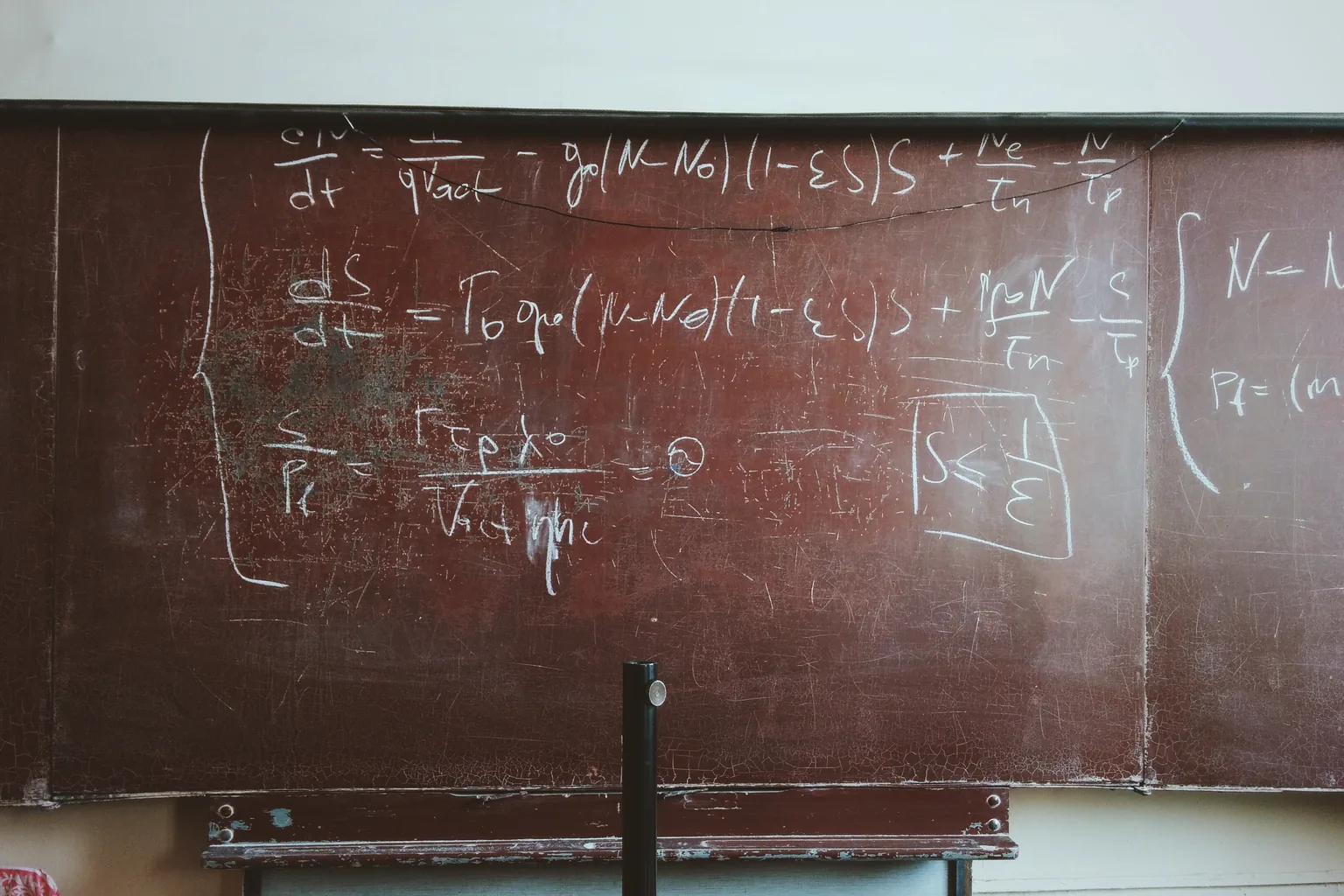
Late one afternoon, Sir Timothy Gowers, a Fields Medallist at Cambridge, heard on a Zoom call that an OpenAI model had cracked one of Paul Erdős’s favourite problems. He took Sébastien Bubeck of OpenAI to mean that the machine had proved Erdős’s conjecture. He spent the evening “adjusting my world view”, he later wrote. If AI could come up with a proof like that, he reasoned, “then maybe it would be all over for mathematicians very soon”.1
An email the next morning corrected him. The model had disproved the conjecture by building a counterexample, “which came as a big relief”, Gowers wrote. Erdős first asked in 1946 how often the same distance can occur among n points on a flat plane. On 20 May 2026 Gowers and eight colleagues posted a short, human-checked version of the machine’s argument.1 In July one of them, Jacob Tsimerman of the University of Toronto, received a Fields Medal, the top prize in mathematics.2
Gowers’s relief says a lot about where machines now stand. Two years earlier an AI system missed a gold-medal score at the International Mathematical Olympiad (IMO) by one point. Today machines write proofs that experts accept, and also confident proofs that are wrong. This article explains what changed, what was oversold, and what it means for Malaysian students, whose team finished 19th at the 2026 IMO. How models work in general is in our explainer on AI models. AI tutors are covered in AI in Malaysian education, and AI in laboratory science in AI in energy science.
The short version
- At the 2025 IMO, Google DeepMind’s Gemini Deep Think scored 35 of 42, a gold score certified by IMO coordinators. By our count of the official results, 46 teenagers scored exactly 35 and 26 scored more.
- In May 2026 an internal OpenAI model disproved a conjecture Erdős posed in 1946, one he had backed with a US$500 prize. Nine mathematicians checked and published the argument.
- Many AI “discoveries” were already in print. When Google DeepMind ran Gemini over 700 Erdős problems marked open, it addressed 13, and 8 of those already had published answers.
- FrontierMath, built as the hardest maths test for AI, had errors in 42% of its problems until June 2026. By November the best model scored 95.1% on its main set.
- Malaysia scored 1 point at its first IMO in 1995 and 142 in 2026. At home, 24.9% of SPM 2024 Additional Mathematics candidates failed the subject.
Why chatbots could not add
A language model learns to predict the next piece of text. That suits prose, where many continuations are acceptable. Arithmetic has one right answer, and nothing in plain next-word prediction checks it. In 2020 OpenAI tested the full 175-billion-parameter GPT-3 on questions such as “Q: What is 48 plus 76? A: 124.”3
With a few worked examples in the prompt, GPT-3 got two-digit addition right every time. On five-digit addition it scored 9.3%, and on two-digit multiplication 29.2%. The smaller 13-billion-parameter version managed two-digit addition and subtraction “only half the time”.3 The authors checked whether the model had memorised the test. Of 2,000 three-digit addition problems, only 17 appeared in its training data.3
Word problems showed the same gap. In 2021 Dan Hendrycks and colleagues released MATH, 12,500 competition problems with step-by-step answers. They concluded that “scaling is not currently solving MATH”.4 OpenAI’s GSM8K paper that October found that even the largest models failed on grade-school word problems. Its fix pointed the way. The team generated many candidate answers and let a second model, a verifier, pick the one it ranked highest, which improved results significantly.5
Two further changes followed. Google’s Minerva, in 2022, was a general model given extra training on technical writing, and it set records without calculators or other tools.6 Then came reasoning models, trained by reinforcement learning to write out long working before they answer. Reinforcement learning means rewarding attempts that reach correct answers; our explainer covers it. On the hardest level of MATH, the best score in Epoch AI’s tests was 23% for GPT-4 in June 2023. Fifteen months later, after OpenAI released its o1 models, it was 89.2%.7
Our reading of Epoch AI’s data: the best score among models released by each date. The September 2024 jump came with OpenAI’s o1 models; GPT-5 reached 98.1% in August 2025.
Source: Epoch AI, benchmark data, MATH Level 5 (retrieved 17 November 2026, CC BY).
Show the numbers
| Period | Best score |
|---|---|
| Jun 2023 | 23.0% |
| Nov 2023 | 40.0% |
| May 2024 | 51.0% |
| Sep 2024 | 89.2% |
| Dec 2024 | 94.7% |
| Apr 2025 | 97.8% |
| Aug 2025 | 98.1% |
DeepMind describes its 2025 olympiad model the same way. It added reinforcement learning on “multi-step reasoning, problem-solving and theorem-proving data”. It also used “parallel thinking”, which lets the model explore several lines of attack at once and combine them, instead of following one chain of thought.8
Olympiad gold in three summers
The IMO, held since 1959, is the oldest and largest maths contest for young people. Contestants sit two papers of 4.5 hours, with six problems in all, each worth seven points.9 Geometry fell first. In January 2024 DeepMind’s AlphaGeometry solved 25 of 30 recent olympiad geometry problems, against ten for the previous best method. It learned from a large set of synthetic theorems and proofs that it generated itself, getting round the shortage of human examples.10
At the 2024 IMO, AlphaProof and AlphaGeometry 2 scored 28 of 42, one point short of gold. People first translated the problems into formal mathematical language that the systems could read. The systems solved one problem within minutes and took up to three days on others. Before the contest, AlphaGeometry 2 could solve 83% of IMO geometry problems from the previous 25 years, against 53% for its predecessor.9 AlphaProof solved the hardest problem, which only five human contestants cracked, but both combinatorics problems went unsolved. Gowers scored the answers with Joseph Myers, who chaired the IMO 2024 problem selection committee. Gowers called one construction “very impressive, and well beyond what I thought was state of the art”.9
AlphaProof’s full description appeared in Nature in November 2025. A model translated about 1 million problems written in ordinary language into about 80 million formal Lean problems. Training then ran for about 80,000 TPU-days, the equivalent of 4,000 of Google’s AI chips for 20 days.11 On the hardest questions, AlphaProof generated and learned from millions of variants of a problem while solving it.11
A year later the machines no longer needed translators. At the 2025 IMO, an advanced version of Gemini Deep Think wrote its proofs in ordinary language, from the official problem texts, within the 4.5-hour limit. It solved five of six problems for 35 points, and IMO coordinators graded and certified the answers.8 IMO President Gregor Dolinar said graders found them “clear, precise and most of them easy to follow”. The review had limits, DeepMind noted: it “does not extend to validating our system, processes, or underlying model”. DeepMind had also given Gemini a curated set of high-quality worked answers and general tips on IMO problems.8
OpenAI announced its own five-of-six result on Saturday 19 July 2025, graded by three former IMO medallists it says it hired. OpenAI’s Noam Brown told TechCrunch that the IMO had asked it to wait until after the Friday-night award ceremony.12 DeepMind announced on the Monday, with the IMO’s certification. Its chief executive, Demis Hassabis, said it had respected the IMO Board’s request to wait until results were verified and students had received their acclaim.12 “The IMO organizers have their grading guideline,” said Thang Luong, who led DeepMind’s IMO effort.12
| Product | Graded by the IMO | Proofs in ordinary language | Within a time limit | Score out of 42 |
|---|---|---|---|---|
| AlphaProof and AlphaGeometry 2Google DeepMind, IMO 2024 | Noscored by Gowers and Myers under IMO rules | Nohand-translated into formal language | Noup to three days | 28 |
| Gemini Deep ThinkGoogle DeepMind, IMO 2025 | Yescertified by coordinators | Yes | Yes4.5 hours | 35 |
| Experimental modelOpenAI, IMO 2025 | Nothree ex-medallists it hired | Yes | Unknown | 5 of 6 problems, company says |
| Celia; dots-note-3.0Huawei; Xiaohongshu, IMO 2026 | PartlyXiaohongshu says organisers graded | Unknown | Yesafter the human exam | 42, companies say |
Joseph Myers chaired the IMO 2024 Problem Selection Committee. “Unknown” means we found no statement on the pages we could open. We found no IMO statement confirming the 2026 company scores.
Source: Google DeepMind (25 July 2024; 21 July 2025); TechCrunch (21 July 2025); The Sun, from AFP (23 July 2026).
Show the numbers
| Product | Graded by the IMO | Proofs in ordinary language | Within a time limit | Score out of 42 |
|---|---|---|---|---|
| AlphaProof and AlphaGeometry 2 | No (scored by Gowers and Myers under IMO rules) | No (hand-translated into formal language) | No (up to three days) | 28 |
| Gemini Deep Think | Yes (certified by coordinators) | Yes | Yes (4.5 hours) | 35 |
| Experimental model | No (three ex-medallists it hired) | Yes | Unknown | 5 of 6 problems, company says |
| Celia; dots-note-3.0 | Partly (Xiaohongshu says organisers graded) | Unknown | Yes (after the human exam) | 42, companies say |
The gold line in 2025 was exactly 35. By our count of the official results, 72 of the 630 contestants won gold: 46 with exactly 35 and 26 with more. Five scored a perfect 42.13 Gemini’s published proofs cover Problems 1 to 5.14 Problem 6 averaged 0.18 points out of 7, and only six contestants solved it fully, by our arithmetic from the official scores.13
Our arithmetic from the official per-problem scores. Only 6 of 630 contestants scored 7 on Problem 6, and 569 scored zero. Gemini Deep Think’s published proofs cover Problems 1 to 5.
Source: IMO official results 2025 (retrieved 17 November 2026); Google DeepMind (July 2025).
Show the numbers
| Problem | Average points |
|---|---|
| P1 | 5.22 |
| P2 | 3.31 |
| P3 | 1.60 |
| P4 | 5.07 |
| P5 | 3.00 |
| P6 | 0.18 |
In 2026 the contest moved to Shanghai. The official results list 666 contestants and 117 teams, and seven contestants scored 42.1516 Huawei and Xiaohongshu said their models, Celia and dots-note-3.0, scored 100%, AFP reported. Firms received the problems only after the human exam and had to answer within a time limit.16 Xiaohongshu said human intervention was barred and that its answers went to IMO organisers for grading. We found no IMO statement confirming either score. Deedy Das of Menlo Ventures said models from OpenAI, Anthropic, Axiom Math and Moonshot AI each scored 42 in his own informal test.16 OpenAI, a sponsor of the IMO, offered every 2026 gold medallist a year of ChatGPT Pro.17
University contests followed. Axiom Math says its AxiomProver solved all 12 problems of the Putnam exam of 6 December 2025 as Lean proofs, eight of them within exam time. One proof ran to 2,054 lines and took 518 minutes to generate, the company says.18 Because Axiom released the proofs in Lean, anyone can check them by machine.
Search with a strict judge
Olympiad problems come with known answers. Research needs something else: a way to tell a better attempt from a worse one. Google DeepMind’s AlphaEvolve, announced in May 2025, pairs Gemini models that write computer programs with “automated evaluators that verify answers”. An evolutionary loop keeps the most promising programs and feeds them into later prompts.19
Its best-known result concerns matrix multiplication, a core operation in AI training. Multiplying two 4×4 grids of numbers the schoolbook way takes 64 multiplications. Applying Strassen’s 1969 method twice cuts that to 49. DeepMind’s AlphaTensor reached 47 in 2022, but only in arithmetic modulo 2, where 1 + 1 = 0.20 AlphaEvolve found a method with 48 multiplications that works for complex numbers.19 About a month later, three researchers published a 48-multiplication method that needs no complex numbers. By September 2026 they and two colleagues had a practical version with 48 multiplications and 204 other operations.2021
On more than 50 open problems, AlphaEvolve matched the best known answer in about 75% of cases and improved it in 20%, DeepMind says. One gain was an arrangement of 593 spheres touching a central sphere in 11 dimensions, a new lower bound for the “kissing number”.19 Terence Tao and three co-authors later tested it on 67 problems. It matched the best known answers in most and improved several, they reported.22
The loop also pays inside Google. A scheduling rule AlphaEvolve found “continuously recovers, on average, 0.7% of Google’s worldwide compute resources”, the company says. It also sped up one Gemini kernel by 23%.19 The method needs a problem where a computer can score every attempt automatically, which most of mathematics is not.
Proofs a computer can check
A written proof persuades a reader. A formal proof satisfies a program. Lean is a proof assistant: a mathematician states a theorem in its language and builds the proof in small steps called tactics. Lean’s kernel, a small core program, verifies that the finished proof is valid.11 If the kernel accepts, the logic is sound, whoever or whatever wrote it. The checker cannot tell whether the formal statement matches what a person meant, so that step still needs human eyes.
Mathlib, Lean’s shared library of formal mathematics, lists 140,102 definitions and 294,403 theorems.23 Its code passed 2.5 million lines in November 2026, up from about 1.42 million at the start of 2024, with 829 people listed as authors.24
That is why AI labs lean on it. AlphaProof’s Nature paper says AI systems relying on human data typically lack “the formal verification necessary to guarantee correctness”, while Lean “grounds reasoning”.11 A Google DeepMind study in May 2026 says models’ “unreliability limits their utility in mathematics research”, and that formal proof is one remedy.25 On the community wiki that logs AI work on Erdős problems, formalisation is the most common kind of help, with 185 entries.26
- 1MathlibCopy human proofsA 3-billion-parameter network was fine-tuned on about 300,000 proof steps from Mathlib, Lean’s shared library.
- 2Auto-formaliserTranslate a million problemsA model turned about 1 million problems in ordinary language into about 80 million formal Lean problems.
- 3ProverPractise by trial and errorReinforcement learning on those problems ran for about 80,000 TPU-days, such as 4,000 chips for 20 days.
- 4Human expertsApprovalPeople state the contest problemFor IMO 2024, people translated each problem into formal language before the system started.
- 5Prover and LeanAdapt, then pass the checkerOn the hardest problems it learns from millions of variants while solving. Lean’s kernel verifies the final proof.
The IMO 2024 run took up to three days on some problems. Translating the training problems took about 100,000 TPU-days in total.
Source: Hubert et al., Nature (12 November 2025); Google DeepMind (25 July 2024).
Show the numbers
| Step | Who | What | Detail |
|---|---|---|---|
| 1 | Mathlib | Copy human proofs | A 3-billion-parameter network was fine-tuned on about 300,000 proof steps from Mathlib, Lean’s shared library. |
| 2 | Auto-formaliser | Translate a million problems | A model turned about 1 million problems in ordinary language into about 80 million formal Lean problems. |
| 3 | Prover | Practise by trial and error | Reinforcement learning on those problems ran for about 80,000 TPU-days, such as 4,000 chips for 20 days. |
| 4 | Human experts | People state the contest problem (approval) | For IMO 2024, people translated each problem into formal language before the system started. |
| 5 | Prover and Lean | Adapt, then pass the checker | On the hardest problems it learns from millions of variants while solving. Lean’s kernel verifies the final proof. |
Formal proof is costly. AlphaProof’s authors say its training phase is “likely beyond the reach of most academic research groups”.11 Lean proofs are also long, as Axiom’s 2,054-line Putnam proof shows.18 Natural-language proofs are cheaper, and riskier to trust.
Erdős problems: found, not solved
Thomas Bloom’s website, erdosproblems.com, collects problems posed by Paul Erdős, some with cash prizes. In October 2025 OpenAI’s Kevin Weil posted that GPT-5 had found answers to ten “previously unsolved” Erdős problems. In fact it had found existing papers. Bloom explained that “open” on his site meant only that he did not know of a solution. Hassabis called the episode “embarrassing”, and most of the posts were deleted.27
Rediscovery kept happening. On 10 January 2026, GPT-5.2 Pro and Harmonic’s Aristotle produced a Lean-checked proof for problem #397. Four days later it was traced to a 2012 Chinese team-selection test, the wiki records.26 For #1026, Aristotle found a Lean proof in December 2025. AI research tools then failed to find earlier work, but “a more ‘old-fashioned’ Google Scholar job” found a 2016 paper with the precise result, Tao wrote.28
Google DeepMind measured the effect directly. It ran Gemini over 700 problems marked open and addressed 13: five with seemingly new answers and eight already answered in the literature. The open status, the authors concluded, came “through obscurity rather than difficulty”. They warned of “subconscious plagiarism”, a model reproducing work it absorbed in training.29
Some results held up. In January 2026 GPT-5.2 Pro and Aristotle produced a Lean proof for #728. A write-up called it the first Erdős problem regarded as fully resolved by an AI system on its own.30 Problem #1196, a conjecture about primitive sets, sets of whole numbers in which none divides another, was “first solved by an autonomous AI query” using GPT-5.4 Pro, Tao wrote in May.3132 The paper’s eight authors built the idea into a method that “seems to have been overlooked by the prior literature since Erdős’s seminal 1935 paper”.32 A May 2026 DeepMind study gave a formal-proof agent 353 open Erdős problems. It resolved nine, “at the per-problem cost of a few hundred dollars”.25
| Problem | When | What happened | What it was |
|---|---|---|---|
| Ten problems | Oct 2025 | GPT-5 found existing papers; the claim was withdrawn | Literature search |
| #1026 | Dec 2025 | Aristotle’s Lean proof; a 2016 paper had the result | Rediscovery |
| #397 | Jan 2026 | Lean-checked proof of a 2012 olympiad selection problem | Rediscovery |
| #728 | Jan 2026 | GPT-5.2 Pro and Aristotle, Lean-checked | Called the first autonomous AI resolution |
| #1196 | Apr–May 2026 | A GPT-5.4 Pro idea, extended by eight authors | New method |
| #90, unit distance | May 2026 | An internal OpenAI model built a counterexample | Famous conjecture disproved |
Source: The Decoder (18 October 2025); Tao (8 December 2025; 3 May 2026); Erdős problems AI wiki (data to 30 June 2026); Sothanaphan (12 January 2026); Alexeev et al. (1 May 2026); Alon et al. (20 May 2026).12627283032
The wiki, hosted in Tao’s Erdős problems repository on GitHub, stopped updating with data to 30 June 2026. By our count, it lists 61 contributions by AI alone where no comparable literature was known, and 25 where such literature turned up afterwards. Another 38 built on known work, and 132 involved significant human collaboration.26 Of the 61 standalone entries, 19 are marked full resolutions and 11 incorrect. The wiki warns that it “is not a benchmark” and that absence of past progress “may reflect obscurity rather than difficulty”.26
The unit distance problem falls
Scatter n points on a flat sheet, and count the pairs exactly one unit apart. Erdős showed that a grid gives a little more than n such pairs, and he believed nothing could do much better. The best proven upper limit, about n to the power 4/3, dates from 1984.1 On 16 April 2026 Bloom put the problem on a “Top 10 Erdős Problems” list, to show that many Erdős problems are hard. He “did not expect” AI to crack it “just one month later”.1
The model’s idea came from algebraic number theory, the study of number systems that extend the ordinary numbers. “Number fields deserve a closer look,” its chain of thought says at one point, as quoted in the paper. The proof was generated “in one shot” by the internal model, and humans then refined the write-up with OpenAI’s Codex.1 Will Sawin, one of the nine authors, made the gain explicit the same day: more than n to the power 1.014 pairs.33 For very large n that beats the grid, though the upper limit still stands near n to the power 1.333.34
Bloom listed four things a human solver would have needed: time on the problem, a wish to disprove it, faith in number-field versions and knowledge of class field theory. “The AI met all of these criteria,” he wrote. Erdős had offered US$500, about RM2,045, for a proof or disproof. Bloom concluded that “we can unambiguously say that the AI has solved a $500 Erdős problem”.135 Tsimerman had once tried to build a counterexample himself and failed. He wrote that he would accept the paper “for any journal without hesitation”. AI systems may have an edge, he suggested: they can keep going for longer, “in more treacherous waters”, without getting overwhelmed.1 Bloom, like Gowers, was a little less surprised once he learnt that the result was a counterexample.1
The praise came with caveats. The argument relies on ideas the nine authors attribute to earlier mathematicians, which the AI’s own write-up did not properly cite, noted Melanie Matchett Wood of Harvard, one of the nine.1 It introduced no new techniques, Kai Williams wrote in Understanding AI.34 Six days after OpenAI’s model, the wiki records, Anthropic’s Claude Mythos also reached a full solution. Between 28 May and 12 June, a system called Aleph Prover formalised the OpenAI proof in Lean.26
This is the first example of a result produced autonomously by an AI that I find exciting in itself, as opposed to as a leading indicator.
Knuth’s cycles
Donald Knuth of Stanford, author of The Art of Computer Programming, had spent weeks on a puzzle. It asked how to split the links of a network of m³ points into three loops that each visit every point. On 28 February 2026 he opened a note with “Shock! Shock!”: Claude Opus 4.6 had solved it for every odd m.36 His friend Filip Stappers posed the problem and coached the model, reminding it again and again to log its progress. Success came at exploration 31, about an hour in. Claude also found answers for m = 4, 6 and 8, but saw no way to generalise them.36
Stappers tested the program for odd m up to 101. Knuth then wrote a proof, which Kim Morrison of the Lean community formalised by 4 March. For even m of 8 or more, GPT-5.4 Pro later produced a 14-page proof that its user said he did not edit.36 “It seems that I’ll have to revise my opinions about ‘generative AI’ one of these days,” Knuth wrote.36
Benchmarks that ran out of road
Epoch AI launched FrontierMath in November 2024 with hundreds of new research-level problems. A typical one takes a specialist hours, the hardest ones days, and at launch the best models solved under 2%.37 Models answer by returning a Python function, so marking is automatic.38
In January 2025 Epoch disclosed that OpenAI had commissioned and owned 300 of the questions, with access to the statements and answers except for a 50-question holdout. Epoch admitted that “many contributors were unaware of these details”.39 Its benchmark page still says OpenAI “has exclusive access to a subset of the benchmark”.38
Quality was the next problem. On 12 June 2026 Epoch released a revision “addressing errors in 42% of problems”, leaving 338 in the full set.38 The fixes moved the leaderboard. By our matching of Epoch’s data, GPT-5.4 Pro scored 50.0% on Tiers 1–3 before and 82.5% after. Claude Opus 4.8 rose to 80.0%, up from 47.2%.7
Our matching of Epoch AI’s private-set results by model version. The revision addressed errors in 42% of problems; the point gains are our arithmetic.
Source: Epoch AI, benchmark data and FrontierMath page (retrieved 17 November 2026).
Show the numbers
| Item | Before revision | After revision |
|---|---|---|
| GPT-5.4 Pro | 50.0% | 82.5% |
| Claude Opus 4.8 | 47.2% | 80.0% |
| GPT-5.2 (xhigh) | 40.7% | 67.4% |
| Gemini 3.1 Pro preview | 36.9% | 59.6% |
| GPT-5 (high) | 32.4% | 55.4% |
Then scores ran to the top. On the corrected Tiers 1–3, the model Epoch labels Claude Fable 5.2, released on 9 November 2026, scored 95.1%. On Tier 4, the hardest set, GPT-6.1 “sol” and Claude Fable 5.2 both scored 100%.7 A perfect score shows that a fixed test is used up. It does not show that research mathematics is solved.
Our reading of Epoch AI’s data: for each date, the best score among models released by then. Older models were re-run on the corrected sets published on 12 June 2026. Tiers 1–3 hold 295 problems and Tier 4 holds 43; scores exclude the 12 public problems.
Source: Epoch AI, benchmark data and FrontierMath page (retrieved 17 November 2026).
Show the numbers
| Period | Tiers 1–3 | Tier 4 (hardest) |
|---|---|---|
| Dec 2024 | 14.7% | – |
| Apr 2025 | 36.1% | 4.9% |
| Aug 2025 | 55.4% | 22.0% |
| Dec 2025 | 74.0% | 46.0% |
| Apr 2026 | 87.7% | 78.0% |
| Sep 2026 | 93.7% | 100.0% |
| Nov 2026 | 95.1% | 100.0% |
New yardsticks are replacing it. Epoch’s FrontierMath: Open Problems lists unsolved problems that have resisted professional mathematicians, each with a computer verifier. As of mid-November, 10 of 49 were marked solved with AI, five by AI alone, and 39 remained open. Schmidt Sciences funds the set, which Epoch owns outright, although OpenAI is so far the only buyer of the verifiers.40 On 27 June 2026 Epoch stopped displaying failed AI attempts. A new FrontierMath-Erdős set has a best score of 4.4%.740
Mathematicians built their own test too. In February 2026 eleven of them, including Martin Hairer and Daniel Spielman, released ten unpublished research questions with encrypted answers.41 In a second batch, four AI systems, including ChatGPT 5.5 Pro, had 24 hours and no human input. Each problem had an unpublished human answer of at most eight pages, and some had taken experts weeks or months. Thirty mathematicians graded the work at Harvard in June. Seven of the ten problems got at least one passing grade, but on Problem 4, in metric geometry, no system made substantial progress.42 Referees found that AI answers “tended to handle routine parts of an argument in meticulous detail while glossing over difficult steps”.42
Credit, citation and trust
Mathematicians are now arguing about credit. In February 2026 a Google DeepMind team proposed standard levels of “autonomy” and “novelty” for AI-assisted results, plus “human-AI interaction cards” to record who did what.43 In September Epoch added a “human + AI” label for problems solved by people steering AI, which “would likely not have been solved without AI”.40 A November 2025 paper by OpenAI’s Bubeck and others, Gowers among them, called four new results from GPT-5 “modest in scope but profound in implication”.44
Views on the unit-distance result range widely. Noga Alon, one of the nine authors, wrote that it “convinces me that it is hard to overestimate the full potential impact of this change”. Gowers, who runs an automatic theorem-proving group at Cambridge, has been trying to pin down what makes a problem difficult. One idea from his group measures a proof by the shortest hint that would let experts rebuild it. He calls it “Kolmogorov complexity modulo experts”.1
Wood wants citation rules settled. A human who skipped earlier work would be assumed not to know it; a model, she noted, is in some sense “familiar” with all of it.1 She also warned about the failures that never reach print.
In many cases, it will be easier for AI to convince humans it has a proof than to come up with a correct mathematical argument, and I believe that we as mathematicians are not sufficiently prepared for this.
Malaysia: one point to the top 20
Malaysia first entered the IMO in 1995. Its team scored 1 point that year and ranked 72nd.45 Since then 92 Malaysians have represented the country, chosen by a committee that the Ministry of Education appoints.46 In Shanghai in July 2026 the team scored 142 of a possible 252 and ranked 19th of 117, with one gold, three silvers, one bronze and an honourable mention.4547 Education Minister Fadhlina Sidek said it was the first time Malaysia had broken into the world’s top 20.47 Its gold medallist scored 29, exactly the gold cut-off, by our reading of the official results.1548 Like every 2026 gold medallist, that student qualified for OpenAI’s offer of a year of ChatGPT Pro.17
A team of six can score at most 252. Malaysia ranked 72nd in 1995, 23rd in 2014, 70th in 2019 and 19th of 117 in 2026.
Source: IMO official results, Malaysia team results (retrieved 17 November 2026).
Show the numbers
| Period | Team points |
|---|---|
| 1995 | 1 |
| 1996 | 9 |
| 1997 | 19 |
| 1998 | 32 |
| 1999 | 37 |
| 2000 | 32 |
| 2001 | 36 |
| 2002 | 26 |
| 2003 | 26 |
| 2004 | 34 |
| 2005 | 15 |
| 2006 | 40 |
| 2007 | 34 |
| 2008 | 65 |
| 2009 | 31 |
| 2010 | 75 |
| 2011 | 93 |
| 2012 | 100 |
| 2013 | 117 |
| 2014 | 129 |
| 2015 | 66 |
| 2016 | 77 |
| 2017 | 101 |
| 2018 | 90 |
| 2019 | 71 |
| 2020 | 130 |
| 2021 | 74 |
| 2022 | 137 |
| 2023 | 114 |
| 2024 | 118 |
| 2025 | 139 |
| 2026 | 142 |
The climb has not been smooth. The previous best rank, 23rd, came in 2014 with two golds, and in 2019 the team fell to 70th.45 By our count of the official results, Malaysians have won seven IMO golds in all. In 2022 and 2023 one Malaysian student scored 35 of 42, with full marks on five problems and none on Problem 6.48 That is the same score, earned the same way, as Gemini’s gold in 2025.
Even this team found the hardest problems brutal. In 2026 its six members scored 5 of a possible 42 on Problem 3 and 1 on Problem 6.45 Singapore and Vietnam finished well ahead within ASEAN.
| Team | Rank of 117 | Points | Medals |
|---|---|---|---|
| Singapore | 4 | 169 | 3 gold, 2 silver, 1 bronze |
| Vietnam | 5 | 168 | 2 gold, 3 silver, 1 bronze |
| Malaysia | 19 | 142 | 1 gold, 3 silver, 1 bronze |
| Thailand | 30 | 133 | 1 gold, 1 silver, 4 bronze |
| Philippines | 54 | 98 | 1 silver, 2 bronze |
| Indonesia | 63 | 91 | 4 bronze |
Source: IMO official results 2026, team table (retrieved 17 November 2026). China ranked first with 232 points.49
Selection changed in 2020. It now runs through IMONST, an open contest in two rounds. The top 300 from the first round sit the second, about 100 of those join the first of usually four training camps, and six go to the IMO.50 The first round is open to anyone, in categories running from age 9 and under to 16 and over. It costs RM45 with early registration or RM50, has Malay and English papers, and earns PAJSK co-curricular marks.51 The same pool feeds Malaysian teams for the Asian Pacific, Balkan and Iranian Geometry olympiads and the Tournament of Towns.46
One IMONST rule now reads differently. The first round is sat online, and the rules ban books, websites, calculators and help from anyone else.51 That relies on honesty at a time when chatbots handle olympiad problems. We found no data on AI use in the contest.
The coaches came through the same system. Ivan Chan Kai Chin, team leader in 2025 and 2026, was himself a four-time IMO contestant. M. Syafiq Johar, leader in several earlier years, first met olympiad maths at 18 as a vocational-school student. He went on to an Oxford doctorate on the Ricci flow and returned to Universiti Kebangsaan Malaysia.4552
The classroom numbers point the other way
Below the olympiad team, the picture is weaker. In TIMSS 2023, an international test of eighth-grade (Form 2) pupils, Malaysia averaged 411 in maths, 50 points below its 2019 score. The international average was 478, and Singapore scored 605.5354 By our count of the table, 34 of the 44 countries scored higher than Malaysia.53 Director-General of Education Azman Adnan linked the fall to Covid, because the sampled pupils were in Years Five and Six during school closures.54 PISA results are in our education article.
SPM shows the same weakness. In SPM 2024, 84,025 of 375,115 candidates, or 22.4%, failed Mathematics, the highest failure count of any subject. In Additional Mathematics, 27,112 of 108,885 failed, or 24.9%, the most of any elective. Counting D and E passes, 49,433 Add Maths candidates failed or only scraped through, about 45% by our arithmetic.55 UKM education expert Dr Anuar Ahmad said students’ grasp of the subject was weak well before SPM.55 In SPM 2025 the national average grade improved to 4.42, the best in five years, yet STEM electives including Add Maths slipped by 0.02 to 0.15 grade points.5657
Fewer students are taking it. SPM candidates for Additional Mathematics fell 17.37% between 2018 and 2023, Science, Technology and Innovation Minister Chang Lih Kang said in October 2026. Upper-secondary STEM enrolment was 50.83% in 2024, still short of the 60:40 science-to-arts target.58 He also pointed to a belief about AI.
Many Malaysian students are shying away from STEM streams, believing that, ‘AI will take over these jobs, so why bother?’ I find this concerning because their perceptions and career decisions will determine Malaysia’s future development.
Schools are adding AI anyway. The ministry’s AI-Powered Classroom pilot ran in 27 schools in 2025 and is due to reach 260 in 2026 and all schools by 2030, the education minister told Parliament. She said 24 technology companies, including Google, Microsoft and Huawei, support it, and that teachers remain at the core of teaching.59 The 2027 curriculum for Year One and Form One stresses digital literacy and the ethical use of AI. Fadhlina said its AI literacy guide aims to help pupils ask better questions rather than wait for the technology to answer.60 In universities, Universiti Malaya says it rose to 93rd in the QS 2026 mathematics ranking, up from 113th, Malaysia’s best placing in the subject.61
Things you probably didn’t know
- Geometry took seconds. At IMO 2024, AlphaGeometry 2 solved Problem 4 within 19 seconds of receiving its formal version.9
- The prize grew. Erdős first offered US$300 for the unit distance problem in 1982. The US$500 prize first appeared in print in 1995, Bloom found.1
- Olympians still win Fields Medals. Two of the four 2026 Fields Medallists were IMO gold medallists: Yu Deng in 2006, and Tsimerman in 2003 and 2004, with a perfect score in 2004.2
- Claude helped settle a matrix problem. In August 2026 Epoch marked its problem on a Hadamard matrix of order 668 solved. An Anthropic researcher had reported a result credited to three humans and Claude.40
- One AI proof impressed its referees. In First Proof’s second batch, one system solved a stochastic PDE problem by an approach that differed from the human answer.42
- Malaysia still has a top tier. In TIMSS 2023, 126 of the Malaysian pupils sampled reached the highest international benchmark in maths, a score of 625 or more.54
- Adults can enter IMONST. The first round is open to everyone, including international students and adults, though later rounds are by invitation.51
What worked and what didn’t
The results that held up had one thing in common: someone outside the system checked them, by hand or by machine.
Worked
Gold graded by the contest
At IMO 2025, Gemini Deep Think’s answers were graded and certified by IMO coordinators, who found them “clear, precise and most of them easy to follow”. DeepMind had worked with the organisers in advance and waited for their verdict before announcing.812
Why it worked: an independent grader with published rules made the score comparable with the students’.
Worked
A famous conjecture, checked in public
OpenAI’s unit-distance counterexample was posted with a human-verified proof and comments from nine mathematicians, including where the ideas came from. Sawin sharpened the result the same day.133
Why it worked: experts checked the claim before the celebration, and named its limits.
Worked
Coach, test, then formalise
On Knuth’s problem, a human coach made Claude log every exploration, and the program was tested up to m = 101. Knuth wrote the proof, and Kim Morrison checked it in Lean within days.36
Why it worked: each step had a different check, by person, computer or proof assistant.
Worked
Proofs nobody has to trust
Erdős problem #728 was resolved with a Lean proof and a readable write-up.30 Axiom says AxiomProver solved all 12 Putnam 2025 problems in Lean, and it published the proofs.18
Why it worked: a formal proof settles correctness, leaving people to judge whether the result is new.
Worked
A judge for every attempt
AlphaEvolve’s scheduling rule recovers on average 0.7% of Google’s worldwide compute, the company says, and it found a 48-multiplication method for 4×4 matrices. Outside researchers then built on that result.1920
Why it worked: where a computer can score every attempt, machine search can run at scale.
Didn’t work
Ten problems that were already solved
In October 2025 OpenAI’s Kevin Weil announced that GPT-5 had found answers to ten “previously unsolved” Erdős problems. It had found existing papers, and the posts were mostly deleted.27
Lesson: “open” on a website can mean “unknown to its maintainer”. Search the literature before announcing.
Didn’t work
Rediscovery presented as discovery
A Lean-checked answer to #397 was a 2012 olympiad selection problem, and #1026 was settled in a 2016 paper.2628 Of 13 open problems Gemini addressed in a DeepMind sweep, eight already had published answers.29
Lesson: obscure is not the same as hard, and a model may reproduce what it absorbed in training.
Didn’t work
Wrong proofs that look right
Of 61 AI-alone entries on the Erdős wiki, 11 are marked incorrect and 9 unverified, by our count.26 In First Proof’s second batch, AI answers handled routine steps carefully while glossing over difficult ones.42
Lesson: a fluent proof needs an expert reader or a formal checker before anyone relies on it.
Didn’t work
A benchmark with hidden ties
OpenAI’s funding of FrontierMath was disclosed only after the benchmark’s launch, and its ownership of 300 of the questions in January 2025. Errors in 42% of the problems were fixed in June 2026, lifting some models’ scores by more than 20 points.73839
Lesson: a secret test needs open governance, or its scores carry an asterisk.
Too early
An open door to the national team
Since 2020, selection has run through IMONST, open online to any pupil; entry now costs RM45 or RM50. The team ranked 32nd that year, 44th in 2022 and 2023, and 19th in 2026.4551
Lesson: wider entry may be helping, but six students a year is too few to prove it.
What to do now
This is general information, not exam or career advice.
For students and parents
- Try a problem before asking a chatbot, then use it to check your working. A trial in which AI hints helped and plain answers hurt is in our education article.
- Fix the basics early. Officials and academics link weak SPM and TIMSS results to gaps from primary school.5455
- Consider IMONST. Entry is open to all ages, with a category for those aged 9 and under, and the route still leads somewhere: two 2026 Fields Medallists were IMO gold medallists.251 Former Malaysian team members went on to study at Imperial, Oxford, Cambridge and Stanford, and to work in fund management and university teaching.52
For teachers and exam setters
- Assume take-home and online maths tasks can be done by AI. Weight in-class, oral and step-marked work.
- Teach checking: a second method, a numerical test, a counterexample. These are the habits that caught AI’s errors.2636
- Use the ministry’s AI literacy aim of asking better questions as a classroom routine.60
For universities and researchers
- Search the literature, including Google Scholar, before claiming an AI result is new.2829
- Record who did what, in the spirit of DeepMind’s interaction cards and Epoch’s “human + AI” label.4043
- Formalise key steps in Lean where you can. Mathlib already holds 294,403 theorems.23
- Do not try to match the big labs on compute. AlphaProof’s authors say its training is likely beyond most academic groups; checking, formalising and posing good problems are not.11
For policymakers
- Track the pipeline as well as the medals: Add Maths entries, TIMSS and SPM failure rates.535558
- Collect data on AI use in homework, exams and online contests. We found none for Malaysia.
What to watch to 2030
- November 2026 to April 2027: four training camps pick the 2027 team. High confidence; the IMO committee has set the dates.51
- 2027: a new curriculum for Year One and Form One. High confidence that it includes AI literacy; how it changes maths teaching is unknown.60
- 2027: the next TIMSS round. TIMSS runs every four years, so it will show whether Malaysia recovers from 411.54
- July 2027: IMO in Budapest, then Saudi Arabia and Mongolia. Medium confidence that AI entries get clearer rules on grading and announcements.4662
- Harder yardsticks for AI. High confidence that attention moves to open problems: 39 of 49 on Epoch’s list were unsolved in November, and the best FrontierMath-Erdős score was 4.4%.740
- Citation norms for AI-suggested ideas. Medium confidence that journals and societies set rules, as Wood urges.1
- 2030: AI-Powered Classrooms in every school. Medium confidence on timing, from 260 schools in 2026.59
AI results from companies, including the 2026 perfect IMO scores, are the companies’ own claims unless an organiser confirmed them. Contestant counts, shares, wiki tallies and benchmark frontiers are our arithmetic from official tables and Epoch AI data, as labelled. The conversion uses Bank Negara Malaysia’s middle rate of 17 November 2026: RM4.089 per US dollar.
Sources
- Alon, Bloom, Gowers and others, “Remarks on the disproof of the unit distance conjecture”, arXiv 2605.20695, 20 May 2026: arxiv.org
- International Mathematical Olympiad, former IMO contestants among the 2026 Fields Medalists, 24 July 2026: imo-official.org
- Brown and others (OpenAI), “Language Models are Few-Shot Learners”, arXiv 2005.14165, 28 May 2020: arxiv.org
- Hendrycks and others, “Measuring Mathematical Problem Solving With the MATH Dataset”, arXiv 2103.03874, 5 March 2021: arxiv.org
- Cobbe and others (OpenAI), “Training Verifiers to Solve Math Word Problems”, arXiv 2110.14168, 27 October 2021: arxiv.org
- Lewkowycz and others (Google), “Solving Quantitative Reasoning Problems with Language Models”, arXiv 2206.14858, 29 June 2022: arxiv.org
- Epoch AI, benchmark data for MATH Level 5 and FrontierMath (CC BY), retrieved 17 November 2026: epoch.ai
- Google DeepMind, Gemini Deep Think reaches IMO gold-medal standard, 21 July 2025: deepmind.google
- Google DeepMind, AI solves IMO problems at silver-medal level, 25 July 2024: deepmind.google
- Trinh and others, AlphaGeometry, Nature, 17 January 2024: nature.com
- Hubert and others, AlphaProof, Nature, published online 12 November 2025: nature.com
- TechCrunch, OpenAI and Google at the IMO, 21 July 2025: techcrunch.com
- International Mathematical Olympiad, official individual results 2025, retrieved 17 November 2026: imo-official.org
- Google DeepMind, Gemini Deep Think’s IMO 2025 proofs (PDF), July 2025: googleapis.com
- International Mathematical Olympiad, official individual results 2026, retrieved 17 November 2026: imo-official.org
- The Sun (AFP), “AI aces top maths contest with perfect score”, 23 July 2026: thesun.my
- International Mathematical Olympiad, ChatGPT Pro for IMO 2026 gold medallists, 4 July 2026: imo-official.org
- Axiom Math, AxiomProver and the 2025 Putnam, 8 January 2026: axiommath.ai
- Google DeepMind, AlphaEvolve, 14 May 2025: deepmind.google
- Dumas, Pernet and Sedoglavic, 4×4 matrices with 48 non-complex multiplications, arXiv 2506.13242, 16 June 2025: arxiv.org
- Dumas, Pernet, Sedoglavic, Stapleton and Tichavský, recursive 4×4 algorithms with 48 multiplications in practice, arXiv 2609.12027, 10 September 2026: arxiv.org
- Georgiev, Gómez-Serrano, Tao and Wagner, “Mathematical exploration and discovery at scale”, arXiv 2511.02864, 3 November 2025: arxiv.org
- Mathlib, statistics page, retrieved 17 November 2026: mathlib.org
- Lean community, mathlib 4 git statistics, generated 17 November 2026: github.io
- Tsoukalas and others (Google DeepMind), “Advancing Mathematics Research with AI-Driven Formal Proof Search”, arXiv 2605.22763, 21 May 2026: arxiv.org
- GitHub, teorth/erdosproblems wiki, AI contributions to Erdős problems, data to 30 June 2026: github.com
- The Decoder, OpenAI’s GPT-5 Erdős claim, 18 October 2025: the-decoder.com
- Terence Tao, “The story of Erdős problem #1026”, 8 December 2025: wordpress.com
- Feng and others (Google DeepMind), Gemini and the Erdős problems, arXiv 2601.22401, 29 January 2026: arxiv.org
- Sothanaphan, “Resolution of Erdős Problem #728”, arXiv 2601.07421, 12 January 2026: arxiv.org
- Terence Tao, Erdős problem #1196 and beyond, 3 May 2026: wordpress.com
- Alexeev and others, “Primitive sets and von Mangoldt chains”, arXiv 2605.00301, 1 May 2026: arxiv.org
- Sawin, “An explicit lower bound for the unit distance problem”, arXiv 2605.20579, 20 May 2026: arxiv.org
- Understanding AI, OpenAI’s unit-distance result, 28 May 2026: understandingai.org
- Bank Negara Malaysia, exchange rates, 17 November 2026: bnm.gov.my
- Donald Knuth, “Claude’s Cycles”, 28 February 2026, revised 14 April 2026: stanford.edu
- Glazer and others (Epoch AI), FrontierMath, arXiv 2411.04872, 7 November 2024: arxiv.org
- Epoch AI, FrontierMath benchmark page, retrieved 17 November 2026: epoch.ai
- Epoch AI, clarifying the creation and use of FrontierMath, 23 January 2025: epoch.ai
- Epoch AI, FrontierMath: Open Problems, retrieved 17 November 2026: epoch.ai
- Abouzaid and others, “First Proof”, arXiv 2602.05192, 5 February 2026: arxiv.org
- Simons Institute, First Proof second-batch results, 12 June 2026: berkeley.edu
- Feng and others (Google DeepMind), “Towards Autonomous Mathematics Research”, arXiv 2602.10177, 10 February 2026: arxiv.org
- Bubeck and others, “Early science acceleration experiments with GPT-5”, arXiv 2511.16072, 20 November 2025: arxiv.org
- International Mathematical Olympiad, Malaysia team results, retrieved 17 November 2026: imo-official.org
- Malaysia IMO Committee, home page, retrieved 17 November 2026: imo-malaysia.org
- Bernama, Malaysia breaks into IMO top 20, 24 July 2026: bernama.com
- International Mathematical Olympiad, Malaysia individual results, retrieved 17 November 2026: imo-official.org
- International Mathematical Olympiad, official team results 2026, retrieved 17 November 2026: imo-official.org
- Malaysia IMO Committee, selection, retrieved 17 November 2026: imo-malaysia.org
- Malaysia IMO Committee, IMONST 1, retrieved 17 November 2026: imo-malaysia.org
- Malaysia IMO Committee, ex-olympians, retrieved 17 November 2026: imo-malaysia.org
- IEA, TIMSS 2023 eighth-grade mathematics achievement, exhibit 1.2.1, November 2024: timss2023.org
- The Star, TIMSS 2023 results, 5 December 2024: thestar.com.my
- Utusan Malaysia, “84,025 gagal Matematik”, 29 April 2025: utusan.com.my
- RTM Berita, SPM 2025 results, 31 March 2026: rtm.gov.my
- Sinar Harian, SPM 2025 subject results, 31 March 2026: sinarharian.com.my
- Bernama, Chang on STEM and AI, 6 October 2026: bernama.com
- RTM Berita, AI-Powered Classroom to reach 260 schools, 18 December 2025: rtm.gov.my
- RTM Berita, 2027 curriculum and AI literacy, 3 November 2026: rtm.gov.my
- Universiti Malaya, QS subject rankings 2026, updated 31 March 2026: um.edu.my
- International Mathematical Olympiad, IMO 2026 concludes in Shanghai, 20 July 2026: imo-official.org
Related research
 Crutch or coach: the same chatbot lifted practice grades 48% and left students 17% behindIn a field trial with nearly 1,000 Turkish high-school students, plain GPT-4 lifted practice grades 48%, then left them 17% behind in the exam.
 What DeepSeek’s US$6 million bill left outDeepSeek’s famous US$5.576 million covered one final training run at rented-chip prices.
 The robot chemist’s 41 new materials became 36On 19 January 2026 Nature corrected Berkeley Lab’s robot-chemist paper: 36 of 57 targets made, and “new” meant new to the prediction platform, not necessarily to science.
