
Privacy
Apple tests a daily meter on Siri’s cloud
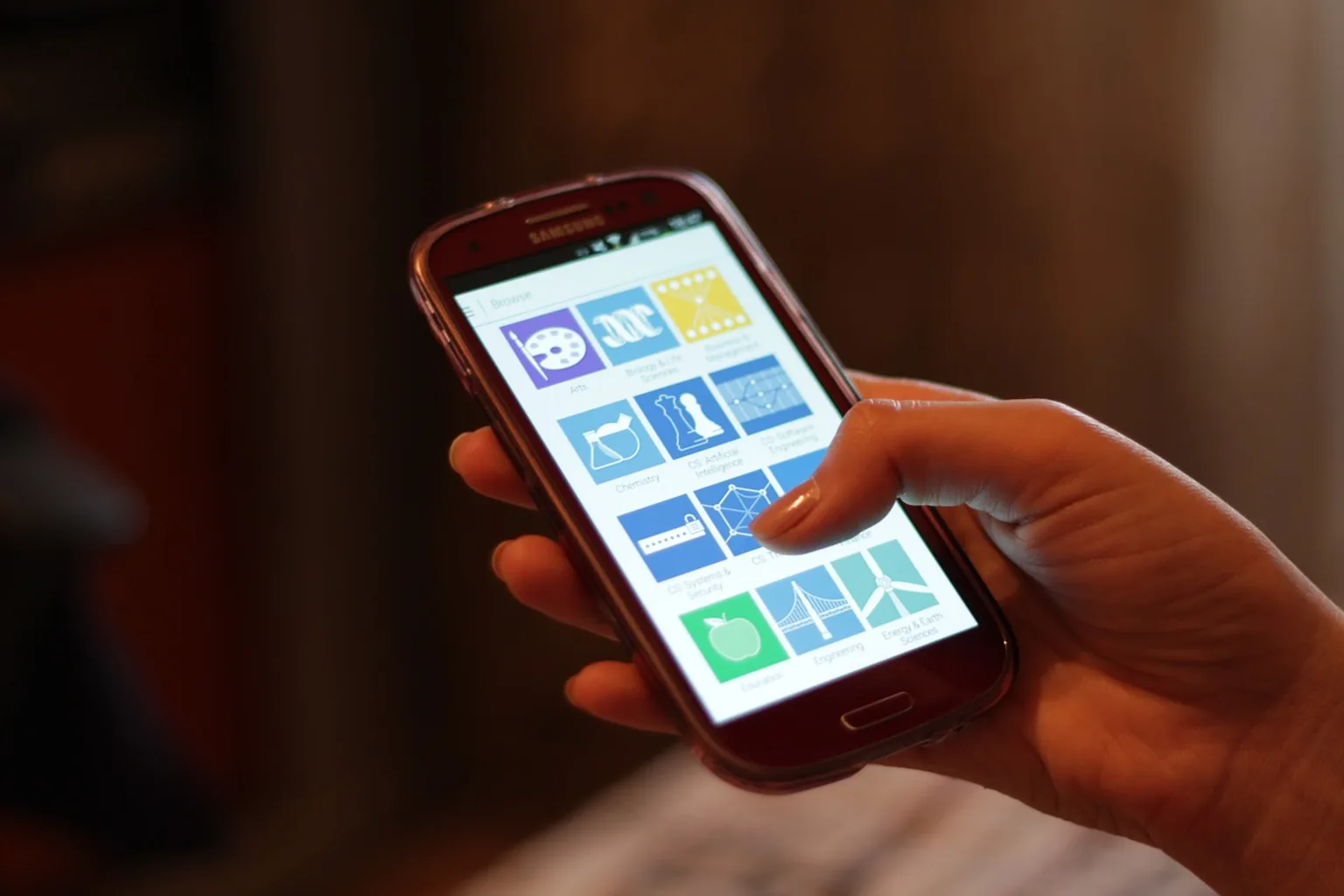
Apple’s iOS 27.3 beta 2, released on 16 November 2026, gives each device a free daily allowance for server-side AI, and iCloud+ plans raise it up to 20 times. Since June some of Apple’s private cloud has run on Google Cloud. In Malaysia, where four Chinese brands shipped 61% of new phones in Q2 2026, no policy we read says where users’ Gemini, Galaxy AI or Siri requests are processed.

On Monday 16 November 2026, Apple began testing a meter on the cloud behind its phones’ AI. In the second beta of iOS 27.3, each device gets “a free daily access allowance for Siri AI and Apple Intelligence features that rely on server-side AI processing”, MacRumors reported. Image Playground and Clean Up in Photos are examples.1 Past the allowance, an iCloud+ storage plan buys more: up to twice as much with 200GB, up to 20 times with 12TB. Basic Siri commands, such as setting a timer, keep working after the limit.1
The limits are still in beta and may change. Apple’s support page, published on 12 November, says “Expanded access to such features will be available for a fee in the future”.2 The meter shows how much of what is sold as phone AI runs on servers. Some of those servers are not Apple’s. Since 8 June 2026 Apple has run some Apple Intelligence work on Google Cloud, on NVIDIA chips. Its security blog calls this “extending our industry-leading PCC privacy commitments to third-party data centers for the first time”.3 PCC is Private Cloud Compute, Apple’s system for answering requests on servers that, it says, keep nothing.
Malaysians are part of this. Here the 200GB plan that doubles the allowance costs RM11.90 a month.4 Siri AI works in six languages, none of them Malay.2 On 14 October Samsung announced Malay for Galaxy AI’s translation and transcription features.5 Six days later the Digital Minister said in a written parliamentary reply that government AI contracts bar providers from training on government data and require them to delete it after processing, The Edge reported.6 Consumer chatbots tend to work the other way: a 2025 Stanford study found six big US developers trained on users’ chats by default.7 Breaches and PDPA penalties are in our article on data leaks, chatbots at work in shadow AI, and camera glasses in smart glasses.
The short version
- Apple’s iOS 27.3 beta 2 tests a free daily allowance for server-side AI on each device. iCloud+ plans raise it by up to 20 times; in Malaysia the 200GB plan costs RM11.90 a month.
- Since 8 June 2026, some Private Cloud Compute requests have run on Google Cloud with NVIDIA GPUs. Apple said protections would be “gradually ramping” through a summer preview. We found no independent audit.
- With Gemini’s History setting off, Google keeps chats for around two months. In February 2025 the page said up to 72 hours. Chats seen by human reviewers stay up to three years.
- Stanford researchers found all six big US chatbot developers they studied, Anthropic, Google and OpenAI among them, trained on chats by default in 2025. Anthropic keeps Claude chats five years if users allow training, 30 days if not.
- OPPO, Xiaomi, HONOR and vivo shipped 61% of new phones in Malaysia in Q2 2026, by our arithmetic from Omdia figures. No policy we read says where Malaysians’ Gemini, Galaxy AI or Siri requests are processed.
A meter on Apple’s cloud
MacRumors listed four kinds of request that count. The first is Siri AI requests with several steps or personal context, such as working out when to leave home to arrive on time. The second is image tools: Image Playground, and Clean Up, Extend and Spatial Reframing in Photos. The third is Shortcuts that use Apple’s cloud models, and the fourth is third-party apps that use Apple’s models in Private Cloud Compute.1 Each category has its own limit. Limits apply per device, reset around midnight local time and do not roll over. A family sharing a plan draws on one pool, first come, first served.1
Apple says limits “may vary by feature, request complexity, system demand, system policies, and other factors”. Neither Apple nor MacRumors gives the free limit.2 The 50GB plan adds nothing, and Apple does not plan to sell usage beyond the 12TB plan for now.1
Monthly prices in Malaysia, tax included: 50GB RM3.90, 200GB RM11.90, 2TB RM44.90, 6TB RM129.90, 12TB RM269.90. These are beta terms. Apple does not publish the free limit, and limits may change.
Source: MacRumors (16 November 2026); Apple Support (16 September 2026).
Show the numbers
| Plan | Multiple of free allowance |
|---|---|
| Free | 1x |
| 50GB | 1x |
| 200GB | up to 2x |
| 2TB | up to 5x |
| 6TB | up to 10x |
| 12TB | up to 20x |
On the phone or on a server
Phone AI runs in two places. A small model on the phone handles quick tasks, and a larger one on a server handles harder ones. In 2025 Apple put its on-device model at about 3 billion parameters, the adjustable numbers that set a model’s size.8 Apple’s rule is to use the device first. For example, “when Priority Notifications determines which notifications have priority over others, that determination is made by an on-device model”. But “when you use Image Playground to generate an image, your device will send your description to Private Cloud Compute”.9
Local AI takes space. Apple Intelligence needs up to 14 GB of storage on the newest iPhones and up to 8 GB on others. It runs only on the iPhone 15 Pro and later models.10 Apple said in 2025 that it does not train its foundation models on users’ “private personal data or user interactions” unless they “explicitly choose to help improve them”.8
When data must leave, engineers have ways to limit what the server learns. Homomorphic encryption lets a server work on a query it cannot read; Apple uses it to match photos against landmarks.11 Federated learning, which Google described in 2017, trains a shared model on phones and sends back only “a small focused update”.12 The team behind Gboard, Google’s keyboard, wrote in 2023 that all its next-word prediction models carry differential privacy guarantees, a mathematical cap on what any one person’s data can reveal.13
Local is not the same as private. “Local AI models are sometimes treated as a panacea, but just because something is running on your own computer doesn’t instantly make it secure,” Signal wrote in May 2025.14 Samsung’s statements on training differ. A September 2025 Samsung newsroom post said personal data is “never stored long-term or used for AI training”, on the device or in the cloud.15 Its enterprise documentation, updated in September 2026, says: “AI features that are processed on-device don’t use your data for training machine learning models. Features that process data in the cloud may be used for model training.”16
| Feature | Company | What the company says |
|---|---|---|
| Priority Notifications | Apple | Decided by “an on-device model” |
| Image Playground | Apple | Your description is sent to Private Cloud Compute |
| Clean Up in Photos | Apple | Counts against the daily server allowance in the iOS 27.3 beta |
| Scam Detection in Google Messages | “all message processing remaining on-device” | |
| Recorder summaries on Pixel | Use Private AI Compute, Google’s server system | |
| Summaries and sketch to image | Samsung | Stop working when on-device-only processing is on (9to5Google) |
| Subway QR codes | Xiaomi | “Your precise location will be encrypted and uploaded to the cloud” |
| Learning your app habits | Xiaomi | “only performed locally on your device” |
Source: Apple (14 September 2026); MacRumors (16 November 2026); Google (4 March 2025; 11 November 2025); 9to5Google (20 February 2025); Xiaomi (3 August 2026).1917181920
Inside Apple’s private cloud
Apple introduced Private Cloud Compute in June 2024 with an unusually detailed design. When a request needs a server, the phone builds it from “the prompt, plus the desired model and inferencing parameters” and encrypts it to specific servers. It travels through a relay “operated by a third party” that hides the phone’s IP address. The servers have no remote shell, so engineers cannot log in to look around. Apple says “no user data is retained in any form after the response is returned”.21
The design is meant to be checked. Apple promised to publish every production software image for inspection within 90 days, and in October 2024 it released a virtual research environment for outsiders.2122 Its bounty pays up to US$1 million (about RM4.1 million) for running arbitrary code on the system, and US$250,000 (about RM1 million) for reaching a user’s request data.22 We found no public report of anyone breaking PCC. Apple still collects metadata, such as “the approximate size of the request and response” and which features were used, which it says is not linked to the account.9
- 1iPhoneThe phone tries firstAn on-device model handles the task if it can. Priority Notifications are decided on the phone.
- 2iPhoneA request is builtThe phone packages the prompt with the chosen model and settings, and encrypts it to specific servers.
- 3Relay operatorA relay hides the senderA third-party relay strips the phone’s IP address before the request reaches Apple’s servers.
- 4Apple or Google CloudA server answersA server with no remote login runs the model. Since June 2026 some run on Google Cloud with NVIDIA GPUs.
- 5AppleThe data is deletedApple says no user data is kept after the answer. It logs limited metadata, such as request size.
- 6YouYou can checkAn optional report in Settings lists each request your device sent to Private Cloud Compute.
This is Apple’s description, not an independent audit. Apple said protections on Google Cloud would ramp up through a summer 2026 preview.
Source: Apple Security Research (10 June 2024; 8 June 2026); Apple, Apple Intelligence & Privacy (14 September 2026).
Show the numbers
| Step | Who | What | Detail |
|---|---|---|---|
| 1 | iPhone | The phone tries first | An on-device model handles the task if it can. Priority Notifications are decided on the phone. |
| 2 | iPhone | A request is built | The phone packages the prompt with the chosen model and settings, and encrypts it to specific servers. |
| 3 | Relay operator | A relay hides the sender | A third-party relay strips the phone’s IP address before the request reaches Apple’s servers. |
| 4 | Apple or Google Cloud | A server answers | A server with no remote login runs the model. Since June 2026 some run on Google Cloud with NVIDIA GPUs. |
| 5 | Apple | The data is deleted | Apple says no user data is kept after the answer. It logs limited metadata, such as request size. |
| 6 | You | You can check | An optional report in Settings lists each request your device sent to Private Cloud Compute. |
Now partly on Google’s servers
In January 2026 Apple confirmed that Gemini would power its next Siri. It said Google’s technology “provides the most capable foundation for Apple Foundation Models”.23 In June it went further. For “the most demanding tasks, including agentic tool-use and complex reasoning”, Apple extended PCC to Google Cloud systems with NVIDIA GPUs.3 “Our core PCC requirements remain exactly the same,” Apple wrote. What changed is the hardware, including “NVIDIA Confidential Computing”, Intel chips and Google’s Titan chip.3 Confidential computing is hardware that walls off data in use, even from the machine’s operator.
Apple says it “retains complete control over PCC software” wherever the servers sit. It keeps “a cryptographically verifiable, append-only ledger of all Google Cloud hardware that is part of the PCC fleet”.3 It also said protections on Google Cloud would be “gradually ramping” through the summer preview, with an updated security guide due later in 2026.3 We found no independent audit of the Google Cloud set-up published by 17 November.
Siri keeps its own rules
Siri has its own privacy notice, dated 26 October 2026. With Siri AI switched on, a request “may be processed on your device or sent to Private Cloud Compute”.24 Siri AI can search Messages, Mail, Calendar and Notes, and can “ask about and take action on what's on your screen”.2 Apple also stores data about each request, such as its category, device details and approximate location. That data carries “a random, device-generated identifier that rotates multiple times per hour”, and Apple “may retain and use this data for up to two years”.24 Apple said in January 2025 that it has “never used Siri data to build marketing profiles”.25
ChatGPT inside Siri follows a third set of rules. If you are not signed in, Apple says OpenAI must “not store your information or any responses it provides unless required under applicable laws”. Signed in, “OpenAI may log your request, attachments, and session history, and use this data to train or improve their models”.26
Researchers have questioned where some Siri data goes. Lumia Security presented research at Black Hat USA in August 2025. Its write-up says messages dictated through Siri, including WhatsApp messages, “are not sent to the Private Cloud Compute”. It added that “there is no assurance as to what Apple does with these messages”.27 Apple told CyberScoop it “respectfully disagrees”, pointing to SiriKit, its system for linking apps to Siri, and to Siri’s privacy policy. CyberScoop’s own report is inconsistent: its opening says the flows occur outside PCC, while a later paragraph says the messages go through it.28 The research predates Siri AI, so it does not show how the new Siri behaves.
Google, Samsung and the Chinese brands
Google followed in November 2025 with Private AI Compute, which runs on its own TPU chips. Google says the system ensures personal data “stays private to you and is not accessible to anyone else, not even Google”.18 Its September 2026 technical brief says outside auditors reviewed the design and third-party relays hide users’ IP addresses.29 Some Google features stay local. Scam Detection in Google Messages is on by default for chats with non-contacts. For its call version, a US beta on Pixel phones, Google says “no conversation audio or transcription is recorded, stored on the device, or sent to Google or third parties”.17
The Gemini app plays by different rules. Its privacy hub, updated on 16 November 2026, says human reviewers, including staff of service providers, “review some of the data we collect”. It asks users not to enter “confidential information that you wouldn’t want a reviewer to see”.30 On Android, Gemini can use Phone, Messages and WhatsApp “whether History is on or off”, and may collect screen content. Google says Gemini chats “are not being used to show you ads” and that it will “clearly communicate” any change.30
Samsung’s Galaxy AI is, in its own words, “processed on-device and in the cloud”. Many features, including Interpreter, Call Assist and Generative Edit, need a Samsung account.16 Owners can switch to on-device processing only. 9to5Google reported in February 2025 that “summarization and sketch-to-image functions” rely heavily on online processing.19 The Galaxy S26, launched in February 2026, offers Gemini and Perplexity as agents that can act across apps. Its Now Nudge feature works with messages in apps including WhatsApp, LINE and Signal, and “requires a Samsung Account login”.31
Chinese brands make similar promises with less public detail. OPPO says its Private Computing Cloud, built with Google Cloud, handles data where “neither OPPO nor third-party cloud service providers can access user data”.32 We found no technical paper or outside audit. Xiaomi’s HyperAI Engine policy, in force since 3 August 2026, is unusually specific. It says screen angle, taps, app category and “how you're holding your device will be used to determine whether you're sleeping”.20 We did not review privacy statements for Huawei’s or Honor’s assistants.
| Product | Says company cannot see data | Outside verification promised | Bounty with stated amounts | Relay hides your IP address | Option to stay on the device |
|---|---|---|---|---|---|
| Apple Private Cloud ComputeSince 2024; partly on Google Cloud since June 2026 | Yes | Yessoftware images published | Yesup to US$1 million | Yes | Unknown |
| Google Private AI ComputeSince November 2025, on Google TPUs | Yes | Yesaudit summaries published | Unknown | Yesthird-party relays | Unknown |
| OPPO Private Computing CloudBuilt with Google Cloud | Yes | Unknown | Unknown | Unknown | Unknown |
| Meta Private ProcessingWhatsApp, optional | Yes | Yesresearchers to verify | Unknownbug bounty, no amounts | Yesthird-party relay | Yesfeature is optional |
| Samsung Galaxy AI cloudCloud-processed features | Unknownmay be used for training | Unknown | Unknown | Unknown | Yeson-device-only switch |
“Unknown” means not stated in the sources we opened, not that the answer is no. Company claims are not audits.
Source: Apple Security Research (10 June 2024; 24 October 2024); Google (11 November 2025; technical brief, September 2026); OPPO (4 March 2025); Engineering at Meta (29 April 2025); Samsung Knox (4 September 2026); 9to5Google (20 February 2025).
Show the numbers
| Product | Says company cannot see data | Outside verification promised | Bounty with stated amounts | Relay hides your IP address | Option to stay on the device |
|---|---|---|---|---|---|
| Apple Private Cloud Compute | Yes | Yes (software images published) | Yes (up to US$1 million) | Yes | Unknown |
| Google Private AI Compute | Yes | Yes (audit summaries published) | Unknown | Yes (third-party relays) | Unknown |
| OPPO Private Computing Cloud | Yes | Unknown | Unknown | Unknown | Unknown |
| Meta Private Processing | Yes | Yes (researchers to verify) | Unknown (bug bounty, no amounts) | Yes (third-party relay) | Yes (feature is optional) |
| Samsung Galaxy AI cloud | Unknown (may be used for training) | Unknown | Unknown | Unknown | Yes (on-device-only switch) |
Assistants that read the screen
The newest assistants read whatever is on screen and tap through apps for you. That needs wide access, and early attempts went badly. Microsoft announced Recall on 20 May 2024. It “takes screenshots of your apps every few seconds” and stores them in a searchable database, Signal summarised.14 Saying it had “heard a clear signal”, Microsoft announced in June 2024 that Recall would be off unless users chose it. It added: “In addition, we encrypted the search index database.”33 By September the services that handle screenshots ran inside a “secure VBS Enclave”, an isolated part of the computer’s memory.34
Microsoft has launched Recall without granular settings for app developers that would enable Signal to easily protect privacy, which is a glaring omission that limits our choices.
China ran a bigger test. On 1 December 2025 ByteDance launched the Nubia M153, made with ZTE, with its Doubao assistant built in. In a demonstration it compared prices across shopping apps and booked restaurants.35 Samm Sacks wrote in Lawfare that the agent has “a kind of master key”. It gives the agent “blanket access to the screen, all app content, and the ability to tap or click as if it were a user”. Within days Taobao, Alipay and WeChat blocked the phone. Banks could not tell the agent’s actions from the user’s.36 ByteDance has said it uses that permission only with explicit user consent.36
A viral video, since removed, showed a user’s bank balance mirrored to other devices logged in to Doubao, Lawfare reported. It also cited a study by the Nanfang Compliance Technology Research Institute. In Lawfare’s summary, phone AI agents “enabled accessibility permissions to access all private screen content and perform operations without notifying users”. Assistants could see bank card passwords and chat logs.36
Keyboards and photos
A keyboard sees everything you type, and a cloud keyboard sends it to a server for better suggestions. In April 2024 Citizen Lab tested cloud-based pinyin keyboards, used to type Chinese, from nine vendors: Baidu, Honor, Huawei, iFlytek, OPPO, Samsung, Tencent, Vivo and Xiaomi. Eight “contained vulnerabilities that could be exploited to completely reveal the contents of users’ keystrokes in transit”. Only in Huawei’s apps did the researchers find no such issue.37 They estimated up to one billion users could be exposed. Most vendors fixed the flaws once told, “although some keyboard apps remain vulnerable”.37 The study did not test whether keyboards on phones sold in Malaysia are affected.
The keyboard study tested Chinese pinyin keyboards, and most vendors fixed the flaws after being told. The Stanford study read 28 policy documents.
Source: Stanford HAI (15 October 2025); Citizen Lab (23 April 2024).
Show the numbers
| Share | What |
|---|---|
| 6 of 6 | big US chatbot developers that trained on users’ chats by default: Amazon, Anthropic, Google, Meta, Microsoft and OpenAI (Stanford HAI, 2025) |
| 8 of 9 | cloud keyboard vendors with at least one app that exposed keystrokes in transit (Citizen Lab, 2024) |
Photos raise the same question. In December 2024 developer Jeff Johnson found that Enhanced Visual Search, which matches photos against landmarks on Apple’s servers, was switched on by default in iOS 18. Apple’s notice said it used homomorphic encryption, differential privacy and an IP-hiding relay. Johnson’s objection was the default, not the cryptography.38
Of course, this user never requested that my on-device experiences be "enriched" by phoning home to Cupertino. This choice was made by Apple, silently, without my consent.
In June 2025 Facebook asked users to let Meta AI process photos they had not shared. Facebook said it would upload media from the camera roll on an “ongoing basis”, TechCrunch reported; Facebook said the media would not be used for ad targeting. Meta’s AI terms said that once images are shared, “Meta will analyze those images, including facial features, using AI”.39 In May 2026 Malaysia’s Immigration Department reminded the public not to use AI tools to generate or edit passport photos.40
What chatbots keep, and for how long
Stanford HAI researchers read 28 documents from Amazon, Anthropic, Google, Meta, Microsoft and OpenAI. They found “all six companies employ users’ chat data by default to train their models, and some developers keep this information in their systems indefinitely”.7 Stanford’s write-up opened with Anthropic, which it said had made “a quiet change” to its terms so that Claude chats are used for training by default unless users opt out.7
If you share sensitive information in a dialogue with ChatGPT, Gemini, or other frontier models, it may be collected and used for training, even if it’s in a separate file that you uploaded during the conversation.
OpenAI’s site blocked our automated requests, so we read Internet Archive captures. Its privacy policy, updated on 6 February 2026 and captured on 3 November, says deleted data is removed “within 30 days”. The exceptions are data it needs to keep longer and data that “has already been de-identified and disassociated from your account” for model improvement.41 Its help page, captured on 25 September 2026, says that when Improve the model for everyone is off, “your new conversations won’t be used to train OpenAI models”. Temporary Chats are not used for training and “may be retained for up to 30 days for safety purposes”. Business, Enterprise and Edu workspaces are not trained on by default.42
Anthropic changed Claude’s consumer terms on 28 August 2025 and gave existing users until 8 October to choose. “We are also extending data retention to five years, if you allow us to use your data for model training,” it said. Users who decline stay with the “existing 30-day data retention period”. The company says it filters or obfuscates sensitive data and does not sell users’ data.43 Its privacy centre says flagged chats and feedback can still be used for training.44 Microsoft’s FAQ for its older consumer Copilot app says: “By default, we store conversation activity for 18 months”.45 In the app released on 18 August 2026, it says, prompts and responses “aren’t used to train foundation models”.46
Gemini shows how a setting can change meaning. In February 2025, with what was then called Gemini Apps Activity off, “your conversations will be saved with your account for up to 72 hours”.47 The November 2026 hub says chats with History off “are retained with your account for around two months”. Default history lasts 18 months; users can choose 3 or 36 months, or no limit. Chats seen by reviewers are separated from the account, and “are retained for up to three years”, even after deletion. And “Your Gemini settings don’t control processing of your chats to create anonymized data to improve Google services.”30
Meta said on 1 October 2025 that from 16 December, chats with Meta AI would shape the content and ads people see. It was “rolling out these changes in most regions”, without listing them. Meta says it does not use topics such as religious views, health or political views to show ads.48 DeepSeek’s policy of 10 February 2026 says: “we directly collect, process and store your Personal Data in People's Republic of China.” It lists a right to opt out of training.49
| Service | Training on your chats | How long chats are kept | Page date |
|---|---|---|---|
| ChatGPT | Unless “Improve the model for everyone” is off; feedback still used | Deleted chats removed within 30 days; Temporary Chats up to 30 days | Captured 25 Sep and 3 Nov 2026 |
| Gemini app | Controlled by a setting in Gemini History; feedback still used | 18 months by default; about 2 months with History off; reviewed chats up to 3 years | 16 Nov 2026 |
| Claude | Your choice; feedback and flagged chats still used | 5 years with training; 30 days without | 28 Aug 2025; 16 Mar 2026 |
| Microsoft Copilot | Not in the August 2026 app; opt-out in the older one | Older app: 18 months by default | Accessed 17 and 18 Nov 2026 |
| Meta AI | Chats shape content and ads from 16 Dec 2025, most regions | Not stated on the page we read | 1 Oct 2025 |
| DeepSeek | Opt-out right listed | “As long as necessary”; stored in China | 10 Feb 2026 |
| ILMUchat | Unless you opt out; feedback and flagged content still used | Not stated in the terms we read | 1 Oct 2026 |
Source: OpenAI, via Internet Archive; Google; Anthropic; Microsoft; Meta; DeepSeek; YTL AI Labs.30414243444546484950
When a court overrides delete
OpenAI’s policy says that if “we receive a lawful subpoena”, it may keep data for as long as the legal obligation lasts.41 In May 2025, in the New York Times’ copyright case, OpenAI was ordered to keep all chat logs, including ones users had deleted. OpenAI appealed, calling the order an “overreach”. On 9 October 2025 Judge Ona T. Wang ended that duty from 26 September. Logs already saved stayed, as did data from accounts flagged by the Times.51
On 5 January 2026 Judge Sidney Stein upheld orders requiring OpenAI to hand over 20 million chat logs; the plaintiffs had first sought 120 million. Stein wrote that Wang “adequately balanced ChatGPT users’ privacy interests against the relevance of the documents in light of the privacy protections already in place”. Those included OpenAI’s de-identification of the sample.52 In July 2025 Sam Altman, OpenAI’s chief executive, said OpenAI could be required to produce users’ conversations in a lawsuit, and called that “very screwed up”. He wanted “the same concept of privacy for your conversations with AI that we do with a therapist or whatever”.53
Regulators push back
Regulators have pushed back too. In December 2024 Italy’s data protection authority, the Garante, fined OpenAI €15 million (about RM67.5 million). It found OpenAI had used personal data to train ChatGPT “without having an adequate legal basis”, and ordered a six-month awareness campaign in Italian media. OpenAI called the decision “disproportionate” and said it would appeal.54 On 18 March 2026 a Rome court annulled the decision: once OpenAI had its EU base in Ireland, it found, the Garante lacked jurisdiction. It did not rule on the substance.55
South Korea’s Personal Information Protection Commission (PIPC) examined DeepSeek after its launch there on 15 January 2025. DeepSeek had sent “device information, user networks, applications, and user input” to Beijing Volcano Engine Technology. It paused new downloads in Korea, and it “has blocked the transfer of user input since April 10, 2025”, the PIPC said.56
Malaysia: whose phones, whose rules
Nearly every Malaysian carries a phone. In 2025, 99.6% of individuals used a mobile phone and 98.3% used the internet, the Department of Statistics found.57 Which phones depends on how you count. Omdia counts shipments, the phones sent to shops in a quarter. It put OPPO first in Q2 2026 with 19%, Samsung and Xiaomi on 16% each, and HONOR and vivo on 13% each. That left “23 percent for Apple, Transsion, realme and other vendors”.58 By our arithmetic, the four Chinese brands in the top five shipped 61%. For the third quarter, Xiaomi shared an Omdia figure putting it first with 21%; other shares were not published.59
StatCounter measures something else: the share of mobile web page views from each brand’s phones. That reflects phones in use and how much their owners browse. In October 2026 Apple led with 36.73%, ahead of Samsung on 11.72%, OPPO on 10.00% and Xiaomi on 9.86%. iPhones made 36.78% of mobile web traffic and Android phones 63.21%.60
Shipments count phones sent to retailers in a quarter; web traffic counts page views by phone brand. Apple alone had 36.73% of web traffic; its shipment share was not given separately. Sums are our arithmetic.
Source: Omdia, via TelecomLead (27 August 2026); StatCounter Global Stats (October 2026, downloaded 17 November 2026).
Show the numbers
| Item | OPPO, Xiaomi, HONOR and vivo | Samsung | Everything else, including Apple |
|---|---|---|---|
| Shipments, Q2 2026 | 61 | 16 | 23 |
| Web traffic, Oct 2026 | 37.7 | 11.7 | 50.6 |
StatCounter counts page views, not phones sold or owned, so monthly shares move with browsing and with its sample. The four-brand line is our sum.
Source: StatCounter Global Stats, Malaysia mobile vendor market share (downloaded 17 November 2026).
Show the numbers
| Period | Apple | OPPO, Xiaomi, HONOR and vivo | Samsung |
|---|---|---|---|
| Oct 25 | 39.3 | 24.7 | 13.6 |
| Nov 25 | 33.5 | 27.3 | 14.9 |
| Dec 25 | 34.1 | 29.1 | 13.9 |
| Jan 26 | 37.0 | 27.3 | 13.3 |
| Feb 26 | 39.1 | 29.5 | 12.8 |
| Mar 26 | 46.8 | 25.4 | 11.6 |
| Apr 26 | 42.8 | 26.4 | 10.9 |
| May 26 | 40.9 | 24.7 | 11.9 |
| Jun 26 | 40.1 | 24.2 | 12.5 |
| Jul 26 | 45.3 | 26.8 | 10.1 |
| Aug 26 | 45.8 | 26.1 | 10.2 |
| Sep 26 | 44.7 | 32.2 | 10.5 |
| Oct 26 | 36.7 | 37.7 | 11.7 |
The brand matters because each has its own AI and policy. Samsung’s 14 October announcement added Malay to Call Assist, Note Assist, Interpreter and Transcript Assist, arriving “in the coming weeks”. Now Nudge, which reads the screen, gained Malay too.5 Google lists Malay among Gemini’s languages and Malaysia among its countries.61 Apple Intelligence supports 16 language options, none of them Malay.10 Siri AI needs the device and Siri set to the same supported language, and an Apple Account in an eligible region. Apple’s page does not list those regions.2
No policy we read says where Malaysians’ Gemini, Galaxy AI or Siri requests are processed. Some say where the company sits. For users outside the European Economic Area and Switzerland, OpenAI’s policy names OpenAI OpCo, LLC in San Francisco as the data controller, the firm responsible for the data.41 DeepSeek stores data in China.49 ILMUchat, a Malaysian chatbot from YTL AI Labs, says its services “are operated from Malaysia”. Its terms allow training on user content “unless you are permitted to, and choose to, opt out through your account settings”. Even after an opt-out, content is used for training when users give feedback or when it is “flagged for safety review”.50 ILMU’s website offers three months of ILMUchat Pro to people who complete modules on the Rakyat Digital portal.62
Malaysians are also unusually trusting. In an Ipsos survey of 30 countries in March and April 2025, 62% of Malaysian online adults agreed that “companies that use artificial intelligence will protect my personal data”. The 30-country average was 48%, and 27% of Malaysians disagreed.63
Agree and disagree do not add to 100; the rest gave other answers. Online samples leave out people who are not online.
Source: Ipsos AI Monitor 2025 (fieldwork 21 March to 4 April 2025; 23,216 adults in 30 countries).
Show the numbers
| Item | Disagree | Agree |
|---|---|---|
| Indonesia | 18% | 72% |
| Thailand | 19% | 70% |
| India | 24% | 66% |
| Singapore | 28% | 64% |
| Malaysia | 27% | 62% |
| 30-country average | 42% | 48% |
| South Korea | 55% | 39% |
| United States | 58% | 33% |
| Japan | 49% | 31% |
| Sweden | 60% | 29% |
What the PDPA covers
The Personal Data Protection Act 2010 applies to firms established in Malaysia. It also covers a firm that is not, if it “uses equipment in Malaysia for processing the personal data otherwise than for the purposes of transit through Malaysia”.64 Whether that reaches a foreign chatbot with no servers here has not been tested in any decision we found. Data may go abroad where the destination has a law “substantially similar to this Act” or adequate protection. It may also go with the user’s consent, or where needed to perform a contract with them.64 Biometric data counts as sensitive personal data. Users may withdraw consent in writing, and may ask a firm to send their data to another (sections 38 and 43A).64
The Personal Data Protection Department (JPDP) consulted from 5 to 23 October 2026 on an AI framework. Before using an outside AI system, a firm would check “whether personal data will be retained, reused or used for model training”. Where data leaves Malaysia, it would, “where appropriate”, carry out a Transfer Impact Assessment.65
The government buys better terms
The government has written its own protections into contracts. Answering Ahmad Fadhli Shaari (PN-Pasir Mas) on 20 October, Digital Minister Gobind Singh Deo said confidential and restricted government data may sit only in domestic private or hybrid clouds. For classified data, The Edge reported, the government owns and controls the encryption keys so foreign providers cannot read the contents on their own, even at a foreign authority’s request. AI vendors may not train on government data and must delete it after processing.6 Those are terms a big buyer can demand. A person with a phone gets the default.
More rules are coming. On 17 November The Star reported that the AI Governance Bill is “targeted for tabling in Parliament early next year”. Deputy Digital Minister Wilson Ugak Kumbong said the ministry would “offer another 100,000 free subscriptions to popular AI applications, mainly for our youths”. The report did not name the apps.66 In January, TechNave reported that the Malaysian Communications and Multimedia Commission (MCMC) views AI chatbots and image tools as “high risk if left unchecked”.67
Things you probably didn’t know
- Accidental “Hey Google” moments can be reused. Depending on your settings, Google says, what it captures after an accidental activation is used to improve its services, including technology that reduces unintended activations.30
- Gemini can import your call history. For users aged 18 or older in some regions, calling or texting history may be copied from Web & App Activity into Gemini History.30
- Apple says it cannot read your Siri app history. Conversation history in the Siri app syncs across devices with encryption Apple says it cannot read.24
- DeepSeek launched in Korea with a policy in two languages. At its Korean launch on 15 January 2025, its privacy policy was only in Chinese and English, the PIPC found.56
- Foreign firms using servers here need a local representative. The PDPA requires one from a firm not established in Malaysia that processes data on equipment here.64
What worked and what didn’t
The designs that held up kept data on the phone or let outsiders check the claims. The failures granted broad access first, or let a promise give way to a court or a bigger model.
Worked
A private cloud outsiders can test
Apple publishes Private Cloud Compute software images, released a research environment in October 2024 and pays bounties of up to US$1 million. A third-party relay hides users’ IP addresses.2122 Google, OPPO and Meta have since announced similar systems.183268
Why it worked: claims that researchers can test carry more weight than promises.
Worked
Scam checks that stay on the phone
Google said in March 2025 that Scam Detection in Google Messages is on by default for non-contacts, “with all message processing remaining on-device”. The call version records and sends nothing.17
Why it worked: a narrow task fits a small local model, so nothing needs uploading.
Worked
A keyboard that learns without reading
Since 2017 Gboard has improved its predictions by federated learning, sending only small model updates.12 By 2023 the Gboard team had deployed more than twenty language models trained with differential privacy, and said all next-word models carried the guarantee.13
Why it worked: when a feature needs only patterns across many users, the text can stay at home.
Worked
A regulator stops the uploads
After Korea’s PIPC examined DeepSeek, the company paused new downloads, added cross-border details to its policy and stopped sending user input to Volcano Engine from 10 April 2025. That was less than three months after its Korean launch.56
Why it worked: a specific legal hook, consent for transfers abroad, plus a pause on downloads.
Worked
One flag that blinds Recall
In May 2025 Signal turned on a screen security setting by default in its Windows 11 app, so Recall captures nothing from its chats. Screenshots of Signal show nothing either.14
Why it worked: an app maker used a system feature it controls, at some cost to convenience.
Didn’t work
Recall’s first design
Microsoft first presented Recall in May 2024 as a feature that screenshots your apps every few seconds into a searchable database.14 In June 2024, before it reached customers, Microsoft made it opt-in, required Windows Hello enrolment and “encrypted the search index database”.33
Lesson: a feature that records everything should be opt-in and encrypted from its first announcement.
Didn’t work
A public feed of private chats
The Meta AI app, launched on 29 April 2025, let users share chats to a public feed. In June TechCrunch found “some users appear blissfully unaware that they are sharing these text conversations, audio clips, and images publicly”. The app had 6.5 million downloads, according to Appfigures.69
Lesson: a share button beside private chats needs an unmistakable warning.
Didn’t work
An agent with a master key
The Doubao phone could read the screen and tap through rival apps. Within days of its December 2025 launch, Taobao, Alipay and WeChat blocked it, and banks could not tell the agent from the user. ByteDance says it acts only with explicit consent.36
Lesson: agents need agreed rules for access before they ship.
Didn’t work
Delete that did not delete
From May to September 2025 a US court order made OpenAI keep chat logs that users had deleted. Saved logs and flagged accounts stayed preserved, and 20 million de-identified logs were ordered handed over.5152
Lesson: a deletion promise holds only until a court says otherwise.
Didn’t work
The local option that vanished
In March 2025 Amazon said it would end, on 28 March, an Echo option that kept voice recordings off its cloud. It cited generative Alexa features that “rely on the processing power of Amazon’s secure cloud”. The option had existed only on three Echo models, for US customers using English. Recordings would instead be deleted after cloud processing.70
Lesson: when a bigger model arrives, a local privacy option can disappear.
Too early
Malaysia’s contract clauses
Government AI contracts bar vendors from training on government data and require deletion after processing, and classified keys stay with the government.6 We found no public audit of how vendors comply.
Lesson: the clauses show what a buyer can demand; consumers have no equivalent default.
Settings you can change today
Menu names come from the companies’ own pages, except where noted, and may differ by software version and region.
On an iPhone
- See what goes to the cloudTurn on the Apple Intelligence & PCC Report under Settings, then Privacy & Security, and choose a duration. You can export the log.9
- Stop improvement sharingUnder Privacy & Security, then Analytics & Improvements, turn off Share iPhone Analytics and Improve Siri & Apple Intelligence or Improve Siri & Dictation.924
- Stop Apple storing your searchesUnder Settings, then Search, turn off Help Apple Improve Search.24
- Fence off appsUnder Settings, then Siri, add apps to Excluded Apps so Siri cannot use their data or act in them.24
- Use ChatGPT signed outApple says OpenAI must not store signed-out requests unless the law requires it; signed-in requests may be used for training.26
On a Samsung Galaxy
9to5Google gives this path: open Settings, tap Galaxy AI and turn on Process data only on device (One UI 6 or later). Summaries and sketch-to-image features may stop working.19 Samsung says features processed on the device do not use your data for training.16
In Gemini
- In Gemini History, cut auto-delete from 18 months to 3 months, and turn off the setting that lets Google train on your chats. Feedback you send is still used.30
- Temporary chats are not used for training but are kept for around two months.30
- Review Connected Apps. Phone, Messages and WhatsApp work on Android even with History off.30
- A separate setting controls the use of audio, Gemini Live video and screenshares.30
In ChatGPT, Claude, Copilot and others
- ChatGPT: Settings, Data controls, then turn off Improve the model for everyone. Feedback can still be used. Use Temporary Chat for one-off questions.42
- Claude: the model-training choice in Privacy Settings decides between five years and 30 days of retention. Feedback and flagged chats can still be used.4344
- Copilot: the August 2026 app does not train foundation models on chats; the older app keeps them 18 months by default.4546
- Meta: Ads Preferences adjusts the ads you see, which Meta AI chats now shape in most regions.48
- ILMUchat: opt out in account settings. Feedback is still used for training.50
For employers
Questions to ask an AI vendor, drawn from JPDP’s draft
- Will our data be retained, reused or used for model training?65
- In which countries is it stored or processed, and who can access it?65
- Which section 129 route covers the transfer abroad, and have we assessed it?64
- Can we restrict cloud-dependent features on staff phones? Samsung’s Knox tools allow it for Galaxy AI.16
For policymakers
- Ask AI providers to state where Malaysian users’ requests are processed. No policy we read does.
- Publish which apps the 100,000 youth subscriptions cover, and on what privacy terms.66
What to watch to 2030
- iOS 27.3’s final release. Date not announced. Watch whether daily limits and iCloud+ multipliers ship as tested, and what paid access costs.12
- An audit of PCC on Google Cloud. Apple promised an updated security guide and research details later in 2026.3
- Galaxy AI in Malay. Due “in the coming weeks” from 14 October 2026.5
- JPDP’s final AI framework. The consultation closed on 23 October 2026; no date is set.65
- The AI Governance Bill, early 2027. Watch whether it sets defaults for consumer apps.66
- The 20 million ChatGPT logs. How they are used in the New York Times case.52
- Agent phones abroad. Lawfare wrote that ByteDance “may target overseas markets next”.36
Company policies change often; we quote each with the date shown on the page or the date of the archive capture we read. Shipment and web-traffic shares measure different things and should not be compared directly. Company statements are their own claims. Nothing here is legal advice. Conversions use Bank Negara Malaysia’s middle rate of 17 November 2026: RM4.089 per US dollar and RM4.5008 per euro.
Sources
- MacRumors, “iOS 27.3 Beta Adds Daily Siri AI Limits and iCloud+ Upgrades”, 16 November 2026: macrumors.com
- Apple Support, “How to get Siri AI”, 12 November 2026: support.apple.com
- Apple Security Research, “Expanding Private Cloud Compute”, 8 June 2026: security.apple.com
- Apple Support, iCloud+ plans and pricing, 16 September 2026: support.apple.com
- Samsung Newsroom Malaysia, Galaxy AI language support, 14 October 2026: news.samsung.com
- The Edge Malaysia, Gobind on public-sector data and AI providers, 20 October 2026: theedgemalaysia.com
- Stanford HAI, “Be Careful What You Tell Your AI Chatbot”, 15 October 2025: hai.stanford.edu
- Apple Machine Learning Research, Apple foundation models 2025 updates, 9 June 2025: machinelearning.apple.com
- Apple, “Apple Intelligence & Privacy” legal notice, 14 September 2026: apple.com
- Apple Support, Apple Intelligence requirements and languages, 5 November 2026: support.apple.com
- Apple Machine Learning Research, homomorphic encryption and Enhanced Visual Search, 24 October 2024: machinelearning.apple.com
- Google Research, “Federated Learning”, 6 April 2017: research.google
- Xu et al., Gboard language models with differential privacy, arXiv 2305.18465, 29 May 2023: arxiv.org
- Signal, “By Default, Signal Doesn’t Recall”, 21 May 2025: signal.org
- Samsung Newsroom Australia, “Your Privacy, Secured: How Galaxy AI Empowers You to Take Control of Your Data”, 15 September 2025: news.samsung.com
- Samsung Knox documentation, “Data processing for Galaxy AI”, 4 September 2026: docs.samsungknox.com
- Google Security Blog, AI-powered scam detection, 4 March 2025: security.googleblog.com
- Google, “Private AI Compute”, 11 November 2025: blog.google
- 9to5Google, Galaxy AI on-device processing, 20 February 2025: 9to5google.com
- Xiaomi, HyperAI Engine Privacy Policy, version v20260803, in force 3 August 2026: privacy.mi.com
- Apple Security Research, “Private Cloud Compute”, 10 June 2024: security.apple.com
- Apple Security Research, PCC research tools and bounty, 24 October 2024: security.apple.com
- MacRumors, Apple confirms Gemini will power the next Siri, 12 January 2026: macrumors.com
- Apple, “Siri, Dictation & Privacy”, 26 October 2026: apple.com
- Apple Newsroom, Siri privacy commitment, 8 January 2025: apple.com
- Apple, “ChatGPT Extension & Privacy”, 14 September 2026: apple.com
- Lumia Security, “AppleStorm”, 8 August 2025: lumia.security
- CyberScoop, research on Apple Intelligence data handling, 8 August 2025: cyberscoop.com
- Google, Private AI Compute technical brief, updated September 2026: services.google.com
- Google, Gemini Apps Privacy Hub, last updated 16 November 2026: support.google.com
- Samsung press release via AAP, Galaxy S26 series, 26 February 2026: aap.com.au
- OPPO, AI integration and security with Google, 4 March 2025: oppo.com
- Windows Experience Blog, update on the Recall preview, 7 June 2024: blogs.windows.com
- Windows Experience Blog, Recall security and privacy architecture, 27 September 2024: blogs.windows.com
- Caixin Global, ByteDance’s AI phone, 19 December 2025: caixinglobal.com
- Lawfare, “China’s Agentic AI Controversy”, 6 March 2026: lawfaremedia.org
- Citizen Lab, keyboard app vulnerabilities, 23 April 2024: citizenlab.ca
- Jeff Johnson, “Apple Photos phones home on iOS 18 and macOS 15”, 28 December 2024: lapcatsoftware.com
- TechCrunch, Meta AI and unshared camera-roll photos, 27 June 2025: techcrunch.com
- The Star, Immigration Department on AI-edited passport photos, 28 May 2026: thestar.com.my
- OpenAI, Privacy Policy, updated 6 February 2026, Internet Archive capture of 3 November 2026: web.archive.org
- OpenAI Help Center, “Data controls in ChatGPT”, Internet Archive capture of 25 September 2026: web.archive.org
- Anthropic, “Updates to Consumer Terms and Privacy Policy”, 28 August 2025: anthropic.com
- Anthropic Privacy Center, “Is my data used for model training?”, 16 March 2026: privacy.claude.com
- Microsoft Support, “Privacy FAQ for Microsoft Copilot”, for the older app, no date shown, accessed 17 November 2026: support.microsoft.com
- Microsoft Support, “Microsoft Copilot for individuals: your activity history”, no date shown, accessed 18 November 2026: support.microsoft.com
- Google, Gemini Apps Privacy Hub, last updated 12 February 2025, Internet Archive capture of 2 March 2025: web.archive.org
- Meta, AI interactions to shape content and ads, 1 October 2025: about.fb.com
- DeepSeek, Privacy Policy, 10 February 2026: cdn.deepseek.com
- YTL AI Labs, ILMUchat Terms of Service, effective 1 October 2026: ilmu.ai
- Engadget, OpenAI chat-log preservation order ended, 11 October 2025: engadget.com
- ABA Journal, OpenAI must turn over 20 million chat logs, 8 January 2026: abajournal.com
- TechCrunch, Sam Altman on confidentiality and ChatGPT, 25 July 2025: techcrunch.com
- Euronews, Italy fines OpenAI €15 million, 20 December 2024: euronews.com
- NT+ Diritto (Il Sole 24 Ore), Rome court annuls the Garante’s €15 million ChatGPT fine, in Italian, 3 June 2026: ilsole24ore.com
- Personal Information Protection Commission (Korea), DeepSeek examination results, 24 April 2025: pipc.go.kr
- Department of Statistics Malaysia, ICT Use and Access by Individuals and Households 2025, 23 April 2026: dosm.gov.my
- TelecomLead, Malaysia smartphone market in Q2 2026, citing Omdia, 27 August 2026: telecomlead.com
- ProductNation, Xiaomi’s Malaysia share in Q3 2026, 13 November 2026: productnation.co
- StatCounter Global Stats, mobile vendor market share in Malaysia to October 2026, downloaded 17 November 2026: gs.statcounter.com
- Google, Gemini Apps Help, “Where you can use Gemini”, accessed 17 November 2026: support.google.com
- YTL AI Labs, ILMU homepage, accessed 17 November 2026: ilmu.ai
- Ipsos, AI Monitor 2025, New Zealand edition of the 30-country report, August 2025: ipsos.com
- Personal Data Protection Department, Personal Data Protection Act 2010 (Act 709), reprint as at 15 September 2026: pdp.gov.my
- Personal Data Protection Department, Public Consultation Paper No. 1/2026 on AI and personal data, October 2026: pdp.gov.my
- The Star, AI Governance Bill enforcement being prepared, 17 November 2026: thestar.com.my
- TechNave, MCMC warns against misuse of AI, 5 January 2026: technave.com
- Engineering at Meta, WhatsApp Private Processing, 29 April 2025: engineering.fb.com
- TechCrunch, “The Meta AI app is a privacy disaster”, 12 June 2025: techcrunch.com
- The Verge, Amazon ends Echo’s local voice processing option, 14 March 2025: theverge.com
Related research
 Treat your IC number like your nameIn 2024 police found 400 million records on Malaysians, sold at RM1.50 to RM2 each or rented out by the month.
 Nearly 900 staff opened ChatGPT. Ten answered the CIOBetween July and December 2023, nearly 900 staff at a government department in Victoria, Australia, opened ChatGPT on work devices.
 Korea’s exam halls now watch for AI glassesRay-Ban Meta glasses went on sale in Malaysia on 20 October 2026, from RM2,119.
