
Technology
Korea’s exam halls now watch for AI glasses
Ray-Ban Meta glasses went on sale in Malaysia on 20 October 2026, from RM2,119. Their maker sold more than 7 million AI glasses in 2025, while Meta’s Reality Labs lost US$19.19 billion. Korea now treats AI-glasses cheating in its college entrance exam as a criminal matter.
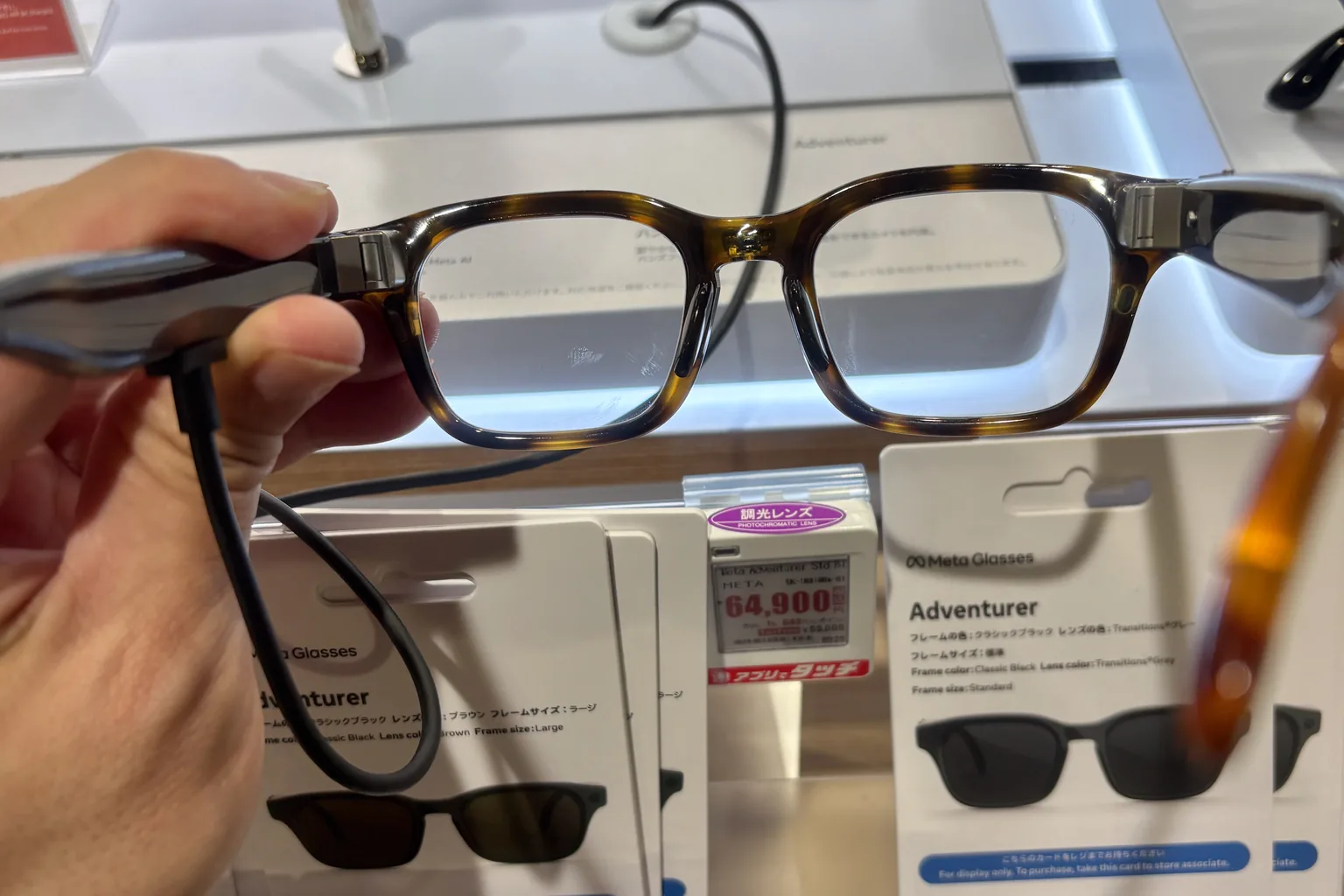
In May 2026 a man in his 40s sat a licensing exam for fire protection engineers in Gwangju, South Korea. A supervisor noticed “light reflected on the lenses of his glasses”, the Korea Herald reported. The man admitted he had built an AI app linked to the glasses to check whether the correct answers would appear. In June prosecutors summarily indicted him, in “the country’s first legal action involving the devices”.1
Six months later, AI glasses are a national exam problem. In July the Education Ministry added them to the banned items for the CSAT, Korea’s college entrance exam. On 29 October it said cheats would face criminal charges, and that it is pushing to lengthen the one-year exam ban to three years.2 When the exam is held on 19 November, one staff member will check for the glasses at each of the 1,312 test sites.23 On 17 November prosecutors were told to seek formal trials, in principle, for cheating with generative AI or smart devices.4
Malaysia has been selling the same glasses for four weeks. On 20 October Ray-Ban Meta and Oakley Meta went on official sale here, with Ray-Ban Meta (Gen 3) from RM2,119.5 EssilorLuxottica, Ray-Ban’s owner and Meta’s manufacturing partner, sold more than 7 million AI glasses worldwide in 2025.6 This article covers what the glasses and other AI gadgets do, who makes money, which ones flopped and what Malaysian law says about filming. We cover face recognition, smartwatch health data and data leaks and PDPA penalties separately. Uses for blind and deaf people are in our article on AI and disability.
The short version
- EssilorLuxottica sold more than 7 million AI glasses in 2025. Its wearables revenue was €1.8 billion (about RM8.1 billion), against €370 million in 2024.
- Meta’s Reality Labs, which makes its glasses and headsets, lost US$19.19 billion in 2025 on revenue of US$2.21 billion. Meta says it prices the devices “not to make a large profit on the hardware”.
- In Malaysia, Ray-Ban Meta (Gen 3) costs from RM2,119. By our arithmetic that is about 15% above the US price and 30% of a median household’s monthly income.
- The flops were costly. Humane raised more than US$230 million, sold about US$9 million of AI Pins and switched them off on 28 February 2025.
- Malaysia’s PDPA exempts data an individual processes only for “personal, family or household affairs”. Posting a clip can still break other laws, with fines of up to RM500,000 under the Communications and Multimedia Act.
How the invigilators caught them
The Gwangju case was not the only one. Two men in their 20s were booked in May for the same method at technical exam sites in Seoul and Mokpo. AI glasses also turned up at TOEIC English tests in May and June.1 Officials from the agencies that run national qualification exams held an emergency meeting on 10 July.1 By the end of October, six smart-glasses cases had been detected in national licensing exams this year.7
Schools found more. A survey of all 5,679 middle and high schools turned up four cases in midterm or final exams. “Three of the four were caught while constantly touching their glasses,” the Korea Times reported. The fourth switched to AI glasses after the exam began. All four received zero scores, and the three high-school students faced measures such as special education, community service and a five-day suspension.8
The ministry describes such cheating as “intentionally and systematically obstructing the normal operation of national examinations”.2 Kim Wi-sang, an opposition People Power Party lawmaker, has proposed 6.57 billion won (about RM20.1 million) in next year’s budget for detection equipment and extra monitoring staff at national licensing exams.7 The ministry also plans to assess radio-signal detectors being developed by specialist institutions.3 For now, detection rests on people who notice a glint or a hand at the frame.
- 1InvigilatorsA glint in GwangjuMay: a supervisor notices light reflected on a licensing candidate’s lenses. Other cases follow in Seoul, Mokpo and TOEIC tests.
- 2ProsecutorsA first indictmentJune: prosecutors summarily indict the Gwangju candidate under the National Technical Qualification Act.
- 3Education MinistryGlasses join the banned listJuly: exam agencies meet on 10 July, and AI glasses are added to the college entrance exam’s banned items.
- 4Education MinistryCriminal charges and a staff check29 October: cheats face charges; the ministry pushes to extend the exam ban to three years, with a checker at each of 1,312 sites.
- 5Supreme Prosecutors’ OfficeFormal trials17 November: prosecutors are told to seek formal trials, in principle, for cheating with generative AI or smart devices.
The college entrance exam is on 19 November 2026. A survey of 5,679 schools found four cases in school exams this year.
Source: Korea Herald (14 July, 30 October 2026); Korea Times (29 October, 9 and 17 November 2026).
Show the numbers
| Step | Who | What | Detail |
|---|---|---|---|
| 1 | Invigilators | A glint in Gwangju | May: a supervisor notices light reflected on a licensing candidate’s lenses. Other cases follow in Seoul, Mokpo and TOEIC tests. |
| 2 | Prosecutors | A first indictment | June: prosecutors summarily indict the Gwangju candidate under the National Technical Qualification Act. |
| 3 | Education Ministry | Glasses join the banned list | July: exam agencies meet on 10 July, and AI glasses are added to the college entrance exam’s banned items. |
| 4 | Education Ministry | Criminal charges and a staff check | 29 October: cheats face charges; the ministry pushes to extend the exam ban to three years, with a checker at each of 1,312 sites. |
| 5 | Supreme Prosecutors’ Office | Formal trials | 17 November: prosecutors are told to seek formal trials, in principle, for cheating with generative AI or smart devices. |
We found no Malaysian exam rules that name smart glasses, but we did not survey every exam body.
What the glasses do
Most AI glasses sold today have no screen. A camera, microphones and small open-ear speakers sit in an ordinary-looking frame. Screenless models made up 96% of AI-glasses shipments in the first half of 2026, Counterpoint Research estimates.9 IDC, another tracker, says audio and camera glasses were 70.3% of all headsets and smart glasses shipped in the second quarter, up from 61.9% a year earlier.10
The AI is a voice assistant that can see what the wearer sees. Google’s list for its audio glasses includes questions about your surroundings, turn-by-turn directions, calls and messages, photos and live translation. Google says they will work with Android phones and iPhones.11 Meta’s first glasses with its AI assistant, Ray-Ban Meta, launched in September 2023 at US$299 with a 12-megapixel camera. It could record video for up to 60 seconds, and Meta AI was a US-only beta.12
Screens are the next step, and still rare. Meta Ray-Ban Display, launched in the US on 30 September 2025 at US$799, has “a built-in, full-color visual display in the right lens”.6 It comes with a wristband that reads electrical signals in the wrist muscles, so small finger movements act as controls.13 China leads this segment, with 45% of shipments of glasses with screens in the first half of 2026, against about 41% for North America.9
One chip family runs most of them. Qualcomm held 86% of the AI-glasses chipset market in the first half of 2026, Counterpoint says. Its AR1 Gen 1 powers both Ray-Ban Meta (Gen 3) and the new Samsung and Google glasses.14
Battery and heat set the limits
Battery life decides what the glasses can do. Ray-Ban Meta (Gen 2) of 2025 claimed up to 8 hours, and Gen 3 claims up to 9.615 Removing the camera buys more. Meta’s camera-free Ray-Ban Meta Audio weighs 43 grams and claims up to 12 hours; Gen 3 weighs 51.5 to 54.5 grams.1415 Meta lists up to six hours for the Display model.13
Heat is the gap in the record. We found no maker that publishes temperature limits for its glasses, and no test in tropical conditions. Battery claims are for typical use, and they come from the makers.
The camera need not sit on the face. In a paper for the CHI 2026 conference, researchers built camera earbuds whose AI answers were “on par with Ray-Ban Meta”, with cameras drawing “under 5mW through on-demand activation”.16 SoyaCincau lists Be My Eyes, a visual-assistance app for blind and low-vision users, among the Malaysian Ray-Ban Meta’s features.5
Seven million pairs, thinner margins
EssilorLuxottica sells more of these glasses than anyone. In 2025 its AI-glasses units, including Ray-Ban Meta and Oakley Meta, “were above 7 million in the full year”.6 From launch until February 2025 the total had been 2 million, UploadVR reported. The company had planned capacity of 10 million units a year by the end of 2026.17
Wearables revenue, which also includes Nuance Audio hearing glasses, reached €1,796 million in 2025. That is 4.85 times the 2024 figure and 6.3% of group revenue, by our arithmetic.18 Its two top executives called 2025 the first year in the company’s history with “annual double-digit sales growth at constant currency”.6
The glasses cost the group margin. Gross margin fell 260 basis points in 2025, which the company put down to US tariffs and “the higher weight of the AI-glasses revenue”.6 In other words, a euro of AI-glasses sales earns less gross profit than a euro from the rest of its business.
Q4 2025 was 14.4% of group revenue, by our arithmetic (1,091 of 7,600). Wearables revenue for all of 2024 was €370 million. The company says Q3 2026 was up 20% at constant exchange rates.
Source: EssilorLuxottica, Q3 2026 revenue release (20 October 2026); FY2025 results (11 February 2026).
Show the numbers
| Quarter | € million |
|---|---|
| Q1 2025 | €104m |
| Q2 2025 | €198m |
| Q3 2025 | €402m |
| Q4 2025 | €1,091m |
| Q1 2026 | €405m |
| Q2 2026 | €370m |
| Q3 2026 | €486m |
Growth has slowed. In the third quarter, wearables sales through its wholesale arm fell in Europe, the Middle East and Africa against a strong year-earlier quarter. In North America they grew by a high single digit.18 Over the first nine months, it was 79.1% above the same period of 2025, by our arithmetic.18
Shops explain much of the lead. Eyewear channels, online and offline, sold more than half of the market leader’s glasses, Counterpoint says.14 IDC credits Meta’s “distribution scale, brand recognition, and AI features built across its product line”.10 EssilorLuxottica keeps buying shops. After it took in Thailand’s Top Charoen, with almost 2,000 stores, its Asia-Pacific store count reached 3,632 at the end of September, against 1,682 at the end of 2025.18
Meta pays for the habit
Meta does not publish unit sales of its glasses. In January 2026 Mark Zuckerberg told analysts that “sales of our glasses more than tripled last year”, and called them “some of the fastest growing consumer electronics in history”.19 The costs sit in Reality Labs, the division that makes the glasses, Quest headsets and research hardware.
Reality Labs lost US$16.12 billion in 2023, US$17.73 billion in 2024 and US$19.19 billion in 2025, on revenue of US$1.90 billion, US$2.15 billion and US$2.21 billion.2021 In 2025 it lost about US$8.70 for each dollar of revenue, by our arithmetic. With US$12.78 billion lost in the first nine months of 2026, the total since 2023 is about US$65.8 billion.22
Reality Labs also makes Quest headsets and funds research, so these are not glasses-only figures. In the first nine months of 2026 it lost US$12.78 billion on US$1.28 billion of revenue. The ratio is our arithmetic.
Source: Meta, results releases (29 January 2025; 28 January 2026; 21 October 2026).
Show the numbers
| Year | Operating loss | Revenue |
|---|---|---|
| 2023 | US$16.1bn | US$1.9bn |
| 2024 | US$17.7bn | US$2.1bn |
| 2025 | US$19.2bn | US$2.2bn |
Meta expects the 2026 loss to be US$18 billion to US$19 billion. It expects about US$15 billion in 2027, “as we reallocate investment toward other priority areas, primarily AI”.22 Glasses now prop up the division’s sales. Third-quarter revenue was US$443 million. It was “down 6% due to lower Quest headset sales, which were partially offset by continued strong growth in AI glasses revenue”, said Susan Li, the chief financial officer.23
So we have priced our devices not to make a large profit on the hardware, but to build a large software and superintelligence business on top of them over time.
The plan is more pairs at more prices. Ray-Ban Meta (Gen 3), launched on 23 September 2026, starts at US$449, and the camera-free Ray-Ban Meta Audio at US$349.15 Meta’s own-brand Meta Glasses, made with EssilorLuxottica, launched at US$299 in June.24 “Early sales have been strong, exceeding our expectations,” Zuckerberg said in July.25 Meta says it will offer more than 100 glasses options by the end of 2026, and calls Ray-Ban Meta “the world’s best-selling AI glasses”.15 Next, Meta says, come VR Glasses at US$1,299.99, due in spring 2027 and about five times lighter than its Quest 3 headset.26
Who is counting, and who is chasing
Meta’s lead is not in doubt, but its size depends on the tracker. Each counts different products over different periods.
| Tracker and period | What it counts | Meta’s share | Market growth |
|---|---|---|---|
| Counterpoint, first half of 2026 | Screenless AI glasses (growth covers all AI glasses) | about 94% | 263% |
| Counterpoint, second half of 2025 | Smart glasses | 82% | 139% |
| Omdia, first half of 2026 | AI glasses: 4.2 million units, 3.4 million of them Meta’s | 81.3% | 127% |
| IDC, second quarter of 2026 | All AR and VR headsets and smart glasses, including Meta’s Quest | 68.7% | 35.3% |
Source: Counterpoint (21 September 2026; 27 February 2026); Omdia via FashionUnited (23 September 2026); IDC (16 September 2026). Growth is year on year.9102728
The table shows why one number misleads. Omdia and Counterpoint both measure AI glasses in the same half-year, yet put growth at 127% and 263%. IDC’s lower share includes Quest headsets, whose sales are falling.23 Worldwide, smart-eyewear shipments reached 3.547 million units in the second quarter, 2.494 million of them audio and camera glasses, TechNode reported from IDC data.29 The US took 42% of smart-glasses shipments in the first half.14
The headsets’ 2025 share is our arithmetic (100 minus 61.9 minus 11.0). IDC forecasts total shipments to grow 26.3% in 2026 and 40.5% in 2027.
Source: IDC (16 September 2026).
Show the numbers
| Item | Audio and camera glasses | Display glasses | Headsets |
|---|---|---|---|
| Q2 2025 | 61.9 | 11 | 27.1 |
| Q2 2026 | 70.3 | 14.3 | 15.4 |
China’s numbers point both ways
Xiaomi’s first AI glasses went on sale in June 2025 at 1,999 yuan, about RM1,226. Xiaomi’s founder, Lei Jun, called the model “a personal AI gateway for the next era of portable technology”.30 IDC counted 1.6 million smart glasses shipped in China in the year to September 2025, with Xiaomi claiming roughly a third, Bloomberg reported. Alibaba’s Quark S1, with screens, launched in November 2025 at 3,799 yuan (about RM2,331). A screenless G1 cost 1,899 yuan. Alibaba sells them in more than 600 stores across 82 cities.31
Omdia says China’s AI-glasses shipments grew 306% in the first half of 2026, with Alibaba, INMO and Xiaomi holding 46.1% of them.28 IDC’s second-quarter data say the opposite. China’s smart-eyewear shipments fell 8% to 611,000, “marking the market’s first decline”, and audio and camera glasses fell 35.4%.29 The trackers define the market differently, and none we read explained the fall.
The challengers
Samsung and Google’s first AI glasses go on sale on 10 December 2026. They will sell in the US under the Warby Parker and Gentle Monster brands, and in South Korea under Gentle Monster. The Warby Parker pairs start at US$395, below Ray-Ban Meta (Gen 3), and the Gentle Monster pairs cost US$449 to US$489. They weigh 39.6 to 43.9 grams. Counterpoint calls their entry “the first credible alternative ecosystem to Meta”.14 Omdia ranks Even Realities, which it calls Singapore-headquartered, second in the first half of 2026 with 102,000 units, or 2.4%.28 Snap’s Specs, with screens, cost US$2,195, AFP reported.24 ProductNation lists the US, the UK and France as their markets, not Malaysia.32
The AI gadget graveyard
Ray-Ban Meta succeeded after a long line of failures. Google Glass Explorer Edition cost US$1,500, and on 15 April 2014 Google opened sales to any US adult for one day.33 It stopped Explorer sales after 19 January 2015, saying “we realize that we’ve outgrown the lab”.34 Glass had drawn “privacy concerns over its use”, TIME reported, and Google had published a guide on how not to be a “Glasshole”.35 The enterprise version stopped selling on 15 March 2023.36
Snap came next. In the third quarter of 2017 it booked US$39.9 million of charges on Spectacles inventory: excess stock, cancelled purchase commitments and impairments.37 Apple’s Vision Pro went on sale in the US on 2 February 2024 at US$3,499, about RM14,307.38 Then came a wave of stand-alone AI gadgets: the Humane AI Pin, the Rabbit R1 and the Friend pendant. Their stories are in the cases below.
| Product | Launch price | Money raised, lost or written off | Units | What happened | Verdict |
|---|---|---|---|---|---|
| Google Glass Explorer2013 | US$1,500 | Unknown | Unknown | Consumer sales ended January 2015 | ✕Withdrawn |
| Snap Spectacles2016 | Unknown | US$39.9m charges, Q3 2017 | Unknown | New Specs at US$2,195 in 2026 | ✕Written down |
| Apple Vision Pro2024 | US$3,499 | About US$1.4bn revenue in 2024 | 390,000 (2024); 45,000 (2025) | Advertising cut by over 95% | !Shrinking |
| Humane AI Pin2024 | US$699 | Over US$230m raised; assets sold for US$116m | About 10,000 | Switched off 28 February 2025 | ✕Shut down |
| Rabbit R12024 | US$199 | Unknown | Over 100,000; about 5,000 used daily | Interface ran as an Android app | !Little used |
| Friend pendant2025 | US$129 | About US$7m raised; US$1m on ads | About 3,000 sold | 1,000 shipped by October 2025 | ✕Few buyers |
| Ray-Ban Meta2023 | US$299 | Reality Labs lost US$19.19bn in 2025 | Over 7m in 2025, with Oakley Meta | Gen 3 on sale in Malaysia | ✓Growing |
“Unknown” means we found no figure in the sources we opened. Vision Pro figures are IDC estimates; Rabbit’s sales are the company’s figures.
Source: CBS News (2014; 2015); Snap 10-Q (2017); The Register (2 January 2026); TechCrunch (18 February 2025); MacRumors (7 August 2024); 9to5Google (26 September 2024); Fortune (1 October 2025); Meta; EssilorLuxottica.
Show the numbers
| Product | Launch price | Money raised, lost or written off | Units | What happened | Verdict |
|---|---|---|---|---|---|
| Google Glass Explorer | US$1,500 | Unknown | Unknown | Consumer sales ended January 2015 | Withdrawn |
| Snap Spectacles | Unknown | US$39.9m charges, Q3 2017 | Unknown | New Specs at US$2,195 in 2026 | Written down |
| Apple Vision Pro | US$3,499 | About US$1.4bn revenue in 2024 | 390,000 (2024); 45,000 (2025) | Advertising cut by over 95% | Shrinking |
| Humane AI Pin | US$699 | Over US$230m raised; assets sold for US$116m | About 10,000 | Switched off 28 February 2025 | Shut down |
| Rabbit R1 | US$199 | Unknown | Over 100,000; about 5,000 used daily | Interface ran as an Android app | Little used |
| Friend pendant | US$129 | About US$7m raised; US$1m on ads | About 3,000 sold | 1,000 shipped by October 2025 | Few buyers |
| Ray-Ban Meta | US$299 | Reality Labs lost US$19.19bn in 2025 | Over 7m in 2025, with Oakley Meta | Gen 3 on sale in Malaysia | Growing |
OpenAI’s plans are less clear. In May 2025 it agreed to buy io, the device start-up of the former Apple designer Jony Ive, for about US$6.4 billion (about RM26.2 billion) in stock, CNBC reported.39 In a court declaration, io’s hardware chief Tang Tan said the prototype “is not an in-ear device, nor a wearable device”.40 A later filing said the first device would not ship before the end of February 2027, and OpenAI dropped the io name, MacRumors reported, citing Wired.41
A camera nobody notices
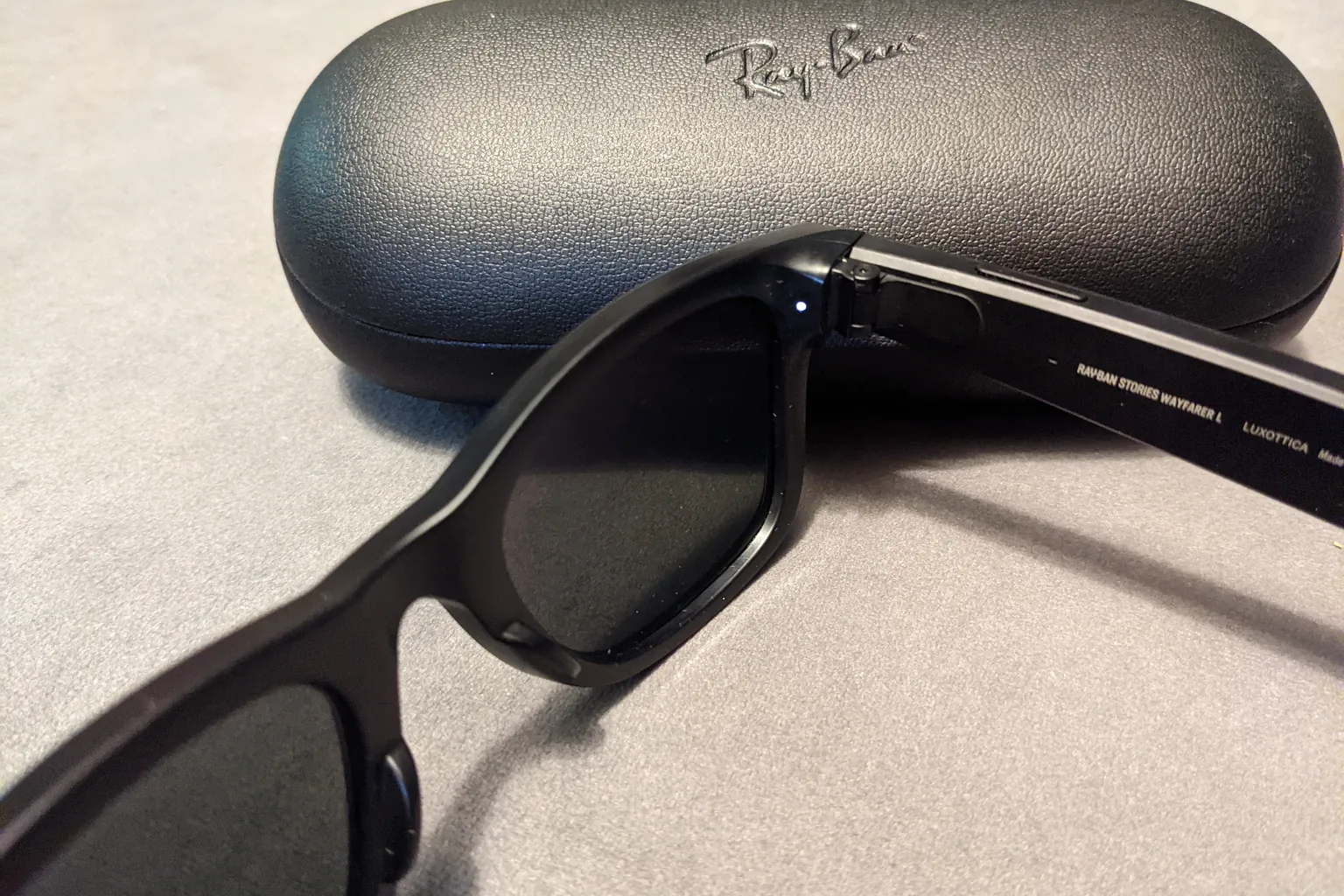
Meta’s answer to bystanders has always been a light. Ray-Ban Stories had an LED that lit up “to let people nearby know when you’re taking a photo or video”.42 Meta says that from the second generation of its glasses the camera would not start if the light was covered, and a July 2026 update disables it if the LED is tampered with. “No other kind of camera has done this and we’re proud to lead the industry forward,” Meta wrote.43
The pressure came from how some people used them. The New York Times reported men filming women in gyms, bathrooms and changing rooms, and shops putting up signs banning the glasses. Its headline called them “pervert glasses”. Meta’s chief technology officer, Andrew Bosworth, said: “I don’t want the discourse to be entirely shaped by this kind of relatively small number of bad actors.”44
Meta has since remotely disabled the cameras on glasses whose LED had been tampered with. Meta vice-president Alex Himel told Semafor the update affected less than a tenth of a per cent of the devices sold, Inc. reported.45 A US class action filed in March 2026 alleges that Meta misrepresented the glasses’ privacy, and it has been expanded to include bystanders. The claims are unproven.45
A light is not consent, critics say. “Seeing a light come on doesn’t mean that you consent to being filmed, nor to have your image distributed to thousands of people afterwards,” said Ines Legendre of e-Enfance, a French internet safety group. Paris prosecutors have opened a sexual harassment investigation into street filming of women.46 Meta’s camera-free Audio model was “designed to combat criticism around the more malicious use cases for AI glasses”, TechCrunch wrote.47 Counterpoint expects more designs of that kind “to address privacy concerns associated with cameras”.9 Audio recording raises the same question. “Meta needs to figure out a way to warn users they are being recorded, even though it just might be audio only,” said Jitesh Ubrani, a director at IDC.48
Footage also travels. In February two Swedish newspapers reported that images from Meta glasses were reviewed by contractors in Nairobi, and Kenya’s data regulator has opened an investigation, a digital rights group said.49 In Seoul, police investigated a man accused of wearing the glasses on dates with four women, recording them without consent and posting the clips. Confronted by the women, he reportedly said it was “to preserve the memories”.50 The New York Times reported on US restaurant staff filmed for TikTok. A Meta spokesperson told it: “Users are responsible for complying with all applicable laws and for using Ray-Ban Meta glasses in a safe, respectful manner.”51
Putting a name to a face
The larger fear is identification. In 2024 two Harvard students linked Ray-Ban Meta glasses to public tools. The glasses livestreamed to Instagram, faces went to the search engine PimEyes, names went to people-search sites and a language model wrote a summary, in “a minute or so”.52 “It’s astonishing that you can build this in a few days – even as a very naïve developer,” said AnhPhu Nguyen, one of the students.52
In February 2026 the New York Times reported that Meta planned a face-recognition feature called Name Tag “as soon as this year”, Android Authority wrote.53 The ACLU and 75 organisations asked Meta to drop it.54 We found no launch as of 17 November.
The principle here is quite simple: Your glasses should not know my name.
Google has taken the other line. It says its glasses are designed to redact bystanders’ faces “before Gemini processes the visuals”, and Google Play bars apps that do “real-time facial identification”. Camera images “are not used to train AI models or target ads”, Google says.55
Regulators abroad are moving. On 13 October the European Data Protection Board, which groups EU privacy regulators, said in non-binding guidance that glasses should make recording obvious. “These warnings need to be reliable, hard to ignore, and always up to date,” said its chair, Anu Talus.56 A Reuters factbox listed courts in England and Wales banning Meta glasses, New York’s court system banning them from its buildings and Oslo banning them in schools. Norway’s government plans to propose a temporary ban in public gathering places.57
“As scrutiny of camera-equipped AI glasses intensifies, tighter privacy settings and clearer messaging will not be enough,” said Jason Low, a research director at Omdia.28 Cheap glasses raise a different risk. Australia’s privacy commissioner, Carly Kind, is examining the app behind Anko glasses sold at Kmart for as little as A$89 (about RM245). With no reply from the app’s Chinese maker, “I have no assurance that it is protecting personal data of Australians as required by the Privacy Act,” she said.58
RM2,119 at the optician
On 23 September Meta listed Malaysia among markets that would get Ray-Ban Meta, Oakley Meta and Ray-Ban Meta Optics “later this year”.15 Sales began on 20 October. Ray-Ban Meta (Gen 3) costs from RM2,119, Ray-Ban Meta Optics (Gen 2) from RM2,209, Oakley Meta HSTN RM2,069 and Oakley Meta Vanguard RM2,589.5 They are sold through EssilorLuxottica retail partners including Sunglass Hut, A-Look and SEEN. A pop-up ran at The Starhill Piazza in Kuala Lumpur until 1 November, and Oakley planned to show its glasses at the Malaysian MotoGP.5 The Optics models are prescription frames sold through authorised optical retailers.59
Several models are missing. As of 17 November we found no Malaysian listing for Ray-Ban Meta Audio, Meta Ray-Ban Display or the US$299 Meta Glasses. The Samsung and Google glasses launch only in the US and Korea.14
Malaysians pay more. Ray-Ban Meta (Gen 3) costs US$449 in the US, about RM1,836 at Bank Negara’s rate for 17 November.1560 RM2,119 is 15.4% more, by our arithmetic. The Oakley models cost about 27% more.624 US list prices exclude state sales tax.
Our arithmetic: US$449, US$399 and US$499 at RM4.089 per US dollar (17 November 2026). The HSTN’s US price is AFP’s starting price for Oakley Meta. US prices exclude state sales tax.
Source: Meta (23 September 2026); EssilorLuxottica (11 February 2026); AFP via The Star (24 June 2026); SoyaCincau (14 October 2026); Bank Negara Malaysia.
Show the numbers
| Item | US price in ringgit | Malaysian price |
|---|---|---|
| Ray-Ban Meta Gen 3 | RM1,836 | RM2,119 |
| Oakley Meta HSTN | RM1,632 | RM2,069 |
| Oakley Meta Vanguard | RM2,040 | RM2,589 |
Against local incomes the price is steep. The median Malaysian household earned RM7,017 a month in 2024, according to the Department of Statistics.61 The cheapest Ray-Ban Meta is 30.2% of that, and the Oakley Meta Vanguard 36.9%, by our arithmetic.
Our arithmetic. The median is household income, not individual pay.
Source: DOSM, Household Income Survey 2024; SoyaCincau (14 October 2026).
Show the numbers
| Share | What |
|---|---|
| 30% | Ray-Ban Meta (Gen 3) at RM2,119 |
| 37% | Oakley Meta Vanguard at RM2,589 |
The optical chains
On 5 June 2025 EssilorLuxottica agreed to buy “one of the largest optical companies in Malaysia operating over 90 stores under the A-Look, Seen and OWL banners”. The deal closed on 1 July. A-Look was founded in 2003 by Dato Terry Ngeow, with a first store in Kuala Lumpur.6 The listed market leader, Focus Point Holdings, has 206 outlets across every state and an estimated 15% to 20% of the market, Mercury Securities says. It uses AirDoc’s AI to screen for eye disease.62 Its revenue was RM311.4 million in its 2025 financial year.63
The law favours licensed shops. In March 2025 the Medical Device Authority said it “will not issue any approvals related to the advertisement and sale of optical devices and contact lenses online”. Such items must be dispensed by a registered optician or optometrist. Penalties reach RM200,000, two years in prison or both.64
Demand for prescription frames is high. A 2026 review pooled 14 studies covering 13,367 Malaysian children. It put the rate of myopia, or short-sightedness, at 26.48% for ages 7 to 12 and 42.71% for ages 13 to 18. “At least four in 10 children and adolescents aged 13 to 18 years are likely to have myopia in Malaysia,” the authors concluded.65
What Malaysian law says about filming
Malaysia has no law written for smart glasses. Which law applies depends on who records and what they do with the footage.
The Personal Data Protection Act 2010 (PDPA) applies to anyone who processes, or controls the processing of, “any personal data in respect of commercial transactions”. Section 3(1) says the Act “shall not apply to the Federal Government and State Governments”. Section 45(1) reads: “There shall be exempted from the provisions of this Act personal data processed by an individual only for the purposes of that individual’s personal, family or household affairs, including recreational purposes.”66
The text sets clear edges. The exemption covers an individual, and only processing for personal, family or household affairs. A business is not an individual, and the Act defines commercial transactions broadly, as “any transaction of a commercial nature, whether contractual or not”.66 The exemption is from “the provisions of this Act” alone, so other laws still apply. The reprint does not say where a monetised social-media channel falls; that question needs a lawyer.
The 2024 amendments came into force in stages on 1 January, 1 April and 1 June 2025. They define biometric data as “any personal data resulting from technical processing relating to the physical, physiological or behavioural characteristics of a person”, and list it as sensitive personal data.66 Face matching is the obvious case, and our facial recognition article covers it.
Other laws cover what is filmed and posted. Thulasy Suppiah, a cybersecurity and emerging technology lawyer, listed several in The Star. They include sections 509, 507E and 507F of the Penal Code, section 233 of the Communications and Multimedia Act 1998, the Online Safety Act 2025 and the Anti-Sexual Harassment Act.67 Since 11 February 2025, section 233 has carried a fine of up to RM500,000, two years in prison, or both.68 Section 507E, in force since July 2025, made doxxing, spreading someone’s personal information without consent, punishable by up to three years in prison, The Star reported.69 Malaysia has no dedicated voyeurism offence, ProductNation notes, so filming in public is not an offence by itself.70
Once the footage is online, the victim can quickly lose control over how it is copied, manipulated or redistributed.
She argued that an outright ban may not be practical, because phones and hidden cameras can be misused too, and that rules should target harmful conduct and higher-risk functions. Nazreen Nizam is executive director of the Women’s Aid Organisation. “Being on the LRT or having a meal in a restaurant or being out and about is not an invitation to become someone else’s content,” she said. The same article cited a University of Sydney study of 350 covert point-of-view videos on Instagram, about 60% of which involved potential harassment.67
| Situation | Main law | What it says |
|---|---|---|
| Filming friends for a holiday video | PDPA, section 45(1) | Exempt if processed “only” for personal, family or household affairs |
| A shop or employer recording customers or staff | PDPA, section 2(1) | The Act covers personal data in commercial transactions |
| Face matching on glasses | PDPA, biometric data | Sensitive personal data since the 2025 amendments |
| Posting an offensive clip | Communications and Multimedia Act, section 233 | Up to RM500,000, two years in prison, or both |
| Publishing someone’s personal details | Penal Code, section 507E | Up to three years in prison |
| Government cameras | PDPA, section 3(1) | The Act does not apply to federal and state governments |
Source: Personal Data Protection Act 2010, reprint as at 15 September 2026; Free Malaysia Today; The Star. This is a summary, not legal advice.666869
Things you probably didn’t know
- Meta has switched off cameras remotely. It disabled them on glasses whose privacy light had been tampered with, which a Meta executive put at under a tenth of a per cent of devices sold.45
- Meta threatens tampering services with lawsuits. It says it will “take legal action against people or businesses that sell services designed for tampering with the capture LED”.43
- The first Ray-Ban Meta filmed in short bursts. In 2023 it recorded video of up to 60 seconds.12
- The Rabbit R1’s interface ran on a phone. Android Authority found its interface was “powered by a single Android app”. Rabbit’s chief executive, Jesse Lyu, replied: “rabbit r1 is not an Android app.”71
- Humane could not refurbish returns. A “technical limitation with the cellular connectivity” stopped it refurbishing returned AI Pins.72
- Apple nearly stopped advertising Vision Pro. Its digital ad spending in eight markets, including the US, “was down more than 95% year over year in each market” in 2025, Sensor Tower data showed.73
- Myopia varies by community. Chinese Malaysian children had the highest rate in the 2026 review, at 44.62%.65
What worked and what didn’t
The winners put AI into objects people already wanted, sold where people already shop. The losers asked people to wear or carry something new.
Worked
Glasses people already buy
Ray-Ban Meta looks like ordinary Ray-Bans and comes in prescription versions. EssilorLuxottica sold more than 7 million AI glasses in 2025, against a cumulative 2 million by February 2025.617 Eyewear channels, online and offline, sold more than half of the leader’s glasses, and Meta says it prices the hardware without a large profit.1423
Why it worked: a familiar frame, sold by opticians, at a price kept low by a company that expects to earn from software.
Worked in 2025
A low price in China
Xiaomi priced its first AI glasses at 1,999 yuan in June 2025.30 It claimed roughly a third of China’s 1.6 million smart-glasses shipments in the year to September.31 Counterpoint ranked it second worldwide in the second half of 2025.27 By the second quarter of 2026, IDC put its global share at 2.3%.10
Why it worked: a low price won share fast. Holding it has been harder.
Worked
Shops on launch day
Alibaba’s Quark glasses went on sale in more than 600 stores across 82 cities in November 2025.31 By the second quarter of 2026 Alibaba was third worldwide in IDC’s count, with 2.6%. IDC called Alibaba “a relative newcomer to the category”.10
Why it worked: people try glasses on before they buy, so physical shelf space counts.
Worked
Room for a second place
Even Realities, which Omdia calls Singapore-headquartered, rose to second in the first half of 2026, up from fifth in the second half of 2025. It shipped 102,000 units, driven by its G2 series in North America and Western Europe.28 Meta shipped 3.4 million, about 33 times as many, by our arithmetic.
Why it worked: a smaller maker can win a niche, though at a fraction of the leader’s scale.
Worked
Invigilators who watch hands
Korea’s first prosecution began with a supervisor who noticed light on a candidate’s lenses.1 Of four school-exam cases found this year, three were caught “while constantly touching their glasses”.8 Since July AI glasses have been on the college entrance exam’s banned list, so staff can act on what they see.2
Why it worked: watchful staff caught cheats before detectors arrived, and the rules now name the device.
Partly
A light that locks the camera
Meta’s glasses refuse to record when the LED is covered, and Meta disabled cameras on tampered pairs.4345 Meta vice-president Alex Himel said “the fact they have to go to these lengths shows our efforts are working”.74 Critics answer that a light is not consent, and that audio recording needs a warning too. A US class action is pending.454648
Lesson: a hardware lock deters casual misuse, but it gives the person being filmed no say.
Didn’t work
The AI Pin
Humane raised more than US$230 million and charged US$699 for its AI Pin.75 It sold about US$9 million worth against plans for 100,000 units in the first year, and faced US$1 million of returns. It told owners to stop using the charging case, which could “pose a fire risk”.72 Between May and August 2024 more Pins were returned than bought.76 One widely watched review was titled “The Worst Product I’ve Ever Reviewed... For Now”.77 HP bought most of the assets for US$116 million, and Humane said the Pins would stop working at noon Pacific time on 28 February 2025.75
Lesson: a new device must do something better than a phone, on the first day, at its price.
Didn’t work
The Rabbit R1
Rabbit said it had sold 130,000 R1s at US$199 by June 2024. “We didn’t create the hype,” said chief executive Jesse Lyu.78 By September Rabbit had sold over 100,000, but only about 5,000 were used daily, about 5% by our arithmetic.79 Android Authority found its interface ran as an Android app.71
Lesson: if a phone app can do the job, people go back to the phone.
Didn’t work
The Friend pendant
Friend, a US$129 pendant that listens all the time and sends requests to Google’s Gemini, spent US$1 million on 11,000 New York subway advertisements. It had sold about 3,000 units, shipped 1,000 and booked about US$348,000, Fortune reported. The campaign cost about 2.9 times that revenue, by our arithmetic. “If I smash your Friend with a hammer, your data is gone forever,” said its founder, Avi Schiffmann.80
Lesson: an always-on microphone needs a clear job before it needs advertising.
Didn’t work
A headset few wear in public
IDC estimates Apple shipped 390,000 Vision Pro headsets in 2024, worth about US$1.4 billion, and just 45,000 in 2025. It forecasts 290,000 in 2026.73 At US$3,499 it cost about 12 times the first Ray-Ban Meta, by our arithmetic.1238 “All of these ideas that AR and VR would replace smartphones didn’t happen. It will never happen,” said Francisco Jeronimo, a vice-president at IDC.73
Lesson: what people will wear on the street sets the market, and light glasses beat heavy headsets.
What to do with a pair
None of this is legal advice. For a specific case, check with a lawyer.
For buyers
- Buy from an opticianPrescription lenses must be dispensed by a registered optician or optometrist, and online sale of optical devices is banned.64 Check the warranty on imported pairs.
- Check what works hereBefore launch, SoyaCincau reported that live translation worked with English and European languages such as Italian, Spanish and German.5 Ask in store which features work in Malaysia.
- Read battery claims as ceilingsGen 3 claims up to 9 hours of typical use.15 No maker we found publishes heat limits.
- Know the price gapGen 3 costs RM2,119 here, against US$449 before tax in the US.515
For wearers
- Treat the light as a minimum, not consent.46 Ask before filming staff or strangers, and do not record in toilets, changing rooms or clinics.
- The PDPA exemption covers only personal, family or household affairs.66 Posting a clip can bring a section 233 charge, with fines of up to RM500,000.68
For businesses
- Decide where glasses may record, and post signs, as some shops abroad have done.44
- If staff use glasses at work, the PDPA is likely to apply to what they capture, including biometric data.66
For schools and exam bodies
- Name AI glasses on banned-item lists, as Korea did in July, and have them handed in before the first paper.23
- Brief invigilators on the signs Korea’s staff noticed: reflections on lenses and hands at the frame.18
For parents and policymakers
- About four in 10 Malaysian teenagers are likely to be short-sighted, and prescription smart frames are already on sale here.5965 Talk about filming etiquette as you would for phones.
- We found no guidance from Malaysia’s privacy regulator or the MCMC on wearable cameras. The European board’s guidance that recording should be obvious is a model to study.56
What to watch to 2030
- Korea’s exam on 19 November 2026. High confidence that checks for AI glasses run at all 1,312 sites. The result will show whether staff checks deter cheats.3
- Samsung and Google glasses on 10 December 2026. They go on sale in the US and Korea. We found no South-East Asian date.14
- More Meta models for Malaysia. Medium confidence that more styles arrive; Meta promises over 100 options by the end of 2026. We found no Malaysian date for the Audio or Display models.15
- OpenAI’s first device, not before March 2027. A court filing says it will not ship before the end of February 2027, and an earlier filing said the prototype is not a wearable.4041
- Meta’s VR Glasses in spring 2027. Meta says US$1,299.99.26 High confidence that Reality Labs keeps losing money; Meta forecasts about US$15 billion in 2027.22
- Detectors in Korean exam halls in 2027. Medium confidence. The ministry is assessing radio-signal detectors and could distribute them next year.3
- Face recognition on glasses. Low confidence on timing. Meta’s Name Tag plan and the US class action are unresolved.4553
- Most glasses become AI glasses. Low confidence by 2030. Zuckerberg says “it’s hard to imagine a world in several years where most glasses that people wear aren’t AI glasses”.19 IDC forecasts 40.5% growth in 2027.10
Market trackers count different products and periods, so their shares are not comparable. Company figures and product claims are the companies’ own. Illustrative calculations are labelled, and nothing here is legal advice. Conversions use Bank Negara Malaysia’s middle rate of 17 November 2026: RM4.089 per US dollar, RM4.5008 per euro, RM0.6135 per yuan, RM2.7576 per Australian dollar and RM0.3056 per 100 won.
Sources
- The Korea Herald, first legal action over AI-glasses cheating, 14 July 2026: koreaherald.com
- The Korea Times (Yonhap), criminal punishment for CSAT cheats using AI glasses, 29 October 2026: koreatimes.co.kr
- The Korea Herald, AI-glasses checks at CSAT sites, 30 October 2026: koreaherald.com
- The Korea Times (Yonhap), prosecution warns on cheating with smart devices, 17 November 2026: koreatimes.co.kr
- SoyaCincau, Ray-Ban and Oakley Meta AI glasses Malaysian launch, 14 October 2026: soyacincau.com
- EssilorLuxottica, fourth-quarter and full-year 2025 results, 11 February 2026: essilorluxottica.com
- The Korea Times, lawmaker seeks budget to detect AI-glasses cheating, 13 November 2026: koreatimes.co.kr
- The Korea Times (Yonhap), four AI-glasses cheating cases at schools, 9 November 2026: koreatimes.co.kr
- Counterpoint Research, global AI glasses shipments up 263%, 21 September 2026: counterpointresearch.com
- IDC, smart glasses growth cools to 35%, 16 September 2026: idc.com
- Google, Android XR at I/O 2026, 19 May 2026: blog.google
- Meta, introducing the new Ray-Ban Meta smart glasses, 27 September 2023: about.fb.com
- Meta, Meta Ray-Ban Display and Neural Band, 17 September 2025: about.fb.com
- Counterpoint Research, Samsung and Google enter AI glasses, 13 November 2026: counterpointresearch.com
- Meta, Ray-Ban Meta (Gen 3) and Ray-Ban Meta Audio, 23 September 2026: about.fb.com
- Kim et al., “VueBuds: Visual Intelligence with Wireless Earbuds”, arXiv 2603.29095, 31 March 2026: arxiv.org
- UploadVR, Meta and EssilorLuxottica sold 7 million smart glasses in 2025, 11 February 2026: uploadvr.com
- EssilorLuxottica, third-quarter 2026 revenue, 20 October 2026: essilorluxottica.com
- Meta, fourth-quarter 2025 earnings call transcript, 28 January 2026: q4cdn.com
- Meta, fourth-quarter and full-year 2024 results, 29 January 2025: q4cdn.com
- Meta, fourth-quarter and full-year 2025 results, 28 January 2026: q4cdn.com
- Meta, third-quarter 2026 results, 21 October 2026: q4cdn.com
- Meta, third-quarter 2026 earnings call transcript, 21 October 2026: q4cdn.com
- The Star (AFP), Meta offers lower-cost glasses, 24 June 2026: thestar.com.my
- Meta, second-quarter 2026 earnings call transcript, 29 July 2026: q4cdn.com
- Meta, everything announced at Meta Connect 2026, 23 September 2026: meta.com
- Counterpoint Research, smart glasses shipments grew 139% in H2 2025, 27 February 2026: counterpointresearch.com
- FashionUnited (Omdia), AI glasses shipments reach 4.2 million in first half of 2026, 23 September 2026: fashionunited.uk
- TechNode (IDC data), global smart eyewear shipments in Q2 2026, 17 September 2026: technode.com
- China Daily (Xinhua), Xiaomi launches AI glasses, 27 June 2025: chinadaily.com.cn
- The Star (Bloomberg), Alibaba releases Quark smart glasses, 28 November 2025: thestar.com.my
- ProductNation, Snap Specs AR glasses, updated 7 August 2026: productnation.co
- CBS News, one-day chance to buy Google Glass, 14 April 2014: cbsnews.com
- CBS News, Google Glass grows up, 15 January 2015: cbsnews.com
- TIME, Google Glass Explorer programme ends, 15 January 2015: time.com
- Google, Glass Enterprise Edition announcement, 15 March 2023: support.google.com
- Snap Inc., Form 10-Q for the quarter to 30 September 2017, 8 November 2017: sec.gov
- Apple, Vision Pro available in the US on 2 February, 8 January 2024: apple.com
- CNBC, OpenAI buys Jony Ive’s device start-up, 21 May 2025: cnbc.com
- TechCrunch, court filings on OpenAI and io’s early device work, 23 June 2025: techcrunch.com
- MacRumors, OpenAI’s device delayed to 2027, 10 February 2026: macrumors.com
- Meta, introducing Ray-Ban Stories, 9 September 2021: about.fb.com
- The Star (Tribune News Service), Meta updates glasses to prevent hidden recording, 14 July 2026: thestar.com.my
- The Star (The New York Times), complaints about “pervert glasses”, 29 September 2026: thestar.com.my
- The Star (Inc.), why Meta disabled the cameras on its smart glasses, 7 September 2026: thestar.com.my
- The Star (Reuters), French prosecutors and regulators scrutinise smart glasses, 18 September 2026: thestar.com.my
- TechCrunch, Meta introduces camera-free AI glasses, 23 September 2026: techcrunch.com
- The Star (Reuters), Meta expected to unveil glasses without a camera, 23 September 2026: thestar.com.my
- The Star (Reuters/AFP), Kenya probes Meta glasses, 1 April 2026: thestar.com.my
- The Star (Korea Herald/ANN), man investigated for recording dates, 10 July 2026: thestar.com.my
- The Star (The New York Times), dinner is being recorded, 21 February 2026: thestar.com.my
- The Register, Harvard students add face recognition to Meta glasses, 4 October 2024: theregister.com
- Android Authority, Meta’s Name Tag face recognition plan, 13 February 2026: androidauthority.com
- ACLU, 75 organisations on Meta’s face recognition plans, 13 April 2026: aclu.org
- Google, designing for privacy on intelligent eyewear, 12 November 2026: blog.google
- The Star (AFP), EU watchdog says smart glasses must warn when recording, 14 October 2026: thestar.com.my
- The Star (Reuters), factbox on smart-glasses bans, 6 October 2026: thestar.com.my
- Free Malaysia Today (AFP), Australia probes app used in cheap smart glasses, 7 October 2026: freemalaysiatoday.com
- SAYS, Ray-Ban and Oakley Meta glasses launch in Malaysia, 21 October 2026: says.com
- Bank Negara Malaysia, exchange rates, 17 November 2026: bnm.gov.my
- Department of Statistics Malaysia, household income data (2024 survey): dosm.gov.my
- Mercury Securities, Focus Point company update, 10 March 2026: mercurysecurities.com.my
- Mercury Securities, Focus Point 6MFY26 results note, 21 August 2026: mercurysecurities.com.my
- The Star, MDA bans online sale of optical devices and contact lenses, 25 March 2025: thestar.com.my
- Tan, Agarwal and Teng, childhood myopia in Malaysia, Malaysian Journal of Medical Sciences, 28 February 2026: usm.my
- Attorney General’s Chambers, Personal Data Protection Act 2010 (Act 709), reprint as at 15 September 2026: agc.gov.my
- The Star, smart glasses raise privacy and abuse concerns, 30 September 2026: thestar.com.my
- Free Malaysia Today, MCMC on section 233 compounds, 12 March 2025: freemalaysiatoday.com
- The Star, clearer path to justice for doxxing victims, 13 July 2025: thestar.com.my
- ProductNation, Meta smart glasses and Malaysian filming law, 20 September 2026: productnation.co
- Android Authority, the Rabbit R1 is an Android app, 30 April 2024: androidauthority.com
- MacRumors, Humane AI Pin returns, 7 August 2024: macrumors.com
- The Register, Vision Pro and Quest sales fall, 2 January 2026: theregister.com
- The Star (Inc.), Meta glasses won’t record with the light covered, 2 September 2026: thestar.com.my
- TechCrunch, Humane’s AI Pin is dead as HP buys its assets, 18 February 2025: techcrunch.com
- 9to5Mac, AI Pin returns exceed sales, 7 August 2024: 9to5mac.com
- Marques Brownlee (YouTube), “The Worst Product I’ve Ever Reviewed... For Now”, 14 April 2024: youtube.com
- tech360.tv (Forbes), Rabbit sells R1 units, 19 June 2024: tech360.tv
- 9to5Google, 5,000 people use the Rabbit R1 daily, 26 September 2024: 9to5google.com
- Fortune, the Friend AI pendant, 1 October 2025: fortune.com
Related research
 Your face gate needs consent. KL’s cameras don’t.Kuala Lumpur City Hall says a residents’ face-scanning boom gate needs the consent of every resident.
 Your smartwatch is a smoke alarmApple’s hypertension alert, listed for Malaysia, stayed quiet for 92.3% of people without high blood pressure in Apple’s own study, but caught only 41.2% of those with it.
 Treat your IC number like your nameIn 2024 police found 400 million records on Malaysians, sold at RM1.50 to RM2 each or rented out by the month.
