
Environment
Sending the rubbish back was the easy part
In May 2019 Malaysia’s environment minister showed reporters smuggled waste at Port Klang; by January 2020, 150 containers had gone back to 13 countries. Malaysia now reports a 37.9% recycling rate, while a World Bank study found about 24% of four main plastics recycled in 2019. A US maker of AI sorting robots says one reached 140 picks a minute; we found no Malaysian sorting plant described as using them.
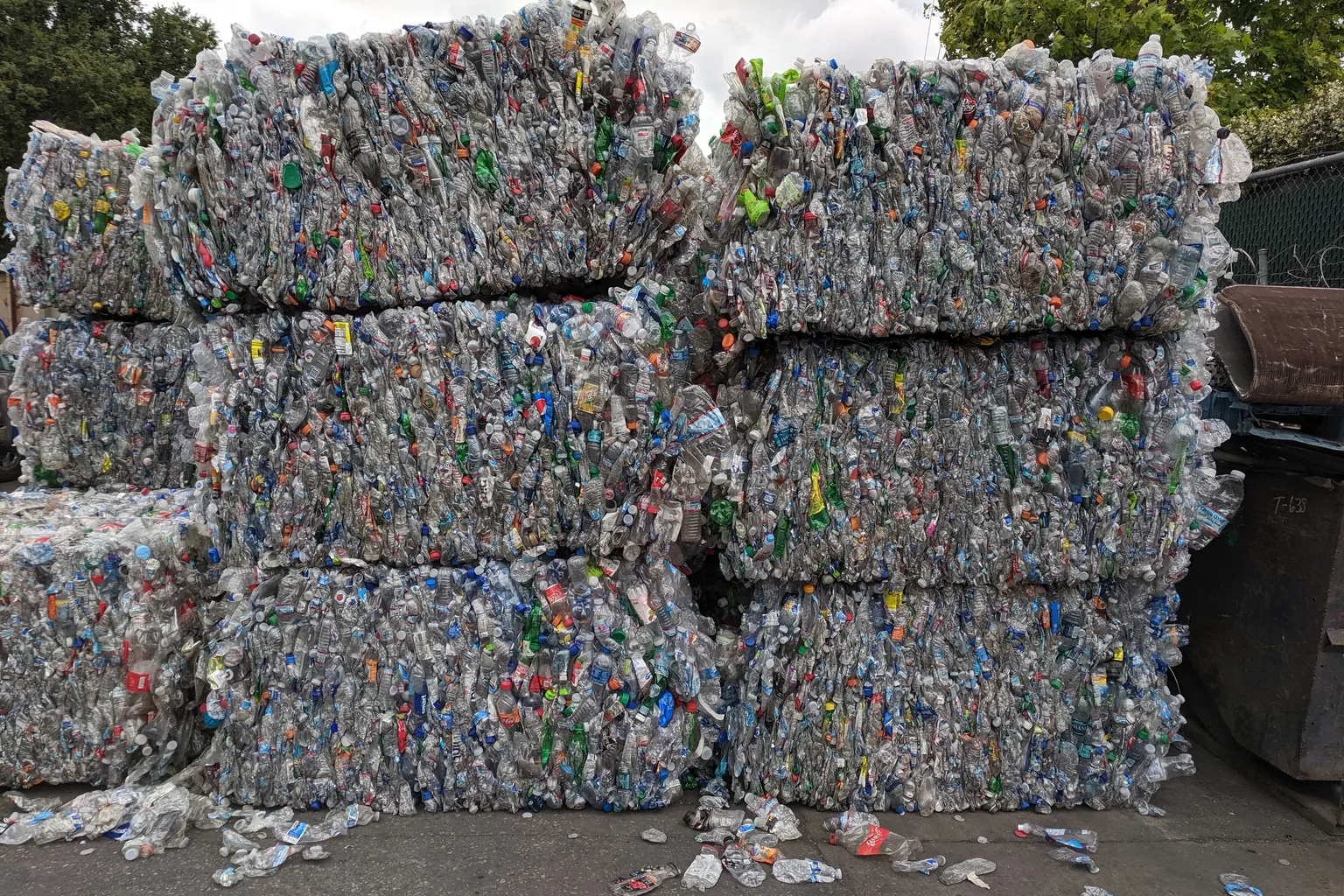
On Tuesday 28 May 2019, at Westports in Port Klang, environment minister Yeo Bee Yin showed reporters what had been shipped to Malaysia as recycling. There were cables from the UK, contaminated milk cartons from Australia and compact discs from Bangladesh.1 A task force had inspected about 123 containers, and 60 of them, holding about 3,000 tonnes of plastic, were to be sent back.2 “Malaysia, like any other developing country, has the right to clean air, water, sustainable resource and a clean environment to live in, just like citizens of developed countries,” she said, Bernama reported.2
She warned developed countries that “if they ship to Malaysia we will return back without mercy”.2 By 20 January 2020 Malaysia had sent 150 containers, 3,737 tonnes, back to 13 mainly rich countries and shut more than 200 illegal plastic recycling factories. The shipping lines and the firms that imported and exported the waste paid for the returns, she said.3
Sending rubbish home settled one argument. It left a harder job: sorting what Malaysians throw away themselves, 39,078 tonnes of waste a day in one 2025 count.4 Abroad, cameras, infrared sensors and robots now do part of that work. This article covers what they claim and why Malaysia’s recycling numbers are disputed. Our articles on Johor’s water, rare earths and humanoid robots cover a shared resource, magnet recycling and what robots cost against workers.
The short version
- After China banned most plastic scrap imports, Malaysia’s reported imports tripled, to 872,526 tonnes in 2018 from 287,673 in 2016. They were 457,769 in 2025, about half the peak.
- The official recycling rate was 37.9% in 2024. A World Bank study found about 24% of four main plastics recycled in 2019. The two measure different things.
- The housing minister has given two totals for 2024 waste, 15.2 million and 14.5 million tonnes. The 2035 recycling target has appeared as both 40% and 53%.
- AMP says one robot reached 140 picks a minute; TOMRA says its AI sorter fires up to 2,000 ejections a minute. We found no Malaysian sorting plant described as using AI robots.
- In the first half of 2020 virgin HDPE sold for US$787 a tonne in Malaysia, below the US$1,000–1,200 (about RM4,089–4,907) recyclers needed to break even, the World Bank found.
Where China’s scrap went
For decades higher-income OECD countries have exported plastic waste to lower-income countries in East Asia and the Pacific, a 2018 study in Science Advances found.5 One buyer dominated. China had taken a cumulative 45% of the world’s plastic waste imports since 1992.5 In 2016 about half of all plastic waste meant for recycling, 14.1 million tonnes, was exported, and China took 7.35 million tonnes of it.5
Then China banned most of it. Its reported imports of plastic scrap, customs code HS 3915, fell to 51,414 tonnes in 2018, from 8.8 million tonnes two years earlier. That is a drop of 99.4%, by our arithmetic from UN Comtrade data.6 The study’s authors estimated that 111 million tonnes of plastic waste would be displaced by 2030.5
Malaysia was one of the places it went. Greenpeace counted 754,000 tonnes of plastic imported in January to July 2018 alone, from countries including the US, Japan, the UK and Australia.7 Some of it went to sheds without licences. Between July and October 2018 the Kuala Langat District Council sealed 33 unlicensed plastic recycling factories and cut their water and electricity.8 The Department of Environment seized 75 processing machines, and 60 undocumented workers were arrested.8 The BBC put the waste smothering Jenjarom, a town in the district, at 17,000 tonnes, The Star reported.9 In 2024 local activists were still finding plastic buried deep in the soil across Kuala Langat, and one new dump held plastic from electronic waste.10
Malaysia reported no weight for 2023, only a value of US$173.9 million. China’s imports under the same code fell to 51,414 tonnes in 2018, from 8.8 million tonnes in 2016.
Source: UN Comtrade, queried 17 November 2026.
Show the numbers
| Year | Imports |
|---|---|
| 2016 | 288 |
| 2017 | 550 |
| 2018 | 872 |
| 2019 | 334 |
| 2020 | 478 |
| 2021 | 405 |
| 2022 | 353 |
| 2023 | – |
| 2024 | 434 |
| 2025 | 458 |
Sending it back, then closing the gate
Two sets of rules did the work. In May 2019 about 180 countries agreed to amend the Basel Convention, the treaty on waste shipments, to cover plastic scrap.2 The amendments took effect on 1 January 2021.11 Clean, sorted scrap of most single plastics, and mixes of PE, PP and PET “almost free from contamination”, can still be shipped without the importing country’s prior consent. Other plastic waste needs it.11 PE, PP and PET (polyethylene, polypropylene and polyethylene terephthalate) are often used in single-use food packaging, and made up 89% of historical exports.5
Yeo used domestic law first. She preferred it to the slower Basel process, she said, “because under the local law, within 14 days you have to send back the waste”. Importers shared the blame: “Every container [imported] will have its local player here,” she said.2 Of the 150 containers sent back by January 2020, 43 went to France, 42 to the UK and 17 to the US. Another 110 were still held at Malaysian ports.3
If people want to see us as the rubbish dump of the world, you dream on.
The second gate came in 2025. Since 1 July 2025 every import under HS 3915, from any country, needs approval from SIRIM Berhad, a government-owned certification body. SIRIM approves shipments only from Basel parties, or from countries with a bilateral deal the convention allows. The US is neither, so US scrap is out.12 In 2024 the US had sent Malaysia 78.5 million pounds, about 35,600 tonnes by our conversion and 8.6% of all US plastic scrap exports. Mixed loads may contain only PE, PET and PP; other resins must be at least 99.5% pure.12
Brokers felt it at once. On 20 June 2025 Steve Wong, chief executive of the brokerage Fukutomi, wrote that “the market for imported plastic waste has effectively frozen”.12 The rule limits who may send scrap and how clean it must be. It does not stop imports: Comtrade records 457,769 tonnes in 2025.6
Two recycling rates, one country
Malaysia’s official figures tell a success story. The national recycling rate, published under the UN’s Sustainable Development Goal indicator 12.5.1 from housing ministry data, reached 37.9% in 2024, up from 13.2% in 2014.13 In 2024 about 2.04 million tonnes of plastic were collected for recycling, ahead of 1.77 million tonnes of metal and 1.49 million of paper. Plastic alone accounted for 14.28 points of the rate, SWCorp, the national solid waste agency, says.14
The rate counts material collected and handed in for recycling, divided by all solid waste generated. Separation at source became mandatory in six states and two federal territories in September 2015. From 2026 food waste also counts, so later years will not be comparable.
Source: OpenDOSM, SDG indicator 12.5.1 (KPKT data), updated 11 October 2026; The Star (23 April 2026); Malay Mail (3 March 2025; 30 August 2025).
Show the numbers
| Year | Recycling rate |
|---|---|
| 2014 | 13.2% |
| 2015 | 15.7% |
| 2016 | 17.5% |
| 2017 | 20.9% |
| 2018 | 24.1% |
| 2019 | 28.1% |
| 2020 | 30.7% |
| 2021 | 31.5% |
| 2022 | 33.2% |
| 2023 | 35.4% |
| 2024 | 37.9% |
A World Bank study published in early 2021 found much less plastic recycled. Of 1.41 million tonnes of four key resins consumed in Malaysia in 2019 (PET, HDPE, LDPE and PP), about 334,000 tonnes, or 24%, were recycled. HDPE and LDPE are high- and low-density polyethylene. The authors called even 24% “likely overstated”.15
The two figures measure different things. The World Bank tracked four plastics against what Malaysians consumed, net of dirt and other materials.15 The official rate covers every material and divides what is collected and handed in for recycling by all waste generated. It does not show whether that material is then recycled, burned or landfilled, Bernama noted.16 By our arithmetic, SWCorp’s 2.04 million tonnes of plastic is about six times the World Bank’s 334,000 tonnes, and more than the 1.41 million tonnes of the four resins consumed. The years differ and other plastics exist, but no source we found explains the gap.
| Measure | What it covers | What it divides | Latest |
|---|---|---|---|
| Official national recycling rate (KPKT data) | All materials; food waste added from 2026 | Material collected and handed in for recycling, over all solid waste generated | 37.9% (2024) |
| Plastic’s part of the official rate | Plastic only, 2.04 million tonnes collected | The same base | 14.28 points (2024) |
| World Bank collected-for-recycling rate | PET, HDPE, LDPE and PP | Plastic sold to recyclers, net of contaminants, over consumption | 24% (2019) |
Source: OpenDOSM; SWCorp via The Star; Malay Mail (Bernama); World Bank (February 2021).13141516
Outside experts doubt the official number. “That’s an extraordinarily high figure,” Philip Landrigan, director of the Global Observatory on Planetary Health at Boston College, told Bernama in an interview published in August 2025. He put the global recycling rate for plastics at about 8%, and Western Europe’s at 14 or 15%. Bernama reported that he suspects the official figures may include categories beyond true recycling.16 SWCorp’s chief executive, Khalid Mohamed, said in July 2025 that recyclables still reach landfill “either due to severe contamination of the material itself and inadequate recycling infrastructure”.17 From 2026 food waste will count towards the rate too, a change The Star said is expected to boost the figures.14
Totals and targets that do not match
The housing minister, Nga Kor Ming, has given two totals for the same year. On 5 December 2024, before the year ended, he put 2024’s solid waste at 15.2 million tonnes, rising to 17.03 million by 2035, The Star reported.17 “In 2024, Malaysia generated 14.5 million metric tonnes of municipal solid waste, with food waste accounting for 44.5% and plastics 13.2%,” he said at the COP31 climate summit in Antalya on 10 November 2026.18 One is labelled solid waste and the other municipal solid waste, and neither source reconciles the two.
The 2035 targets also vary. At COP31 Nga cited a 40% recycling rate and 53% diversion of waste from landfill by 2035.18 Bernama reported 53% as the landfill diversion target in June 2026, and as the national recycling target in October.1920 A 40% target for 2035 would be barely above 2024’s 37.9%. The 12th Malaysia Plan aimed for 40% by 2025, and the 2025 result had not been announced by April 2026.14 On 5 October 2026 Nga told the Dewan Rakyat the ministry was confident of exceeding 40% by the end of 2026.21
The first two shares come from the minister’s COP31 speech; the landfill share comes from SWCorp, and the report does not say when the waste was sampled. Paper is 10.17% of landfill waste, glass 2.96% and metal 2.56%.
Source: The Star (10 November 2026); The Star via Asia News Network (23 April 2026).
Show the numbers
| Share | What |
|---|---|
| 44.5% | of municipal solid waste generated in 2024 was food, the minister said |
| 13.2% | of municipal solid waste generated in 2024 was plastic |
| 20.55% | of waste in landfills is plastic, SWCorp says, the largest recyclable share |
Separating at source, unevenly
Malaysia has tried before. Its first National Recycling Programme, launched in 1993 with 23 local councils, had some success in Petaling Jaya, Melaka and Kuching. Elsewhere it failed for lack of buyers for recyclables, poor collection and no policy framework, Malay Mail recorded.4
The lasting change came with law. Under the Solid Waste and Public Cleansing Management Act 2007, known as Act 672, separation at source became mandatory in September 2015. It applies in Kuala Lumpur, Putrajaya, Johor, Melaka, Pahang, Kedah, Negeri Sembilan and Perlis.4 A landed household’s first offence costs RM50, rising to RM500 for repeats. High-rise residents pay RM100 to RM500, and repeat offenders who refuse to pay can face fines of up to RM10,000 in court.4
Enforcement is the weak point. Pauline Goh, a former general manager of the Malaysian Recycling Alliance (MAREA), said in July 2026 that the fines have had limited impact because enforcement is weak.22 “Legislation is a big problem in Malaysia. It is not uniform, so nobody understands and knows what to do,” she said.22 Selangor still does not apply the act. In October 2026 its palace said the state was preparing to adopt it, once the ministry, the state and local councils sign a tripartite agreement.23
The infrastructure is growing. Recycling centres under Act 672 rose to 6,152 in 2025, an addition of 563 in a year.14 Nearly 1,000 shopping centres must provide recycling collection points from 2026.24 Landfills set the deadline. Malaysia has more than 100 landfill sites, of which only 22 are sanitary; the rest are open dumpsites.22 Twenty-one landfills managed by SWCorp will be full by 2041.25 Nga says Malaysia spends more than RM2 billion a year on waste management.18 In 2019 households in Act 672 states paid RM472 million in collection fees, about 31% of the cost, the World Bank found.15
How a machine sees plastic
A materials recovery facility, or MRF, separates mixed recyclables on fast conveyor belts. Conventional optical sorters read near-infrared (NIR) light, which plastics reflect differently, so a sensor can tell one polymer from another. TOMRA, the Norwegian company whose AUTOSORT machine dates from 1996, lists NIR, visible-light and electromagnetic sensors among its options.26 Software decides what each item is, and air jets blow the chosen items off the belt.
Deep learning adds sight. TOMRA says its software compares “millions of labeled images” to identify objects “as they speed along the sorting line”.27 A camera can then judge shape, label and use as well as polymer. TOMRA says its GAINnext unit separates food-contact PET bottles from non-food containers such as detergent and spray bottles, so the PET can be made into bottles again. It quotes “up to 2000 ejections per minute, depending on the application”.28
Robots are the other route. AMP, a US company, pairs cameras with an AI system that it says identifies items “by material type, form factor, color, polymer, and even brand”. A robot arm or air jet then removes them.29 AMP says its Delta robot sorts “up to four times faster than manual sorting”.29 In June 2021 AMP said one robot had reached 140 picks a minute, more than two items a second, and sustained 120 on common layouts, at first for paper and cardboard.30
- 1Sorting plantWaste is spread on a beltMixed recyclables, or in newer plants opened rubbish bags, move along a fast conveyor.
- 2NIR and camerasSensors read each itemNear-infrared reads the polymer; colour cameras capture shape and labels. Black plastic and thin film are hard to read.
- 3AI modelAI classifies itSoftware trained on labelled images decides what the item is, including whether it is food packaging, within milliseconds.
- 4Ejectors, robot armsJets or robots remove itTOMRA says its air jets fire up to 2,000 times a minute; AMP says one robot reached 140 picks a minute.
- 5Quality inspectorsApprovalPeople check the resultInspectors remove what machines miss. A Johor Bahru PET plant uses three manual stages after its machines.
- 6Data systemsBales are measuredBelt cameras count what passes, and AMP says it gives each bale a barcode tied to its composition.
Speeds are company figures. Reported accuracy for AI waste sorting ranges from 72.8% to 99.95% in studies a 2023 review collected; we found no independent field audit.
Source: TOMRA (2026); AMP (29 June 2021; 1 July 2025; 21 November 2025); Valle-Bravo et al., Polymers (22 January 2026); Fang et al. (9 May 2023); theSun (11 December 2025).
Show the numbers
| Step | Who | What | Detail |
|---|---|---|---|
| 1 | Sorting plant | Waste is spread on a belt | Mixed recyclables, or in newer plants opened rubbish bags, move along a fast conveyor. |
| 2 | NIR and cameras | Sensors read each item | Near-infrared reads the polymer; colour cameras capture shape and labels. Black plastic and thin film are hard to read. |
| 3 | AI model | AI classifies it | Software trained on labelled images decides what the item is, including whether it is food packaging, within milliseconds. |
| 4 | Ejectors, robot arms | Jets or robots remove it | TOMRA says its air jets fire up to 2,000 times a minute; AMP says one robot reached 140 picks a minute. |
| 5 | Quality inspectors | People check the result (approval) | Inspectors remove what machines miss. A Johor Bahru PET plant uses three manual stages after its machines. |
| 6 | Data systems | Bales are measured | Belt cameras count what passes, and AMP says it gives each bale a barcode tied to its composition. |
Physics sets limits that software cannot remove. Carbon black, the pigment in black plastic, absorbs NIR light and leaves “feature-poor NIR spectra”, a 2026 review in the journal Polymers found. Thin films and very clear plastics are hard to read too.31 “NIR-based identification is fundamentally bounded by the physics of light–matter interaction, rather than solely by algorithmic capability,” the authors wrote.31 TOMRA calls black polymers “traditionally undetectable” and sells add-ons to find them.26
Laboratory numbers flatter. A 2023 review of AI in waste management found reported sorting accuracy between 72.8% and 99.95%.32 The 2026 review warns of “domain shift between laboratory conditions and operational environments”, where changes in light, moisture and throughput can degrade performance.31 We found no independent audit of any vendor’s accuracy on a working line.
What the robot makers claim
The companies publish speeds and scale, and the figures below are their own. At AMP’s Cleveland plant, it says, “up to 60,000 tons per year are sorted with no manual intervention”. Each bale gets “a barcode tied to its exact composition and purity”.33 In November 2025 AMP said its AI had identified more than 200 billion items, with more than 400 AI systems in North America, Asia and Europe.34
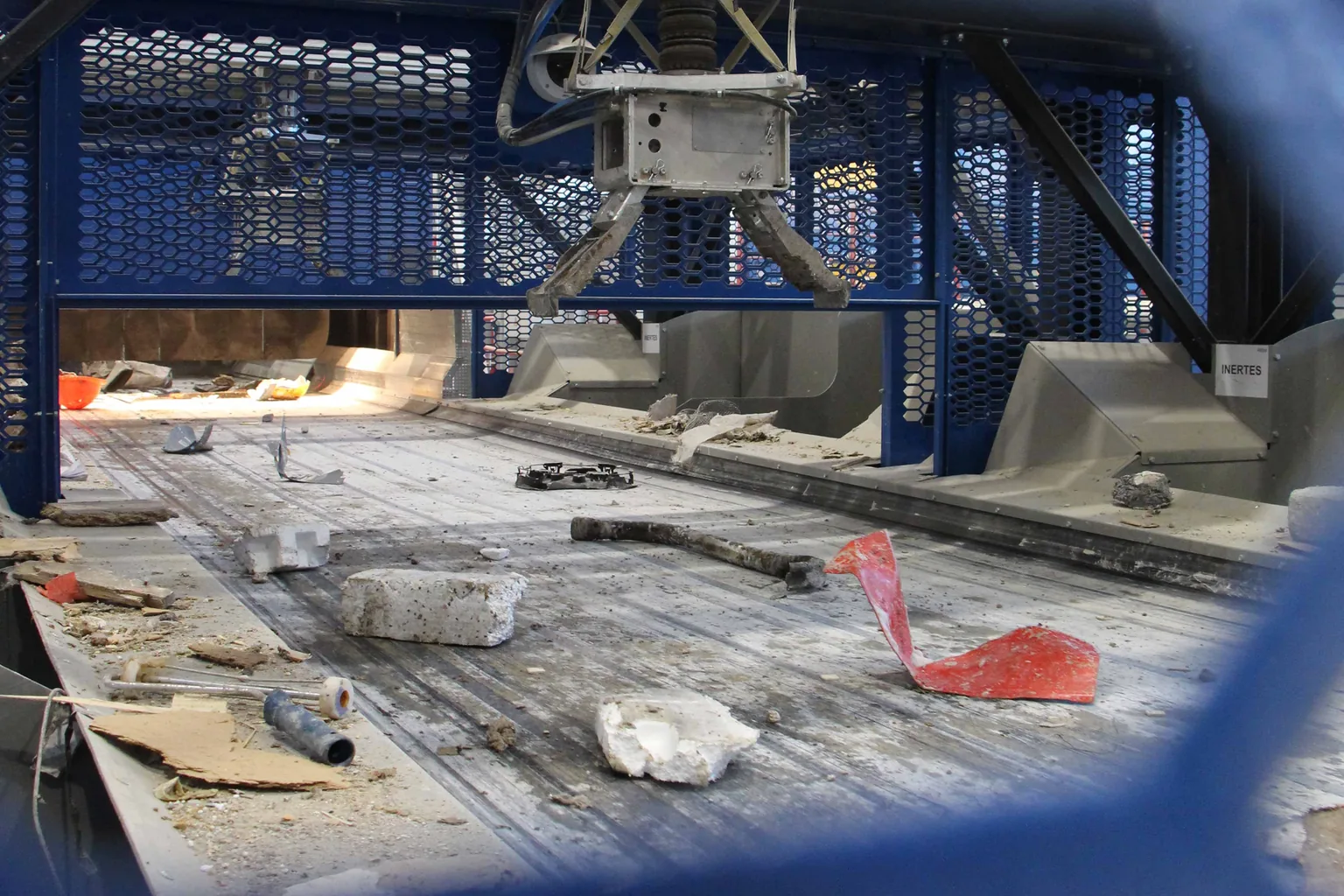
Its largest bet sorts rubbish nobody has separated. On 21 November 2025 AMP announced that the Southeastern Public Service Authority of Virginia (SPSA), serving 1.2 million residents in eight communities, had signed a 20-year contract with an AMP affiliate. AMP’s cameras, robots and air jets pull recyclables and organic waste out of sealed rubbish bags.34 AMP says the deal “guarantees the region will recycle 20% of its waste”, more than double the rate of its best-performing community.34 In September 2026 it raised US$70 million (about RM286 million) of project debt for a second Portsmouth plant, due in early 2028. At full scale the system should handle more than 1,400 tons a day.3536 “Recycling rates have been stuck for both communities and the nation at large for the last decade and a half,” said Tim Stuart, AMP’s chief executive.34
Greyparrot sells cameras that watch rather than sort. Its units sit above conveyor belts and record every item that passes. It says it has more than 300 units in more than 80 sorting plants across more than 20 countries, and analysed more than 52 billion objects in 2025.37 “Manual sampling sees less than 1% of what goes through a plant,” the company says. It names Unilever, Colgate, L’Oréal and Kenvue among brands that use its data on how their packaging sorts.37
| Product | Uses AI vision | Sorts items itself | Published speed or scale | Independent field audit found | Found in use in Malaysia |
|---|---|---|---|---|---|
| AMPRobots and AI plants, US | Yescompany says | Yes | Yes140 picks a minute | No | Unknown |
| TOMRA GAINnextOptical sorter, Norway | Yesdeep learning | Yes | Yes2,000 ejections a minute | No | Unknown |
| GreyparrotBelt cameras | Yescompany says | Nomeasures only | Yes52bn objects in 2025 | No | Unknown |
| KDEB Smart 5-in-1Reverse vending, Selangor | YesAI sensors, operator says | Partlyaccepts or rejects | Partlyabout 100 planned | No | Yes |
| F&N, Grab, KLEAN, MRANTIReverse vending pilot, 2023 | YesAI-driven, partners say | Partlyaccepts or rejects | Partly18 machines | No | Yes |
| Hiroyuki IndustriesPET recycling, Johor Bahru | Unknownoptical sorting; AI not stated | Yes | Partly95–99% purity after machines | No | Yes |
Our reading of company pages and news reports. ‘No’ and ‘unknown’ mean we found no public evidence, not that none exists. Speeds are company figures; the Hiroyuki purity range is its executive director’s estimate.
Source: AMP (29 June 2021; 21 November 2025); TOMRA (2026); Greyparrot (2026); The Star (6 October 2025); F&N (2 November 2023); theSun (11 December 2025).
Show the numbers
| Product | Uses AI vision | Sorts items itself | Published speed or scale | Independent field audit found | Found in use in Malaysia |
|---|---|---|---|---|---|
| AMP | Yes (company says) | Yes | Yes (140 picks a minute) | No | Unknown |
| TOMRA GAINnext | Yes (deep learning) | Yes | Yes (2,000 ejections a minute) | No | Unknown |
| Greyparrot | Yes (company says) | No (measures only) | Yes (52bn objects in 2025) | No | Unknown |
| KDEB Smart 5-in-1 | Yes (AI sensors, operator says) | Partly (accepts or rejects) | Partly (about 100 planned) | No | Yes |
| F&N, Grab, KLEAN, MRANTI | Yes (AI-driven, partners say) | Partly (accepts or rejects) | Partly (18 machines) | No | Yes |
| Hiroyuki Industries | Unknown (optical sorting; AI not stated) | Yes | Partly (95–99% purity after machines) | No | Yes |
The plainer case for robots comes from a public plant in Kent County, Michigan. With part-funding from a state grant, it installed three AMP robots over a weekend. “Almost immediately, the facility was able to drop three to four people off the line,” AMP’s case study says, putting the payback at under two years.38 Staff had been hard to find. The county’s deputy director said the plant could not quality-check polypropylene without the robots, because it looks so like PET.38
AI sorting in Malaysia so far
We found no Malaysian materials recovery facility described in public sources as using AI robots or AI optical sorters. The AI we found in Malaysian recycling sits in reverse vending machines, kiosks that take bottles and cans and reward the user.
In November 2023 F&N, Grab, the recycling app KLEAN and the government agency MRANTI launched 18 “AI-driven Reverse Vending Machines” in the Klang Valley for a six-month pilot. They took rinsed plastic food containers, aluminium cans and PET bottles, which a certified processor, Asasrama, would turn into PP and PET flakes.39 “With AI being the backbone for the operation of each RVM, it is important that we cultivate partnerships that contribute towards building a thriving community,” said Rais Hussin, MRANTI’s chief executive.39 We found no published results from the pilot.
Selangor’s state waste company went further. In October 2025 KDEB Waste Management launched “Smart 5-in-1” machines that take paper, cartons, plastic, aluminium and used cooking oil, and pay users money.40 “The machine is equipped with artificial intelligence sensors which can detect unacceptable materials to prevent damage and fraud,” said its managing director, Ramli Mohd Tahir. The sensors reject a bottle filled with water or stones to make it heavier, he said. Users can withdraw earnings once they reach RM5, and KDEB planned about 100 machines by the first quarter of 2026.40 We found no count of how many were installed. SWCorp lists reverse vending machines among its plans for 2026.14
The sorting plants still rely on people. Hiroyuki Industries in Johor Bahru turns used bottles into recycled PET resin, including food-grade material, using automated and optical sorting. theSun calls it the first ASEAN company to produce food-grade, high-quality PET resin. Even so, “the plant still relies on three levels of manual inspection to achieve near food grade purity”, theSun reported.41 “We have three stages of manual sorting. You will expect 95–99% purity after the last machine, but we still need people to remove anything that should not be there,” said its executive director, Lionel Choong.41
The quality of post-consumer waste is terrible. It is very difficult to find clean PET. That is our main challenge.
Elsewhere the picture is similar. RISE@KL in Batu Caves is a semi-automated recycling hub, developing what Malay Mail called Malaysia’s first dry, clean MRF.4 The Ocean Cleanup’s river-plastic sorting centre on Sungai Klang, opened in July 2025, sorts by hand. “A team of full-time workers are stationed at the site to sort waste by hand, separating recyclables such as plastic and aluminium from organic and non-recyclable waste,” said Syaiful Azmen Nordin. His company, Landasan Lumayan, is the state-appointed partner.42
In Kent County the case for robots was a labour shortage; our article on foreign workers covers Malaysia’s own debate on automation. At a Kuala Lumpur forum on 23 July 2026, TOMRA’s Annupa Mattu Ahi cautioned governments. “One of the biggest challenges I see when I work with other Asian governments is that it is assumed that technology is the answer,” she said.22
Technology is not the answer alone. It’s an enabler. It gives you accuracy. It gives you speed. It gives you reporting. It gives you data. But on its own, it cannot achieve anything.
Why recycled plastic struggles to sell
Recycled plastic competes with new plastic made from oil and gas, called virgin resin. When oil is cheap, so is virgin resin. Industry sources in Southeast Asia told the World Bank that recycling tends to pay only when oil is above about US$70 a barrel. When the study was written, that level had last been reached in September 2018. Their resin must sell 15–30% below virgin to win buyers. When prices converge, manufacturers “generally switch back to virgin resins”.15
In Malaysia, recyclers that meet environmental, health and safety standards break even only when virgin resin sells for US$1,000–1,200 a tonne, industry sources told the World Bank. The study called 2019 prices “well below” what recyclers needed, though only HDPE, at US$991, was under that range; in the first half of 2020 all four resins were, at US$742–859.15 The study found that Malaysia captured only 19% of the material value of its plastics, US$234 million (about RM957 million) a year. Another US$1–1.1 billion (about RM4.1–4.5 billion) a year was lost.15 Most recyclers are small firms that rely on “informal and fragmented waste supply networks that work on cash terms”.15
One brake was Malaysian. The World Bank noted that the halal packaging standard, MS 2565:2014, said packaging “for direct food contact application it shall not be made from recycled material”. One brand used bottle preforms with 10% recycled content, imported from overseas, but chose not to say so on its label.15 We could not confirm whether the standard still applies in that form.
The year 2026 brought a twist. US polyethylene prices rose by a cumulative 25 cents a pound, a LyondellBasell executive said in late October.43 PET and natural HDPE bale prices did not follow. In November 2026 natural HDPE bales fetched 41.25 US cents a pound in the US, down from 46.56 a year earlier. PET bottle bales fetched 2.64 cents, against 5.22, or about 24 sen a kilogram by our conversion. The lowest grade of plastic film was priced at minus 0.63 cents: sellers pay to be rid of it.44
C-grade film was minus 0.63 cents a pound in November 2026. At RM4.089 per US dollar, 2.64 cents a pound is about 24 sen a kilogram and 41.25 cents about RM3.72, by our conversion.
Source: Resource Recycling, Secondary Materials Pricing index (12 November 2026).
Show the numbers
| Item | November 2025 | November 2026 |
|---|---|---|
| Natural HDPE | 46.56 | 41.25 |
| A-grade film | 18.06 | 13.19 |
| Coloured HDPE | 2.69 | 12.31 |
| Polypropylene | 5.38 | 7.19 |
| PET bottles and jars | 5.22 | 2.64 |
Europe shows what low prices do. Plastics Recyclers Europe, blaming cheap imported recycled plastic and weak demand, warned that the region was likely to lose close to 1 million tonnes of recycling capacity between 2023 and the end of 2025. Recyclers also face “low virgin polymer prices, which are putting margins under further strain”, letsrecycle.com reported. Biffa closed its 39,000-tonne plant in Sunderland in July 2025.45
Rules that require recycled content can break the link. In May 2018 European bottlers pledged at least 25% recycled PET in new bottles by 2025, and the EU’s Single-Use Plastics Directive set 25% by 2025 and 30% by 2030. As a result, food-grade recycled PET began “a partial decoupling from virgin PET prices from August 2018 onwards”, the World Bank found. Recycled PP and HDPE, with no such targets, stayed cheap.15
Chemical recycling: big plans, small output
Chemical, or “advanced”, recycling breaks plastic down into chemicals. The commonest route is pyrolysis. At one US plant, Bloomberg reported, plastic is heated in reactors without oxygen until it turns to vapour, which is cooled into oil and cut into fuels.46 The oil can also feed new plastic.
Malaysia’s flagship project belongs to PETRONAS Chemicals Group (PCG). In October 2023 it took the final investment decision on what it called “Asia’s largest advanced chemical recycling plant”, at Pengerang in Johor, with capacity of 33,000 tonnes a year. Using a licence from Plastic Energy, it would turn end-of-life plastics into “pyrolysis oil or TACOIL” to make new plastics. The plant was “targeted to be operational by the first half of 2026”.47 We found no public confirmation that it has started. In August 2025 MAREA’s chief executive, Roberto Benetello, said Malaysia did not have chemical recycling facilities. “Chemical recycling will likely come in after the EPR law becomes mandatory,” he said.16
The US record is sobering. By mid-2024 Brightmark’s pyrolysis plant in Ashley, Indiana, had processed 4 million pounds in four years, against capacity of 200 million pounds a year. In March 2025 its operating companies filed for Chapter 11 bankruptcy protection, after the parent had put in US$211 million (about RM863 million) of equity.48 A unit to turn the oil into wax did not work, a court filing said, and the company had found fuel production unprofitable.46
The biggest dispute is in court. On 23 September 2024 California’s attorney general, Rob Bonta, sued ExxonMobil, alleging decades of misleading claims about recycling. The suit alleges that 92% of plastic waste processed through Exxon’s “advanced recycling” becomes mainly fuels, not recycled plastic.49 Exxon rejects this. Spokesperson Lauren Kight told NPR that “advanced recycling works”. “To date, we’ve processed more than 60 million pounds of plastic waste into usable raw materials, keeping it out of landfills,” she said.50 In January 2025 Exxon sued Bonta and five environmental groups for defamation in a federal court in Texas.51 In February 2026 the judge dismissed the claims against the environmental groups for lack of jurisdiction but let the case against Bonta proceed.52 We found no final judgment in either case.
| Project | Promised | What sources show |
|---|---|---|
| PCG, Pengerang, Johor | 33,000 tonnes a year, operating by the first half of 2026 | No public confirmation of start-up found |
| Brightmark, Ashley, Indiana | 200 million pounds (about 90,700 tonnes) a year | 4 million pounds in four years; 5% of capacity; Chapter 11 in March 2025 |
| ExxonMobil, Baytown, Texas | Exxon says “advanced recycling works” | 70 million pounds processed in 2024, Exxon says; California alleges 92% becomes fuels; cases unresolved |
| LyondellBasell, MoreTec-2 | A second chemical recycling plant | Now expected in Europe, not the US, citing weak US regulatory support (October 2026) |
Source: Malay Mail (Bernama); Resource Recycling; Floodlight; California Department of Justice.4347484951
Investment follows rules. “In the US, we do not yet see strong regulatory support that would eventually enable an investment in MoreTec-2,” LyondellBasell’s chief executive, Peter Vanacker, said on 30 October 2026.43
The treaty that keeps slipping
In March 2022 the UN Environment Assembly agreed to negotiate a treaty covering “the full life cycle of plastic, including its production, design, and disposal”.5354 Talks ran through Uruguay, Paris, Nairobi and Ottawa. The meeting meant to finish, in Busan from 25 November to 1 December 2024, failed to agree on curbing plastic use and manufacture.515355 A resumed session in Geneva on 5–14 August 2025 ended with countries “deadlocked on specific issues such as reducing production and controlling toxic chemicals”, Packaging Insights reported. Multiple countries and campaigners rejected the chair’s draft because it left out an article on reducing production.55
The chair, Luis Vayas Valdivieso of Ecuador, resigned. On 7 February 2026 a one-day session elected Julio Cordano of Chile’s foreign ministry.5354 “Plastic pollution is a planetary problem that affects every country, community and individual,” Cordano said.54 America’s Plastic Makers, an industry group, and the Trump administration oppose caps on production, Resource Recycling reported.54
Malaysia has argued for a treaty centred on waste infrastructure. Its delegation told the Geneva plenary on 9 August 2025 that the treaty “must focus on tackling plastic pollution by establishing effective mechanisms to improve infrastructure, incentivize innovation and drive circularity”. It complained that the text still held “more than [500 or maybe more than that] square brackets”, which mark disputed wording.56 Greenpeace Malaysia criticised it because “Malaysia submitted no text under Article 6”, the article on binding cuts to plastic production.57 The plastics industry contributed RM30.98 billion, 4.7% of Malaysia’s GDP, in 2018, an industry figure cited by the World Bank.15
- 1March 2022A mandate is agreedUN resolution 5/14 asks for a treaty covering the full life cycle of plastic, including production.
- 2Nov to Dec 2024Busan ends without a dealThe session meant to finish fails to agree limits on plastic use and manufacture.
- 3August 2025Geneva deadlocksCountries split over production cuts and toxic chemicals; the chair later resigns.
- 4February 2026A new chairA one-day session elects Julio Cordano of Chile.
- 5Aug 2026 to Jan 2027Closed-door draftingAn Aid to Negotiations text appears on 8 August; delegation heads meet in Bangkok, then Nairobi in January 2027.
- 6March 2027ApprovalFormal talks resumeINC-5.4 is due in March 2027, Oceanographic reports. An agreed text would go to a diplomatic conference.
The UNEP pages we read give no date for INC-5.4; March 2027 is Oceanographic’s report.
Source: UNEP (accessed 17 November 2026); Floodlight (10 January 2025); Packaging Insights (15 August 2025); Resource Recycling (10 February 2026); Oceanographic via SEJ (11 August 2026); INC Chair’s fifth letter (2 November 2026).
Show the numbers
| Step | Who | What | Detail |
|---|---|---|---|
| 1 | March 2022 | A mandate is agreed | UN resolution 5/14 asks for a treaty covering the full life cycle of plastic, including production. |
| 2 | Nov to Dec 2024 | Busan ends without a deal | The session meant to finish fails to agree limits on plastic use and manufacture. |
| 3 | August 2025 | Geneva deadlocks | Countries split over production cuts and toxic chemicals; the chair later resigns. |
| 4 | February 2026 | A new chair | A one-day session elects Julio Cordano of Chile. |
| 5 | Aug 2026 to Jan 2027 | Closed-door drafting | An Aid to Negotiations text appears on 8 August; delegation heads meet in Bangkok, then Nairobi in January 2027. |
| 6 | March 2027 | Formal talks resume (approval) | INC-5.4 is due in March 2027, Oceanographic reports. An agreed text would go to a diplomatic conference. |
The work has moved behind closed doors. Cordano published an “Aid to Negotiations” text on 8 August 2026, and possible elements of draft resolutions for a diplomatic conference on 25 August.58 Campaigners called it a retreat, Oceanographic reported, and civil society groups were not admitted to the talks that preceded it.59 Heads of delegation met in Bangkok on 27–30 September. On 2 November the chair wrote that the process was “beyond the mid-point on the road towards INC-5.4”. He urged “discipline to prevent text from expanding into multiple options, brackets and alternative paragraphs”.60
Making producers pay
Extended producer responsibility (EPR) makes the companies that sell packaged goods pay to collect and recycle the packaging. Malaysia’s housing ministry, KPKT, said in August 2025 that the first phase would start on a voluntary basis in 2026 and “become mandatory by 2030”. It covers six packaging materials: plastic, paper, aluminium, glass, metal alloy with iron, and cartons. The ministry was considering “tax rebates for early adopters”.16 Producers could collect packaging themselves, pay a producer responsibility organisation (PRO) to do it, or mix the two.22
The law has been slower. In October 2025 Eco-Business reported that the EPR bill was scheduled to go to Parliament in early 2026.61 In July 2026 it described a voluntary framework in place, with mandatory compliance for major producers from 2030 and the broader policy still being developed.22 We found no report that the bill had been tabled. MAREA, an industry alliance piloting voluntary EPR since 2020, collected about 3,000 tonnes of recyclables in 2023.16 “Voluntary EPR does not necessarily attract the level of recycling investment and drive that you need because predictability is largely missing,” TOMRA’s Ahi said.22
Deposits are the other lever. In Norway, which has had deposits since 1902, 92.4% of plastic bottles and 93.1% of cans come back this year, its operator Infinitum reports.62 We found no deposit scheme in Malaysia; machines here pay rewards instead.
Things you probably didn’t know
- Most recycled plastic is recycled once. Of the plastic recycled up to 2015, only about 10% had been recycled more than once.63
- Most plastic waste ever made is still around. Of about 6,300 million tonnes of plastic waste generated by 2015, 79% had accumulated in landfills or the natural environment.63
- Malaysia’s daily rubbish fills 3,908 lorries. Malay Mail calculated that the line would stretch more than 52 km.4
- Selangor banned polystyrene food boxes in 2017. The ban came in January 2017, with a RM1,000 fine for violators.4
- Courts now sentence litterers to sweep. By National Day 2026, courts had ordered 599 people to do cleaning work, including sweeping roads and cleaning drains and toilets.24
- Virginia’s rubbish will yield biochar. AMP plans to turn organic waste recovered from rubbish bags into biochar, a charcoal-like material, for landfill cover. Its production will generate carbon removal credits under AMP’s deal with Google.35
What worked and what didn’t
What worked had a law, a buyer or a paying customer behind it.
Worked
Containers sent home at the shippers’ cost
By January 2020 Malaysia had returned 150 containers, 3,737 tonnes, to 13 countries, and shipping lines and the firms involved paid.3 Yeo said she would use the Environmental Quality Act 1974, with its 14-day deadline, before the slower Basel route.2
Why it worked: a domestic law with a short deadline put the cost on the shippers.
Worked
A legal duty to separate
Since September 2015 households in eight states and territories must separate recyclables.4 The official rate rose to 37.9% in 2024, from 15.7% in 2015, though what it measures is disputed.1316
Why it worked: a law, a collector and drop-off points moved behaviour, even with light enforcement.
Worked
Robots where workers could not be found
Kent County, Michigan, installed three AMP robots over a weekend with help from a state grant. It took three to four people off the line and can now quality-check polypropylene, with payback in under two years, AMP’s case study says.38
Why it worked: a labour shortage, a grant and a retrofit into an existing line.
Worked
Money back on every bottle
Norway’s deposits bring back 92.4% of plastic bottles and 93.1% of cans, with 98% total collection, its operator Infinitum reports.62
Why it worked: a deposit paid at purchase gives every bottle a cash value.
Worked
Mandates that created demand
A bottlers’ pledge and EU rules set 25% recycled PET in bottles by 2025 and 30% by 2030. Food-grade recycled PET prices partly decoupled from virgin PET from August 2018, the World Bank found.15
Why it worked: guaranteed demand kept a price floor under recycled resin.
Didn’t work
Jenjarom’s unlicensed factories
Imports tripled by 2018.6 Kuala Langat sealed 33 unlicensed factories that year, and the BBC counted 17,000 tonnes of waste in Jenjarom.89 Buried plastic was still being found in 2024.10
Lesson: when a global flow shifts overnight, enforcement has to move as fast as the importers.
Didn’t work
A recycling drive with no buyers
The 1993 National Recycling Programme covered 23 councils. Outside Petaling Jaya, Melaka and Kuching it failed for lack of market demand, poor collection and no policy framework.4
Lesson: collection without buyers and law does not last.
Didn’t work
A pyrolysis plant at 5%
Brightmark’s Indiana plant handled 4 million pounds in four years, against capacity of 200 million a year. Its operating companies filed for Chapter 11 in March 2025.48
Lesson: ask what a chemical recycler has processed, not what it could process.
Didn’t work
Europe’s recyclers priced out
Europe was likely to lose close to 1 million tonnes of recycling capacity between 2023 and the end of 2025, including Biffa’s Sunderland plant. Cheap imports, weak demand and low virgin prices squeezed margins.45
Lesson: without mandated demand, recyclers are at the mercy of cheaper plastic, new or imported.
Too early
Sorting the rubbish bag itself
Virginia’s SPSA signed a 20-year deal for AMP to sort recyclables out of bagged rubbish for 1.2 million people, with 20% recycling guaranteed.34 The second plant is due in early 2028.35
Lesson: a performance guarantee made AI sorting financeable; delivery is still to come.
What to do now
None of this is legal or investment advice.
For households
- In Act 672 states, separate recyclables. Fines start at RM50 for landed homes and RM100 for high-rises.4
- Hand in clean, single-material items. Recyclers reject contaminated food containers and multilayer pouches, such as detergent refills.16
- Use paying routes, such as KDEB machines in Selangor, which pay out from RM5; malls must now offer collection points too.2440
For brands that sell packaged goods
- Count your packaging nowRecord tonnes by material across the six EPR materials. Mandatory EPR for major producers is planned from 2030.1622
- Design for the sorterAvoid carbon-black colouring and thin multilayer films, which NIR sensors struggle to read.31
- Question “advanced recycling” claimsAsk what share of the input became new plastic and what became fuel.4950
- Check halal rules before using recycled PETThe halal packaging standard barred recycled material in direct food contact when the World Bank studied it.15
For recyclers weighing machines
Questions to ask a vendor
- What accuracy and purity on a stream like mine, measured by whom?
- How does it handle black plastic, film and dirty feedstock?
- What labour saving does the payback assume?
- Who owns the data, and is service available in Malaysia?
For policymakers
- Publish one waste total for 2024 and one 2035 recycling target, with the method behind each.171820
- Publish a plastic-only recycling rate on the World Bank’s basis next to the official rate.15
- Pair EPR with recycled-content rules, which gave EU recycled PET a price of its own.15
- Enforce separation at source, and bring Selangor under Act 672.2223
What to watch to 2030
- 9–10 December 2026: virtual treaty talks. Delegation heads meet online, after a second Aid to Negotiations text due in November.5860
- End of 2026: the 40% test. Nga expects the recycling rate to pass 40%. The next official update is due by 31 December 2027.1321
- 28–30 January 2027: Nairobi. The last informal in-person meeting before INC-5.4.60
- Early 2027: cheaper virgin PET. Roberto Ribeiro, who covers PET at Dow Jones Energy, expects virgin PET prices to trend lower in the first quarter, which could squeeze recyclers again.64
- March 2027: INC-5.4. Formal treaty talks resume, Oceanographic reports.59
- PCG Pengerang. Confirmation of the 33,000-tonne plant, which was due in the first half of 2026.47
- Early 2028: AMP’s second Virginia plant. A test of AI sorting of raw rubbish at regional scale.35
- 2030: mandatory EPR. Major producers must comply, and the EU’s 30% recycled PET target for bottles applies.1522
- 2035 and 2041. The blueprint’s recycling and diversion targets fall due; 21 SWCorp landfills will be full by 2041.1825
Malaysia’s official recycling rate and the World Bank’s plastics estimate measure different things, and the ministry has given two waste totals for 2024. Company figures are their own claims, the California cases are unresolved, and nothing here is investment or legal advice. Conversions use Bank Negara Malaysia’s middle rate of 17 November 2026: RM4.089 per US dollar.
Sources
- Associated Press via Fox News, Malaysia to send back plastic waste, 28 May 2019: foxnews.com
- The Edge Financial Daily (Bernama), plastic waste to be sent back, 29 May 2019: theedgemalaysia.com
- Associated Press via PBS NewsHour, Malaysia returns trash, 20 January 2020: pbs.org
- Malay Mail, what Malaysia is doing with its waste, 3 March 2025: malaymail.com
- Brooks, Wang and Jambeck, “The Chinese import ban and its impact on global plastic waste trade”, Science Advances, 20 June 2018: pmc.ncbi.nlm.nih.gov
- UN Comtrade, imports of plastic scrap (HS 3915) by Malaysia and China, 2016–2025, queried 17 November 2026: comtradeapi.un.org
- Greenpeace Southeast Asia, plastic from the developed world dumped in Malaysia, 26 November 2018: greenpeace.org
- Malay Mail (Bernama), 33 plastic recycling factories sealed, 19 February 2019: malaymail.com
- The Star, BBC reports 17 million kg of rubbish in Jenjarom, 13 February 2019: thestar.com.my
- The Star, hidden plastic deep in the ground, 23 June 2024: thestar.com.my
- Basel Convention Secretariat, Plastic Waste Amendments overview, accessed 17 November 2026: basel.int
- Resource Recycling, Malaysia fully halting US plastic scrap imports, 1 July 2025: resource-recycling.com
- OpenDOSM, SDG indicator 12.5.1: national recycling rate (KPKT data), updated 11 October 2026: open.dosm.gov.my
- The Star via Asia News Network, 40% of Malaysia’s trash is recyclable, 23 April 2026: asianews.network
- World Bank, Market Study for Malaysia: Plastics Circularity Opportunities and Barriers, February 2021: worldbank.org
- Malay Mail (Bernama), plastic pollution and Malaysia’s planned EPR law, 30 August 2025: malaymail.com
- The Star via Asia News Network, recycling drowned out by rising tide of trash, 31 July 2025: asianews.network
- The Star, COP31: Malaysia proposes three-pronged plan for zero-waste cities, 10 November 2026: thestar.com.my
- Bernama, Kempen Kitar Semula Kebangsaan 2026, 24 June 2026: bernama.com
- Bernama, Malaysia and Japan memorandum on waste management, 7 October 2026: bernama.com
- Bernama, Dewan Rakyat answer on food waste and recycling, 5 October 2026: bernama.com
- Eco-Business, Malaysia’s EPR rollout must move beyond voluntary action, 31 July 2026: eco-business.com
- The Star (Bernama), Selangor Sultan briefed on adoption of Act 672, 12 October 2026: thestar.com.my
- Bernama, Hari Cuci Malaysia 2026, 26 September 2026: bernama.com
- The Star, landfills to hit full capacity by 2041, 31 July 2025: thestar.com.my
- TOMRA, AUTOSORT product page, updated 5 November 2026: tomra.com
- TOMRA, deep learning technology page, updated 2 September 2026: tomra.com
- TOMRA, GAINnext product page, updated 5 November 2026: tomra.com
- AMP, AMP Delta robotic sortation, accessed 17 November 2026: ampsortation.com
- AMP, data milestones and recycling automation breakthrough, 29 June 2021: ampsortation.com
- Valle-Bravo et al., “Integrating Artificial Intelligence into Circular Strategies for Plastic Recycling and Upcycling”, Polymers, 22 January 2026: pmc.ncbi.nlm.nih.gov
- Fang et al., “Artificial intelligence for waste management in smart cities: a review”, Environmental Chemistry Letters, 9 May 2023: pmc.ncbi.nlm.nih.gov
- AMP, AMP ONE Cleveland case study, 1 July 2025: ampsortation.com
- AMP, largest US recycling project for Virginia residents, 21 November 2025: ampsortation.com
- AMP, Galvanize leads US$70 million project financing, 30 September 2026: ampsortation.com
- Bank Negara Malaysia, exchange rates, 17 November 2026: bnm.gov.my
- Greyparrot, home page, accessed 17 November 2026: greyparrot.ai
- AMP, Kent County, Michigan case study, 26 November 2023: ampsortation.com
- F&N, AI-driven reverse vending machines with Grab, KLEAN and MRANTI, 2 November 2023: fn.com.my
- The Star, Selangor rolls out AI-powered recycling vending machines, 6 October 2025: thestar.com.my
- theSun, building a cleaner recycling ecosystem for ASEAN through EPR, 11 December 2025: thesun.my
- The Star, river plastic sorting facility along Sungai Klang, 3 July 2025: thestar.com.my
- Resource Recycling, LyondellBasell looks to EU for chemical recycling growth, 2 November 2026: resource-recycling.com
- Resource Recycling, PET bales stay low, HDPE edges up, 12 November 2026: resource-recycling.com
- letsrecycle.com, EU plastics recycling industry warns of imminent collapse, 28 August 2025: letsrecycle.com
- The Star (Bloomberg), US plastic recycling plant files for bankruptcy, 20 March 2025: thestar.com.my
- Malay Mail (Bernama), Petronas Chemicals to build Asia’s largest advanced chemical recycling plant, 9 October 2023: malaymail.com
- Resource Recycling, Brightmark defaults on Indiana bonds, 19 March 2025: resource-recycling.com
- California Department of Justice, Attorney General Bonta sues ExxonMobil, 23 September 2024: oag.ca.gov
- GPB (NPR), California sues ExxonMobil over plastic recycling, 23 September 2024: gpb.org
- Floodlight, ExxonMobil sues California attorney general and environmental groups, 10 January 2025: floodlightnews.org
- Insurance Journal (Reuters), judge says Exxon Mobil can sue California AG for defamation over recycling, 18 February 2026: insurancejournal.com
- UNEP, INC on plastic pollution: sessions and meetings, accessed 17 November 2026: unep.org
- Resource Recycling, member states select new chair for global plastics treaty, 10 February 2026: resource-recycling.com
- Packaging Insights, INC-5.2 ends without agreement, 15 August 2025: packaginginsights.com
- Government of Malaysia, statement at the INC-5.2 plenary, 9 August 2025: unep.org
- Greenpeace Malaysia, still no plastics treaty, 21 August 2025: greenpeace.org
- UNEP, activities leading up to INC-5.4, accessed 17 November 2026: unep.org
- Oceanographic (Rob Hutchins) via SEJ, one year on, plastics treaty going backwards, 11 August 2026: sej.org
- UNEP, fifth letter from the INC Chair, 2 November 2026: wedocs.unep.org
- Eco-Business, strengthening Malaysia’s EPR model, 9 October 2025: eco-business.com
- Infinitum, Norway’s deposit system, accessed 17 November 2026: infinitum.no
- Geyer, Jambeck and Law, “Production, use, and fate of all plastics ever made”, Science Advances, 19 July 2017: pmc.ncbi.nlm.nih.gov
- Resource Recycling, PET producers ride local-for-local wave, 16 November 2026: resource-recycling.com
Related research
 When Johor’s taps ran dry, data centres trucked waterWhen silt cut water to 455,499 Johor accounts in late October 2025, a deputy minister said he understood data centres had bought water using their own tankers.
 Malaysia’s rare earth export ban bends for FranceOn 17 November 2026 Anwar Ibrahim said Malaysia, which has banned raw rare earth exports since January 2024, would make an exception for France, with a venture due to start in early 2027.
 The RM1,700 test: a working humanoid still costs about five times a Malaysian worker an hourThe IFR counted about 7,000 full-size humanoids sold worldwide in 2025, against more than 600,000 conventional factory robots.
