
Technology
The deadline for a machine nobody has built
On 9 November 2026 Malaysia told a UN telecoms conference it is developing a plan to move critical systems to quantum-safe encryption, four months after a plan was reported launched. Estimates of the machine needed to break RSA-2048 have shrunk to under 100,000 qubits in a 2026 preprint, against 20 million in 2019; Google’s Willow chip has 105. NIST will disallow today’s vulnerable public-key encryption after 2035.
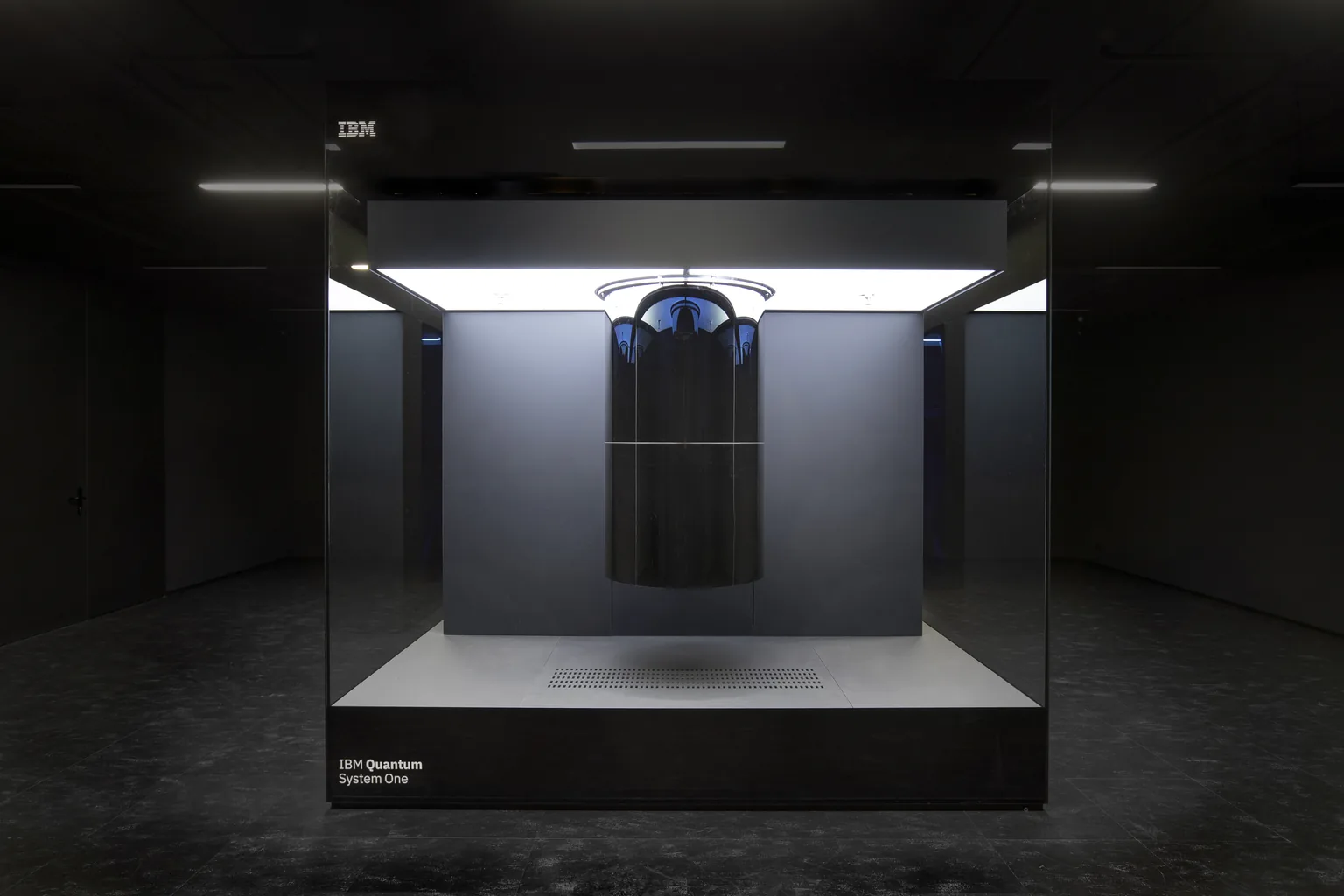
On 9 November 2026, in Doha, Communications Minister Fahmi Fadzil delivered Malaysia’s policy statement to the plenipotentiary conference of the International Telecommunication Union, the UN agency for digital technologies. His subject was a machine that does not yet exist. “Malaysia is developing a national plan to move critical information infrastructure to post-quantum cryptography. I have asked MCMC to engage NSC, Nacsa and telecommunications operators on a shared R&D testbed,” he said.1 Representatives of Telekom Malaysia, CelcomDigi, Maxis and U Mobile were in Malaysia’s delegation.1
Four days later, The Star reported a written parliamentary reply from Deputy Prime Minister Ahmad Zahid Hamidi saying Malaysia was the only ASEAN country rated Tier 1 for post-quantum readiness. He said the rating came from an ASEAN Post-Quantum Cryptography Readiness 2026 report.2 The reply, as reported, does not say who assessed the countries or how. The plan’s status is unclear too. On 9 July 2026 Malay Mail reported that Malaysia “has launched” a framework that introduced a National Post-Quantum Cryptography Migration Plan.3
No quantum computer today can break the encryption that protects bank logins, digital identities and government networks. Nobody knows when one will. Governments have set deadlines anyway. NIST, the US standards body, will deprecate vulnerable public-key cryptography after 2030 and disallow it under its standards after 2035.4 The reason is “harvest now, decrypt later”: data copied today can be read once such a machine exists. Online fraud is covered in our article on AI in Malaysian banking, breaches in Malaysia’s data leaks, and the country’s quantum hardware start-up in university spin-offs.
The short version
- Malaysia says it is the only ASEAN country rated Tier 1 for post-quantum readiness, without naming who assessed it or publishing the method. A national plan was reported launched on 9 July 2026; on 9 November a minister said one was being developed.
- Estimates of the machine needed to break RSA-2048 encryption were 20 million noisy qubits in 2019, under a million in 2025 and under 100,000 in a 2026 preprint. Nobody has built one; Google’s Willow chip has 105 qubits.
- NIST will deprecate RSA and elliptic-curve cryptography after 2030 and disallow them after 2035. US high-value federal systems must use post-quantum key establishment by 31 December 2030.
- Experts surveyed in 2024 put the average odds of a code-breaking quantum computer within ten years at about 19% to 34%, depending on how their answers are read. DARPA thinks a useful one by 2033 is more likely than not.
- Quantinuum raised US$1.68 billion (about RM6.9 billion) in its June 2026 listing, at a reported valuation of US$14 billion to US$15 billion. It expects 2026 revenue of US$31 million to US$34 million.
What a qubit is
An ordinary computer stores information in bits. Each bit is a 0 or a 1, like a light switch that is off or on. A qubit, in IBM’s description, “can act like a bit, storing either a zero or a one”. But “it can also exist as a weighted combination of both simultaneously.”5 Physicists call this superposition. When the qubit is measured, the mix gives way to a plain 0 or 1, with odds set by the weights.
A common picture is a coin spinning on a table, neither heads nor tails until it settles. The picture misses the important part. The weights in a qubit behave like waves, which can reinforce or cancel one another. A quantum algorithm is a recipe that arranges the waves so that wrong answers cancel and the right one grows. A quantum computer does not try every answer at once and report the best. It helps only with problems whose structure allows such a recipe.
“Entanglement is the ability of qubits to correlate their state with other qubits,” IBM says.5 Each added qubit doubles the number of weights needed to describe the machine, which is why imitating a quantum processor on an ordinary computer gets hard fast.
The enemy is noise. “Decoherence is the process in which a system in a quantum state collapses into a nonquantum state,” IBM explains. To hold it off, superconducting processors sit in cooling systems “capable of creating temperatures lower than outer space”.5 The physics behind that design won the 2025 Nobel Prize in Physics. In 1984 and 1985 John Clarke, Michel Devoret and John Martinis showed that an electric circuit built of superconductors could behave as a single quantum object.6
Why errors decide everything
Every physical qubit makes mistakes. Useful algorithms need error rates below about one in ten billion operations, a Harvard, QuEra and MIT team wrote in Nature in December 2023. That is “far below those that will probably ever be achievable with any physical device”.7 Quantinuum reports a two-qubit fidelity of 99.921% for its Helios machine, or roughly one error in 1,300 operations by our arithmetic.8
The way out is error correction. A quantum state cannot be copied and backed up like a file. Instead, entanglement spreads one reliable “logical” qubit across many unreliable physical ones, so that “if any given physical qubit fails, it does not corrupt the underlying logical information”, the Harvard team wrote.7 Helper qubits check again and again whether their neighbours still agree. It works a little like a checksum, which flags a typo without revealing the message. Google puts the cost at “hundreds of physical qubits” for each logical one.9
There is a catch. More qubits also means more places for errors to start. Google defines the goal, “below threshold”, as “being able to drive errors down while scaling up the number of qubits”. In December 2024 it said its 105-qubit Willow chip had got there. It encoded qubits on grids of 3×3, 5×5 and 7×7. Each time the grid grew, Google said, “we were able to cut the error rate in half”. It called this “an outstanding challenge since quantum error correction was introduced by Peter Shor in 1995”.10
The paper behind the claim, later published in Nature, reports errors falling by a factor of 2.14 at each step. Its largest code used 101 qubits, erred 0.143% per cycle and kept information 2.4 times longer than the chip’s best physical qubit.11
Code distance is the width of the grid used to encode one logical qubit (3×3, 5×5, 7×7). Values are our arithmetic from the reported suppression factor of 2.14 per step: 1 ÷ 2.14 and 1 ÷ 2.14². The distance-7 code used 101 physical qubits and erred 0.143% per cycle.
Source: Google Quantum AI, arXiv 2408.13687 (24 August 2024); Google (9 December 2024).
Show the numbers
| Code | Relative error |
|---|---|
| Distance 3 | 1.00 |
| Distance 5 | 0.47 |
| Distance 7 | 0.22 |
Logical qubits are now the scoreboard, though teams count them differently. In December 2023 the Harvard team ran circuits with up to 48 logical qubits on up to 280 physical ones; those circuits detected errors rather than fully correcting them.7 Quantinuum says Helios runs 94 error-detected and 48 error-corrected logical qubits “with better than physical performance”.8 In July 2026 IBM and the University of Chicago reported 70.12 IBM’s Starling, due in 2029 in Poughkeepsie, New York, is meant to run 100 million operations on 200 logical qubits.13
Six ways to build a qubit
Nobody knows which kind of qubit will win. DARPA, the Pentagon’s research agency, runs the Quantum Benchmarking Initiative to test whether any approach can reach utility scale, meaning “its computational value exceeds its cost”.14 Firms in its final stage can receive up to US$300 million each, about RM1.23 billion. On 8 October 2026 that stage held six companies, each with a different approach.14
Superconducting circuits are tiny loops of metal on a chip, chilled until current flows without resistance. Google made Willow’s 105 qubits in its own fabrication facility in Santa Barbara.10 IBM’s Nighthawk, announced in November 2025, links 120 qubits with 218 tunable couplers.15 China’s Zuchongzhi 3.0, from a University of Science and Technology of China (USTC) team, has 105.16
Trapped ions are single charged atoms held by electric fields and steered with lasers. Quantinuum’s Helios has 98, and IonQ also uses ions.814 Neutral atoms carry no charge and are held by focused laser beams called optical tweezers. In September 2025 a Caltech team held 6,100 caesium-atom qubits in one array and kept them in superposition for about 13 seconds, with 99.98% accuracy on single qubits.17 QuEra and Atom Computing also build with atoms.14
Photonic machines use particles of light on silicon chips; PsiQuantum and Xanadu take this route. Silicon spin qubits store information in electrons in chips made like ordinary processors, the approach of Diraq and Quantum Motion.14 Topological qubits, Microsoft’s bet, would store information in exotic states meant to resist noise by design. Whether Microsoft has made them is disputed.
| Product | What holds the information | Largest claim cited here | DARPA stage |
|---|---|---|---|
| SuperconductingGoogle, IBM, USTC | Metal circuits colder than outer space | 120 qubits (IBM Nighthawk) | C: IBM. A: Google |
| Trapped ionQuantinuum, IonQ | Charged atoms held by electric fields | 98 qubits; 48 error-corrected logical qubits (company claim) | C: IonQ. B: Quantinuum |
| Neutral atomQuEra, Atom Computing | Atoms held by laser tweezers | 6,100 atoms in one array (Caltech) | C: Atom Computing. B: QuEra |
| PhotonicPsiQuantum, Xanadu | Particles of light on silicon chips | Unknownno result cited here | C: PsiQuantum. B: Xanadu |
| Silicon spinDiraq, Quantum Motion | Electrons in standard-process chips | Unknownno result cited here | C: Diraq. B: Quantum Motion |
| TopologicalMicrosoft | Exotic states meant to resist noise | Partly8 qubits claimed; disputed | C: Microsoft |
Stage C is DARPA’s final stage, with awards of up to US$300 million. DARPA lists only firms with an active contract, so a firm between stages may be missing.
Source: DARPA (list current as of 8 October 2026); Google (9 December 2024); IBM (12 November 2025); Quantinuum (5 November 2025); Caltech (24 September 2025); Microsoft (19 February 2025).
Show the numbers
| Product | What holds the information | Largest claim cited here | DARPA stage |
|---|---|---|---|
| Superconducting | Metal circuits colder than outer space | 120 qubits (IBM Nighthawk) | C: IBM. A: Google |
| Trapped ion | Charged atoms held by electric fields | 98 qubits; 48 error-corrected logical qubits (company claim) | C: IonQ. B: Quantinuum |
| Neutral atom | Atoms held by laser tweezers | 6,100 atoms in one array (Caltech) | C: Atom Computing. B: QuEra |
| Photonic | Particles of light on silicon chips | Unknown (no result cited here) | C: PsiQuantum. B: Xanadu |
| Silicon spin | Electrons in standard-process chips | Unknown (no result cited here) | C: Diraq. B: Quantum Motion |
| Topological | Exotic states meant to resist noise | Partly (8 qubits claimed; disputed) | C: Microsoft |
The Majorana dispute
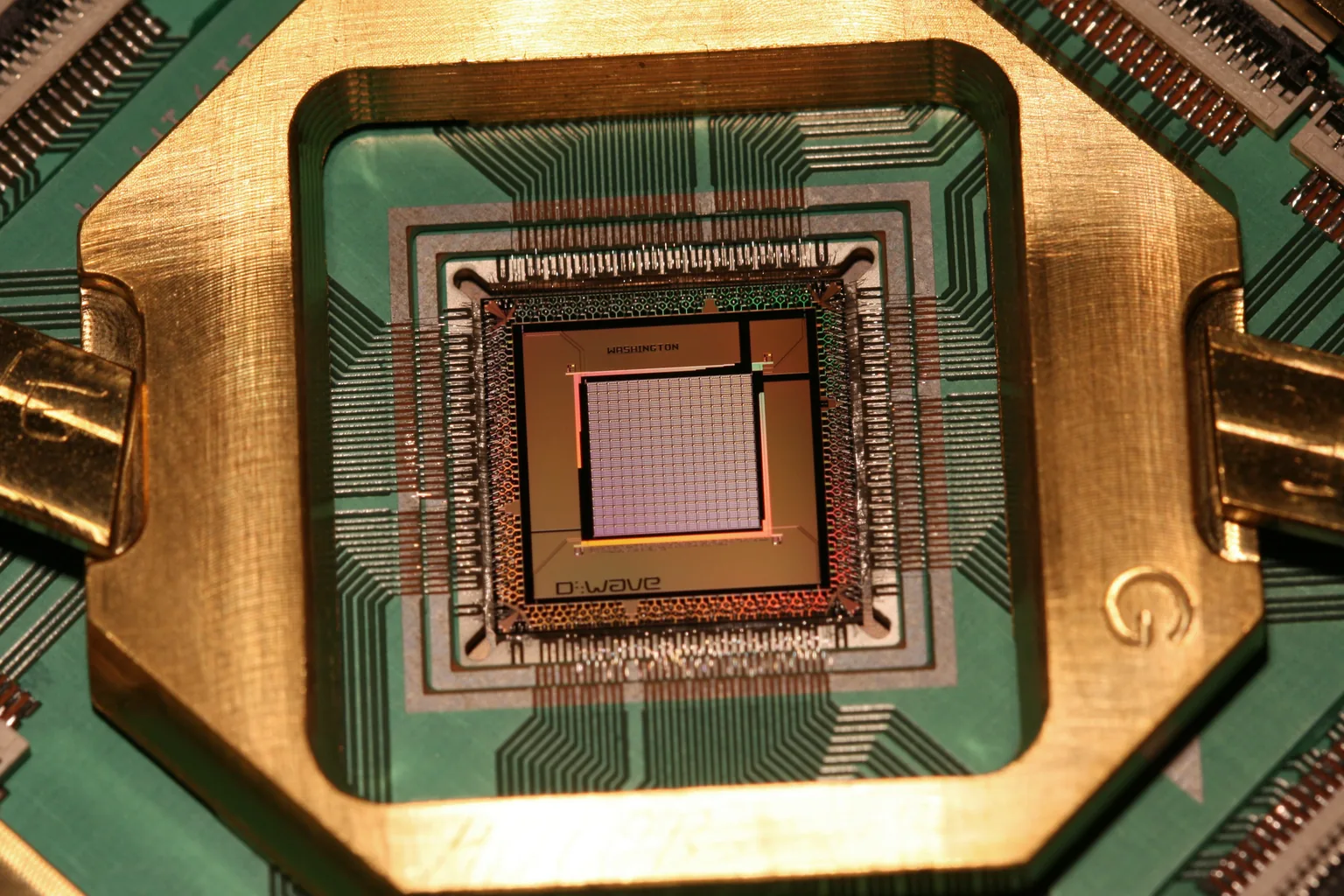
On 19 February 2025 Microsoft announced Majorana 1, a chip it said held eight topological qubits and was “designed to scale to one million”.18 The qubits are meant to rely on Majorana zero modes, exotic states that Microsoft says its new material can host. It called that material “the world’s first topoconductor” and said useful machines were “years, not decades” away.18
The field had been here before. In 2018 Nature published a paper on “quantized Majorana conductance” by a team including researchers at Delft University of Technology and Microsoft Station Q Delft. Sergey Frolov and Vincent Mourik pointed out inconsistencies between the raw data and the published figures. A recalibration shifted the reported conductance plateaus by 8%, and in March 2021 the authors retracted the paper. “We apologize to the community for insufficient scientific rigour in our original manuscript,” they wrote.19
Majorana 1 drew doubts within days. Microsoft’s accompanying Nature paper carried a note from the journal’s editorial team in its peer-review file. It said “the results in this manuscript do not represent evidence for the presence of Majorana zero modes” in the reported devices, Physics World reported. Microsoft’s Chetan Nayak said more evidence had been gathered since the paper was submitted in March 2024.20 In June 2026 Henry Legg of the University of St Andrews published a peer-reviewed critique in Nature. He argued that Microsoft’s Topological Gap Protocol, its test for the topological state, is flawed.21 “Something was making noise, but it didn’t look like the breakthrough Microsoft had claimed,” Legg said, as quoted by Computerworld. Nayak, a Microsoft technical fellow, replied: “We stand by our results and our roadmap.”21 DARPA lists Microsoft in its final stage.14
Claims of advantage, and the classical comeback
“Quantum advantage” means a quantum computer doing a task that ordinary computers cannot do in any reasonable time. Each claim so far has been a race against classical programmers, who keep finding faster methods.
In October 2019 Google said its Sycamore chip had finished a task in 200 seconds that would take a supercomputer an estimated 10,000 years.22 The task, random circuit sampling, asks a quantum computer “to generate patterns so complex that a classical computer cannot efficiently reproduce them”, IBM explains.12 A Chinese Academy of Sciences team later did the same sampling in about 15 hours on 512 graphics processors. A full supercomputer, it argued, would beat Google’s chip.23
The claims have grown since. In December 2024 Google said Willow had run a benchmark in under five minutes that would take a top supercomputer 10 septillion years.10 In October 2025 it said its “Quantum Echoes” algorithm ran 13,000 times faster on Willow than the best classical method. A test on molecules of 15 and 28 atoms matched conventional nuclear magnetic resonance (NMR) measurements.24
On 30 July 2026 IBM and the University of Chicago claimed advantage on error-corrected circuits. They ran 70 logical qubits through 2,415 logical two-qubit operations and 468 logical “T gates”, both measures of a circuit’s complexity, in about 15 minutes.12 Many leading classical methods faced “prohibitive runtimes”, the university said, without giving a time.25 IBM posted the circuits on a public Quantum Advantage Tracker for others to challenge. “We are now firmly in the quantum advantage era,” said Jay Gambetta, director of IBM Research.12 Its academic partner pointed to the hard part.
Verification remains one of the biggest challenges in firmly establishing experimental quantum advantage.
| Claim | Quantum run | Claimed classical time | What followed |
|---|---|---|---|
| Google Sycamore, October 2019 | 200 seconds | 10,000 years | About 15 hours on 512 GPUs |
| Google Willow, December 2024 | Under 5 minutes | 10 septillion years | None found in our research |
| USTC Zuchongzhi 3.0, December 2024 | A few hundred seconds | About 6.4 billion years (Frontier supercomputer) | None found in our research |
| Google Quantum Echoes, October 2025 | 13,000 times faster, Google says | Not stated as a time | Molecule results matched NMR |
| IBM and UChicago, July 2026 | About 15 minutes | “Prohibitive runtimes” | Circuits posted for challengers |
Source: Google; Pan, Chen and Zhang; USTC team; IBM; University of Chicago.10121622232425
Big valuations, small revenues
Investors are paying for roadmaps. In its June 2026 Nasdaq listing, Quantinuum sold 28 million shares at US$60, raising US$1.68 billion, about RM6.9 billion. The Quantum Insider put its valuation “in the neighborhood of $14 billion to $15 billion”. Honeywell kept about 48.1% of the voting power.26
Its sales are small. In the third quarter of 2026 Quantinuum’s revenue was US$9.1 million, up 233% on a year earlier, and its net loss was US$118 million. It held US$1.94 billion in cash and raised its 2026 revenue outlook to US$31 million to US$34 million, about RM127 million to RM139 million.27 By our arithmetic, the listing valued the company at roughly 410 to 480 times that outlook (US$14 billion ÷ US$34 million; US$15 billion ÷ US$31 million).
IonQ, which also builds trapped-ion machines, reported revenue of US$173.8 million for the same quarter, up 336%, which it called its sixth consecutive record quarter. Nearly half, US$83.5 million, came from SkyWater, a chip foundry it bought.28 Its US$564.0 million net income reflected “the non-cash mark-to-market impact of warrants”, an accounting effect rather than operating profit. IonQ expects 2026 revenue of US$505 million to US$515 million, about RM2.1 billion.28
Shares are our arithmetic (90.3 ÷ 173.8; 83.5 ÷ 173.8). SkyWater is a chip foundry IonQ acquired. Qolab, founded by Nobel laureate John Martinis, became a foundry customer.
Source: IonQ, Form 8-K exhibit 99.1 (5 November 2026).
Show the numbers
| Item | IonQ Platform (US$90.3m) | SkyWater foundry services (US$83.5m) |
|---|---|---|
| Q3 2026 | 52 | 48 |
Across the industry, start-ups raised a record US$12.6 billion in 2025, about RM51.5 billion, McKinsey estimated, as reported by DPA. Public money’s share fell to 3%, against about a third in 2024. Quantum computing companies’ revenue passed US$1 billion for the first time.29
Total start-up investment in 2025 was a record US$12.6 billion, about RM51.5 billion. McKinsey estimated, as reported by DPA.
Source: TechCentral.ie (DPA), on McKinsey’s Quantum Technology Monitor 2026 (30 April 2026).
Show the numbers
| Share | What |
|---|---|
| 64% | went to start-ups in the United States |
| 44% | of private investment came through capital markets |
| 3% | came from public sources, against about a third in 2024 |
Renting is cheaper. IBM’s free Open Plan offers up to 10 minutes a month on its machines; pay-as-you-go time starts at US$96 a minute, about RM393, or about RM23,550 an hour by our arithmetic.30
What quantum computers do today
Useful results so far are narrow and carefully chosen. In March 2025 a JPMorganChase-led team, publishing in Nature, used Quantinuum’s 56-qubit H2-1 machine over the internet to produce 71,313 bits of certified randomness.31 “Certified” means the randomness can be checked mathematically rather than taken on trust. The check needed supercomputers running at a combined 1.1 billion billion operations a second, and it holds against a “restricted adversary”.31
In September 2025 HSBC reported “up to a 34 percent improvement in predicting how likely a trade would be filled at a quoted price”, using IBM’s Heron processor on European corporate bonds.32 That is the bank’s own claim, and we found no independent replication.
Quantum and AI, each helping the other
The clearest link runs from AI to quantum. Google DeepMind’s AlphaQubit, a Transformer neural network like those behind chatbots, learned to spot errors in Google’s chips. On Sycamore data it made 6% fewer errors than tensor-network methods and 30% fewer than correlated matching, two conventional decoders. But it was “still too slow to correct errors in a superconducting processor in real time”.33
Speed is why chipmakers are wiring graphics processors to quantum ones. Nvidia’s NVQLink, launched in October 2025, connects the two; Nvidia says it supports 17 quantum-processor builders, five controller builders and nine US national laboratories.34 Quantinuum says it will use Nvidia computing for real-time error correction on Helios, and markets “Generative Quantum AI”.8
The other direction is mostly promise. Sponsored content for MIMOS in The Edge in June 2025 stated, citing its then acting chief executive, that AI becomes significantly more advanced when run on quantum processors. It offered no evidence.35
The code-breaking machine nobody has built
Public-key cryptography lets two strangers agree a secret key over an open network, and lets software prove who signed a file or a payment. It rests on maths puzzles that ordinary computers cannot solve at the sizes used. RSA depends on how hard it is to find the two primes multiplied to make a very large number. Elliptic-curve cryptography (ECC) depends on a related puzzle. Shor’s algorithm, devised by Peter Shor, would let a large error-corrected quantum computer solve both.936
The machine that could do this is called a cryptographically relevant quantum computer, or CRQC. Estimates of its size have fallen sharply, though each describes a machine nobody has built. A 2019 estimate by Craig Gidney of Google and a co-author, Ekerå, said a 2048-bit RSA number could be factored in eight hours with 20 million noisy qubits. Gidney’s paper of 21 May 2025, “How to factor 2048 bit RSA integers with less than a million noisy qubits”, needed under a week.36 Both assume an error rate of 0.1% per operation and a correction cycle of one microsecond.
On 12 February 2026 a preprint by Paul Webster and seven co-authors, “The Pinnacle Architecture”, went below 100,000 physical qubits, with the same error rate and cycle time and a newer family of codes.37 By our arithmetic, that is about a 200-fold fall in seven years, on paper. The 2026 abstract gives no runtime. No machine has shown such error rates at that scale: the chips in this article hold about 100 qubits.
Estimates for elliptic curves have fallen too. On 31 March 2026 Google Quantum AI said the 256-bit elliptic-curve problem behind cryptocurrency security could be solved with under 1,200 logical qubits. On a superconducting machine that means “fewer than 500,000 physical qubits in a few minutes”, an “approximately 20-fold reduction”.9
Google did not publish the attack. It “engaged with the U.S. government” and released a zero-knowledge proof, so others can verify the claim “without providing a roadmap for bad actors”.9 It is like proving you know a safe’s combination by opening it behind a screen and passing out what is inside. Six days earlier Google had set 2029 as the deadline for its own migration and put its authentication services first. “We recommend that other engineering teams follow suit,” wrote Heather Adkins, its vice-president of security engineering, and Sophie Schmieg, a cryptography engineer.38
Nobody knows when
Experts disagree. In a 2024 survey of 32 experts for the Global Risk Institute, the average estimated chance of a CRQC within ten years was about 34% on an optimistic reading, up from 31% in 2023. Within five years it was about 14%, up from 11%. Here a CRQC meant a machine that breaks RSA-2048 within 24 hours. A more pessimistic reading of the same answers gives about 19% for ten years.39 NIST says “some experts predict” a code-breaking device “could appear within a decade”.40 DARPA thinks it more likely than not that a company will build an industrially useful quantum computer by 2033.14
Optimistic reading of the experts’ ranges; on a pessimistic reading the 2024 ten-year figure is about 19%. These are opinions, not forecasts of a known machine.
Source: Global Risk Institute and evolutionQ (Mosca and Piani), Quantum Threat Timeline Report 2024, executive summary (December 2024).
Show the numbers
| Item | 2023 survey | 2024 survey |
|---|---|---|
| Within 5 years | 11% | 14% |
| Within 10 years | 31% | 34% |
Harvest now, decrypt later
The danger starts before the machine exists. NIST describes adversaries who “collect encrypted data now with the goal of decrypting it once quantum technology matures”. It calls this “one of the main reasons why the transition to post-quantum cryptography is urgent”.4 NACSA, Malaysia’s National Cyber Security Agency, put it more bluntly in October 2025: “Threat is not tomorrow, but TODAY, to the data of the past”.41
Picture a thief who cannot open a safe, so he carries it home and waits for better tools. An eavesdropper who records a bank’s encrypted traffic today keeps both the scrambled data and the key exchange that protected it. When a CRQC arrives, the recorded exchange gives up the key, and the key unlocks the data. Anything still secret by then is exposed.
NIST offers a rule of thumb. Let X be the years data must stay secure and Y the years needed to migrate. An organisation must start before X plus Y exceeds Z, the expected wait for a CRQC. So even if quantum computers are a decade away, NIST concludes, migration must begin today. It singles out data with long-term sensitivity, “such as government secrets or medical records”.4
Not everything is equally exposed. Google calls the threat to encryption “relevant today with store-now-decrypt-later attacks, while digital signatures are a future threat”.38 A forged signature is useful only once a forger exists, so signatures can move later, though they must move before a CRQC. Symmetric ciphers such as AES, which scramble the bulk of the data, are “significantly less vulnerable”. NIST believes versions with at least 128 bits of security meet its lowest post-quantum category.4
- 1Customer and bankA session startsAn app and a server agree a secret key using RSA or elliptic-curve key exchange, then encrypt the data with it.
- 2EavesdropperTraffic is copiedAn eavesdropper records the encrypted data and the key exchange. Neither can be read yet.
- 3EavesdropperIt is storedThe recording is kept for years, waiting for better tools.
- 4Future machineA code-breaker arrivesA cryptographically relevant quantum computer runs Shor’s algorithm on the recorded key exchange and recovers the key.
- 5Data ownerOld secrets are readAnything still sensitive, such as medical records or government secrets, is exposed.
Post-quantum key exchange, such as ML-KEM, breaks the chain at the first step. Signatures are a later threat, because a forger needs the machine at the moment of forging.
Source: NIST IR 8547 (October 2026); Google (25 March 2026); NACSA (October 2025).
Show the numbers
| Step | Who | What | Detail |
|---|---|---|---|
| 1 | Customer and bank | A session starts | An app and a server agree a secret key using RSA or elliptic-curve key exchange, then encrypt the data with it. |
| 2 | Eavesdropper | Traffic is copied | An eavesdropper records the encrypted data and the key exchange. Neither can be read yet. |
| 3 | Eavesdropper | It is stored | The recording is kept for years, waiting for better tools. |
| 4 | Future machine | A code-breaker arrives | A cryptographically relevant quantum computer runs Shor’s algorithm on the recorded key exchange and recovers the key. |
| 5 | Data owner | Old secrets are read | Anything still sensitive, such as medical records or government secrets, is exposed. |
The deadlines
The defence already exists. On 13 August 2024 NIST published three post-quantum standards: FIPS 203 (ML-KEM) for general encryption, FIPS 204 (ML-DSA) for digital signatures, and FIPS 205 (SLH-DSA) as a backup signature method.40 The first two rest on problems about lattices, grids of points in many dimensions, believed hard even for quantum computers. NIST began the contest in 2015 and assessed 82 algorithms from 25 countries.40
There is no need to wait for future standards. Go ahead and start using these three.
NIST’s final transition report, published in October 2026, sets the end dates. Quantum-vulnerable public-key cryptography will be deprecated after 2030 and disallowed under NIST standards after 2035. Previous transitions took 10 to 20 years, it notes, so “these deadlines leave little margin”.4 In the United States, Executive Order 14412 of 22 June 2026 and an OMB memorandum two days later set the federal pace.442 High-value systems must use post-quantum key establishment by 31 December 2030 and post-quantum signatures by 31 December 2031. Agencies must support TLS 1.3, the current version of the protocol behind secure websites, by 2 January 2030.4
Britain, the EU and Singapore have set similar dates. The EU wants high-risk uses moved “no later than the end of 2030”.4344 Singapore told critical information infrastructure owners in June 2026 to migrate by 2031, and on 14 October asked other exposed organisations to finish by 2035.45
| Who | Plans or discovery | Priority systems | Everything else |
|---|---|---|---|
| NIST standards | Standards final since August 2024 | RSA and ECC deprecated after 2030 | Disallowed after 2035 |
| US federal agencies | Plans due 120 days after 24 June 2026 | Key establishment by 31 December 2030; signatures by 31 December 2031 | 2035 |
| United Kingdom (NCSC) | 2028 | 2031 | 2035 |
| European Union | National roadmaps by end-2026 | High-risk uses by end-2030 | Medium-risk uses by end-2035 |
| Singapore (CSA) | Plans by 2027 | Critical infrastructure by 2031 | 2035 |
| Google (own systems) | Not stated | 2029 | Not stated |
| Malaysia (NACSA) | Plan for 2025–2030 named; text not public | Not published | Not published |
Source: NIST; OMB; NCSC; European Commission; Cyber Security Agency of Singapore; Google; NACSA.4384142434445
Adoption is under way. By late October 2025, more than half of human web traffic reaching Cloudflare was protected by post-quantum key agreement. But “not a single public post-quantum certificate is used”, Cloudflare reported, so website signatures had not moved.46 Google says Android 17 is adding ML-DSA signatures.38
Malaysia: cryptography first
Malaysia’s quantum policy has been led mainly by its security agencies. NACSA says it is following “NIST, ISO, ETSI post-quantum standardization”.41
One plan, three descriptions
The national plan has been described three ways. In October 2025, at a post-quantum conference in Kuala Lumpur, NACSA chief executive Megat Zuhairy Megat Tajuddin showed slides naming “Malaysia’s Post-Quantum Cryptography (PQC) Migration Plan 2025-2030”.41 On 9 July 2026 Malay Mail reported that Malaysia had launched a National Post-Quantum Cryptography Migration Plan and a Malaysia Quantum Cryptography Sandbox at CYDES 2026 in Putrajaya.3 On 9 November Fahmi said Malaysia “is developing a national plan” for critical information infrastructure.1
We could not find the published text of any of these plans, so we cannot say whether they are one document at different stages or several. Other pieces are named but not public. The Star reported in June 2026 that the government had developed a “PQC Migration Framework” to guide companies.47 A column in The Star in October described a MyKriptografi Action Plan 2026-2030 and NACSA’s five migration phases: Assess, Select, Validate, Deploy and Monitor.48 At the July launch, Prime Minister Anwar Ibrahim said: “If we want the country to remain safe, we must master these new fields of knowledge. There is no other choice.”3
A Tier 1 rating without a method
The government says Malaysia leads the region. “Malaysia is now recognised at Tier 1, the highest level, for readiness to transition to post-quantum cryptography,” the Budget 2027 speech said on 9 October 2026.49 Zahid’s written reply in November repeated the claim. It set the rating beside efforts to reduce reliance on foreign technology, including the Cyber Security and Cryptology Development Centre (CSCDC) and the National Cryptography Policy, MyKriptografi.2 Neither document, as reported, says who produced the ASEAN report, which countries were assessed or how they were scored. A column in The Star in October said that, according to the National Security Council, the assessment rested on verifiable national-level actions rather than stated intentions, but it did not name the assessor either.48 We could not find the report, so readers cannot check the rating.
The institutions
NACSA runs the policy side. It says MyKriptografi is aligned with the Cyber Security Act 2024. A new Malaysia Cryptology Technology and Management Centre is meant to move identity and authentication systems to quantum-resilient standards.41 That matters at scale. MyDigital ID, the national digital identity, had more than 14 million registered users across 203 public and private services by October 2026.49 In July it had over 12 million users and 114 government services.3 Budget 2026 provided for CSCDC under NACSA to develop cryptography, “termasuk teknologi pasca-kuantum”, including post-quantum technology. It also set aside RM53 million in Malaysia Digital Acceleration Grants for blockchain, AI and quantum computing.50 Budget 2027 said NACSA and MCMC would develop home-grown quantum-resistant data protection and strengthen CSCDC, with no ringgit figure in its annex.49
Research and hardware
MIMOS, the national applied research and development centre, opened a Quantum Intelligence Centre in February 2025, launched by Science Minister Chang Lih Kang.51 GovInsider, reporting on MIMOS’s Quantum Day on 30 September 2026, described a quantum communication channel over 52 km of standard fibre. MIMOS built it with the Swiss firm IDQuantique, Malaysian universities and Telekom Malaysia. GovInsider reported that banks and government agencies have used it to exchange the digital keys that protect sensitive information and to detect interception.52 This is quantum key distribution: keys travel as single particles of light, which an eavesdropper cannot read without disturbing them.
Malaysia is building quantum readiness through policy direction, research laboratories, early pilots, partnerships and emerging talent. These are essential assets, but they do not automatically produce adoption.
Nordin proposed a National Quantum Consortium session, a call for use cases and three to five pilots “with named owners” within the first 90 days.52 A second track runs through IBM. On 9 July 2026, at a cyber-security summit in Cyberjaya, NACSA and MCMC signed a memorandum with IBM Malaysia. It covers a study of a National Quantum and AI Centre of Excellence.53 RTM listed its focus as ecosystem development, trusted governance and security, and innovation, capability and talent.54 In October Chang said talks on the centre were continuing. “Technology can evolve rapidly, but talent cannot be built overnight,” he wrote.55
Hardware is arriving in small pieces. In September 2026 AQSolotl, which builds control hardware for quantum computers, set up research at UTM Technovation Park in Johor Bahru. UTM calls it “Malaysia’s first quantum computing hardware company”, though it is a Singapore company. It draws on UTM’s quantum work with Japanese partners since 2009 and Singaporean ones since 2018.56 Ahmad Ashrif A Bakar, director of UKM’s IMEN institute, argues that silicon photonics, chips that carry light, is Malaysia’s realistic route, with SilTerra in Kulim already involved. “It is important to be clear: silicon photonics is not a quantum computer,” he wrote.57 Next door, Quantinuum is assembling a Helios in Singapore for commissioning in spring 2027.27
What banks and firms have said
We found no Bank Negara Malaysia circular, policy document or speech on post-quantum cryptography, and no public data on Malaysian banks’ readiness. That is a gap in what we could find, not proof that none exists. Edward Law, chief executive of Securemetric, told StarBiz in June 2026 that organisations that fail to adapt “will eventually find themselves excluded from international digital supply chains and financial networks”. An analyst in the same article said smaller firms would likely struggle with costs and technical complexity, especially at first, and cited a shortage of advanced-cryptography talent.47
| Product | Announced | Text or results public | Funding stated | Evidence it operates | Verdict |
|---|---|---|---|---|---|
| National PQC migration planNSC and NACSA; MCMC for critical infrastructure | YesJuly and November 2026 | No | No | Unknown | ?Launched or still being developed |
| Quantum Cryptography SandboxAnnounced 9 July 2026 | Yes | No | No | Unknown | ?Too early |
| Tier 1 ASEAN readiness ratingBudget 2027; written reply | Yes | Noassessor not named; method not published | n/a | n/a | !Cannot be checked |
| CSCDCCryptology development centre | Yes | Partlybudget text only | Nono figure in Budget 2027 annex | Unknown | ?Too early |
| Quantum and AI centre (NQAIC)Memorandum with IBM, 9 July 2026 | Partlya study | Partlythree focus areas | No | Notalks continuing, October 2026 | ?Too early |
| MIMOS Quantum Intelligence CentreLaunched February 2025 | Yes | Partlypilots proposed | Unknown | Yes | !Operating; few results public |
| 52 km quantum key linkMIMOS, TM, IDQuantique | Yes | Partlydescribed, no data | Unknown | Yesused by banks and agencies | ✓Operating |
| AQSolotl at UTMSingapore company, Johor base | Yes | Partlycontrol hardware | Unknown | Yesresearch base set up | ?Too early |
Our reading of public sources. “No” and “unknown” mean we found no public evidence, not that none exists. The 52 km link’s use by banks is as GovInsider reported.
Source: Malay Mail (9 July 2026); NST (9 November 2026); The Star (13 November 2026); Ministry of Finance budget speeches (10 October 2025; 9 October 2026); Scoop via Newswav (9 July 2026); Bernama (10 October 2026); GovInsider (29 October 2026); The Quantum Insider (25 September 2026).
Show the numbers
| Product | Announced | Text or results public | Funding stated | Evidence it operates | Verdict |
|---|---|---|---|---|---|
| National PQC migration plan | Yes (July and November 2026) | No | No | Unknown | Launched or still being developed |
| Quantum Cryptography Sandbox | Yes | No | No | Unknown | Too early |
| Tier 1 ASEAN readiness rating | Yes | No (assessor not named; method not published) | n/a | n/a | Cannot be checked |
| CSCDC | Yes | Partly (budget text only) | No (no figure in Budget 2027 annex) | Unknown | Too early |
| Quantum and AI centre (NQAIC) | Partly (a study) | Partly (three focus areas) | No | No (talks continuing, October 2026) | Too early |
| MIMOS Quantum Intelligence Centre | Yes | Partly (pilots proposed) | Unknown | Yes | Operating; few results public |
| 52 km quantum key link | Yes | Partly (described, no data) | Unknown | Yes (used by banks and agencies) | Operating |
| AQSolotl at UTM | Yes | Partly (control hardware) | Unknown | Yes (research base set up) | Too early |
Things you probably didn’t know
- Two Nobel laureates work in the industry. Michel Devoret is chief scientist for quantum hardware at Google Quantum AI. John Martinis is chief technology officer of Qolab, now a customer of IonQ’s SkyWater foundry.628
- Google invoked the multiverse. Willow’s benchmark result, Google’s Hartmut Neven wrote, “lends credence to the notion that quantum computation occurs in many parallel universes”.10
- A dog matched quantum factoring records. In a satirical 2025 paper, the cryptographers Peter Gutmann and Stephan Neuhaus reproduced published quantum factoring results “using a VIC-20 8-bit home computer from 1981, an abacus, and a dog.”58
- You can see the qubits. In Caltech’s 6,100-atom array, each qubit shows up on a screen as a pinpoint of light, graduate student Hannah Manetsch said.17
- Encryption starts cars. The US post-quantum memo notes that Americans rely on encryption for “everyday tasks such as starting their cars, paying for groceries, and messaging friends and family.”42
- Willow’s maker sits in DARPA’s first stage. Google is listed in Stage A of the Quantum Benchmarking Initiative. DARPA lists only firms with an active contract.14
What worked and what didn’t
The successes share a habit: claims that others could check.
Worked
Willow goes below threshold
In December 2024 Google showed errors falling by a factor of 2.14 at each step up in code size, in a paper later published in Nature.11 Its qubits held their state about five times longer than the previous chip’s.10
Why it worked: better qubits, not more of them, made error correction pay.
Worked
An open contest for new locks
NIST’s contest began in 2015 and assessed 82 algorithms from 25 countries before the 2024 standards.40 By late October 2025, more than half of human traffic reaching Cloudflare used post-quantum key agreement.46
Why it worked: years of public scrutiny gave vendors standards they were willing to ship quickly.
Worked
Atoms in tweezers scale up
Harvard, QuEra and MIT ran up to 48 logical qubits on up to 280 physical ones in 2023.7 In 2025 Caltech held 6,100 atom qubits in superposition for about 13 seconds.17 Atom Computing and QuEra are in DARPA’s later stages.14
Why it worked: a platform that is easy to enlarge grew fast; the test now is error-corrected computing at that size.
Worked
Randomness you can check
In March 2025 a Quantinuum machine produced 71,313 bits of certified randomness, verified with supercomputers.31 The task was chosen to be hard for ordinary computers yet checkable.
Why it worked: a modest task with a proof of correctness beats a grand one nobody can verify.
Worked
Disclosure without a blueprint
In March 2026 Google backed its 20-fold cut in the qubits needed to attack elliptic curves with a zero-knowledge proof instead of publishing the circuits.9 It paired the warning with a 2029 deadline for itself.38
Why it worked: defenders got a checkable warning, attackers got no recipe.
Didn’t work
The 10,000-year claim
Google’s 2019 Sycamore result compared 200 seconds with an estimated 10,000 years on a supercomputer.22 A Chinese Academy of Sciences team later did the task in about 15 hours on 512 graphics processors.23
Lesson: an advantage claim lasts only until someone writes a better classical algorithm.
Didn’t work
A retraction in 2021
A 2018 Nature paper reporting “quantized Majorana conductance” was retracted after Sergey Frolov and Vincent Mourik found inconsistencies between raw data and figures. Recalibration moved the key plateaus by 8%.19
Lesson: the problems surfaced only once outsiders saw the raw data, so release it with the paper.
Didn’t work
Quantum software, no quantum market
Zapata Computing, founded in 2017 as a quantum software firm, had moved into generative AI. It listed on Nasdaq through a SPAC on 1 April 2024. Its board approved closure on 7 October 2024, owing US$2.5 million to Sandia Investment Management and US$2.3 million to others.59
Lesson: a business cannot wait years for hardware to make its product useful.
Didn’t work
The 372-qubit scare
A December 2022 preprint claimed RSA-2048 could be challenged with 372 physical qubits, after factoring a 48-bit number with 10.60 Scott Aaronson of UT Austin wrote “No. Just No.” and called it “one of the most actively misleading quantum computing papers I’ve seen in 25 years”.61
Lesson: check any qubit count against the error-corrected estimates, which run to hundreds of thousands.
Too early
A bond-trading first
In September 2025 HSBC said quantum processing with IBM gave “up to a 34 percent improvement” in predicting whether European corporate bond quotes would be filled.32 It is the bank’s claim, and we found no independent replication.
Lesson: wait for others to reproduce a gain before paying for it.
What to do now
None of this is legal or security advice for a specific system. The steps follow NIST, the US federal plan and NACSA’s phases.
For banks, insurers and critical infrastructure operators
- Find your cryptographyList where RSA and elliptic-curve keys are used: apps, payment links, VPNs, hardware security modules and suppliers. The US memo asks for automated tools feeding a “Cryptographic Bill of Materials”. NACSA’s first phase, Assess, starts here.4248
- Rank data by shelf lifeApply NIST’s X plus Y rule. Records that must stay secret past 2030, such as identity data and loan files, move first.4
- Fix key exchange firstMove to TLS 1.3 and hybrid key exchange, which pairs a classical method with ML-KEM so an attacker must break both. The US memo calls hybrids a stopgap that needs careful evaluation.442
- Ask vendors for datesAsk each supplier when its products will support FIPS 203 (ML-KEM) and FIPS 204 (ML-DSA), and write the answer into contracts.40
- Build in agilityCryptographic agility lets an organisation “switch its cryptographic algorithms with minimal disruption”. Keep algorithm choices in configuration files, not compiled code.42
- Plan signatures and certificatesThey move later, by 2031 for US federal systems, but no public post-quantum certificates were in use in late 2025.446
- Test, then phaseUse the national sandbox where possible, and switch in stages so essential services keep running.13
For firms that sell abroad
Customers in the US, EU and Singapore face deadlines in 2030 and 2031 for their most important systems.44445 Expect post-quantum questions in security reviews and tenders, and recall Law’s warning about supply chains.47
For SMEs and IT teams
Updated software already does part of the work, as Cloudflare’s figures show.46 Keep operating systems, browsers, VPNs and libraries current, and ask managed-service and cloud providers for their post-quantum roadmap in writing. Cost and scarce cryptography skills are the obstacles a Malaysian analyst named, so phase the work.47
Questions to ask your IT supplier
- Which of our systems use RSA or elliptic-curve keys, and where are the keys kept?
- When will your products support ML-KEM and ML-DSA?
- Can we change algorithms through configuration, without new code?
- Is TLS 1.3 with hybrid post-quantum key exchange available now?
- Which of our data must stay secret beyond 2030?
For individuals
Keep phones, browsers and banking apps updated: that is how post-quantum protection arrives. Treat “quantum” investment pitches with care. Valuations far exceed revenue, and a listed former quantum software firm closed six months after listing.2759
For students and teachers
IBM’s free plan allows 10 minutes a month on real quantum hardware.30 In his Budget 2027 speech, Anwar urged young people to master fields such as “coding, data science and quantum technology”.49
For policymakers
- Publish the migration plan, with deadlines by sector, as the US, UK, EU and Singapore have done.42434445
- Name who produced the ASEAN Tier 1 assessment and publish its method.2
- Give banks supervisory expectations. We found no Bank Negara document on post-quantum cryptography.
- Consider grants for migration, as Singapore has done with its Quantum Safe Kickstarter Grant, open until 31 October 2027.45
What to watch to 2030
- 31 December 2026. EU member states are due to have national post-quantum roadmaps and pilots under way.44
- End of 2026. IBM’s target date for quantum advantage. Watch whether anyone matches its July circuits on the public tracker.1215
- Spring 2027. Quantinuum plans to commission its Helios machine in Singapore.27
- Second half of 2027. Quantinuum’s Sol is meant to approach 100 logical qubits at an error rate of one in 100,000.27
- Also in 2027. Singapore wants exposed organisations to have migration plans in place, and its Kickstarter Grant closes on 31 October.45
- 2028. UK organisations should finish discovery and initial plans; US agencies begin prioritised migration.4243
- 2029. IBM’s Starling with 200 logical qubits, Quantinuum’s fault-tolerant Apollo, and Google’s own post-quantum deadline.132738
- 2030. NACSA’s 2025–2030 plan and the MyKriptografi Action Plan end; we found no published milestones for either. US agencies must support TLS 1.3 by 2 January and use post-quantum key establishment in high-value systems by 31 December.44148
- After 2030. NIST deprecates vulnerable public-key cryptography, US signature migration follows in 2031, DARPA’s test date is 2033, and NIST disallows the old methods after 2035.414
Estimates of code-breaking machines describe hardware nobody has built, and expert odds are opinions. Company figures are their own claims, and calculations marked as ours are illustrative. Nothing here is investment, legal or security advice. Conversions use Bank Negara Malaysia’s middle rate of 17 November 2026: RM4.089 per US dollar.
Sources
- New Straits Times (Bernama), national plan for post-quantum cryptography, 9 November 2026: nst.com.my
- The Star (Bernama), Malaysia at highest tier for post-quantum readiness, 13 November 2026: thestar.com.my
- Malay Mail, quantum cryptography sandbox launched, 9 July 2026: malaymail.com
- NIST, IR 8547, Transition to Post-Quantum Cryptography Standards, October 2026: nvlpubs.nist.gov
- IBM, What is quantum computing?, 10 June 2025, updated 2 April 2026: ibm.com
- Nobel Prize in Physics 2025, press release, 7 October 2025: nobelprize.org
- Bluvstein et al., logical quantum processor, Nature, 6 December 2023: nature.com
- Quantinuum, Helios launch, 5 November 2025: quantinuum.com
- Google Research, disclosing quantum vulnerabilities responsibly, 31 March 2026: research.google
- Google, Willow quantum chip, 9 December 2024: blog.google
- Google Quantum AI, Willow error-correction paper, arXiv 2408.13687, 24 August 2024: arxiv.org
- IBM, quantum advantage with the University of Chicago, 30 July 2026: newsroom.ibm.com
- IBM Quantum blog, Starling and fault tolerance, 10 June 2025: ibm.com
- DARPA, Quantum Benchmarking Initiative, list as of 8 October 2026: darpa.mil
- IBM, new quantum processors including Nighthawk, 12 November 2025: newsroom.ibm.com
- USTC team, Zuchongzhi 3.0, arXiv 2412.11924, 16 December 2024: arxiv.org
- Caltech, 6,100-qubit array, 24 September 2025: caltech.edu
- Microsoft, Majorana 1, 19 February 2025: news.microsoft.com
- Nature, retraction note, Quantized Majorana conductance, 8 March 2021: nature.com
- Physics World, experts on Microsoft’s topological qubit claim, 25 February 2025: physicsworld.com
- Computerworld, new doubt on Microsoft’s quantum advance, 25 June 2026: computerworld.com
- Google Research, quantum supremacy, 23 October 2019: research.google
- Pan, Chen and Zhang, Sycamore sampling on GPUs, arXiv 2111.03011, 4 November 2021: arxiv.org
- Google, Quantum Echoes, 22 October 2025: blog.google
- University of Chicago News, quantum advantage, 30 July 2026: news.uchicago.edu
- The Quantum Insider, Quantinuum IPO, 4 June 2026: thequantuminsider.com
- Quantinuum, third-quarter 2026 results, 5 November 2026: quantinuum.com
- IonQ, third-quarter 2026 results (Form 8-K exhibit 99.1), 5 November 2026: sec.gov
- TechCentral.ie (DPA), McKinsey quantum study, 30 April 2026: techcentral.ie
- IBM Quantum, pricing, accessed 17 November 2026: ibm.com
- Nature, certified randomness on a trapped-ion processor, 26 March 2025: nature.com
- HSBC, quantum-enabled bond trading with IBM, 25 September 2025: hsbc.com
- Google, AlphaQubit, 20 November 2024: blog.google
- NVIDIA, NVQLink, 28 October 2025: nvidianews.nvidia.com
- The Edge Malaysia, sponsored content for MIMOS, 9 June 2025: theedgemalaysia.com
- Craig Gidney, RSA-2048 with less than a million noisy qubits, arXiv 2505.15917, 21 May 2025: arxiv.org
- Webster et al., The Pinnacle Architecture, arXiv 2602.11457, 12 February 2026: arxiv.org
- Google, 2029 post-quantum migration timeline, 25 March 2026: blog.google
- Global Risk Institute, Quantum Threat Timeline Report 2024 summary, December 2024: globalriskinstitute.org
- NIST, first three post-quantum standards, 13 August 2024: nist.gov
- NACSA, slides at the PQC Conference, Kuala Lumpur, 28–30 October 2025: pkic.org
- White House OMB, Memorandum M-26-15, 24 June 2026: whitehouse.gov
- UK NCSC, post-quantum migration timelines, 20 March 2025: ncsc.gov.uk
- European Commission, post-quantum transition roadmap, 23 June 2025: digital-strategy.ec.europa.eu
- Cyber Security Agency of Singapore, quantum-safe timeline and grant, 14 October 2026: csa.gov.sg
- Cloudflare, the post-quantum internet in 2025, 28 October 2025: blog.cloudflare.com
- The Star, quantum-safe encryption emerges as new standard, 3 June 2026: thestar.com.my
- The Star, Setting up quantum-safe migration, 10 October 2026 (Webull reprint): webull.com
- Ministry of Finance, Budget 2027 speech, 9 October 2026: belanjawan.mof.gov.my
- Ministry of Finance, Ucapan Belanjawan 2026, 10 October 2025: belanjawan.mof.gov.my
- MOSTI, MIMOS Quantum Intelligence Centre launch, 25 February 2025: mosti.gov.my
- GovInsider, MIMOS Quantum Day 2026, 29 October 2026: govinsider.asia
- Scoop (via Newswav), quantum and AI centre with IBM, 9 July 2026: newswav.com
- RTM Berita, NQAIC memorandum, 10 July 2026: berita.rtm.gov.my
- Bernama, Chang on quantum capability, 10 October 2026: bernama.com
- The Quantum Insider (UTM release), AQSolotl at UTM, 25 September 2026: thequantuminsider.com
- Bernama Thoughts, Ahmad Ashrif A Bakar on silicon photonics, 19 May 2026: bernama.com
- Gutmann and Neuhaus, IACR ePrint 2025/1237, revised 1 December 2025: eprint.iacr.org
- The Quantum Insider, Zapata Computing ceases operations, 12 October 2024: thequantuminsider.com
- Yan et al., 372-qubit preprint, arXiv 2212.12372, 23 December 2022: arxiv.org
- Scott Aaronson, Shtetl-Optimized, 4 January 2023: scottaaronson.blog
Related research
 No hacking required: in over 95% of Malaysian online fraud, the victim presses ‘send’Bank Negara’s 2022 rules cut reports of unauthorised online-banking fraud by 58% in five months, and scammers switched to persuading customers to pay.
 Treat your IC number like your nameIn 2024 police found 400 million records on Malaysians, sold at RM1.50 to RM2 each or rented out by the month.
 RM2 billion on paper, RM24 million on the tableIn September 2026 the higher education minister said more than 500 matched university patents were valued at over RM2 billion.
